
Alright – so today we’ve got the honor of introducing you to Jim Sweeney. We think you’ll enjoy our conversation, we’ve shared it below.
Jim, looking forward to hearing all of your stories today. How did you learn to do what you do? Knowing what you know now, what could you have done to speed up your learning process? What skills do you think were most essential? What obstacles stood in the way of learning more?
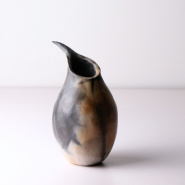
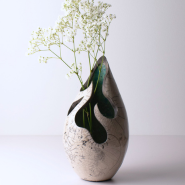
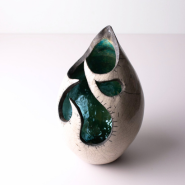
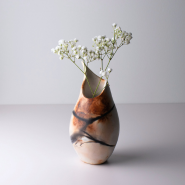
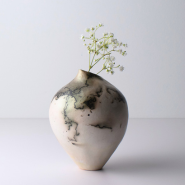
After getting into ceramics, I was introduced to raku and was immediately drawn to the surface design. There’s something about the unpredictability of it that hooked me right away, and it’s now the primary way I create my work.
Most of what I learned came from going down research rabbit holes—books, online resources, tutorials, blogs, and talking to other artists. I did that for about a year and a half before deciding to build my own raku kiln. I started digging into the engineering and science behind it and realized I could probably build a small, inexpensive version using a propane metal melting furnace. I hadn’t really seen anyone else take that approach, but I wanted a way to experiment on a smaller scale and work out the kinks.
Once I got it dialed in and experienced that mix of alchemy and unpredictability, I was all in. That’s when I decided to invest in a proper raku kiln. Having that setup allowed me to start working larger, explore different techniques and styles, and eventually expand into other firing methods like saggar.
Looking back, I probably could have sped up the learning process by taking a workshop early on. It would have helped me build confidence and understand the fundamentals faster. At the time, though, I was still new to ceramics and hesitant to invest in another kiln after already putting so much into building out our home studio and buying an electric kiln. Raku is also a pretty volatile firing method, so there were definitely concerns about safety—fires, explosions, all of that. So far, so good (knock on wood).
I think one of the most important skills in my process has been persistence. I’m pretty stubborn about figuring things out, which my wife will confirm. I tend to go deep when something interests me, and that willingness to experiment, fail, and keep going has been essential.
Honestly, I don’t think my path would have been possible without how accessible information is today, or how generous other ceramic artists are with sharing their knowledge. That’s something I really respect, and I hope I can pay that forward as I continue to grow.
Great, appreciate you sharing that with us. Before we ask you to share more of your insights, can you take a moment to introduce yourself and how you got to where you are today to our readers.
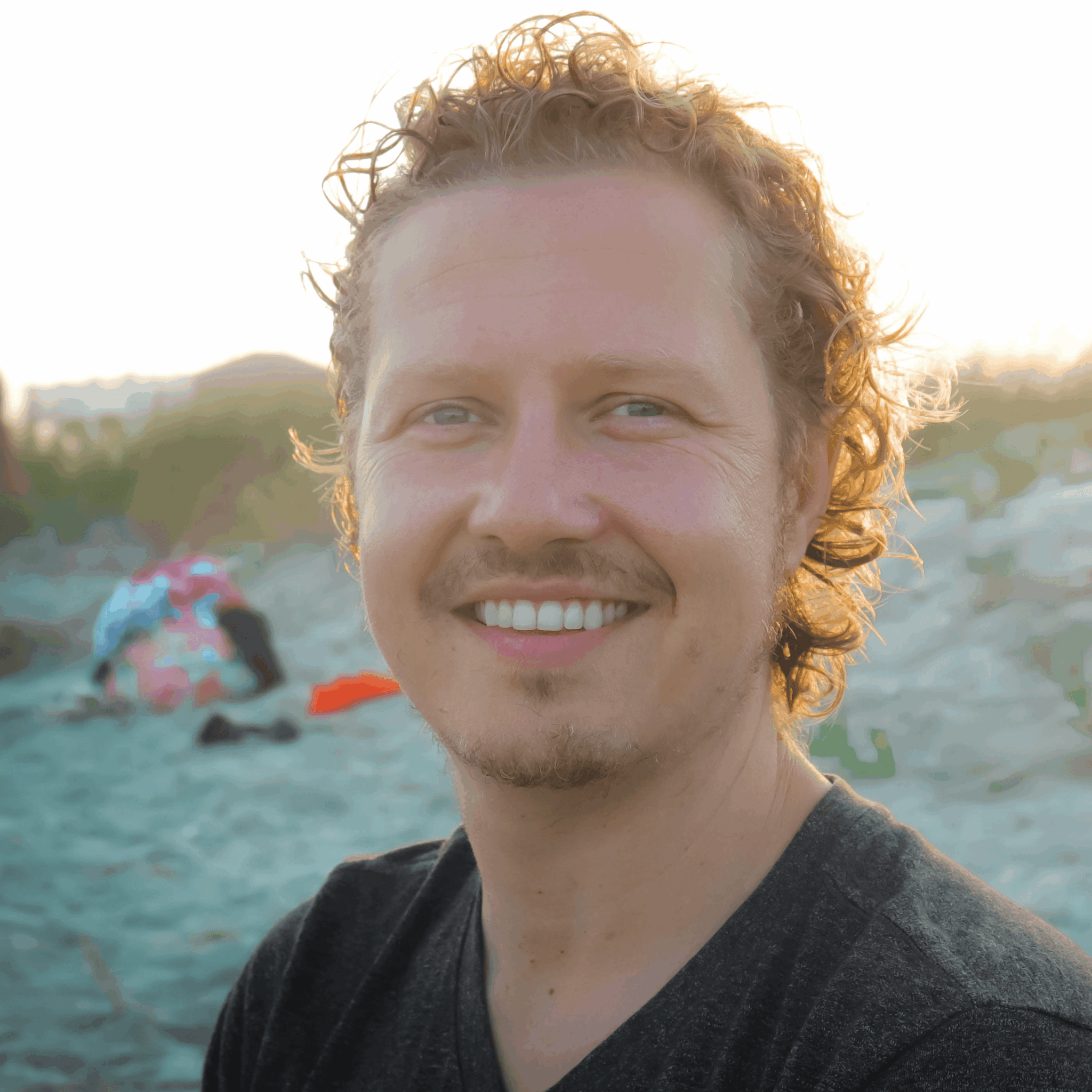
I’m a ceramic artist creating vessels and sculptures alongside my wife, Ashley, through our studio, harlow.
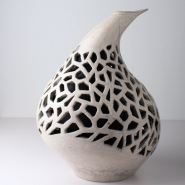
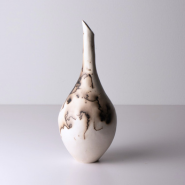
My background is in engineering and video game design, where structure, problem-solving, and visual world-building were core to what I did. That naturally translated into ceramics, where I approach each piece with a balance of precision and exploration. I work with clean forms and detailed surface techniques like sgraffito, carving, and raku, creating pieces that feel sculptural, textured, and full of character.
At the same time, my work is really driven by something more personal. It comes from a need to feel grounded and connected in a world that can feel heavy at times. When I’m surfing or spending time in nature, I find a sense of calm and clarity, and that’s the feeling I try to translate into my ceramics. If someone experiences a moment of ease or connection when they see one of my pieces, then it’s done what it’s meant to do.
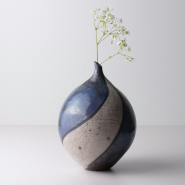
The beach and the water are constant sources of inspiration. You’ll see that in the flowing curves, coastal silhouettes, and textures that feel worn by time and tide. Travel has also played a big role in shaping how I think about form, color, and visual storytelling, so my work often sits somewhere between grounded and exploratory.
My broader creative background—engineering, 3D modeling, music, and game art—continues to influence how I approach clay. There’s a balance between control and unpredictability that I really enjoy. Techniques like raku, sgraffito, and etching allow for both intention and surprise, whether it’s through the alchemy of fire or the more meditative process of carving.
At its core, my work is about letting go a bit, embracing imperfection, staying curious, and creating pieces that feel honest.
How can we best help foster a strong, supportive environment for artists and creatives?
I think one of the biggest things is better preparing artists for the reality of building a career. There should be more emphasis on business education within art programs (e.g., pricing, marketing, branding, and how to actually sustain yourself as a working artist). Talent is important, but without those skills, it can be really hard to gain traction early on.
At the same time, there should be more art education for non-artists. The more people understand the time, effort, and skill that go into creating a piece, the more they’ll value it. That shift in understanding can change how people engage with and support artists.
Accessibility is another big piece. Art can feel intimidating or out of reach for a lot of people, whether that’s because of traditional gallery environments or the cost of attending certain events. Creating more approachable, inclusive spaces where people can experience art without pressure or barriers would make a huge difference.
When people feel comfortable engaging with art—whether that’s discovering a piece that resonates with them or having a conversation with the artist—it creates a stronger connection. And those connections are what ultimately help build a more supportive and thriving creative ecosystem.
What do you find most rewarding about being a creative?
For me, the most rewarding part of being an artist is the sense of connection and grounding it brings. It allows me to slow down, breathe, and step away from the high-pressure, demanding nature of my engineering job.
Art has become a space where I can practice self-acceptance through exploration. It gives me a sense of ownership. Not just over the pieces I create, but over how I choose to work and what direction I take. I’m not confined to a specific path, and I can let the work evolve naturally.
I also appreciate that it helps me navigate my PTSD and challenge my own perfectionism. It’s taught me that not everything can—or should—be controlled. Some of the most interesting or meaningful outcomes come from the unexpected.
Learning to embrace that, and seeing that something imperfect can still be beautiful, has been one of the most rewarding parts of the process.
Contact Info:
- Website: https://harlow.studio/collections/available-works-by-jim-sweeney
- Instagram: https://www.instagram.com/jimsweeney_art/