

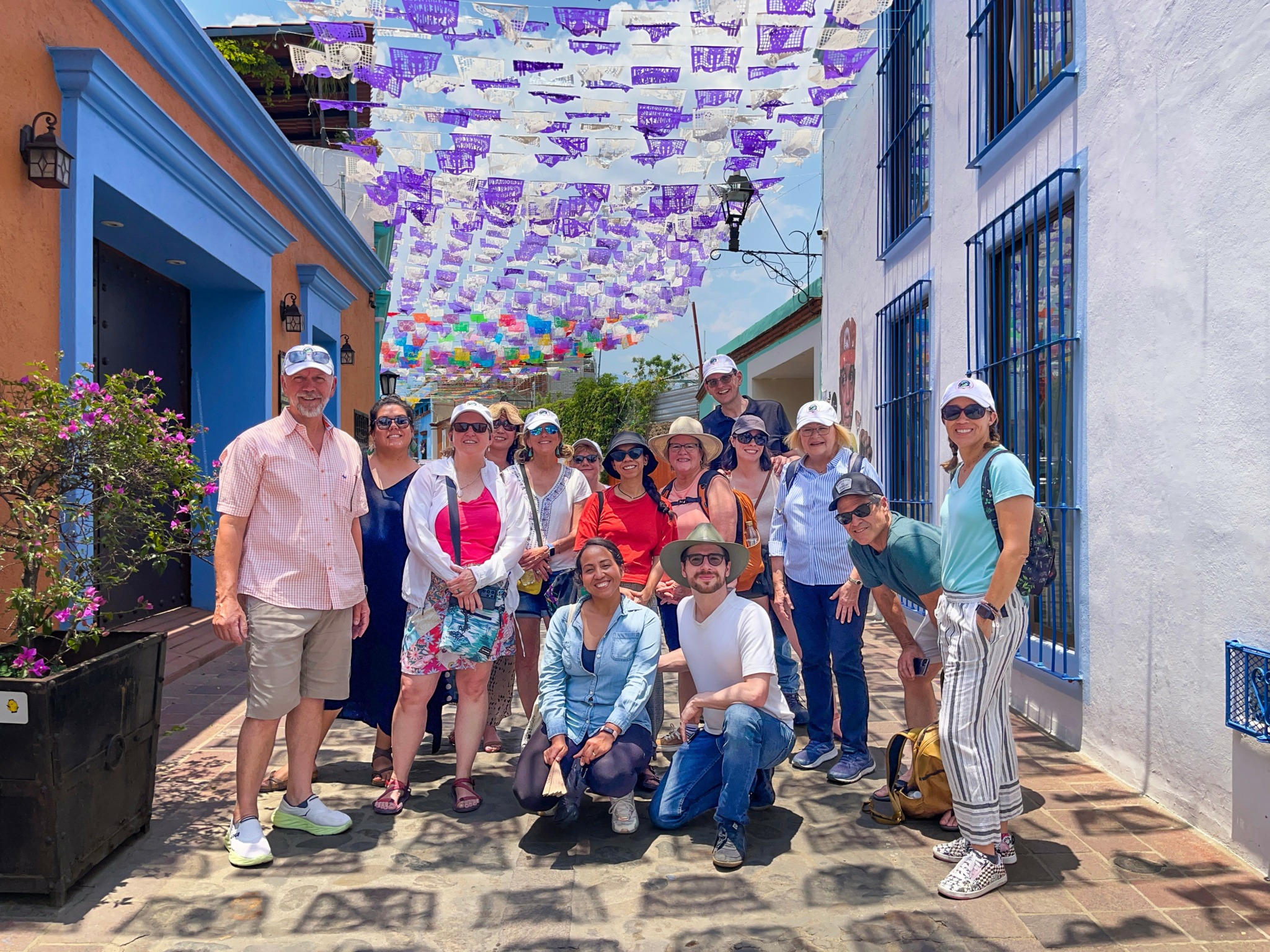

We caught up with the brilliant and insightful Jim And May Spanish And Go a few weeks ago and have shared our conversation below.
Alright, Jim and May thanks for taking the time to share your stories and insights with us today. How did you come up with the idea for your business?
The idea for Spanish and Go came from the intersection of our relationship, our professional backgrounds, and a very real problem Jim experienced as a Spanish learner.
In 2011, we met on italki. Jim was living in Minnesota and had recently started learning Spanish. May was living in Mexico, had recently graduated with a degree in language teaching, and wanted to keep practicing English after finishing university. Neither of us was trying to start a business. We were just two people curious about language, culture, and the world beyond our own routines.
After months of talking online, Jim visited May in Mexico for the first time. We met in Guadalajara, traveled around Jalisco and Colima, and Jim got to experience Mexico not as a tourist checking places off a list, but through May’s family, food, language, and daily life. That first trip changed both of us. It made our relationship real, but it also showed us how powerful language can be when it becomes a bridge into another culture.
For a while we were long-distance, going back and forth between the United States and Mexico. Eventually Jim spent time with May in Playa del Carmen. During that season, he was constantly noticing cultural differences, new expressions, and the kinds of practical Spanish questions that do not always show up in textbooks. He would write about those experiences and share them informally with friends. At the same time, May had the teaching background, with experience designing lessons and working with students of all ages. Jim had a background in audio, video, music production, and technology. We both loved travel and were constantly noticing the little cultural and language details that make immersion so rich.
Spanish and Go grew from that overlap. We saw a gap between studying Spanish and actually feeling ready to use it in the real world. A lot of learners can complete lessons or memorize vocabulary, but still feel intimidated when they travel, hear natural conversations, or need to navigate a Spanish-speaking country. We wanted to create something that made Spanish feel practical, human, and connected to real places.
At first, the idea was simple: share our experiences with Spanish, Mexico, travel, and culture in a way that helped other learners feel more prepared and more connected. We originally thought of the name Spanish to Go, but the domain was already taken, so Spanish and Go was born. That turned out to be a better name anyway because the heart of the work is not just taking Spanish somewhere. It is Spanish and travel, Spanish and culture, Spanish and human connection.
Over time, that small idea became a YouTube channel, blog, podcast, membership resources, community, and in-person Spanish immersion retreats in Mexico. The logic behind it has always been the same: learning Spanish is more meaningful when it opens the door to real conversations, real relationships, and real experiences. What got us excited then still gets us excited now. Spanish can change where people go, who they meet, and how they understand the world.

Great, appreciate you sharing that with us. Before we ask you to share more of your insights, can you take a moment to introduce yourself and how you got to where you are today to our readers.
We are Jim Fricker II and May Larios Garcia, the husband-and-wife team behind Spanish and Go. Our work helps English speakers learn real-world Spanish and connect more deeply with the Spanish-speaking world through travel, culture, conversation, and immersion.
Our story started before Spanish and Go existed. Jim is from Minnesota and began learning Spanish in 2010 because he did not want to spend his life only speaking one language. May is from Colima, Mexico, and has been teaching English and Spanish as a foreign and second language since she was 18. She studied language teaching at the university level, including curriculum design, materials development, and language acquisition. Jim’s background was in audio, video, music production, and technology. Before Spanish and Go, he owned a recording studio and worked with musicians, including producing and recording projects across genres like rock and rap.
When we met through a language exchange, our worlds started to overlap. Jim was discovering Mexico and Spanish as a learner. May was sharing the culture, language, and everyday reality of Mexico from the inside. We realized that the combination of those perspectives could be genuinely useful for other learners. A lot of people study Spanish for years but still feel nervous when they travel, speak with native speakers, or try to understand real conversations. We wanted to help bridge that gap.
Spanish and Go now includes our Learn Spanish and Go podcast, YouTube channel, blog, learning materials, community, and Spanish immersion retreats in Mexico. Our podcast is designed for intermediate and advanced learners who want to improve their listening comprehension through natural conversations about travel, culture, Spanish, and life in the Spanish-speaking world. Our learning materials help students follow along with transcripts, understand difficult phrases, and turn passive listening into real progress. Our retreats give students the chance to practice Spanish in context, surrounded by the culture, food, history, and daily interactions that make the language come alive.
What sets us apart is that we are not only teaching Spanish as an academic subject. We are living the cross-cultural experience ourselves. Jim knows what it feels like to be the learner who makes mistakes, misuses a word, or feels overwhelmed in a new country. May knows how to guide learners with patience and structure, but also how to explain the cultural context that textbooks often leave out. Together we try to make Spanish feel practical, human, and connected to real places and real people.
One of the things we are most proud of is seeing students move from “I understand Spanish when I read it” to “I used Spanish in real life.” That might happen when someone asks a question at a market, has a conversation during a retreat, understands a podcast episode without translating every word, or finally feels confident enough to travel somewhere they used to think was out of reach.
Our philosophy is that Spanish is not just a language goal. It is a doorway. It can change where you go, who you meet, what you notice, and how you understand yourself. That is why we often say, “El camino es el destino” or “the journey is the destination.” We are still learning too, and that is part of what keeps the work honest.

Let’s talk about resilience next – do you have a story you can share with us?
One of the biggest resilience lessons for us has been learning to build Spanish and Go slowly, through many seasons where the next step was not obvious.
In the beginning, the idea was exciting but not glamorous. We had a long-distance relationship, limited resources, and two very different professional backgrounds. We knew we wanted to create something around Spanish, travel, and culture, but knowing that and turning it into a sustainable business were completely different things. We recorded early podcast episodes years before the current version of Learn Spanish and Go existed. We experimented, changed names, learned what we did not know, and had to keep coming back to the mission even when the format was not clear yet.
There were also practical challenges. Building an education business online means wearing a lot of hats: teaching, curriculum, filming, editing, web design, audio production, marketing, customer support, logistics, retreat planning, and community-building. For a long time, we were the ones doing nearly everything. That can be energizing, but it can also be exhausting, especially when the work is personal and tied to your own relationship and identity.
What helped us stay resilient was remembering the real people on the other side. A download number or video view is nice, but what really kept us going were messages from learners who said they finally understood a real conversation, traveled to Mexico with more confidence, connected with family, or felt less alone in the learning process. Those moments reminded us that Spanish and Go was not just content. It was helping people create experiences they might not have had otherwise.
Resilience has also meant allowing the business to evolve. We started with travel and Spanish content, then grew into the podcast, membership resources, and in-person immersion retreats. More recently, we have been building a stronger community component because we kept seeing the same need: people do not only need more Spanish content. They need real places to use what they are learning and people to practice with consistently.
The lesson for us is that resilience is not always dramatic. Sometimes it is simply continuing to listen, improve, and show up for the people you serve. It is being willing to build the next version, even when the first version was imperfect.

Can you tell us about a time you’ve had to pivot?
Yes, several times. One of the most important pivots was realizing that Spanish and Go could not only be about giving people information. It needed to help them create real-life experiences with the language.
At first, a lot of our work was content-based: videos, blog posts, podcast episodes, and learning materials. That was valuable, and it still is. But as we interacted with learners, we saw a pattern. Many people had studied Spanish for years. They had apps, books, grammar explanations, and YouTube playlists. But when they arrived in a Spanish-speaking country, they still felt nervous. They could recognize words, but they did not feel ready to participate.
That changed how we thought about the business. We began leaning more deeply into immersion, not only as travel, but as a learning philosophy. Our Spanish immersion retreats in Mexico became a way to help students practice in real situations: ordering food, navigating a city, understanding local customs, meeting people, and realizing that mistakes are part of the process. The retreats also showed us how powerful community can be. People often learn faster and feel braver when they are surrounded by others who are trying too.
Another pivot has been moving from “Here are resources” toward “Here is a path and a community.” That is part of the thinking behind La Escala, our Spanish Fluency Hub. We want learners to have a central place where they can keep practicing, join challenges, participate in conversation spaces, use podcast materials, and feel connected to other people on the same journey.
The pivot has not meant abandoning content. It has meant connecting the pieces better. The podcast gives learners listening practice and cultural context. The materials help them understand more deeply. The community gives them a reason to show up and use what they are learning. The retreats bring Spanish into real life.
In hindsight, the pivot was really about honoring what language learning is. Spanish is not something people simply consume. It is something they live, use, and build relationships through.
Contact Info:
- Website: https://spanishandgo.com
- Instagram: https://www.instagram.com/spanishandgo/
- Facebook: https://www.facebook.com/spanishandgo
- Youtube: https://www.youtube.com/spanishandgo
- Other: Podcast: https://podcast.spanishandgo.com/
Immersion retreats: https://spanishandgo.com/retreats/
Community: https://spanishandgo.com/la-escala/


Image Credits
Spanish and Go