



Today we’d like to introduce you to Jill Harris.
Hi Jill, we’re thrilled to have a chance to learn your story today. So, before we get into specifics, maybe you can briefly walk us through how you got to where you are today?
After graduating from UC Davis, I thought I wanted a career in PR and fashion. But once I was in those roles, I realized they didn’t inspire me. Around the same time, I was dancing a lot—taking classes, teaching, and performing, and that’s what truly energized me.
Pilates had been around but wasn’t yet mainstream in the late ’90s. I read that it made your body lean and that dancers loved it, so with little information or experience, I signed up for a teacher training program—and completely fell in love.
Within two years of teaching, Pilates became a household name, and I was building a solid career. But the studios I worked for were disorganized and overcrowded. I partnered with another trainer to open our own studio, hoping to offer something better. That was my first experience with running a business—from setting up the business entity and bookkeeping to marketing, scheduling, and managing a team. We grew quickly, but my partner and I had different visions for the future. So, we split, and I started over.
This time, I opened a larger space, which brought bigger expenses and new challenges like staffing and lease management. It wasn’t inspiring me, nor was it giving me the creative spark to make meaningful changes in an industry that was shifting with the economy.
Clients started using Groupon and ClassPass to explore more intense workouts elsewhere, only to come back to me when they got injured. I didn’t want to just fix people; I wanted to offer them workouts they loved—without the pain.
Meanwhile, I started posting what I called Creative Pilates Workouts on Instagram, using equipment in new ways to offer something fresh. One of these workouts led to a YouTube series on the Pilates Cadillac, and I received tons of feedback. That got me thinking about the missing link: how could I provide resistance for arms and legs simultaneously?
I found someone to build a machine based on this idea, experimenting with different springs, straps, bars, and handles until I found the right combination. Once the setup was solid, I created classes and started training teachers.
But I had no clue how to scale this. Trainers at my studio were resistant to this new addition, so I hired an industrial designer to help me turn it into a product I could sell. That ended up being a financial failure, and I had to start from scratch.
Around the same time, I discovered I had an ovarian tumor, fibroids, and severe B12 deficiency. My energy was drained, my memory was foggy, and I was struggling to keep a studio open for people who didn’t appreciate it. My doctors told me to shut everything down, get a hysterectomy, and focus on my health.
During recovery, I moved my practice to a smaller space, but FitSprings—my product—was too large to fit. After months of searching for solutions, I realized I needed to redesign it from the ground up. I found a manufacturer who invited me to their warehouse, where we built the system together. That’s when FitSprings became a product I could finally sell.
When I announced it for sale, a studio owner reached out to train with me. But just a week before her visit, I was brutally attacked, leaving me unable to use traditional Pilates equipment. Thankfully, I could still use FitSprings. I trained her, and she became my first official customer.
As I recovered, I shifted my focus to sales, hosting pop-up events in LA where my manufacturer was based. Sales picked up, but I was barely breaking even after travel and event costs. I was starting to explore new ways to get FitSprings into studios when COVID hit, and everything shut down.
During the pandemic, my manufacturer helped create a home system. But by the time it was ready, people were slowly returning to studios. Fitness and Pilates were creeping back, and sales were slow.
It took about three and a half years to regain momentum. Now, studios are adding 4-person and 8-person FitSprings systems to their offerings. We recently outfitted a studio in France with an 8-person system, and we’re continuing to connect with businesses looking for something fresh—just like I was when I first started out.
Alright, so let’s dig a little deeper into the story – has it been an easy path overall and if not, what were the challenges you’ve had to overcome?
It’s definitely not been a smooth road. The first big challenge was getting people to understand and see the value in something they’d never heard of before. Then came the industrial designer disaster—after taking $100K, he handed me a useless drawing and left me with nothing to build. I had to go back to square one with the original builder to salvage the idea.
Right after that, I was hit with serious health issues: a tumor, fibroids, and severe B12 deficiency. I was completely depleted and had to shut down my business to have a hysterectomy and focus on recovery. When I was ready to restart, I found a new space, but the FitSprings system was too large to fit. That forced me into a full redesign, which came with its own issues—poor-quality straps from one manufacturer, inconsistent springs from another.
Once I finally had a great design and was ready to push forward, I was brutally attacked. Despite serious injuries, I had to show up to make that first sale and continued training clients using FitSprings throughout my recovery.
After that, I faced the financial strain of hosting expensive pop-up events that barely broke even. Then COVID hit, and with studios shutting down, no one was buying equipment. Sales trickled in, but it was tough to keep the momentum going.
Even now, obstacles remain. I’m still teaching, which makes balancing marketing and sales challenging, and there’s no budget to hire a team. I’m doing everything—product development, marketing, sales, and running the studio. But despite all of this, FitSprings continues to grow.
Appreciate you sharing that. What should we know about Informed Body ?
My business operates under the LLC Informed Body, which has been the name of my studio since 2007. But the product I created—FitSprings—is what really sets us apart. In 2022, I rebranded the studio as FitSprings Studio to serve as both a prototype for other studios and a creative space where we could showcase and refine the system.
I’m known for my creative Pilates workouts that inspire other teachers to rethink movement while helping clients achieve strength and mobility in a fun, pain-free way. My clients get a mix of Pilates, rehab, FitSprings, and personal training. When I can meet all their needs in one space, they don’t feel the need to look elsewhere—which is a win for everyone.
What sets me apart is not just how I see movement, but how I reimagined the equipment itself. Traditional Pilates tends to be more horizontal and limited in its planes of movement. I wanted to shift that by using spring resistance differently—creating something that Pilates lovers would be drawn to, but that would also help them get stronger, more functional, and move in new, dynamic ways.
I’m especially proud that FitSprings came to life through the collaboration of two female-owned companies. Most fitness equipment is designed by men, but FitSprings reflects a fresh perspective. When we set up studios with our systems, we’re not just selling equipment—we’re empowering women to build something transformative in their own businesses.
FitSprings isn’t just for Pilates studios—it’s used by Super Bowl champions, Olympic figure skaters, MMA fighters, celebrities, Pilates pros, and active seniors alike. This versatility speaks to the system’s ability to meet people where they are, whether they’re elite athletes or looking to move pain-free and stay active.
But FitSprings is more than just equipment. It’s dynamic training, a new way to move, and a growing educational platform. We offer certification programs for trainers, and we’re building out our Vimeo channel with new content and ideas. Soon, this will evolve into a larger subscription model where teachers from different disciplines can share their unique spin on FitSprings workouts. Our accessories continue to evolve, and our goal is to expand into studios, gyms, training facilities, and rehab clinics worldwide.
We’d be interested to hear your thoughts on luck and what role, if any, you feel it’s played for you?
Luck—both good and bad—has definitely played a role in my life and business, but I’ve learned that setbacks often push me to find better solutions.
Was it bad luck that I hired the wrong person to help develop FitSprings? At the time, it felt like a disaster, but looking back, it was one of the best learning experiences. It taught me what to look for, what to avoid, and how to trust my instincts moving forward. I might have had more support navigating that situation if, at the same time, my now ex-husband hadn’t hired someone who lied about having cancer and embezzled money from him. That created a lot of stress and communication breakdowns at home, which definitely made it harder for me to see the red flags sooner.
Being attacked on the street was undeniably bad luck. But in a strange way, it gave me proof of concept—FitSprings wasn’t just a fitness tool; it could be used for rehab, too. It kept me moving when traditional Pilates equipment wasn’t an option during my recovery. That unexpected discovery added a whole new dimension to the product.
Good luck showed up when I realized I needed to redesign the system to fit into my smaller studio. That led me to Summer Davies from Vertical Art Dance, who helped me create a modular version of FitSprings. What started as a 2-person system for my space can now be expanded into a 4-person or even an 8-person system just by adding a few parts and springs. That flexibility has been a game-changer for studios looking to grow without taking on massive renovations.
And of course, the pandemic shut everything down, which was bad luck for everyone. But even that taught me something important: not to give up and to stay focused on what I do best. Every setback has forced me to innovate, adapt, and keep pushing forward. In the end, luck might’ve played a role, but perseverance is what’s kept FitSprings growing.
Pricing:
- 2-Person System $15,000
- 4-Person System $20,500
- 8-Person System $33,500
Contact Info:
- Website: https://www.fitsprings.com
- Instagram: www.instagram.com/jillharrispilates www.instagram.com/fitsprings
- Facebook: https://www.facebook.com/informedbody
- LinkedIn: https://www.linkedin.com/in/jill-harris-a084202
- Youtube: https://www.youtube.com/@fitspringsstudio
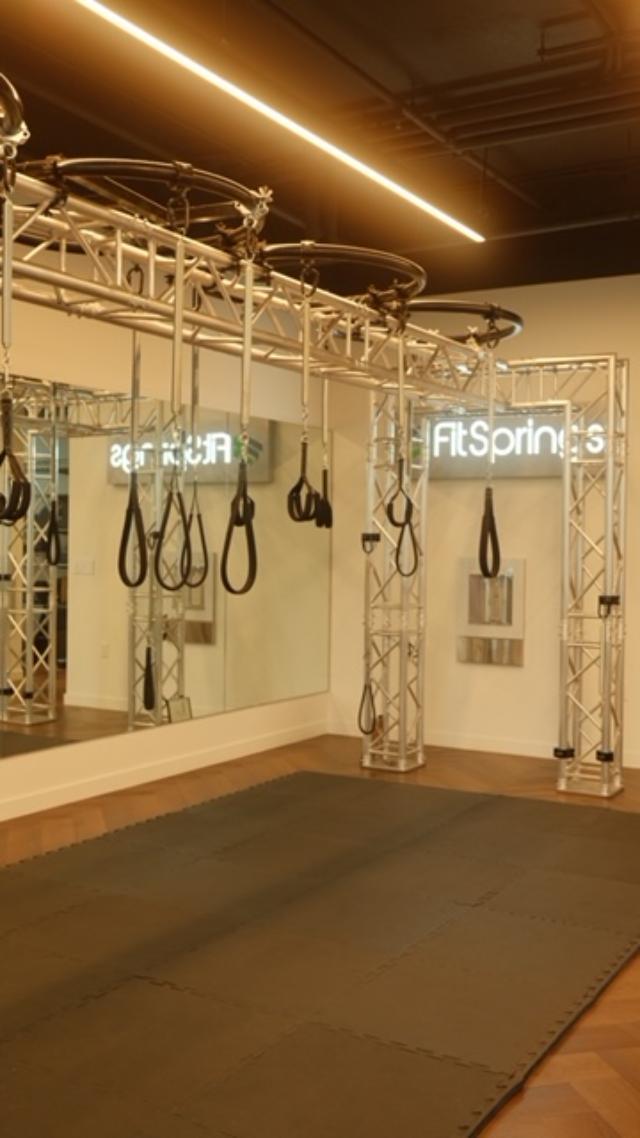
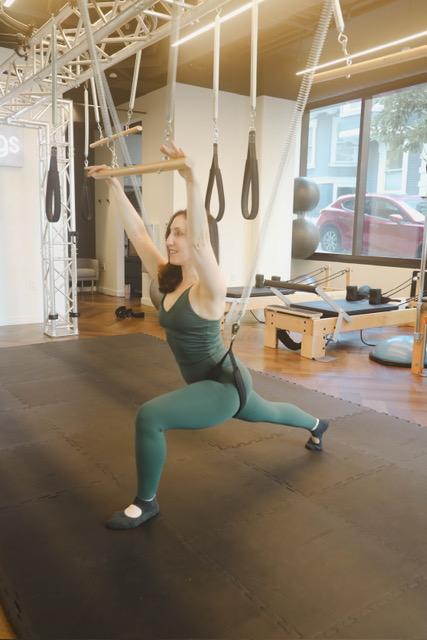
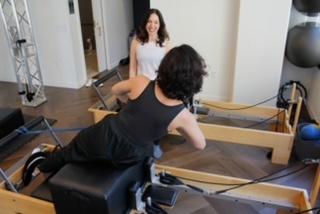
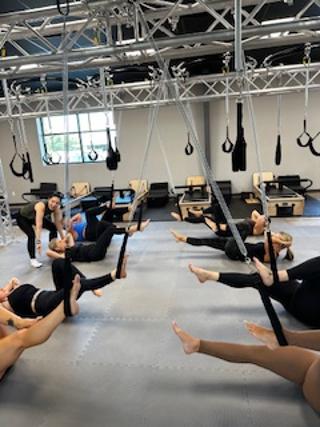
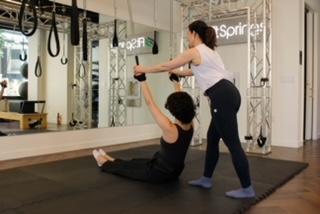
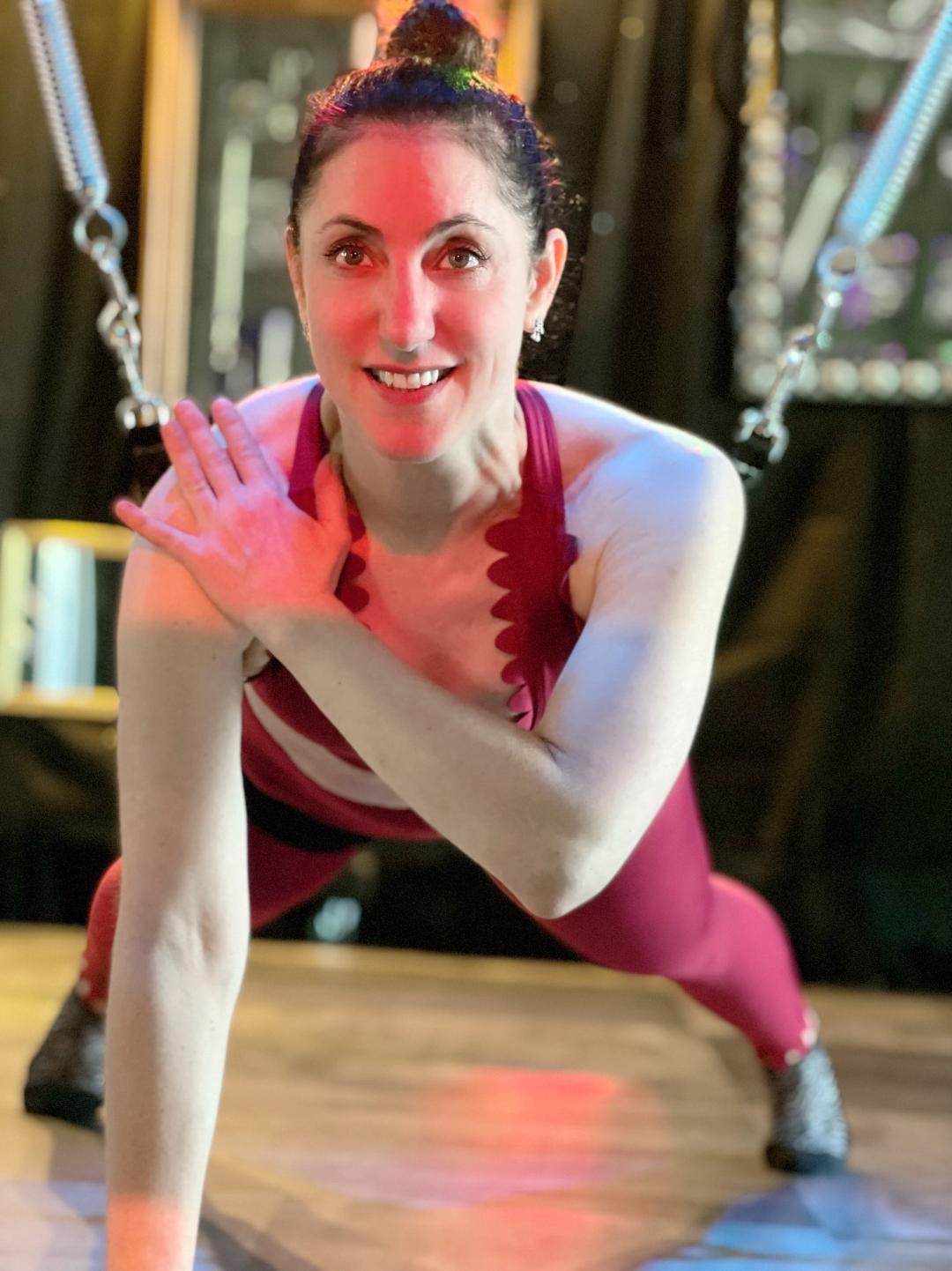
Image Credits
Gelica Peralta