



We recently connected with Jessie Santiago and have shared our conversation below.
Alright, Jessie thanks for taking the time to share your stories and insights with us today. When you’ve been a professional in an industry for long enough, you’ll experience moments when the entire field takes a U-Turn, an instance where the consensus completely flips upside down or where the “best practices” completely change. If you’ve experienced such a U-Turn over the course of your professional career, we’d love to hear about it.
I spent 23 years in the beauty industry as a stylist, educator and salon owner. And for most of that time, the job was simple on paper: make people look good. The assumption underneath everything was that if you were technically excellent, the client would be happy. Color theory, cutting technique, product knowledge. That was the whole conversation.
Then something shifted for me about half way through my career. The industry started talking about mental health. About the fact that stylists were functioning as unlicensed therapists behind the chair for decades, absorbing clients’ grief, anxiety, and trauma with zero training and zero support. What had been treated as a perk of the job (“people really open up to you!”) got reframed as an occupational hazard. Boundaries, emotional labor, scope of practice. Terms that had never come up in any training I received suddenly became industry-wide conversations.
It was a complete reversal. The thing we had always been quietly praised for was now something we needed to protect ourselves from. I didn’t just witness that shift. I lived it. And honestly, it’s a big part of why I’m sitting here now as a certified clinical hypnotherapist. I didn’t leave the beauty industry because I stopped loving the work. I left because I started taking seriously what the work was actually asking of me, and I wanted to do it with the right tools.


Awesome – so before we get into the rest of our questions, can you briefly introduce yourself to our readers.
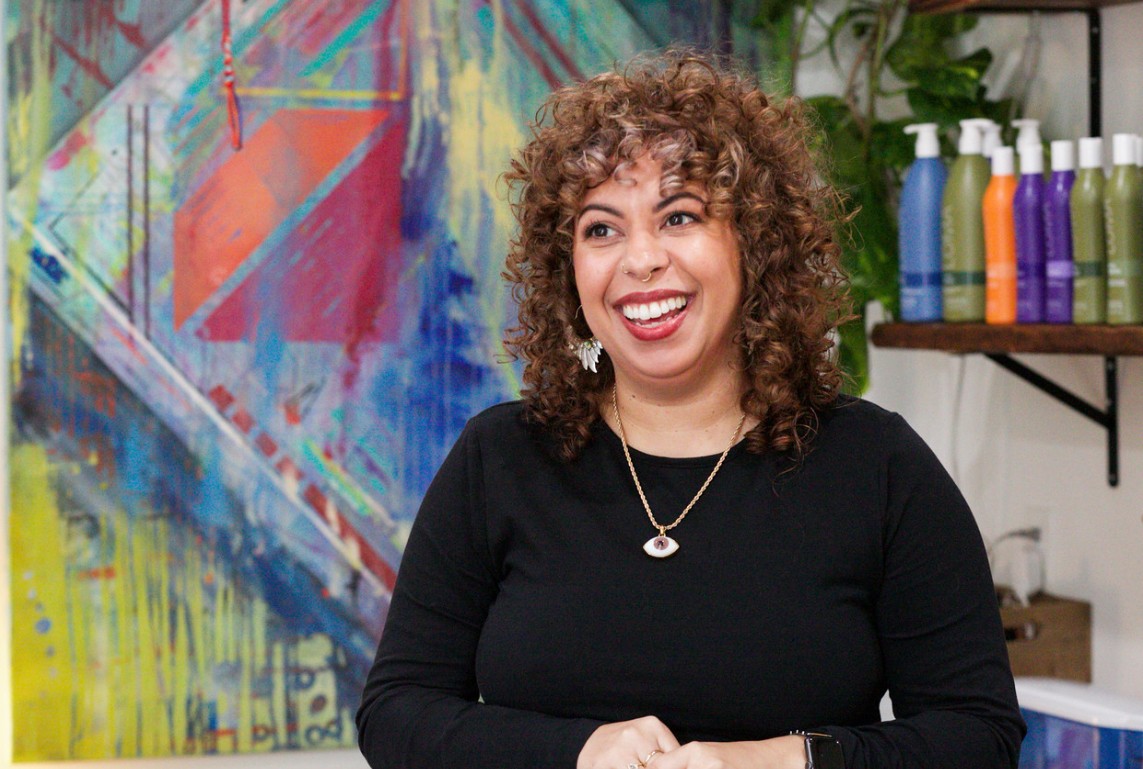
I’m Jessie Santiago, a Certified Clinical Hypnotherapist, Reiki Master, and Artist based in Long Beach, California. My practice is Hypnosis Healing Long Beach, where I see clients virtually and in studio. I also operate under the brand The Subliminal Stylist, which is the larger container for my work around subconscious identity and personal transformation.
The people I work with are mostly helpers and healers, therapists, nurses, coaches, caregivers, and highly sensitive or neurodivergent folks who have spent so long holding space for others that they’ve lost the thread back to themselves. They’ve usually done a lot of work already. They know their patterns but they can’t figure out why knowing isn’t enough to change their behaviors. That gap is exactly where hypnotherapy lives.
The subconscious is where your actual operating system runs. Hypnotherapy gives us access to it. You’re aware the entire time. Nothing happens without your full agreement. My practice is trauma-informed and consent-based from the ground up and that is non-negotiable.
What sets me apart is the combination of 23 years reading people behind the chair, clinical training, energy work, and my own deep personal healing process. I’m not working from theory. I built this practice because I needed this work myself and couldn’t find it in the form I needed.
I’m also currently writing a book built around an original framework I developed for understanding subconscious processing styles. It’s the most honest thing I’ve ever made.
If you’re ready to stop running the same loop and actually understand why it’s there, that’s where we start.

Any advice for growing your clientele? What’s been most effective for you?
Referrals. Full stop. I meant it.
I have never had a client come to me from an ad. Almost everyone who finds me was sent by someone who either worked with me directly or knows someone who did. That tells me the most important thing I can do for my business is to do good work and be a real person in my community.
A big part of that has been building genuine relationships with therapists and other clinicians. Hypnotherapy and talk therapy are not competing. They work on different layers. When a therapist trusts me enough to send their client my way, that’s not a transaction. That’s a relationship built on shared values and mutual respect for what the other person does. I take that seriously.
The other piece is just showing up as myself. People can feel when someone is performing their expertise versus actually living it. I’m not interested in performing. I went through my own process, I built something real out of it, and that comes through. When it resonates with someone, they tell the people they love.
That’s the whole strategy, honestly. Do the work. Be a decent person. Let the rest follow.


Any advice for managing a team?
I’m going to answer this one by telling you what not to do, because I learned it the hard way. I ran a salon for years and I brought every unexamined belief I had about worth, loyalty, and love straight into that environment. I didn’t know I was doing it. That’s the thing about unhealed trauma. It shows up in how you respond when someone calls out sick, or how you handle a conversation that feels like criticism, or who you unconsciously give more grace to and why.
I upheld toxic norms because they were familiar. Not because I thought they were right. I had absorbed them from every work environment I had ever been in, and I replicated them without questioning them because in reality, I didn’t see them. The people on my team paid for that. I’m not proud of it, but I think it’s worth saying out loud because I don’t think I was unique. I think most people in leadership are doing the same thing and calling it management.
The most honest advice I can give is this. Before you try to lead other people, get into the room with a good therapist or a hypnotherapist and look at your relationship history. Not just romantic relationships. All of them. What you learned about power, about being needed and about your attachment style.
Those patterns will run your team if you don’t run them first. High morale isn’t a beautiful building or a team lunch. It’s people feeling safe, seen, and fairly treated. And you cannot create that from the outside in. It has to start with you doing your own work.
Contact Info:
- Website: https://thesubliminalstylist.com
- Instagram: @thesubliminalstylist
- Linkedin: https://linkedin.com/in/jessie-santiago-17295b267
- Youtube: https://youtube.com/@thesubliminalstylist
- Other: https://jessiesantiago.substack.com
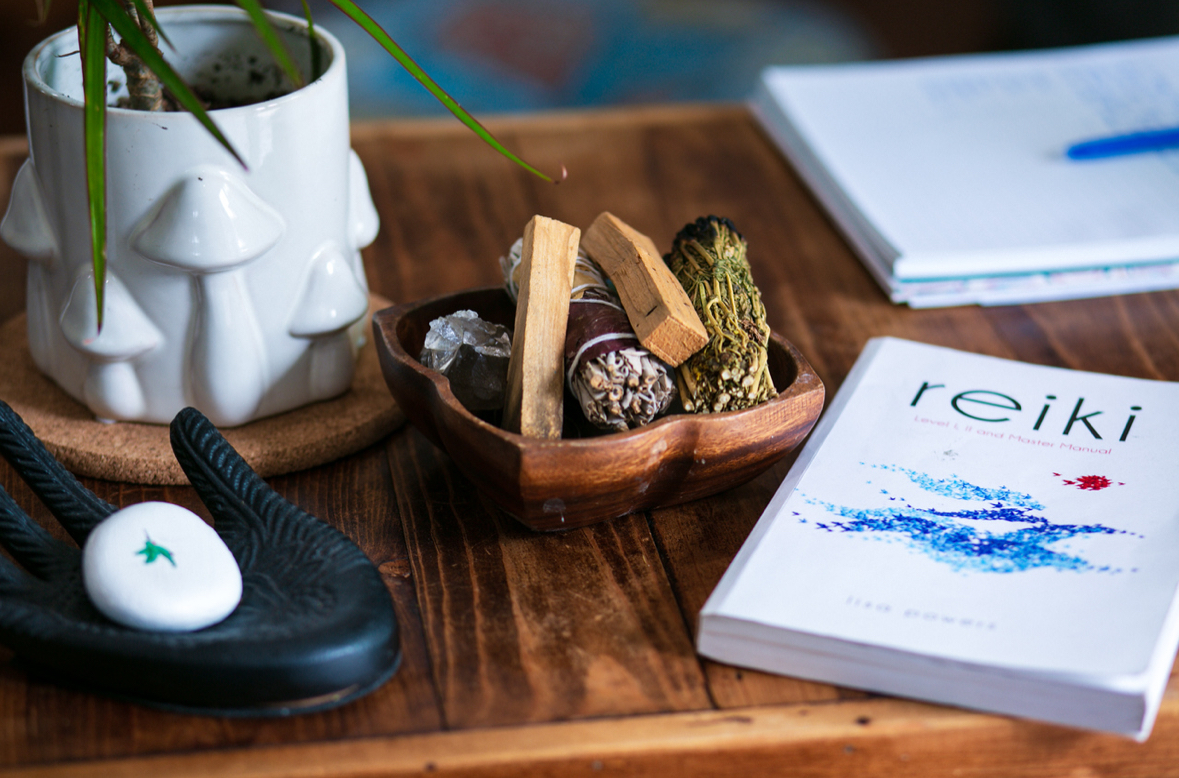

Image Credits
aliah bailey amber houglin