

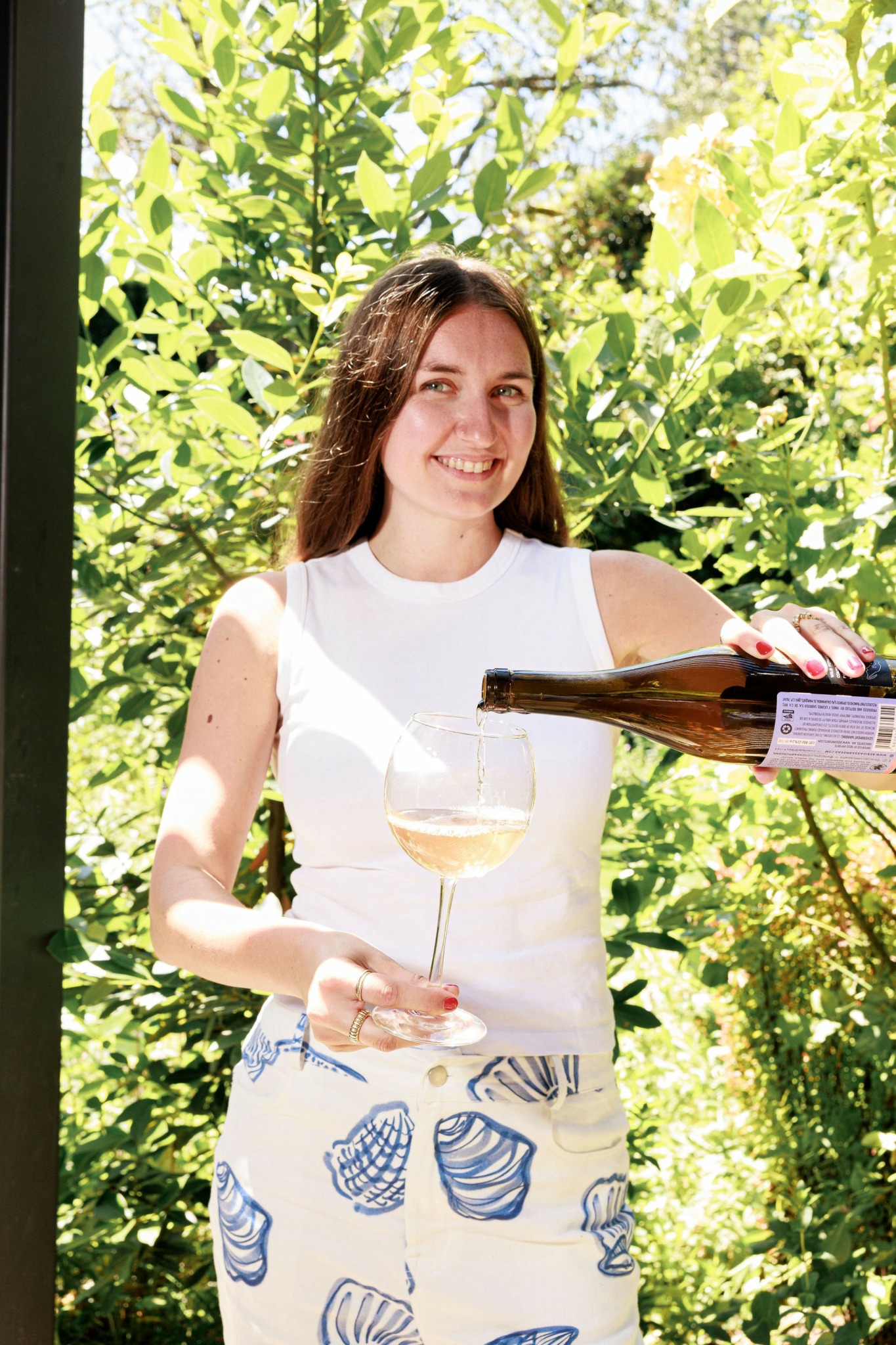

We were lucky to catch up with Jess Thevenoz recently and have shared our conversation below.
Jess, thanks for joining us, excited to have you contributing your stories and insights. We’d love to have you retell us the story behind how you came up with the idea for your business, I think our audience would really enjoy hearing the backstory.
I was in the wine aisle and I needed to pick up a bottle of wine on the way to a friend’s place for dinner. I remember looking at this wall of wines, overwhelmed and intimidated at this huge selection. I couldn’t find a wine that I usually go for and I thought, after ten years of being a casual wine sipper, why am I not getting better at this?
I wasn’t a wine expert or a sommelier. I would call myself a casual wine sipper; a person who loves wine, doesn’t know much about it (or care to), but if it was a Friday night and I was reaching for an alcoholic beverage, it would most often be my go-to.
I remember seeing somebody out of the corner of my eye swarming the wine aisle and thinking, this is not just a me problem. This is a design problem.
As casual sippers in the wine aisle, we get the feeling we don’t know enough about wine or there’s something wrong with us . That if we learned more, we would be fine and that it is on us to figure it out. It is a feeling that is evoked frequently by the wine industry for so many consumers.
But that makes me angry because it isn’t on us. We deserve better than to feel like we’re guessing every time we step in the wine aisle – a place we all deserve to be. The problem is that the wine retail experience is fundamentally an environment that isn’t set up for us to succeed.
It’s a wall of wines with labels that tell you very little. They aren’t written in a way that casual sippers understand. You feel like you’re guessing despite living in a world where we have so much information at our fingertips. And then there is the social pressure: you’re expected to buy wine as a gift or bring over a bottle of wine to a friend’s place.You hope you get it right each time but the feeling of doing it wrong makes us feel so small.
So I thought, instead of the answer being “learn more about wine”- could there be another way? Do you really need to know more about wine to find a wine you love?
So I started talking to friends and I realized that so many people had this exact same challenge. We were all struggling silently. And the more I dug in, the more opportunities I saw.
So, what makes me excited about Theodora? Beyond helping everyone find a wine they love and walk out of the aisle confidently, I am here because the wine world made me feel small and insignificant. Like I didn’t deserve to find new wines I love because I didn’t have the vocabulary. And I hate that this industry makes us feel like we don’t deserve to be there, that we are the problem and doing things wrong. You deserve to find something great every time. You deserve to be there and feel like you belong, no matter how much you know about wine.

Jess, love having you share your insights with us. Before we ask you more questions, maybe you can take a moment to introduce yourself to our readers who might have missed our earlier conversations?
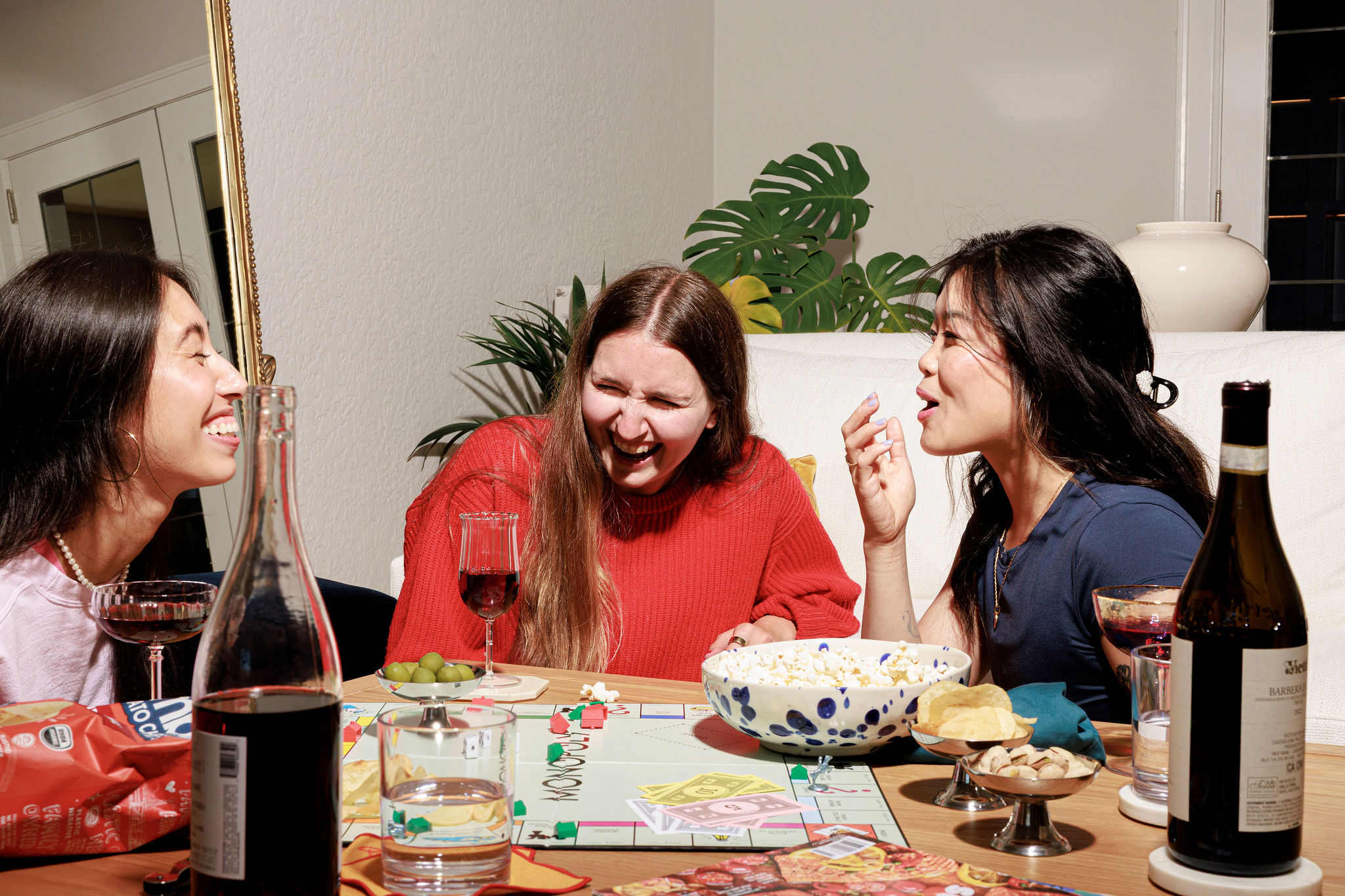
I’m Jess and I’m the friend of the group who always loves bringing people together. It brings me endless joy when my friends become friends and honestly my favorite memories are with my people, whether it is venting about a long day of work with my husband while cooking dinner, finally catching up with my best friend, or celebrating something big. Those times tend to be with a glass of wine in hand- not because of the alcohol but because the moment they are a part of.
This may come as a surprise, but I don’t even care about wine. I don’t care about the barrels or the jargon. I just wanted to consistently find wine I would like. So that’s why I built Theodora. Theodora gives personalized wine recommendations that actually work for you because you shouldn’t have to become a wine expert to find wine you like. Our goal is to make it easy to figure out what you like so you can get back to what wine is actually for, to be with your people.
So, how does Theodora work? You answer a few questions about your preferences to set up your profile: go-to wines, budget, occasion, all questions that require zero wine expertise. You share your location and get a wine recommended to you: a specific bottle at a specific place. So you can walk out of the wine aisle confidently and quickly with a wine you’ll love. Like a wine best friend who learns your palate so you don’t have to. The more wines you try and share, the smarter she gets at getting to know you.
Because I believe you shouldn’t need to know anything about wine to find a wine you love.
We’re building a new world of wine for the casual wine sipper: one that puts you at the center of it. In a way you think about wine. In a way you talk about wine. Because for too long we felt we didn’t belong, that we didn’t know enough to buy a product we are equally allowed to buy just as much as anyone else.

We’d love to hear about how you keep in touch with clients.
As a data expert, I come from a world where you have to stay close to the customer at every step of the way.
So when I started out with giving wine recommendations, I gave them via text and it gave me a bridge to talk to my customers after. It built relationships with early customers who are still with me today.
These interactions helped the early customers understand how important they were to me. It tore down this idea that I was an opaque business and it showed people that I was just a person who really cared that they felt confident in an industry that is so gatekept. They aren’t a number or count I’m trying to reach, they’re a person who struggles with something I’m trying to solve and I need them to help me solve it for more people.
The industry often made me feel like I was not heard or cared for, and I knew I wanted to do the exact opposite. I wanted to provide a space that was comfortable, relatable, and fun. And to do that, I needed to have a space to listen to them.
The common advice is do the unscalable thing first then make it scalable advice and it could not be more true.
I can’t text my customers all my forever, but I cherished this phase of the business where I could meet people who really believed in Theodora before it was anything.
I asked them about what they thought about different things I was building. I collected data: what did they think of the website, the brand, the messaging. I got a sense of how they talked about Theodora with friends. They texted me the wine questions they had when they were in the wine aisle. They texted me pictures of them walking out confident with a wine they got recommended. Different ideas they had for Theodora in spur of the moments after we talked.
For example, when I first gave customer recommendations, they asked for pictures of the wine label to make it easier to find. I knew that had to go with every wine recommendation from then on. Now, it is one of the features of the wine recommendation that people love most, and makes people feel like I understand how they shop for wine.
Another key example, I realized early while telling people about Theodora that asking if someone drinks wine often led to blank faces, worried about what follow up questions were coming next. I realized there was no term for people who just like to drink wine without being a sommelier. So I named them and the way I figured out how was through many continuous text threads. It is the origin story of the casual wine sipper. An early customer texted me “I need this on a hat”. It’s one of our best selling merch items today. And it’s one of the most liked sections of the website.
Getting that input is so valuable and shaped what Theodora is today. It would not be the same without them.
Learning and unlearning are both critical parts of growth – can you share a story of a time when you had to unlearn a lesson?
When I started out: I had created a few questions that each customer would answer to share their preferences about wine they like so that I could tailor the recommendations to them. When I asked people for feedback afterwards, it became clear that there were endless conflicting opinions on whether those were the “right” questions.
The valuable lesson I learned was this: Not every customer is the one for you right now.
I could focus on the “correct” way to ask questions. The ones by the book, in a way sommeliers would say is the correct and informed way to ask. But wine experts aren’t my audience. So I continued to ask questions in ways that they would actually get annoyed with. They were like this isn’t really how it works. They probably still question my legitimacy. But they aren’t who I am concerned with, if I try to please everyone, I may alienate the people who I am striving to help. If you try to be everything to everyone, you will end up being nothing to no one.
The wine industry is disconnected with how every day consumers think about wine. So I could align myself with an industry and stay disconnected, or use the questions to build a bridge. I could ask questions in the way customers actually understood wine.
It doesn’t satisfy everyone. But there are a million ways to adjust these questions and my most important criteria was this: was it easy for customers to answer or did they feel intimidated? I knew my brand value was to always put approachability first. Was it building trust? Did people feel they gave enough information for Theodora to make an informed decision?
Not every customer is going to love what I have built. But if you’re struggling in the wine aisle and hate the jargon, feel overwhelmed and intimidated, you’re the person I want to help. It isn’t about doing things the “standard” way, it’s about figuring out how to reach your customer. And that isn’t every person.
Contact Info:
- Website: https://www.theodora.wine/
- Instagram: https://www.instagram.com/theodorahq/
- Linkedin: https://www.linkedin.com/in/jess-thevenoz/
- Other: App! https://apps.apple.com/us/app/theodora/id6753152327
tiktok: https://www.tiktok.com/@theodora_hq


Image Credits
Photography by Brooke Fitts and designs by Elisa Minamide