
We caught up with the brilliant and insightful Jess Fauscette a few weeks ago and have shared our conversation below.
Jess, thanks for joining us, excited to have you contributing your stories and insights. Can you talk to us about a project that’s meant a lot to you?
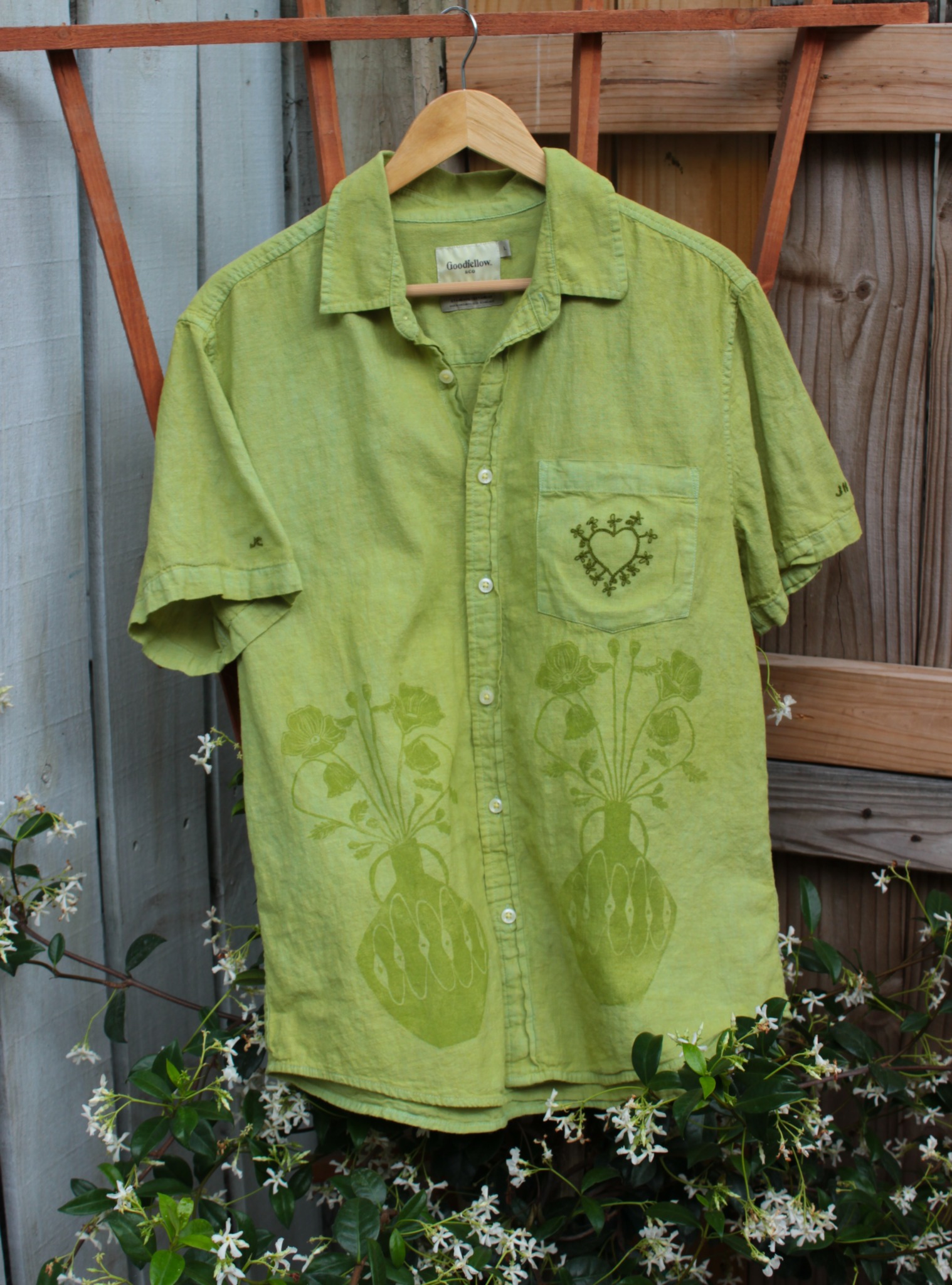
It’s always deeply meaningful when someone asks me to work on a piece of clothing that’s well loved from their own closet. That’s actually why I started Polly’s Press in the first place. My goal has always been to honor textile history—whether it’s the personal story stitched into someone’s favorite shirt, or something genuinely historical, like a vintage linen or heirloom tablecloth.
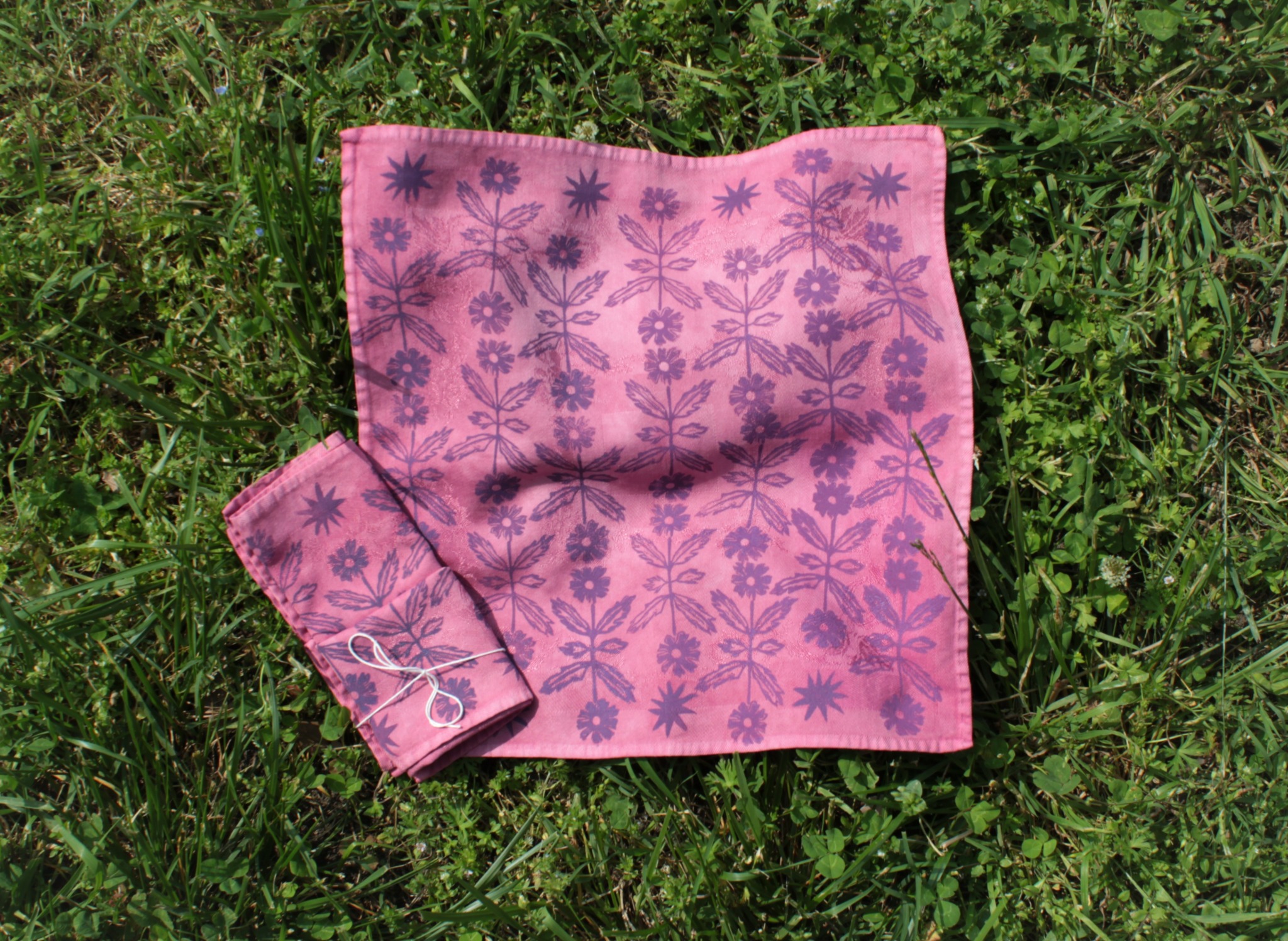
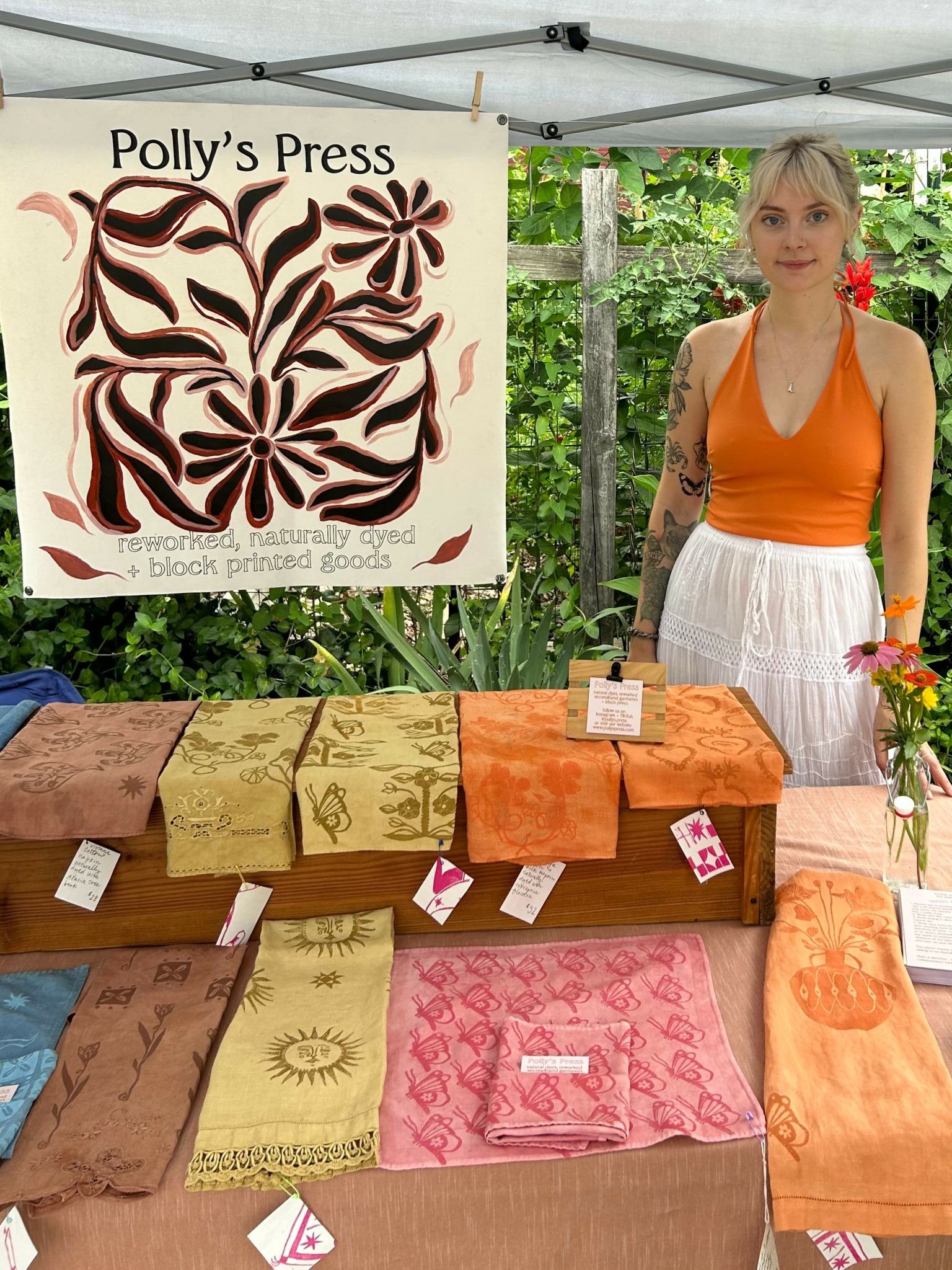
Most of the time, these commissions come up at craft markets. Someone will stop by my booth and notice the things I’ve made—maybe a scarf block printed by hand, or a napkin set I dyed with madder root or indigo. They’ll light up and say something like, “I have a shirt I love but there’s a stain I can’t get out—can you help?” Or, “These napkins belonged to my great-grandmother—can you dye them to match my kitchen?”
And honestly, those moments make my whole week.
To take something already full of life and history and extend its journey—it’s the kind of work that gives me the warm-and-fuzzies. Because textiles do hold memory. Every thread tells a story: the hands that wove it, the ones that stitched it, wore it, repaired it, and loved it. We live in a world where the amount of textile waste is staggering. Fast fashion and throwaway culture make it easy to forget that cloth used to be precious. Mending, repurposing, dyeing—it’s not just about style. It’s about value. It’s about connection. So when I get to help someone keep a beloved item in their life and out of a landfill, that’s a win-win in my book.
Polly’s Press is my small way of honoring those stories—past and present. Whether I’m using natural dyes, reviving vintage fabrics, or reimagining a favorite garment, it all comes back to this belief: that textiles are not disposable. They’re heirlooms. They’re memory-keepers. They’re part of us.
Great, appreciate you sharing that with us. Before we ask you to share more of your insights, can you take a moment to introduce yourself and how you got to where you are today to our readers.
At Polly’s Press, everything begins with a garden.
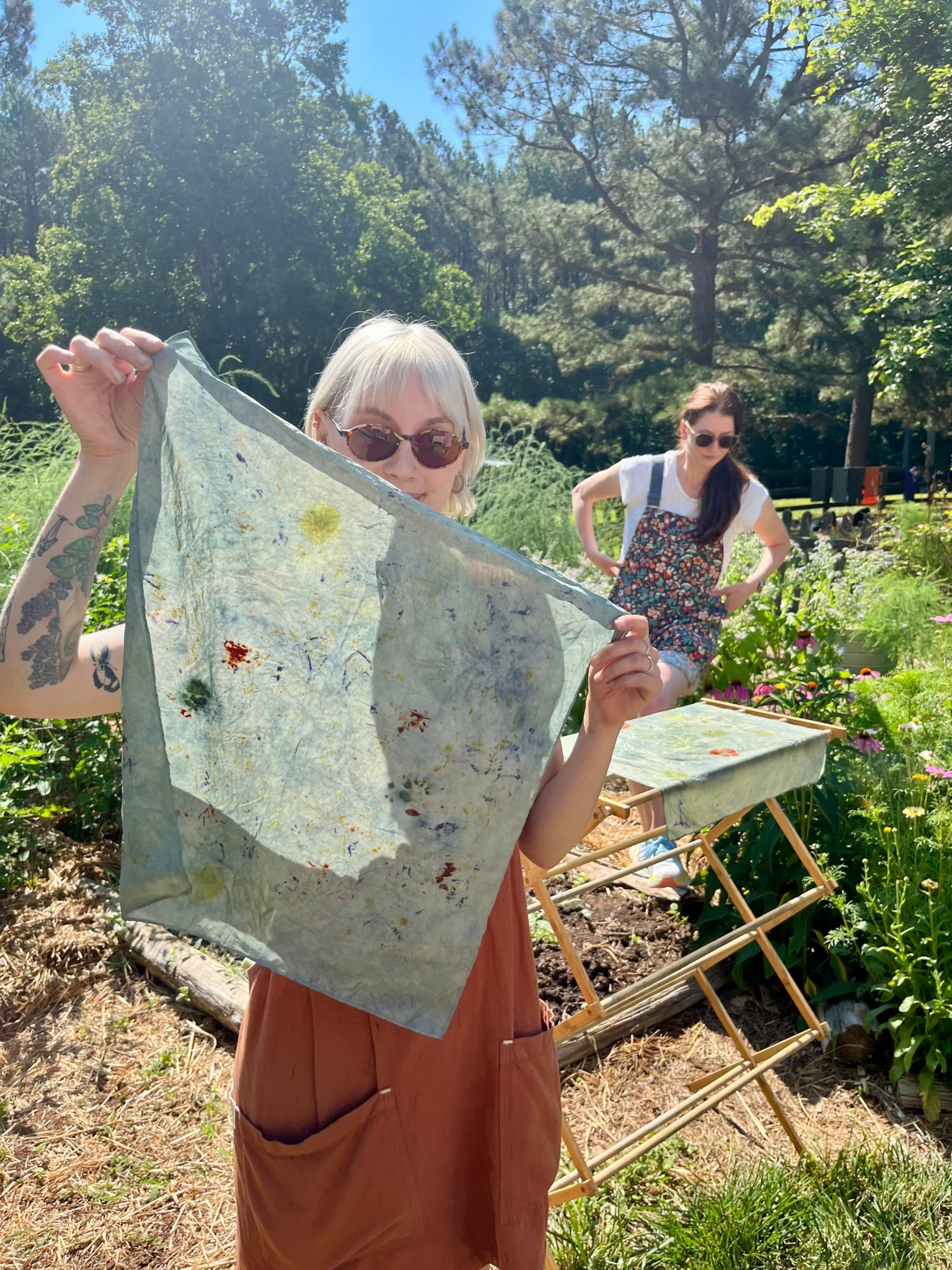
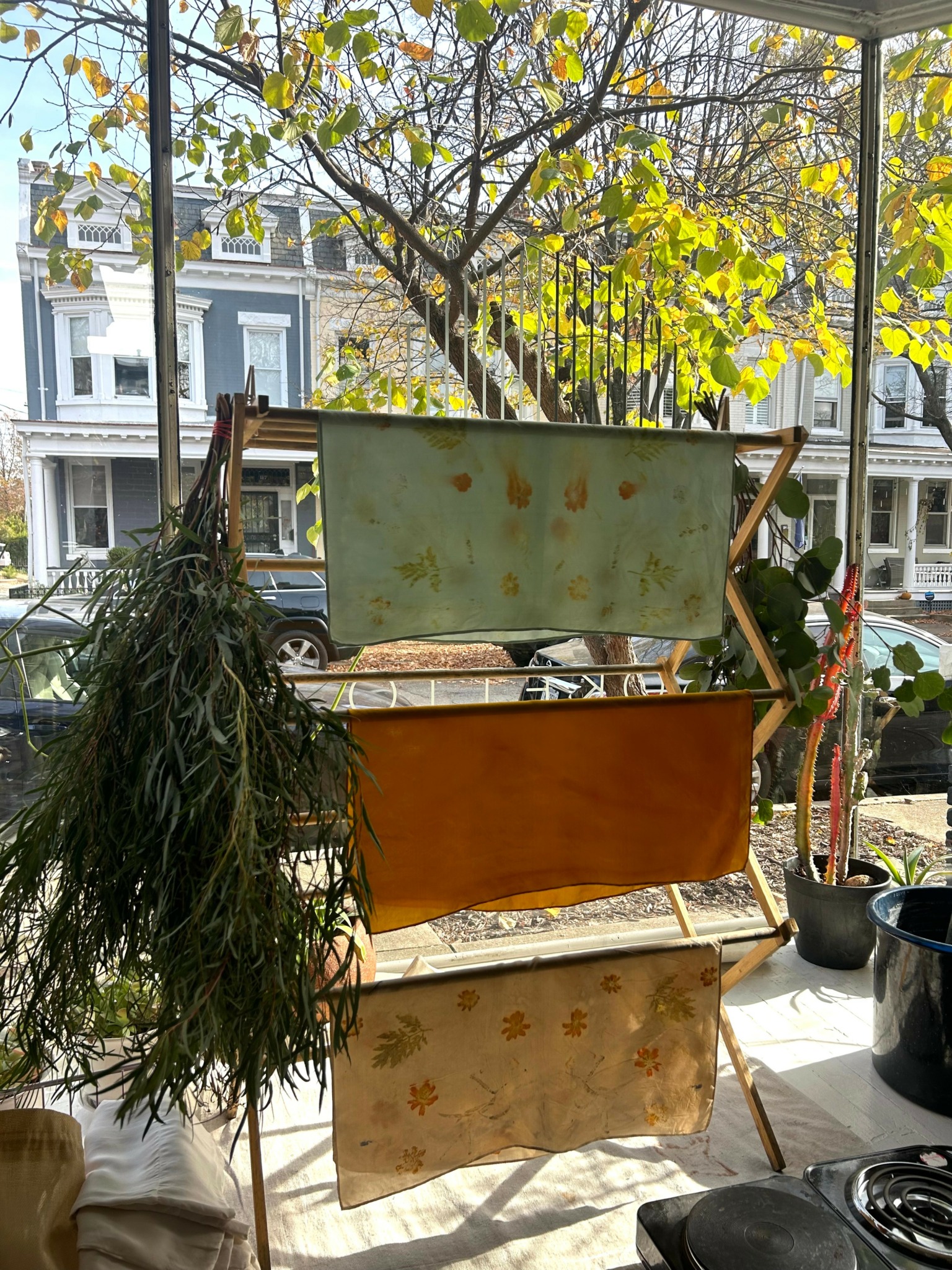
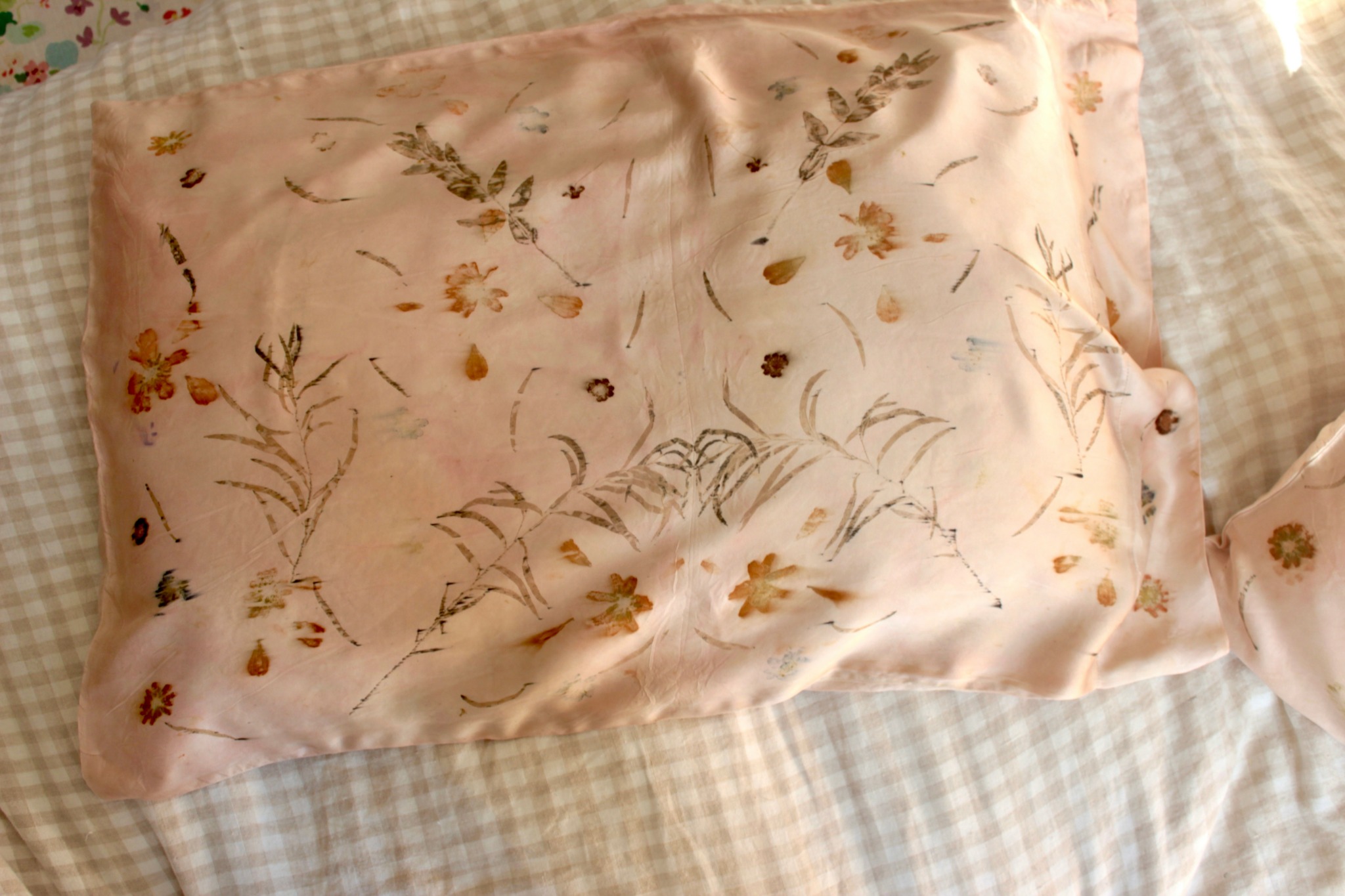
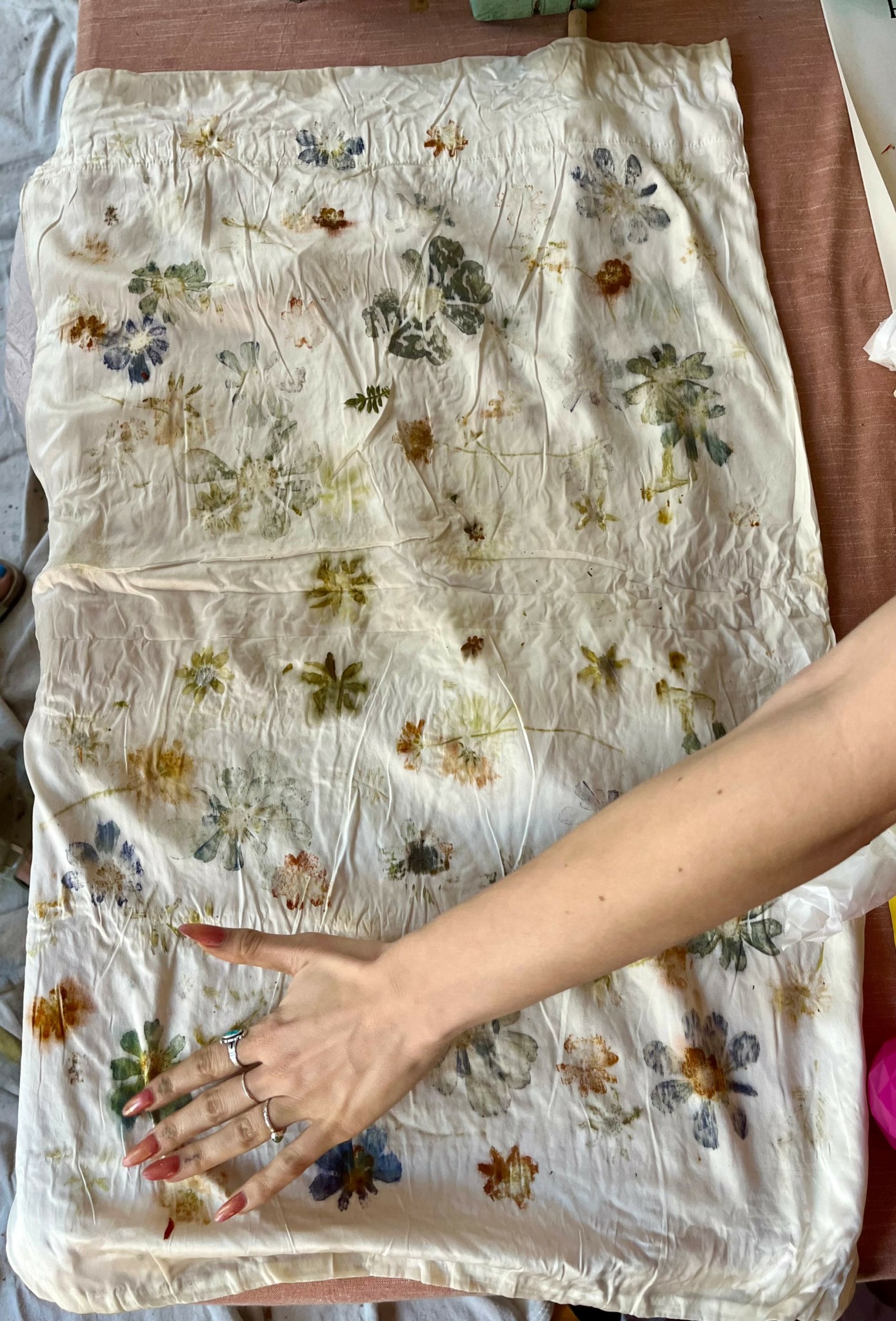
Rows of marigolds, beds of indigo, and handfuls of cosmo petals aren’t just beautiful—they’re the secret ingredients behind each piece I make. I take once-forgotten garments and give them new life using natural dyes, most of which I grow myself. Every print is carved by hand and block-printed with care. The result? Reworked, one-of-a-kind textiles that are as gentle on the Earth as they are on your skin.
My pieces are for plant lovers, vintage textile hoarders, and anyone who wants a little more whimsy in their wardrobe. You’ll find dresses that smell faintly of the garden, scarves stamped with sunshine, and fabrics that tell a story stitched from the past into the present.
At its heart, Polly’s Press is a slow rebellion against fast fashion—a celebration of reuse, natural beauty, and handmade magic. Here, sustainability isn’t a trend. It’s the whole point.
Polly’s Press is named after my’ grandmother & closest confidant, Polly Ann Carter. My pattern-driven illustrations, block prints & naturally dyed work reflect my background in textile design. I received my BFA from Savannah College of Art and Design in Fibers & worked as a wallpaper & textile designer in New England. I currently live & work from my studio in Richmond, Virginia. When I’m not in the studio or in my dye garden, I’m managing River City Flower Exchange. Richmond’s only local flower farm cooperative.
In your view, what can society to do to best support artists, creatives and a thriving creative ecosystem?
Buy from small businesses and artists as much as you can. I know it’s a big ask—especially given the state of the economy. Most of us don’t have a lot of extra spending money right now. But even small, intentional choices in how we spend can make a meaningful impact.
Do you have a friend’s birthday coming up? Thinking about grabbing something quick from a big box store? What if, instead, you stopped by a local craft fair (they’re happening pretty much every weekend these days!) and picked up a handmade mug, a naturally dyed silk scarf, or a screen-printed art print?
Most artists offer a wide range of items at different price points. I know I always try to have some $25 pieces available alongside more intricate or expensive work. That way, there’s something for everyone.
By shopping this way, you’re not only giving your friend something thoughtful and one-of-a-kind—you’re also supporting a real person, a local artist or maker who likely did a little happy dance after you walked away from their booth.
The more we choose to shop small, the more we help keep creativity, craftsmanship, and community alive. Every dollar counts.
What’s the most rewarding aspect of being a creative in your experience?
Without sounding too woo-woo, being an artist sometimes feels like making magic. I can take stained cloth, petals from flowers I grew in my own garden, some aluminum salt, water, and time—and turn it into something completely new.
It’s a kind of transmutation.
And I feel incredibly lucky that I get to create things people want to wear, hang in their homes, or give to someone they love. That never stops feeling like an honor.
There’s something deeply rewarding about the slow, steady rhythm of this work. Starting seeds indoors during the quiet of late winter, watching them sprout and stretch toward the light, then moving them into the garden come spring. Waiting patiently for the flowers to bloom. Harvesting them at just the right moment.
It’s slow art. It’s nature, chemistry, intention, and time—and I’ll never stop being amazed by it.
Contact Info:
- Website: https://pollyspress.com/
- Instagram: https://www.instagram.com/pollys.press?igsh=MTB3bjFjYjFndmM0ag%3D%3D&utm_source=qr