



Alright – so today we’ve got the honor of introducing you to Jeri-Ashley Bremer. We think you’ll enjoy our conversation, we’ve shared it below.
Jeri-Ashley, thanks for taking the time to share your stories with us today We’d love to hear about the things you feel your parents did right and how those things have impacted your career and life.
Many say that this generation, my generation, will be the one that changes the world. We’ll be the ones that break cycles of pain and trauma within our families and create spaces for children to thrive in their true authenticity. That is one of the reasons I stepped into this work, to empower parents and caregivers to become more purposeful and mindful in their daily interactions with themselves AND their kids, so that they can show up as the BEST versions of themselves–something I think many of our parents were unable to do.
A large part of practicing conscious & mindful parenting (and coaching others in this practice) focuses on reflecting and becoming more aware of why you do the things you do as a parent. For many of us, including myself, it stems from our childhood and things we saw our caregivers do. It may be a conscious decision to continue a practice, but more often than not it’s something that’s been engrained in us–a value, belief, tradition, etc.–that we are not conscious of that we do out of comfort or familiarity.
Recently, I was reflecting back on a story that my dad often shared from his own childhood when his family would visit his abuelitos on his dad’s side. “I never really knew my grandfather on my dad’s side. Anytime we’d go to visit, he would sneak out the back door and wouldn’t interact with us.” He would go on to note that his dad was not very affectionate when they were growing up either, a different view of the man I myself knew–a man that was loving and caring. My dad recalls the limited number of times his dad told him “I love you” and the coldness that was felt from the lack of physical affection, such as hugs, from his childhood.
I’d sit there sighing, rolling my eyes (to myself of course) because of the long-winded story I had heard for the millionth time. Saying things like, “Yes, we know, Popo wasn’t very affectionate.”
As I recalled this story, what hit a little different this time was this: my dad took what he knew and what he had experienced to be INTENTIONAL in his own parenting. He fell short in many areas, but he made sure to tell us that he loved us. He wrote us notes that he’d stick in our lunch boxes when we were in elementary school. He is a firm believe in the idea that: A hug is with two arms, and always made sure to hug us (even if I didn’t want to hug him, but that’s a story for another time).
My dad wasn’t a perfect man–he will straight up tell you that himself–but I believe he is a man that did the best he could with what he knew. I believe he reflected on his own upbringing so he could be the father he so desperately wanted when he was a child. I believe that in his heart he believed he was doing better for us than his parents did for him. For that, I cannot fault him. We all do the best we can with what we know, and like the quote says: when we know better we do better.
I think the best thing my dad did, was show me that it’s never too late to change, to become the person–or rather, the parent–that you’ve always wanted to be. The permanence of social media can make it hard to believe that change is possible, but it is. As I work with parents and caregivers, I strive to help them see that it is never too late to change and become the parent they WANT to be.
Great, appreciate you sharing that with us. Before we ask you to share more of your insights, can you tell us more about your business?
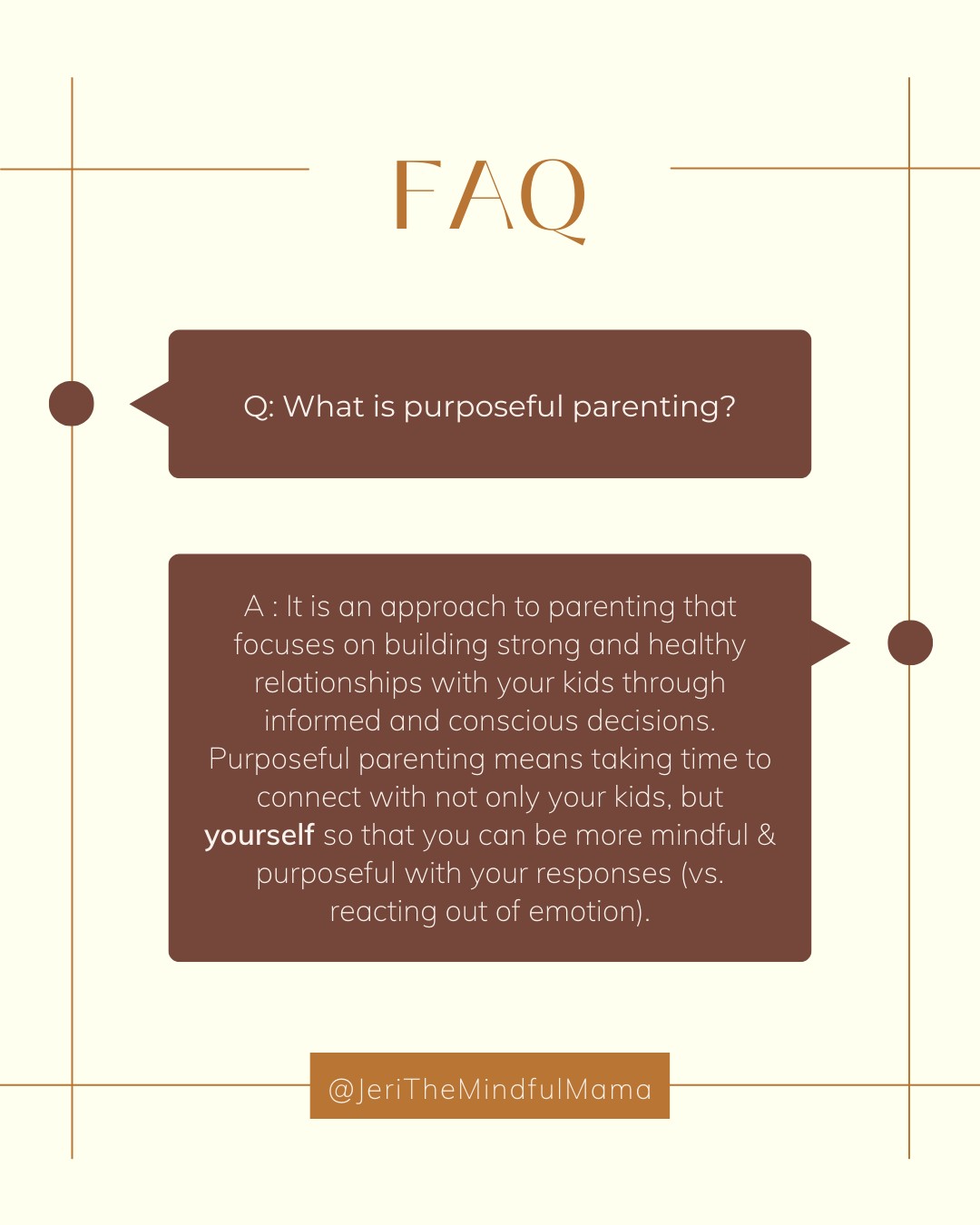
I serve a wide range of partners, from individuals and small coaching groups to non-profits and school districts using a strengths-based, adult-centric approach. At the heart of my philosophy is the belief that children’s behaviors are a direct reflection of our actions (based on beliefs, our own needs, triggers, past experiences) and our children’s needs (met or unmet). When we as the adults consciously and purposefully show up for ourselves, we are better equipped to respond (instead of react) to those behaviors so that we can meet our children where they are at and empower them with the tools they need to flourish into their best selves. I do this through one-on-one and small group coaching, as well as through coaching workshops, which are different from other workshops as participants not only have the opportunity to practice the skill they’re focusing on, but are also coached through the process during the workshop itself.
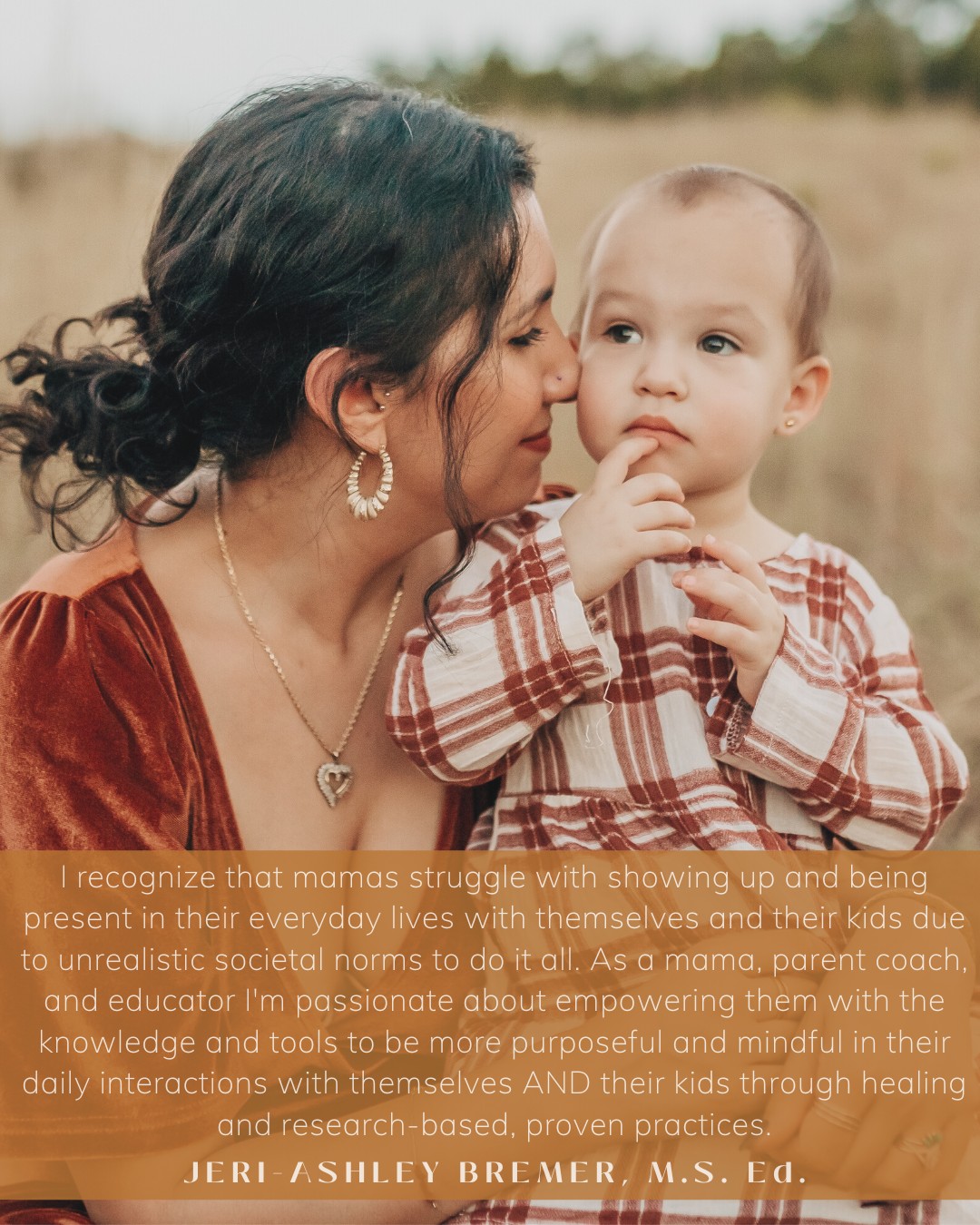
I recognize that parents struggle with showing up and being present in their everyday lives with themselves and their kids due to unrealistic societal norms to do it all. As a mama, mindfulness + parent coach, and educator I’m passionate about empowering them with the knowledge and tools to be more purposeful and mindful in their daily interactions with themselves and their kids through healing and research-based, proven practices. When parents are equipped with the tools they need to be purposeful and mindful, they experience less burnout, build stronger (and healthier) relationships with their kids, are less stressed, and are able to show up as the best versions of themselves.
One of the biggest things that sets me apart is my commitment to authenticity. So much of what we see on social media is filtered down to slight glimpses into authentic moments. Even in workshops and trainings we often are met with personas instead of real people. I don’t know it all, and I don’t claim to know it all. I struggle, I stumble, and I share from the heart and hold a brave space for others to share with no judgement because we are all just trying to do the best we can with what we know.
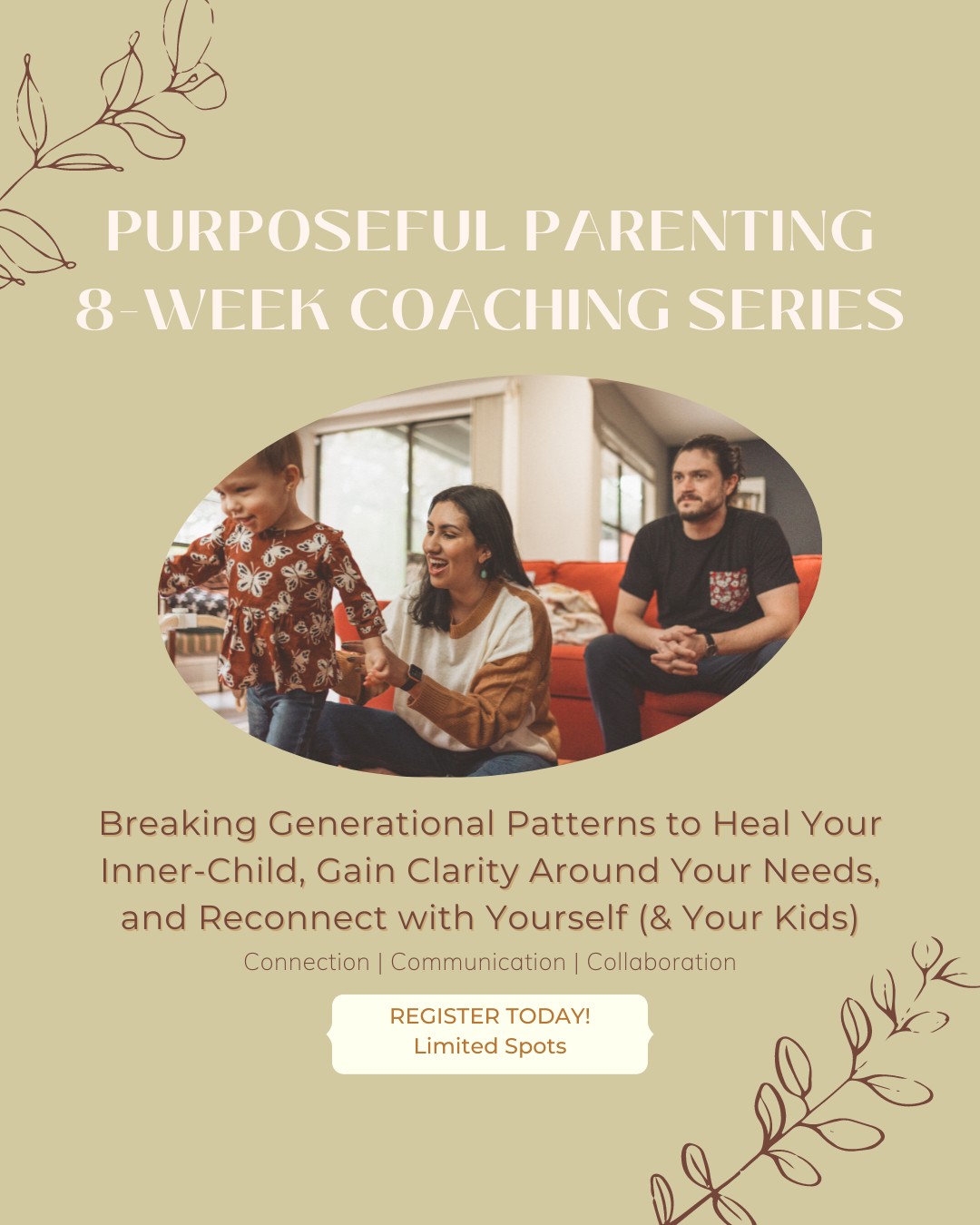
Second to that, I would say that my program is incredibly unique as it’s a holistic approach to supporting caregivers in their journey. In my 8-week group coaching EXPERIENCE participants engage in learning, hands-on practice, and actual in the moment coaching. Many programs offer one or the other, but seeing a combination of content PLUS coaching is what I believe truly sets me apart and allows my clients to become more purposeful in their parenting. In addition to that, my program is strengths-based, meaning that we focus on what you’re doing well and build on that, and adult-centric where the focus is on YOU as the caregiver. I teach caregivers tools to be more purposeful in how they show up as a means to create connection to their children so that they can better communicate and collaborate as a family.
When working with me, we use mindfulness techniques to become more present and aware, identify how generational patterns show up in parenting, practice tools to emotionally regulate, shift mindsets & beliefs, and make connections between perception and what lies beneath the surface during challenging moments with ourselves AND our kids. We do this to bring about a greater sense of awareness that makes it easier to identify triggers, explore root causes, and shift mindset to one which acknowledges parents’ past and empowers their future.
I offer an 8-week group coaching program, that is also available to school districts and non-profits as a parent curriculum facilitated by me. I also provide coaching workshops and trainings for school districts, non-profits, and businesses on topics including: basic mindfulness practices, emotional regulation, and having connected conversations. All coaching and workshops are trauma-informed and are centered around 1) non-violent communication, 2) mindfulness, 3) emotional intelligence, 4) nervous system science, 5) child development, and 6) attachment science.
You can inquire about any of these opportunities via the contact page on my website: www.jerithemindfulmama.com/contact or reach out to me via email: [email protected]. Registration for my next 8-week coaching program is now OPEN at: www.jerithemindfulmama.com/coaching (pay in full bonus and payment plan option available).
We often hear about learning lessons – but just as important is unlearning lessons. Have you ever had to unlearn a lesson?
When I started my parenting journey, I came into it with over 15 years of experience working with kids of all ages. I had a lot of practice with kids that weren’t my own and really found a groove, especially working with older kids, when I was in the classroom. It allowed me the space to build strong relationships with my students, build them up, and teach them how to advocate for themselves, all things that I knew I wanted to do with my own kids when the time came.
I had engaged in hundreds, if not thousands, of hours learning theory & best practices, and applying this learning with the kids that I worked with. There were things that I had learned were “best” or “right” that were challenged during my first couple of weeks with the Jai Institute (the parent coaching program I was a part of). Reading these thoughts that challenged what I thought was right this whole time felt like an attack on who I was as an educator and a parent.
Wonder what that idea was: Rewards and consequences are used as a way to condition children (i.e. manipulate and coerce behavior, rather than the behavior coming from an authentic place). There’s much more to this idea, but this was the idea that really threw me back.
In Alfie Kohn’s book, Unconditional Parenting, he shares: “the conditional approach is closely related to a school of thought known as behaviorism,” which focuses almost solely on a person’s behaviors (p. 13). Many of us were raised by our caregivers using this approach, which focused on getting us to comply and act a certain way, regardless of it possibly being ingenuine, making us uncomfortable, or being inauthentic to who we are as people.
The use of rewards and punishments were what caregivers often used as a way to get a child to act, do, or say what they, as the adult, wanted them to. When a child complies, they get a reward (ex: money, candy, a gold star, praise, extra love, etc.), and when they don’t comply they receive a punishment (ex: time out, withholding of love, blame & shame, etc). Often times the punishment isn’t age appropriate and is used as a punitive measure rather than something logical to the action (ex: it’s cold outside and you choose not to wear a jacket, the logical consequence is that you’ll be cold and uncomfortable).
I wasn’t one to use punishments as I never believed they worked or taught kids anything other than the fact that they did something that an adult didn’t like. I used more restorative practices and always worked with my student to ensure that the consequence made sense, was warranted, and followed campus/district protocols for major offenses. However, I used rewards ALL THE TIME, and really had to take a step back to reflect on this practice.
I thought to myself, “My kids would get so excited when they got their homework stickers or when we’d have an end of year party after taking the state assessment if they met the goals. They totally work!” I had heard of this idea of beginning with extrinsic motivation as a means to help kids gain intrinsic motivation, and was completely invested in that idea. As I thought about it more, I began to recall countless examples of students who didn’t care about the rewards. If they didn’t want to do it, they weren’t going to do it, and there was no amount of extrinsic motivation that would build the intrinsic for them.
Then it hit me…the rewards, the stickers, the positive praise wasn’t because they WANTED to, it was because they liked me as their teacher and wanted to make me proud & happy. My heart broke. Although I would have been proud even with just the smallest amount of effort, I realized that many of my students were just looking for the approval from an adult in their life, and I was it. They had likely been raised in homes similar to mine where approval from their caregivers was contingent on compliance.
As I continued to reflect and replay numerous scenarios in my head, I realized that rewards and punishments aren’t what work long-term. They might work temporarily, but remember that it’s compliance driven and that will only last so long. It’s the connections that we build that show others that we truly care and are invested in their well-being.
Other than training/knowledge, what do you think is most helpful for succeeding in your field?
When it comes to succeeding in this field, I would say the most helpful thing is authenticity, especially since it’s a very people-centered profession.
There is no such thing as a “perfect parent” and I would never pretend to be. I am a mother, flawed and fragile and frantic and constantly evolving. I make choices that are best for my family and each individual child, and help others do the same. Society already puts on an insane amount of pressure for us as parents to say the right thing, to be patient and kind and caring to your little ones, to keep the house running, to do all the things, and the last thing that a caregiver needs is someone who pretends to know it all and have it all together.
Each parent’s journey is different, and not everyone will vibe with you–THAT’S OKAY! By being your most authentic self, you’ll attract clients that are in alignment with you & your values, which means that you’ll better be able to serve them. Trust in that, and you’ll be golden!
Contact Info:
- Website: www.jerithemindfulmama.com
- Instagram: https://www.instagram.com/jerithemindfulmama/
- Facebook: https://www.facebook.com/jerithemindfulmama
- Linkedin: https://www.linkedin.com/in/jeri-ashley/
Image Credits
Daringly She Photo Bianca Flanagan Photography (image with text overlay “I recognize…”)