

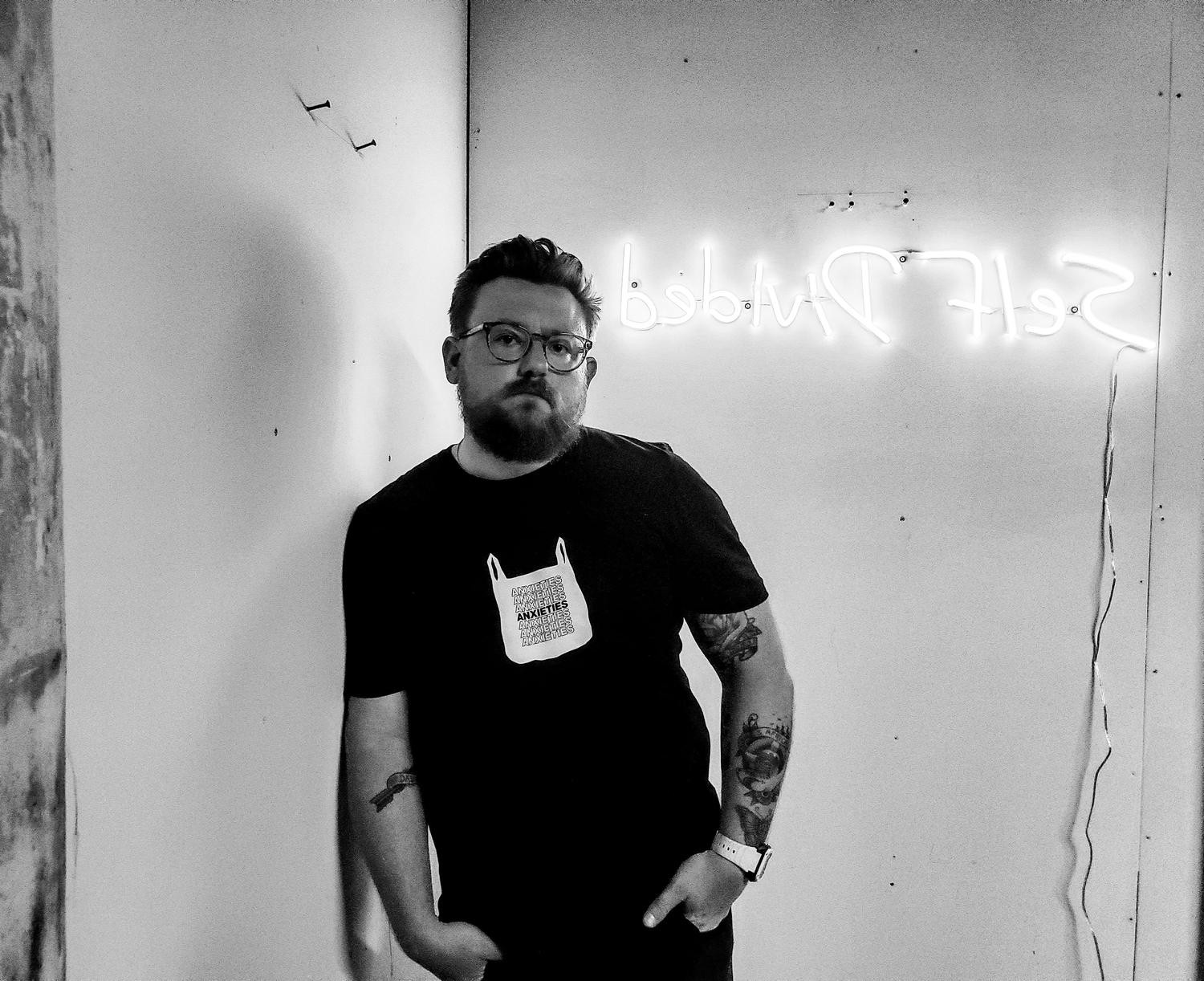

We recently connected with Jeremy Jirsa and have shared our conversation below.
Jeremy, looking forward to hearing all of your stories today. We’d love to hear about a project that you’ve worked on that’s meant a lot to you.
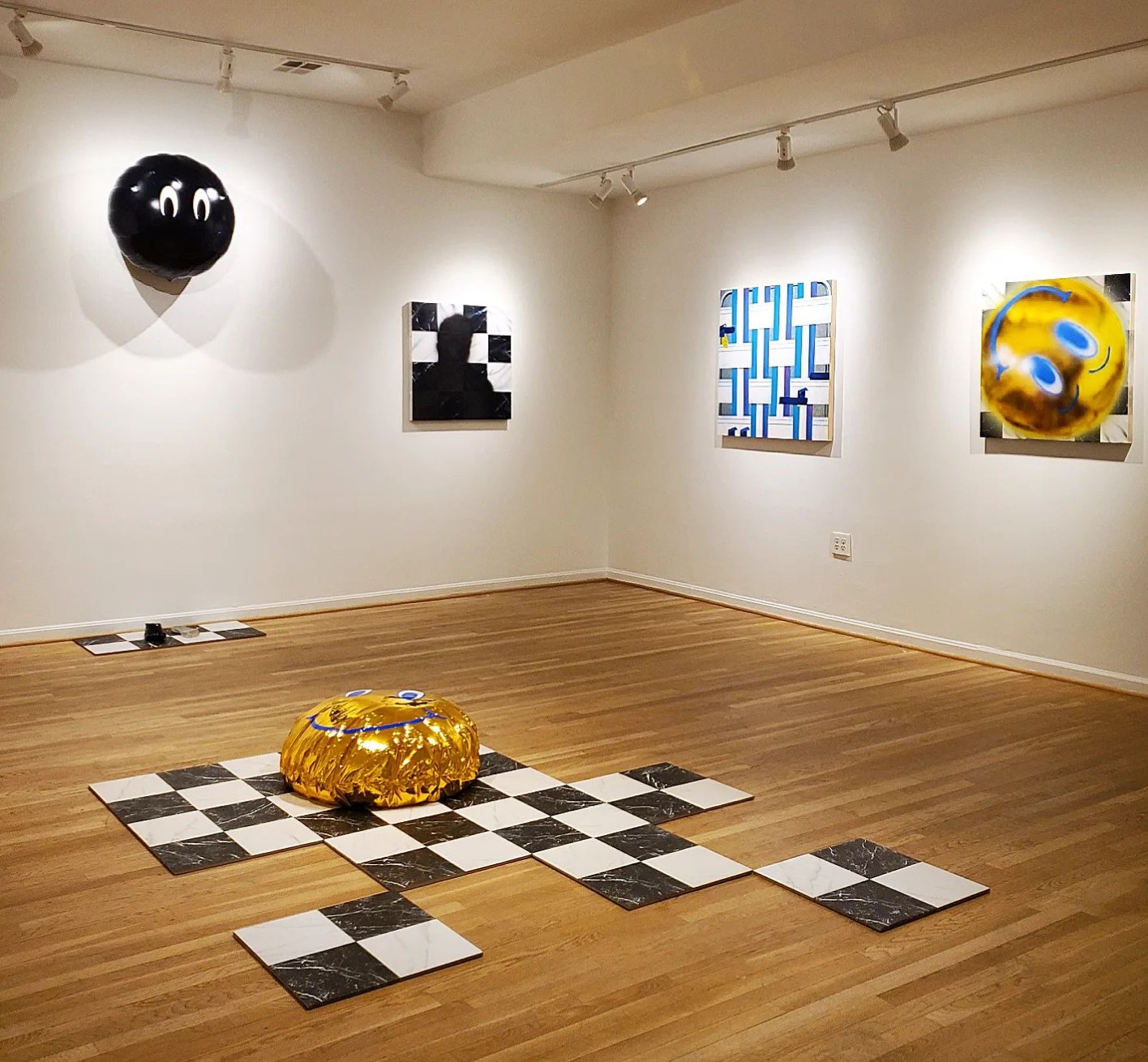
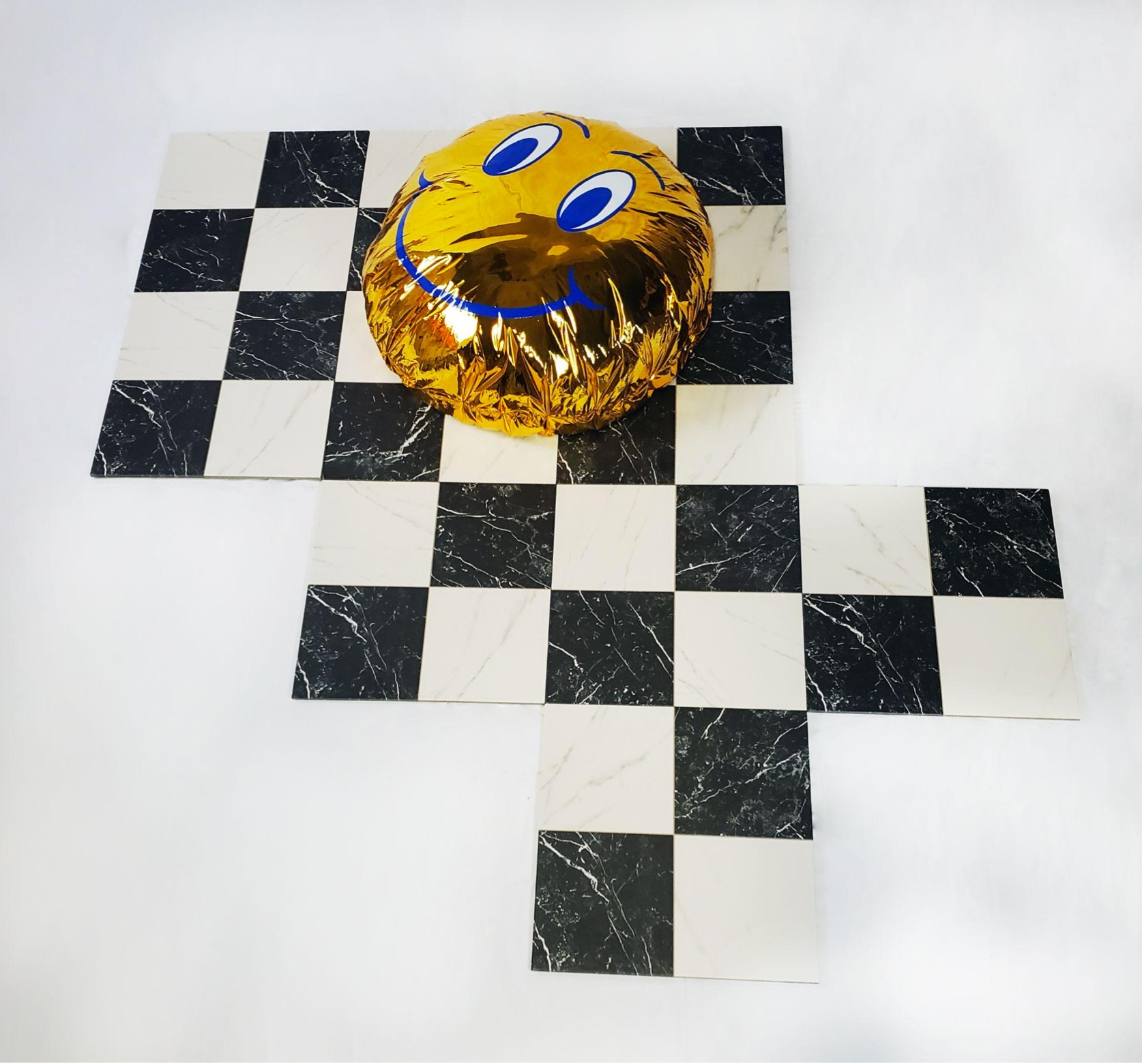
I would say the majority of my work has a high significance of personal meaning running throughout my studio practice. All of my work is autobiographical in some form and stems from my experience living with Tourette Syndrome. While bringing my Tourette Syndrome to the forefront of my practice I find my work exploring tones of isolation, self-medication, and depression, ultimately offering a perspective of TS through a false façade of perceived reality. My tourettes manifests itself through throat clearing and the making sounds along with arm/shoulder spasms and head jerking. Living with such an ailment has left me in chronic pain and at times unable to function due to extreme ticing. Leaving one to feel trapped and as if they are a prisoner within their own body. Through the work, my goal is to explore the psychological space and coping mechanisms that are integral to my personal experience of Tourettes itself, within the internal and external environment of one’s being while simultaneously exploring larger themes of self doubt, self depreciation, anxiety, social anxiety and the want to conceal an aspect of self.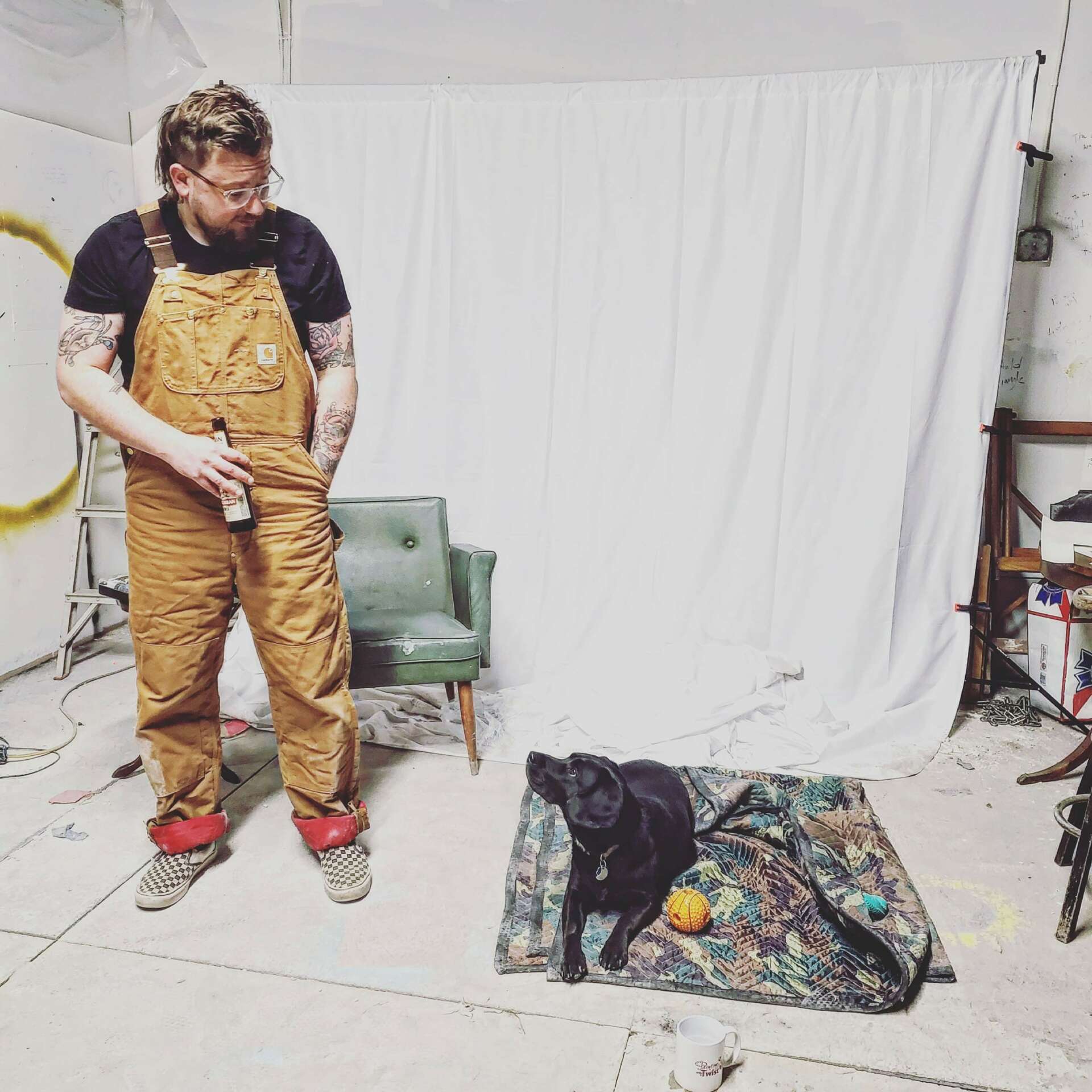
Awesome – so before we get into the rest of our questions, can you briefly introduce yourself to our readers.
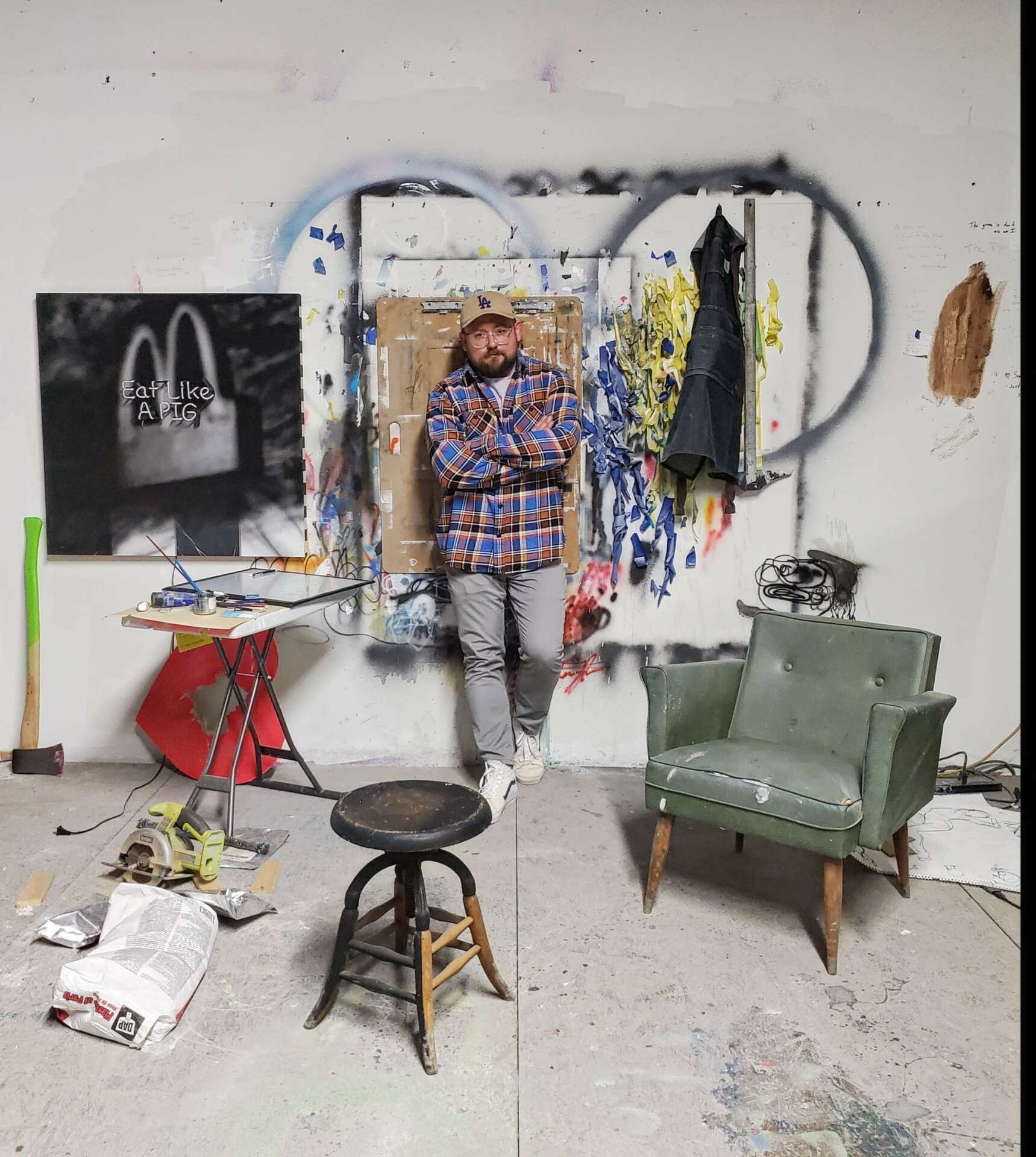
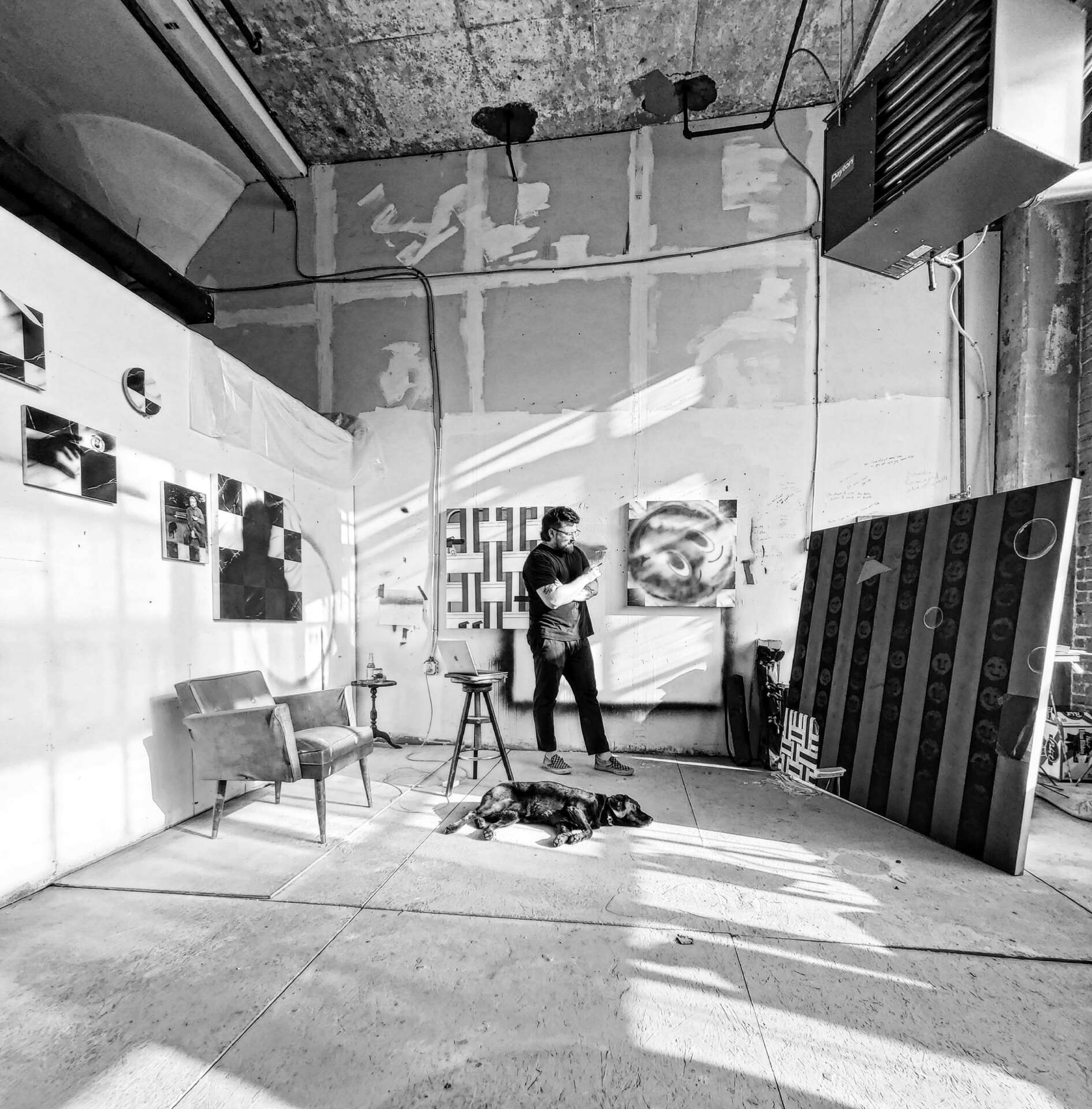
I am a multidisciplinary artist and art professor based in Los Angeles. I create paintings, sculptures, performance, video, installation and for a short period of time even ran a podcast called “Beware the Artist” connecting artists through conversations about their studio practice, ranging from painters to musicians across the world. My voyage into the arts can be seen as somewhat conventional but also somewhat unconventional and maybe a little disruptive. At a young age I had found art and it was always something I had loved doing. My parents and Grandfather had a huge impact on me and always provided the encouragement to pursue a life in the arts but for me it was never just something I liked to do or just something I started to find achievement or recognition in, It was bigger than that for me.
In 2000 I was diagnosed with Tourette Syndrome. As a child this was something that was inexplicably hard for me to understand or navigate. As I grew older I found out very quickly that art and the creation of art would become a refuge from the TS. When I was making I would become lost, the tourettes would disappear and I could spend hours without a tic or episode. It became my therapy, a safe space, a space I could control, express myself and relieve myself from the stressors of the day and TS itself. I eventually would attend an Art magnet middle school, Art magnet high school, Art School for college and eventually earn an MFA.
During this time I always knew I would want to pursue a career in education, I had seen those who had the strongest positive impact on my life and I wanted to be that for someone else. These teachers and professors saw something in me I may not have seen myself and I knew having had the experiences I have had, living with TS and struggles with mental health, I could be a great empathetic ally to future students. I saw teaching as a calling but even after attending so many art schools, I only saw myself as a future educator. Art was what I did, it was a part of me, I saw it as a part of my life and integral to my existence and sanity not necessarily a career. Yet I would never stop pursuing my work as a serious contemporary artist but it’s the self recognition of this pursuit and acknowledgment of the term “Artist” that took me a while to realize.
It may sound strange but it was not until I was half way through my MFA that I finally started to call myself an artist. I feel this is a big moment for me because even though I found my studio practice inseparable from myself, to express the distinction of “artist” to the world was something I felt I had not earned yet. Looking back I see this now as a self confidence issue. To make the declaration that this studio practice that had been so personal to me was worthy enough or could possibly be something of public interest was something I saw as egotistical while ironically I was taking all the steps necessary to achieve a career as a contemporary artist.
I was in my 20’s and thinking to myself what is the level of achievement I need to brand myself an artist. Was it the MFA, was it the next solo show, was it gallery representation. At what point does one become an artist? It was then, when I finally was able to step back and look at my life and steps I had in place to sustain such a pursuit as a career while also recognizing that I will never stop making because it’s so integral to my being, that I finally accepted the word and said I am an artist.
I share this because as someone who was inherently making and learning and showing, I always had a chip on my shoulder. I saw art as a privileged vocabulary, a way of life I shouldn’t be able to access but a life I wanted to access. I grew up in a post industrial blue collar area in Baltimore and pursuing art was just not something someone from my area did. It was hard enough breaking the perceived stereotypes and getting into college let alone becoming an artist and furthermore a professor. It was not uncommon to be labeled as white trash, less than, just because of where I lived and grew up. I had a teacher in high school, Mrs. Z, share a quote with me from Queen Victoria; “Beware of artists, they mix with all classes of society and are therefore most dangerous.” I always kept this quote with me in the back of my head. This quote was my fuel, my justification, the foundation for my fight against the privileged system if you will. I would think to myself, I may not “belong” here but I worked harder than most to get here and those who second guess my dedication or question me because of where I am from have no choice but to accept me now, because we are in the same room and while it may have been harder for me to get here I am justified in my presence.
Since then, I have shown across the United States as well as internationally. My work while extremely personal hits on larger themes of self doubt, self depreciation, anxiety, social anxiety and the want to conceal an aspect of self. Post pandemic, with the rise of mental health awareness, its been amazing talking with people who view my work and seeing how the work can be used to open up a dialogue about mental health and how universal a subject that can feel so isolating has become.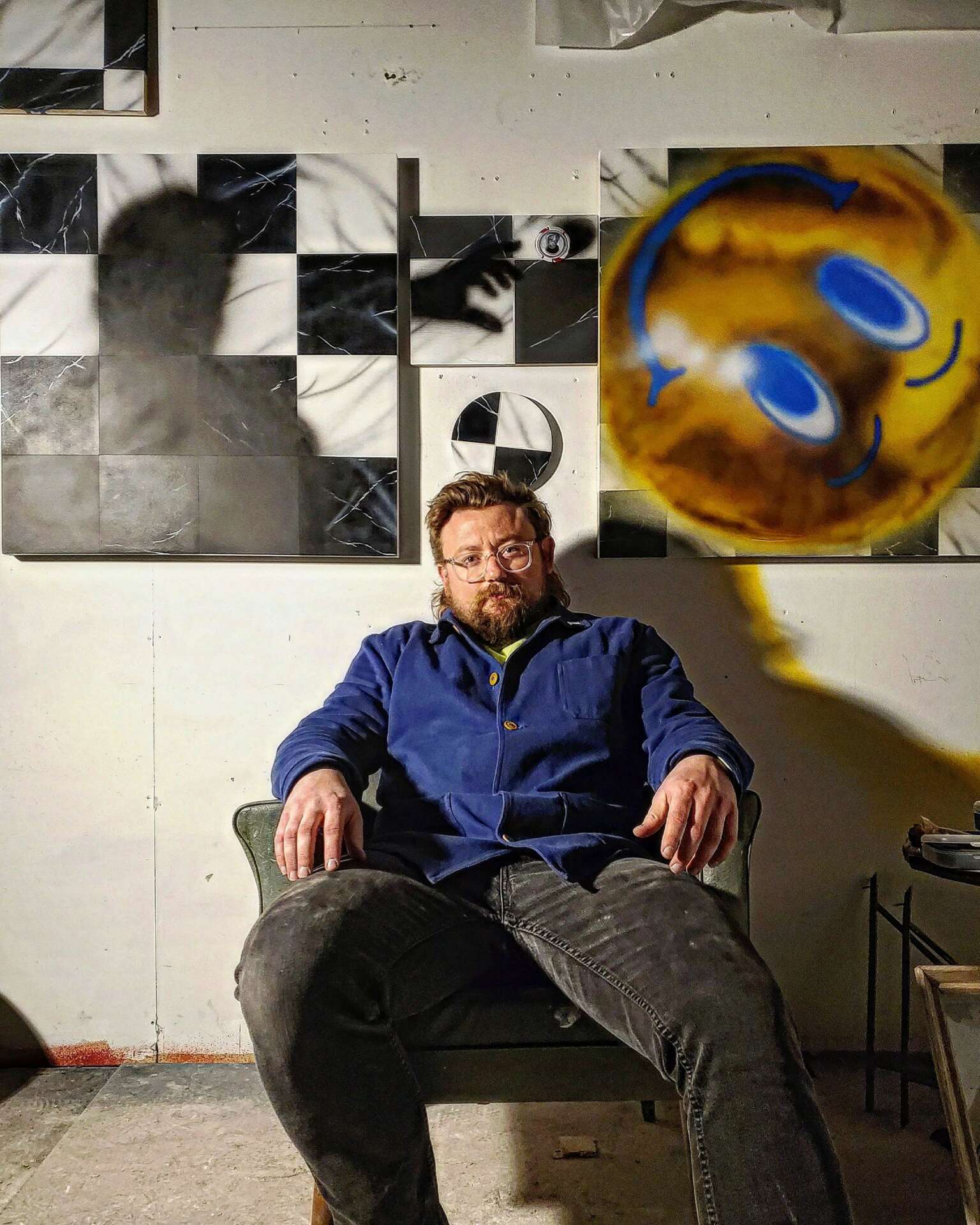
What do you find most rewarding about being a creative?
For me the most rewarding aspect of being an artist is simply being able to create. Most people with in their daily lives are beholden to a certain structure of societal norms. Go to work complete a task go home repeat. When you are an artist you have the luxury of time to become lost and consumed with in an area of interest. The day to day changes based on what you need to do to complete a project and that variation and exploration is something I find super exciting. As artists we become alchemists, scientists, explorers all to solve a problem creatively. Not many careers allot for play and experimentation with the risk of failure on the daily, especially in the name of art.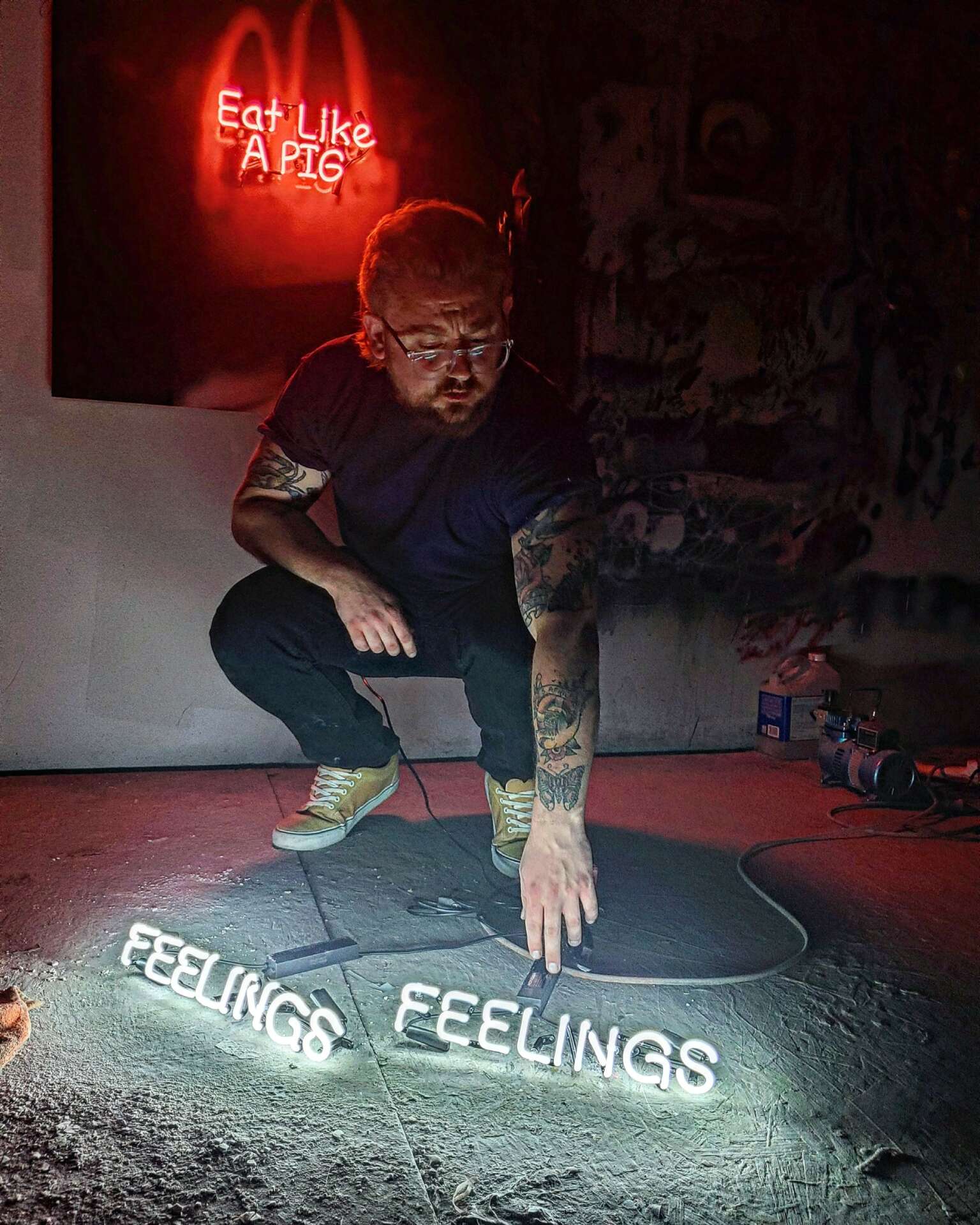
Is there a particular goal or mission driving your creative journey?
Honestly I would not call it a goal or mission but it is a driving force in my creative journey. For me it’s very simple, its such a part of my being that I cannot stop. It’s wrapped in how I act, how I see, how I think. I need to create to function properly. There have been times in my life when I had to take breaks from the studio for one reason or the other and it was at these points in my life where I found myself to be the most unhappy with myself, with life, and genuinely found it hard to function. If you get into this game it’s like drugs. When you finish a piece you have been frustrated with for months, and you step back and see it finally in a place of completion. That moment is a high worth chasing. It’s an addiction and if you’re not willing to put in the work to feed this addiction you will not find success in this field. If you think you’re working hard there is someone behind you working 10 times harder to get to where you are now. You cant let them pass you. 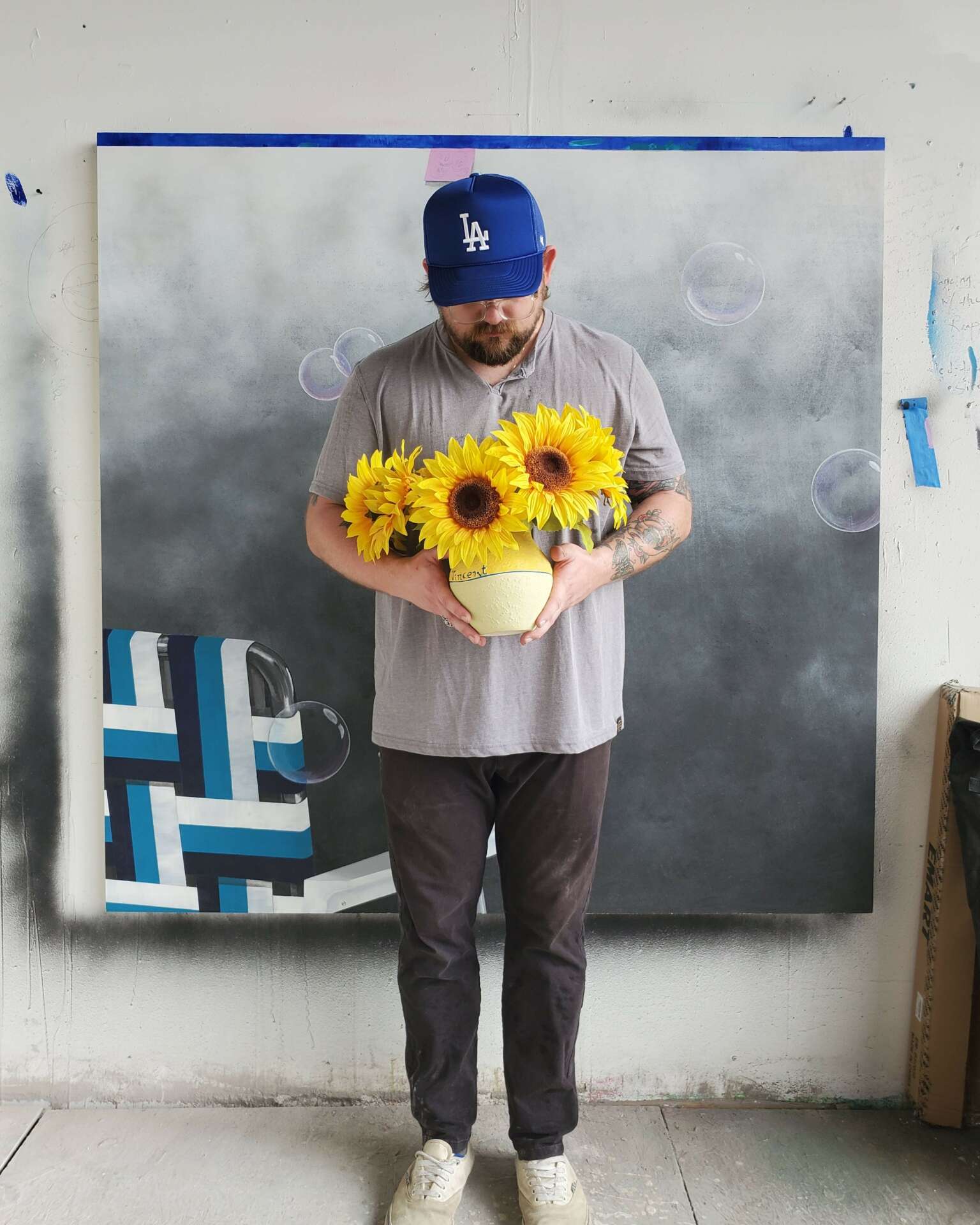
Contact Info:
- Website: www.jeremyjirsa.com
- Instagram: @jeremyjirsa
- Youtube: Video art youtube: https://www.youtube.com/@jeremyjirsa7769
- Other: Podcast youtube: https://www.youtube.com/@bewaretheartist49 You can listen to Beware the Artist where ever you get your podcasts!