

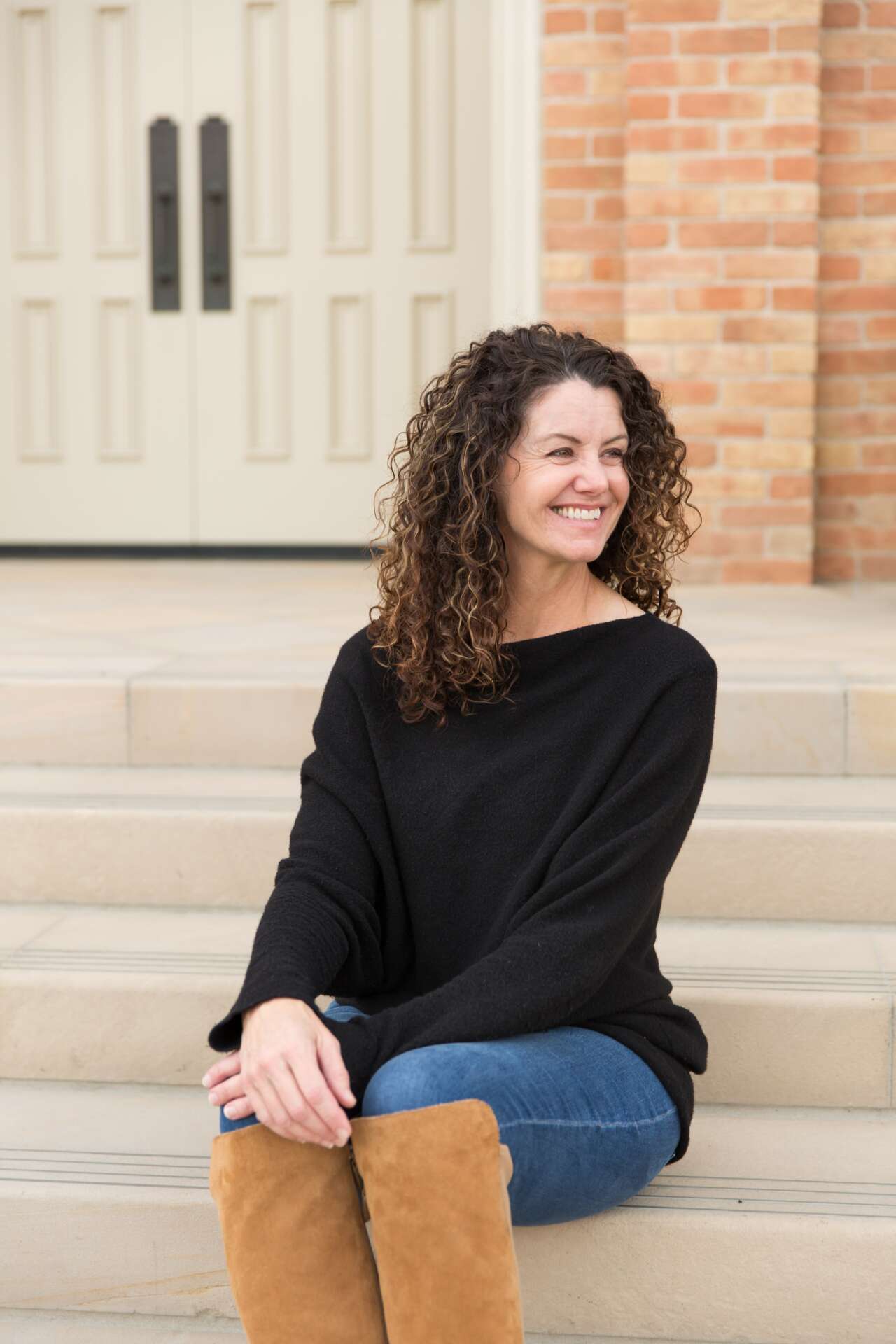

We recently connected with Jennifer Benson, RD and have shared our conversation below.
Jennifer, thanks for joining us, excited to have you contributing your stories and insights. We’d love to hear the backstory behind a risk you’ve taken – whether big or small, walk us through what it was like and how it ultimately turned out.
I have been a Registered Dietitian for 26 years, so I am definitely well seasoned in my field. I started my career working in hospitals, and spent most of my career in acute care and long term care facilities. I enjoyed this work, and with all of the experience I gained, I was very comfortable working in this area of my field. Although I thought many times about changing my direction, I was so completely comfortable that re-learning a whole new aspect of dietetics seemed overwhelming, so I stayed comfortable for a while.
It is said that there is no growth in comfort, and I fully believe this. I also think there is a belief that as women age, they kind of disappear after a certain point, a belief that I would love to debunk. So, at the age of 48, I decided to completely switch directions in the field of dietetics and start working in the area of eating disorders and disordered eating. This required a heavy dose of continuing education and learning on my part. It also required a lot of ups and downs while gaining experience working with patients. There were many times in the beginning of this career shift that I really questioned if I made the right move as there was a lot of discomfort in the first year. However, I am so happy on a professional and personal level that I made this big switch.
I look back with zero regrets at this point. When I was younger, I struggled with food and body image issues of my own. I feel like my own lived experience has really helped me connect with and understand my patients. I appreciate that my patients let me take this very difficult journey with them. I also appreciate watching the beauty of the recovery process, and seeing patients move on to live a life full of meaning and purpose. I look forward to many many more years of continuing to learn and grow in this field.

Jennifer, love having you share your insights with us. Before we ask you more questions, maybe you can take a moment to introduce yourself to our readers who might have missed our earlier conversations?
I originally chose to become a Registered Dietitian because I was very much into health and fitness. I was an athlete from childhood through high school, and my hope was to go into sports nutrition. I ended up working in acute and long term care hospitals for most of my career; however, I always had the hope of switching gears and working in a different area of dietetics. When the opportunity presented itself, I took the brave step to change directions and start working in the eating disorder field.
I currently work with patients that have been diagnosed with eating disorders or disordered eating and patients who are working to improve their relationship with food and their body. Most of the patients that I work with have anorexia, bulimia, ARFID or binge eating disorder. We live in an environment that is heavy in diet culture, and disordered food rules are very easy to internalize. These food rules can become a way for people to feel in control of something in their life or to cope with adversity or difficult emotions in life. Letting go of a coping mechanism is incredibly hard. I see most patients weekly, sometimes for years and get to develop a relationship with them as we work on changing their relationship with food.
Part of changing a person’s relationship with food is healing their relationship with their body. Body image is many times the driver behind a disordered relationship with food. The thought is that a person can control their body by controlling their food. This is where restricting intake comes into play. Although many people believe that restricting intake in any form is healthy, it actually does a lot of harm and damage to one’s body. We might see symptoms like low energy, difficulty in regulating emotions, lack of focus and attention span, increased anxiety, and GI symptoms like gas, bloating, and constipation to name a few. These symptoms appear due to lack of energy intake, which means the body doesn’t have adequate energy to run all of its systems efficiently. To heal, a person needs adequate energy intake to support body function, consistently throughout the day, with a good variety of different foods. This may mean that one’s body may change, and they may gain weight. This is a difficult thought for everyone, especially living in a society that is heavily laden in diet culture which sends a message to women that their job is to shrink themselves. I acknowledge that there are men that struggle with eating disorders and disordered eating; however, the majority of my patients identify as female. Eating disorders and disordered eating take up so much of a person’s brain space that there isn’t enough left for them to go out and change the world in whatever way they are here to change it.
My favorite aspect of working with patient’s is helping them to heal their body image issues. As I stated previously, we live in a culture that makes us believe that there is only one right way to have a body. From a very young age, women are made to feel like their body and image are where their value exists. We are never told that our body will change throughout our life, so when our body does change if our value is based on our body weight, shape or size we feel that our value changes with it. This is when women turn to diet and restriction as a way to get their value back. My goal with working on body image is to help women to realize that their real value lies in who they are. I strongly believe in the Health at Every Size principles, and use this model in my practice. I believe that bodies are supposed to be diverse, just like height is very diverse.
I am also a certified intuitive eating counselor. A good relationship with food is always the goal, and in my many years of experience I know of no better way to reach this goal than with intuitive eating. It isn’t a diet so it can take awhile to change someone’s relationship with food, but it is always worth it. The goal is living a life where there is no guilt or shame over any food. I always ask patients, when you are 85 years old and sitting in your rocking chair on your porch, what kind of memories do you want to see, and is your relationship with food in alignment with that view?
When I work with patients, I don’t give them a meal plan, and we are working to remove “good” and “bad” labels from food. I am more interested in why someone is eating something than what they are eating. Any time we restrict, whether it is overall food restriction or certain foods, our tendency to binge increases. There is so much guilt behind the binging, that we restrict again. This is a cycle that is hard to break when one doesn’t understand why they keep binging. Our brain needs to know that it has access to all foods at all times, and when it does that drive to binge goes away. This can be a scary process as we are working to allow foods back in that a person believes are “bad” or “unhealthy”. We are also working to get a person enough food, consistently throughout the day, with a good variety of different food which includes foods that might be scary or difficult to add back in.
I love this work, and I am very passionate about it. The reward is getting to see people heal, and go out and live their lives unobstructed by constant thoughts and guilt about food and body. They get to go out and change the world, and food is there to fuel them through it.
Putting training and knowledge aside, what else do you think really matters in terms of succeeding in your field?
I believe that life experience has been very helpful in my success. My own experience with food and body image has helped me to understand what my patients feel, and how best to help them. I also believe that with life experience, one gains a lot of empathy, which I believe has been helpful for me in helping my patients.

What do you think helped you build your reputation within your market?
I believe that the biggest thing that has helped my to build my reputation is collaboration with other healthcare professionals. Patients who are working through an eating disorder on an outpatient basis have a team that usually includes a doctor, psychiatrist, therapist, and a dietitian. This team collaborates on the care of patients. Reaching out to these different professionals has helped me to build referral sources and a reputation of my passion in working with patients with eating disorders.
Contact Info:
- Instagram: jbensonrdn
- Linkedin: linkedin.com/in/jennifer-benson-a6b30333
Image Credits
Copyright: <a href=’https://www.123rf.com/profile_luzazure’>luzazure</a> Copyright: <a href=’https://www.123rf.com/profile_igolaizola’>igolaizola</a>