
We’re excited to introduce you to the always interesting and insightful Jay Chung. We hope you’ll enjoy our conversation with Jay below.
Jay, appreciate you joining us today. Are you able to earn a full-time living from your creative work? If so, can you walk us through your journey and how you made it happen?
Not yet. Not fully. I’m not making a complete living just from my work at this point. But I’m also no longer relying on a single job the way I used to. It feels like I’m in the middle of building something that can eventually support itself.
Before committing fully to painting, I worked as a civil engineer. At the time, I thought of the two as completely separate. Looking back, I’m not so sure. Engineering taught me that what holds a structure together is rarely what you can see. Stability comes from forces beneath the surface. I didn’t know it then, but that way of seeing followed me into the studio.
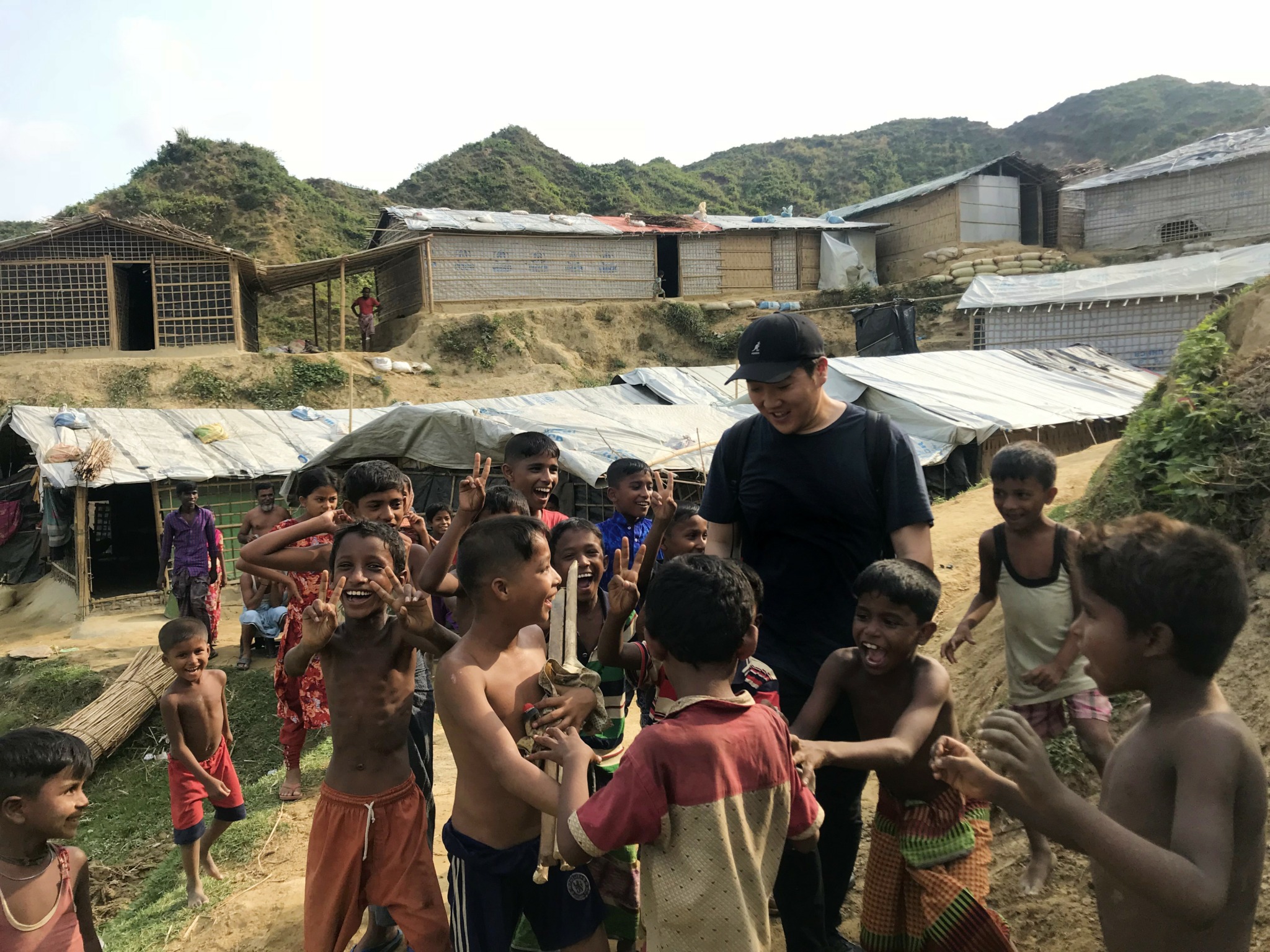
In the beginning, painting was something I did with whatever time and energy I had left. The balance shifted slowly. The real turning point came after I spent time volunteering in refugee camps in Greece and Bangladesh. Being there, I was confronted with something real and unresolved, and it made it hard to keep making work that just looked like art. I had to start making work that felt necessary.
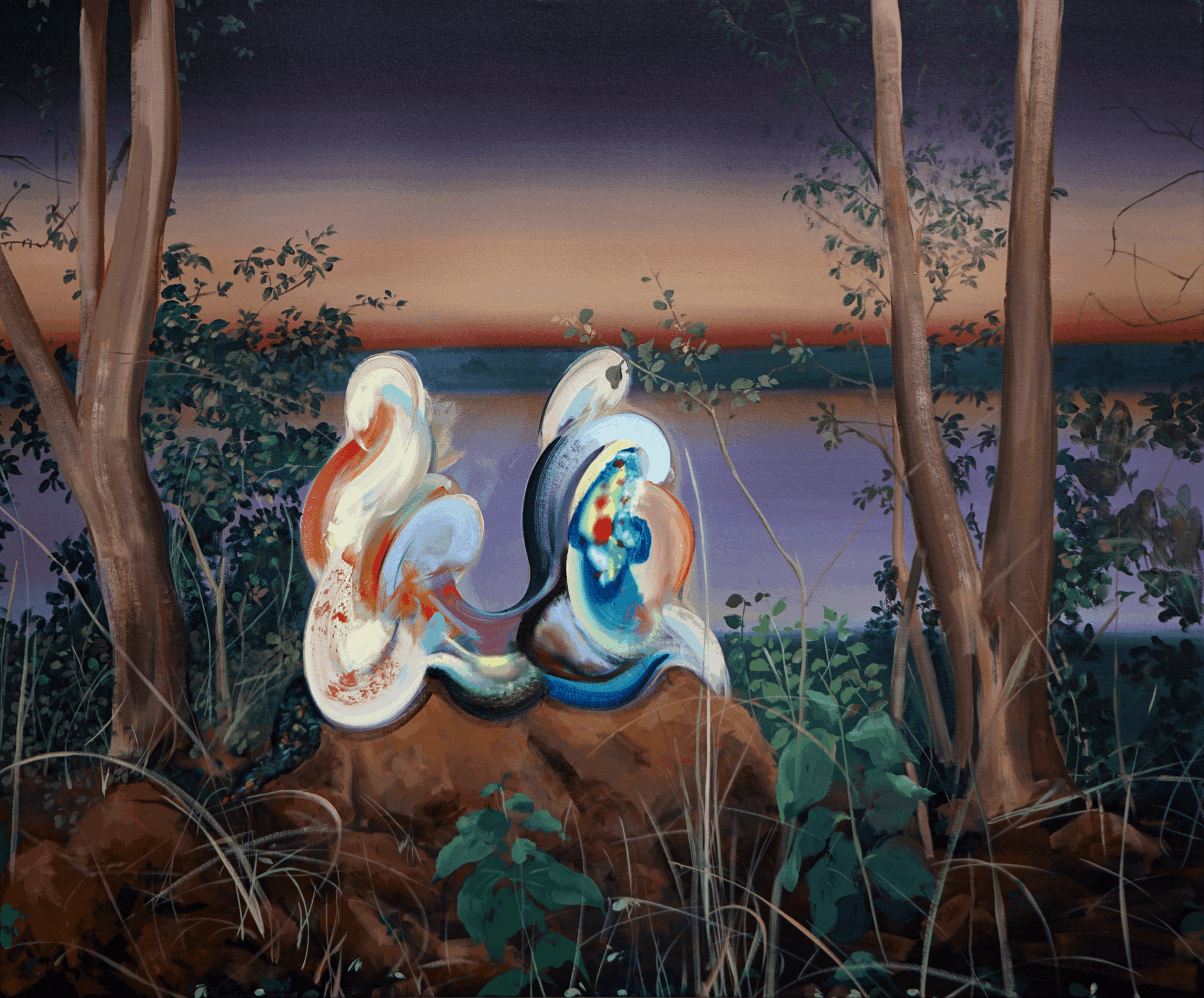
That also changed how the work looks. I moved away from describing situations directly and became more interested in what remains: tension, afterimage, the way something lingers in the body. The figure started to loosen, sometimes dissolve.
After school, I spent time in Dallas trying to fit the work into contexts that weren’t really aligned with it, chasing visibility in places where it didn’t quite belong. It took time to recognize that. But eventually the work found its way to the right people. Through online platforms, paintings reached collectors in eight countries. Curators in Europe reached out directly. A residency in Italy followed.
There are still moments, usually at the end of the month when sales have been slow, where a predictable salary feels very real, not abstract. I spent years working as a civil engineer alongside this practice for exactly that reason. The financial uncertainty hasn’t gone away.
But what I keep coming back to is this: the moments of doubt are uncomfortable, but they’re not confusing. I know why I’m doing this. A stable salary wouldn’t resolve that. It would just move the problem somewhere quieter.
So I stay. Not because it’s easy, but because leaving would feel like a different kind of loss.
Jay, love having you share your insights with us. Before we ask you more questions, maybe you can take a moment to introduce yourself to our readers who might have missed our earlier conversations?
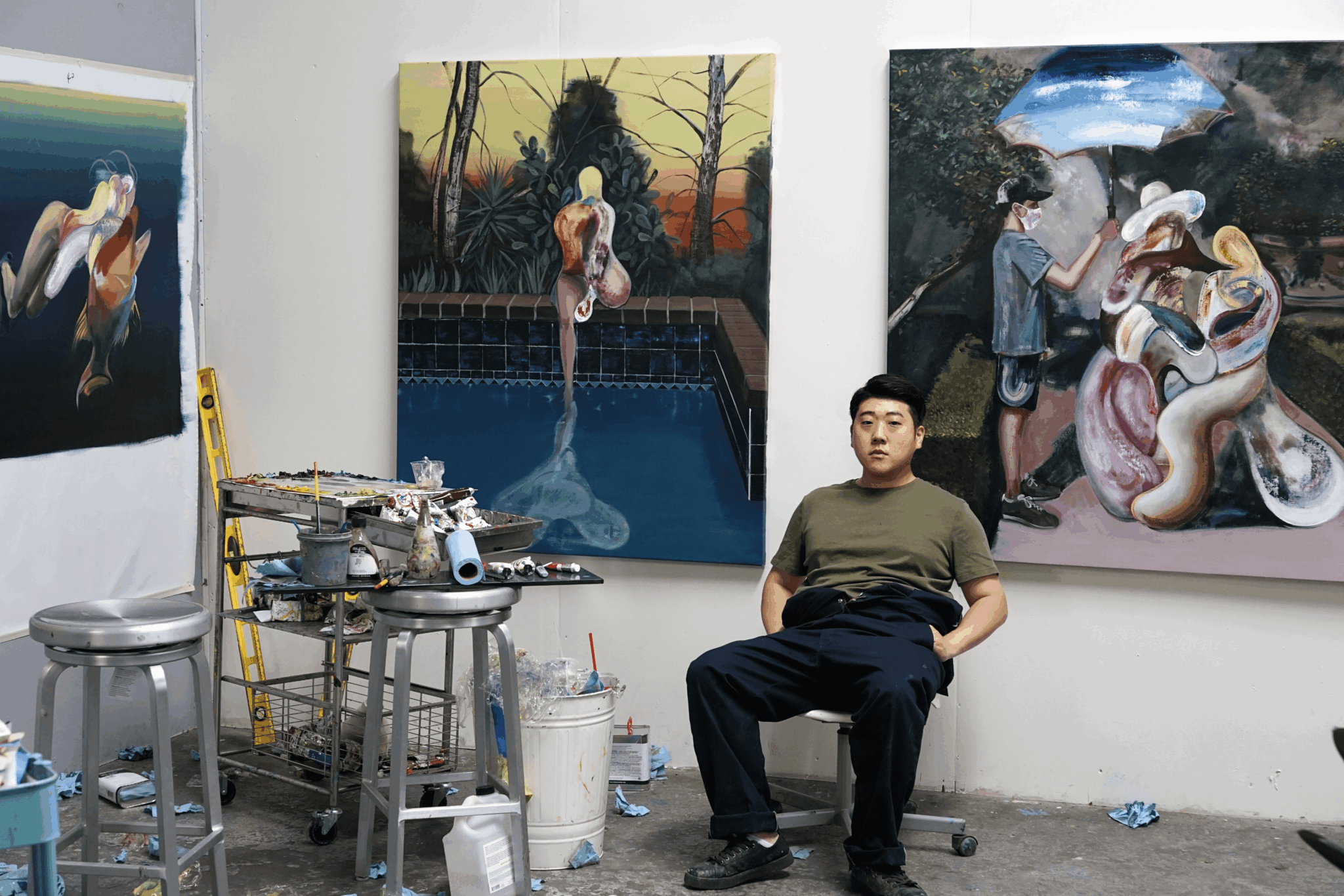
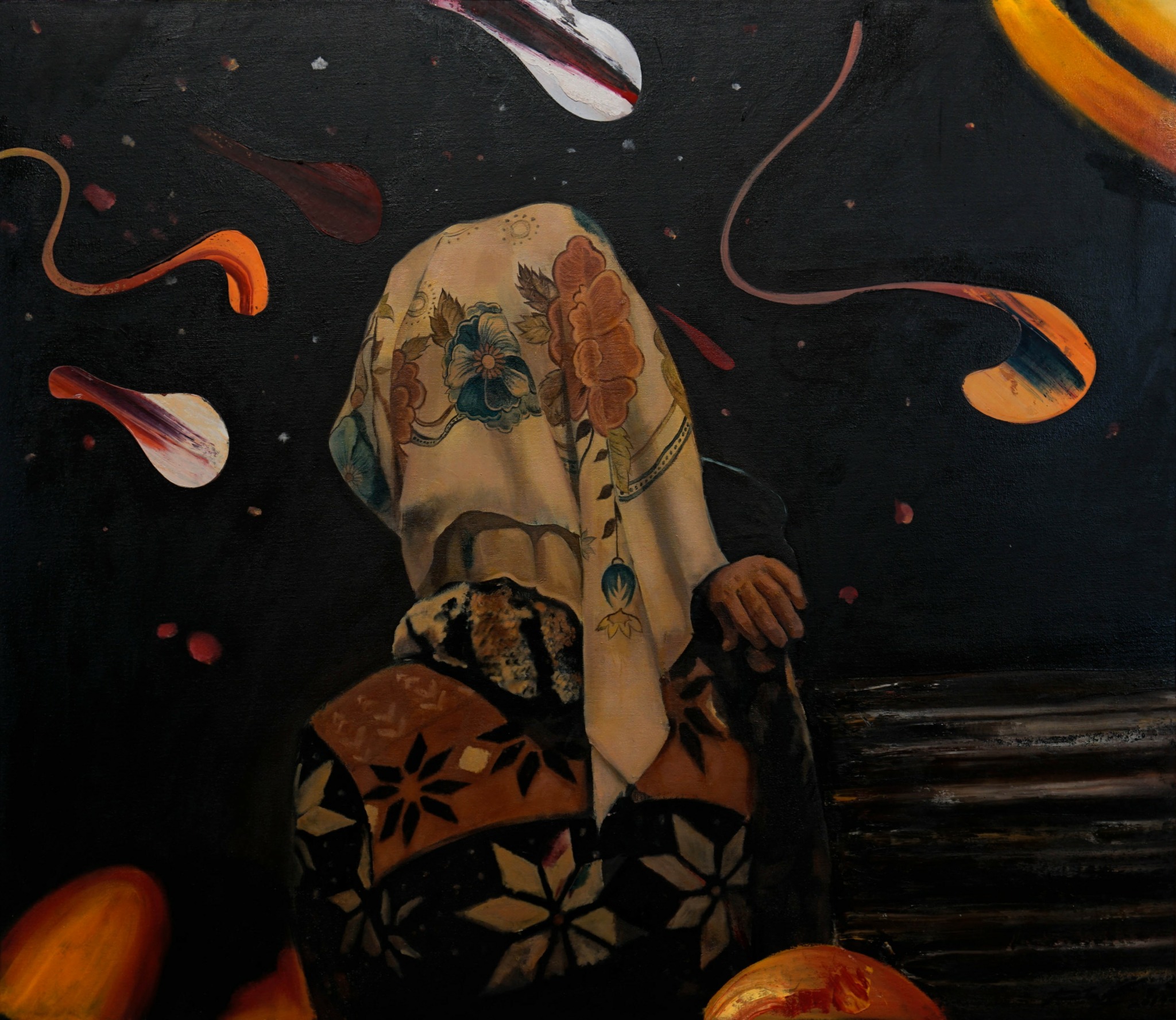
I’m Jay Chung, a painter. My work approaches the human body not as a fixed form, but as something continuously shaped by forces that aren’t always visible: tension, pressure, and the shifting conditions between inner and outer experience.
Before committing fully to painting, I studied architecture in Korea. After immigrating to the United States, I worked as a civil engineer for five years. That period fundamentally shaped how I see, not just technically, but perceptually. What holds a structure together is rarely what you can see. Carrying that awareness, I made the decision to start over, enrolling as an undergraduate at Tufts University to study psychology and fine arts. The same logic applied to the body. What appears stable is always contingent on something unseen.
My background as an immigrant, moving between languages, cultures, and systems of belonging, deepened that awareness further. There’s a persistent gap between what is experienced and what can be articulated. That gap became central to the work.
After graduating, rather than pursuing graduate school, I spent time volunteering in refugee camps in Greece and Bangladesh I spent time volunteering in refugee camps in Greece and Bangladesh, and later worked with homeless communities in Florence during an artist residency in Italy. Those experiences moved the work away from representing external situations and toward something more interior. How conditions like displacement are absorbed into perception. How they persist in the body long after the visible circumstances have changed.
The figures in my paintings are often fragmented or in flux, not as a statement about identity, but as a way of tracing what’s underneath: the invisible structures that shape how something holds together, or doesn’t.
What sets the work apart, I think, is this focus on conditions rather than events. I’m not interested in illustrating narratives. I’m more drawn to states that resist clear definition, where language begins to fall short and something more physical and intuitive has to take over.
Each body of work builds on accumulated experience, gradually moving from observing boundaries in the world to understanding how those boundaries become internal. The work doesn’t aim to resolve experience, but to remain within it, especially at the point where it can no longer be fully articulated.
We’d love to hear a story of resilience from your journey.
One of the moments that most clearly defined resilience for me was when I traveled to Bangladesh to volunteer in a refugee camp.
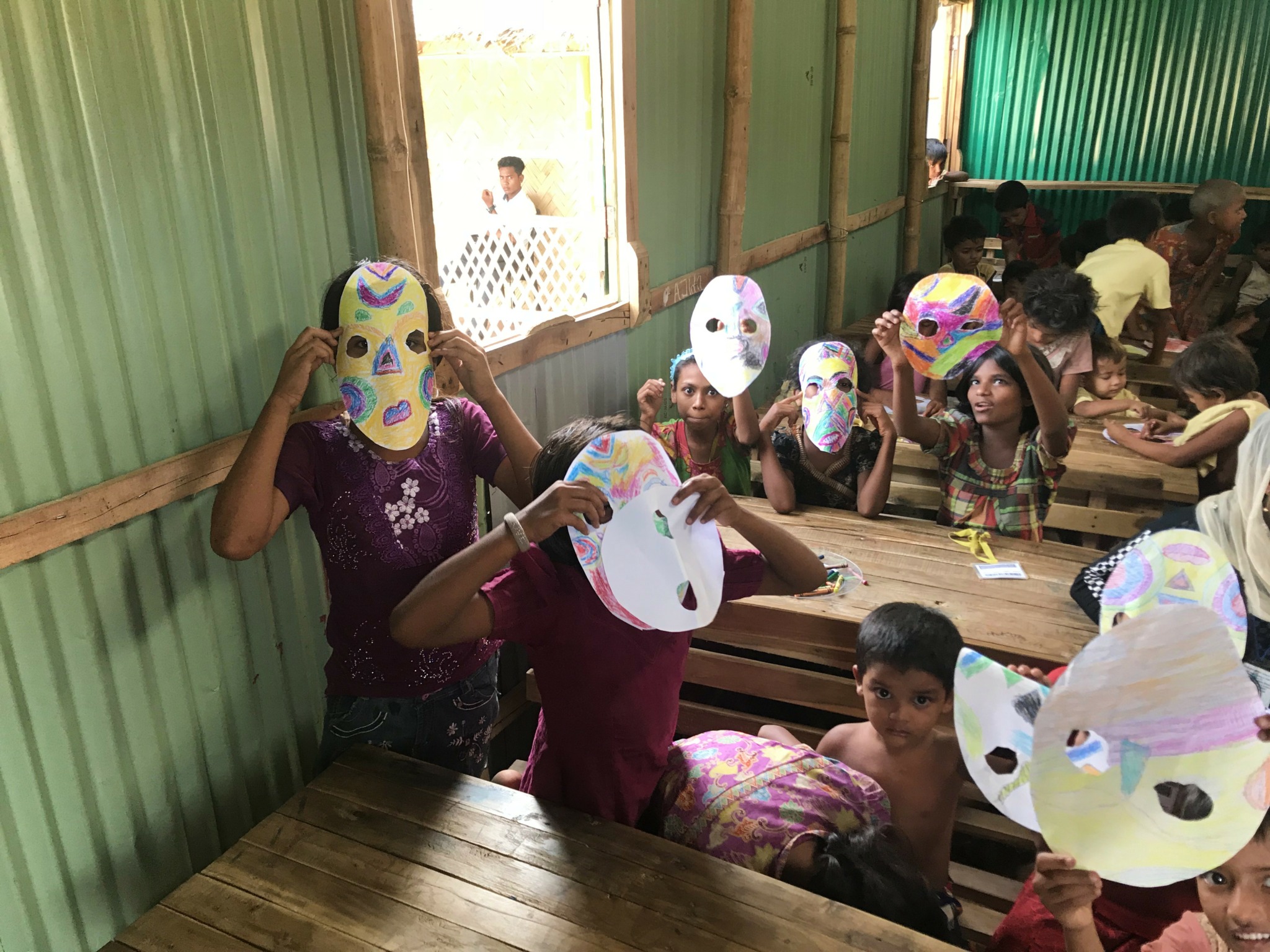
Unlike my experience in Greece, where I worked through an organization connected to the UN, this time I went independently. I contacted a local NGO in Cox’s Bazar directly and just went. No institutional backing, no official documentation. There’s no record that I was ever inside that camp.
I remember arriving and realizing, almost immediately, how exposed that decision was. I had no formal standing, no system to fall back on if something went wrong. I was walking into one of the largest refugee camps in the world, in a country I didn’t know, with nothing formally connecting me to anyone.
Being there didn’t feel like entering something entirely unfamiliar. It felt closer to recognition. The people I met were living, in a much more visible way, a condition I had already experienced more quietly. Existing between systems, between definitions, between forms of belonging.
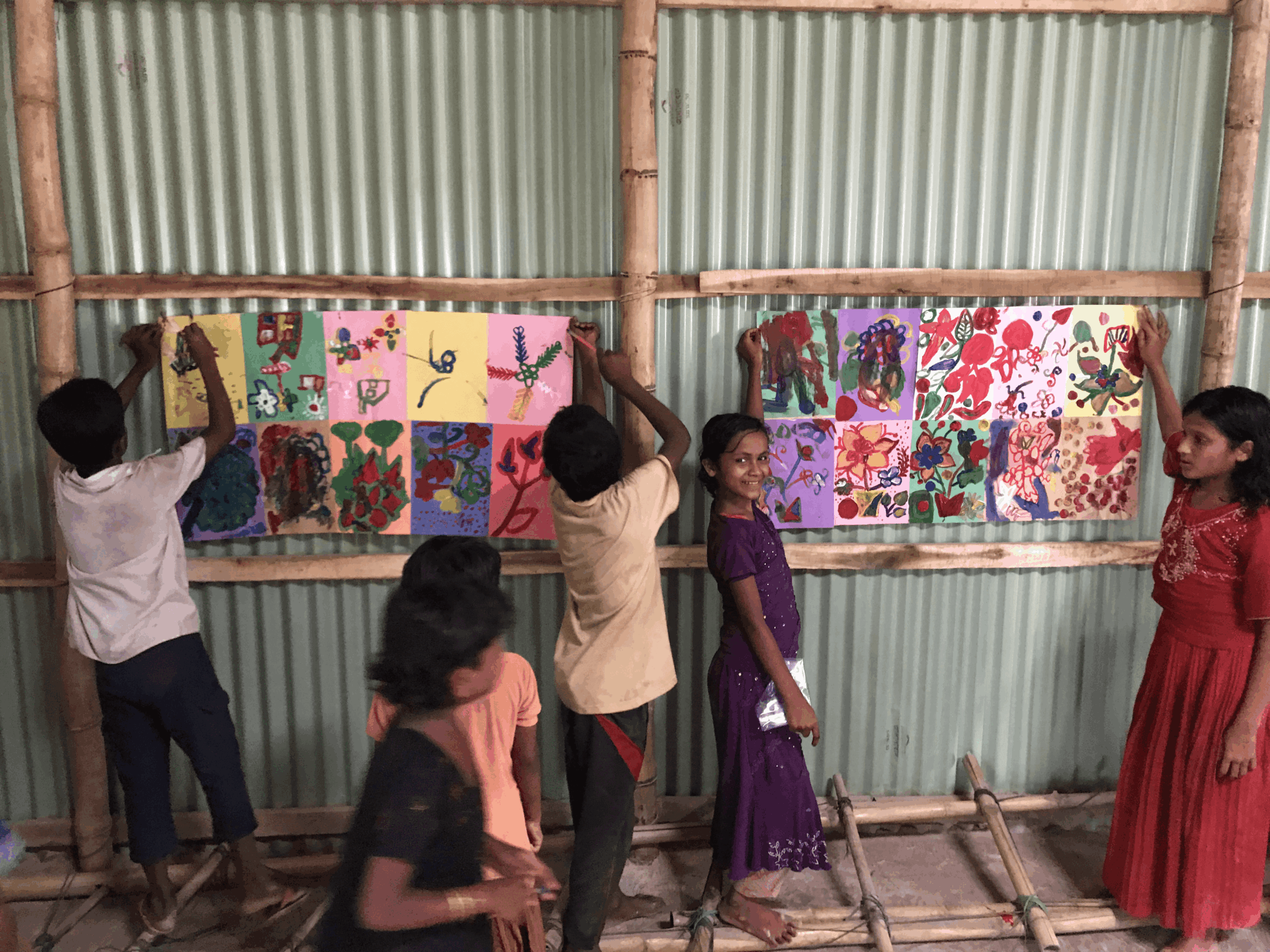
What I found there was something I didn’t expect. Two months with the Rohingya community, teaching orphaned children, living close to their daily lives. It was, genuinely, some of the happiest time I can remember. Being in a place of profound hardship and still experiencing that kind of warmth and connection is something I still find difficult to explain.
That’s the thing about resilience. It’s not always about pushing through difficulty. Sometimes it’s about stepping into uncertainty without guarantees, and encountering something that only becomes visible once you do.
What’s a lesson you had to unlearn and what’s the backstory?
The lesson I had to unlearn was the assumption that visibility equals progress.
After school, I spent time trying to fit the work into contexts that weren’t really aligned with it, particularly in Dallas, where the market leaned toward a certain kind of painting. I kept adjusting, trying to make the work legible to audiences that were never going to be the right ones. It took time to recognize that this wasn’t a personal failure, but a misalignment.
The deeper shift came from an unexpected constraint.
When I volunteered in refugee camps in Greece, photography wasn’t allowed. Not of the camp, not of the people, not even of the children I was teaching. I came back with nothing but memory.
At first, that felt like a loss. The paintings I made were flat, accurate in some ways, but unable to get inside the experience. There was a real frustration in that.
What changed was accepting the limitation as a condition rather than a problem. Without photographs to return to, I had to work from something more fragmentary. Impressions, atmosphere, the emotional residue of specific moments. And strangely, that brought me closer to what I was actually trying to hold onto.
Now I work almost entirely without reference. Not as a fixed rule, but because that experience taught me something I couldn’t have learned otherwise. Memory, when it’s allowed to remain incomplete, carries something that documentation doesn’t.
The lesson wasn’t just about process. It was about recognizing that certain limitations don’t restrict the work. They reveal where it needs to go.
Contact Info:
- Website: https://djaychung.com
- Instagram: @djay_studio