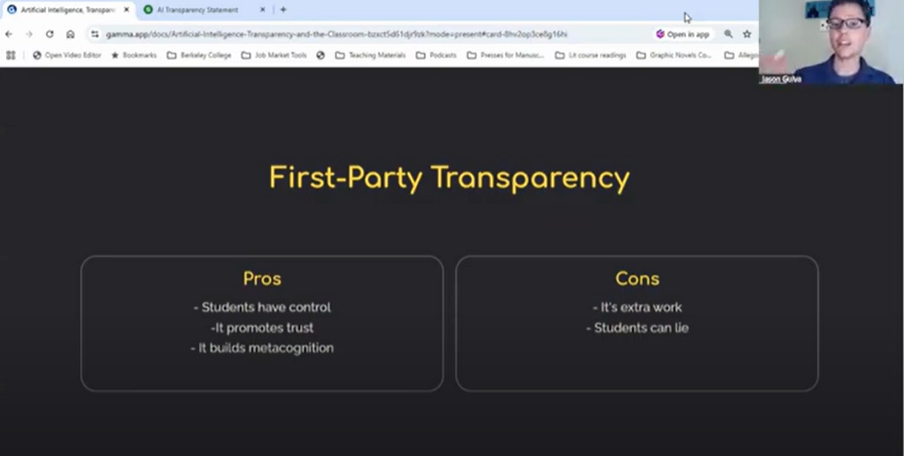
We’re excited to introduce you to the always interesting and insightful Jason Gulya. We hope you’ll enjoy our conversation with Jason below.
Jason, thanks for taking the time to share your stories with us today Let’s kick things off with a hypothetical question – if it were up to you, what would you change about the school or education system to better prepare students for a more fulfilling life and career?
I’d create an education system that was focused more on learning and less on grade-getting and point-collecting. In my experience, so much of education is compliance-based and about testing whether students can predict what someone with authority already wants to hear from them. I would love to see an education system that was far more invested in practices like self-reflection, self-directed learning, and student agency.
When I was a student, I was very frustrated by being told exactly what to do and how to do it. I always felt like school put me in a box; it didn’t really give me the chance to own my own ideas and to push myself creatively. I recognized at a relatively early age that I was within an education system that rewarded toeing the line more than going through the iterative process of learning, which often means failing and then trying again. Personally, I’d love to see an education system that provides students a safe space for practicing skills, even if it means needing to try again and again.
When I interact with my students and talk to them about why they’re in college, for example, I’m constantly taken aback by how point-centered and grade-centered their worldviews commonly are. For many of them, formal education is a way to get grades and credentials rather than to learn as much as possible. One of my jobs as an educator is to try to reorient their worldviews around learning, which can actually be extremely difficult because of how much damage a point-centered and grade-centered worldview has done.
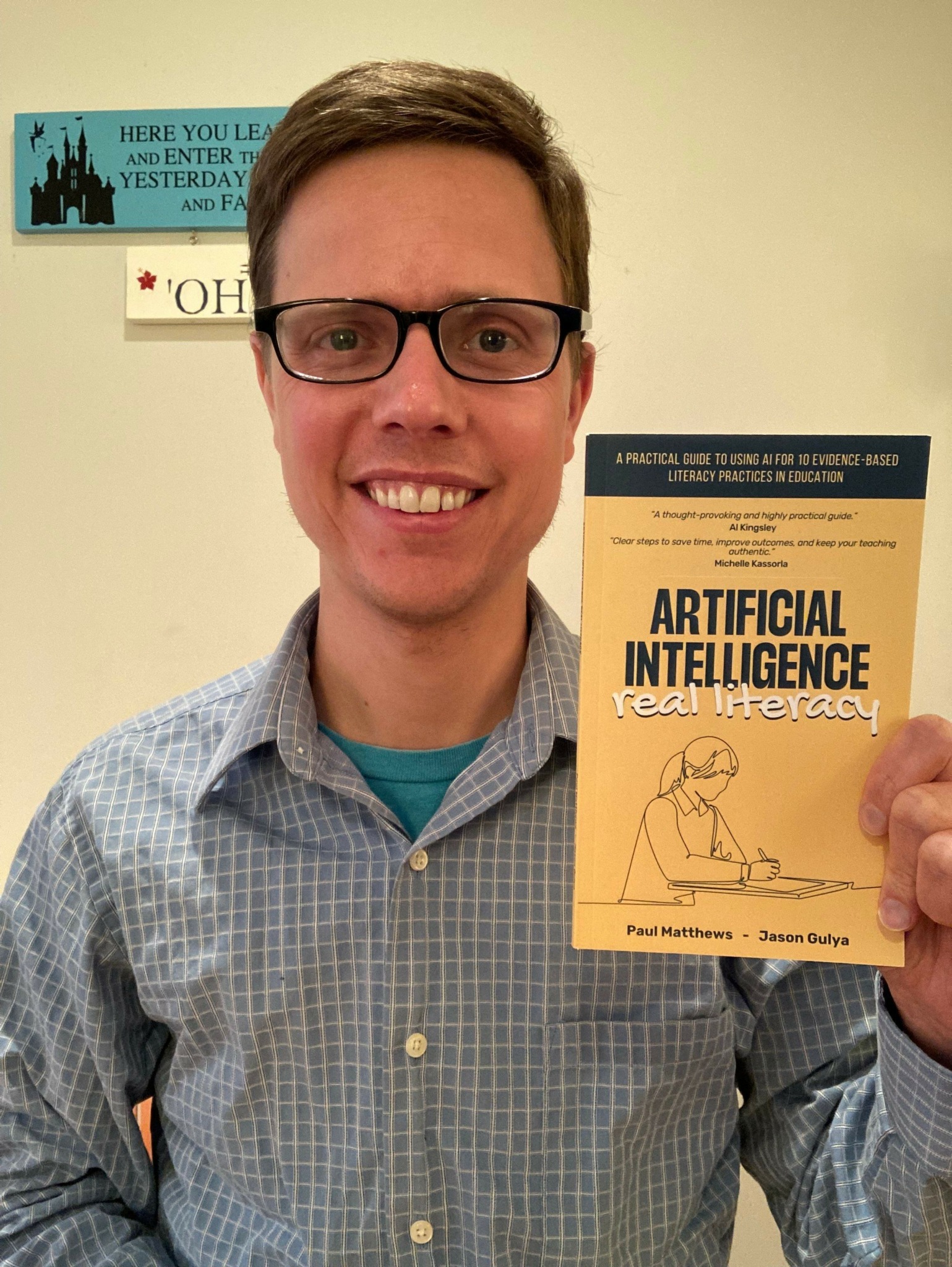
Jason, love having you share your insights with us. Before we ask you more questions, maybe you can take a moment to introduce yourself to our readers who might have missed our earlier conversations?
I’ve been teaching at the college level for around 16 years. I started teaching as a young graduate student and very quickly became enamored with teaching students how to read and write. I really emphasized how important literacy is for the current moment.
About two years ago, after ChatGPT came out, I started consulting with various colleges and universities in the area. I really enjoyed getting to learn what other institutions were going through, how they were thinking about this technology, and what it meant for education as well as the future of work. It’s such an interesting space to be in because colleges have been trusted with preparing students for promising jobs and careers, and suddenly there’s technology that, for many of us, felt like an existential threat to what we do. I remember when I started training and working with faculty, thinking about how wide-ranging our approaches to the technology were.
Since then, I’ve worked with about 30 different colleges and universities. I’ve trained faculty, administrators, and students. I’ve also worked with many different companies, both by providing feedback on their products and by helping them get a sense of how educators might be thinking about this technology and its role in the classroom. I’ve given many different keynotes and presentations for institutions and companies all over the world.
I think what really sticks out to me is that every time I train a group of faculty or staff, I’m continually reminded of how varied our approaches and understandings of artificial intelligence are. In any group, we may have people who are adamantly opposed to this technology. We may also have people who have embraced it entirely and adopted it in almost every aspect of their lives. My role, as I see it, is to empower educators to design the classrooms and learning experiences that they think make sense for their students at the current moment. I don’t think there is a one-size-fits-all solution. I do think there is going to be a space, going forward, for AI-embedded classrooms that use technology to provide students with personalized learning paths. I also think there will be a place for low-tech classrooms, where a community of learners agrees to put down their devices and step away from AI as much as they can, to connect with each other more directly.
I suppose what I’m most proud of is my commitment to working through what I think are really important and really complicated questions in public. One of the reasons I’ve been able to grow and work with so many different individuals and institutions over the last few years is because of my presence on social media, LinkedIn in particular. I use social media as a way to work through ideas within a larger community. One of the things I constantly tell people is that if I write something on LinkedIn or another platform, it often means I haven’t figured it out yet. Writing and sharing my ideas is a way for me to work through them and hopefully come to clarity about a set of questions or concerns that I’m trying to tackle.
That willingness to work and think in public has opened many doors for me—and I did not expect that at the outset at all.
We often hear about learning lessons – but just as important is unlearning lessons. Have you ever had to unlearn a lesson?
Whenever I offer a training with a college, university, or business, my impulse is to provide as much value as possible. Especially early on in my consulting business, I wanted to give my clients as many resources as I could. I felt like I was constantly getting paused during a presentation to show them something else, or to walk through an interesting bit of research or a resource to explore later. It took me several failed presentations to start figuring out that in order to really provide as much value as I could, I needed to slow down and really hover over a specific concept or idea.
For example, I gave a presentation a little while ago that I didn’t think went particularly well. I was presenting on AI and education in general and provided the listeners with a lot of different concepts and models to think about. The presentation would have been much better if I had really cut it down and thought through one particular topic deeply.
I’ve also found, since I’ve been consulting and training for almost three years now, that it is a constant process of going back and forth. Whenever I feel like I’m getting the hang of it and have done several solid presentations and consultations in a row, I hit a snag and one doesn’t go as well as I would have liked. Then, I need to pick myself back up and learn from my mistakes in order to really help my clients as much as I possibly can.
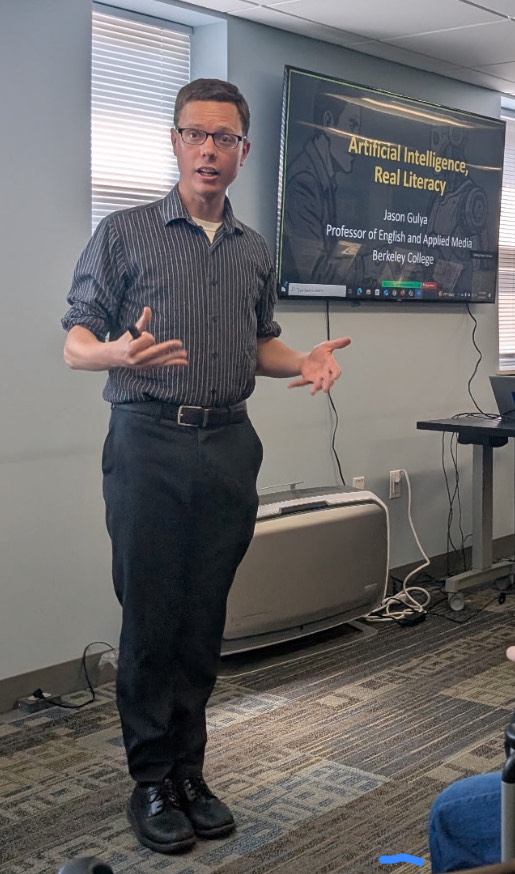
Any stories or insights that might help us understand how you’ve built such a strong reputation?
I experiment in public. Over the last two or three years, I’ve really committed to trying to tease out some of the most difficult, perplexing problems related to AI in education in very social spaces. At first, it made me feel very uncomfortable. It didn’t feel natural. It felt like I was just trying to make something happen. But instead of backing off, I decided to lean in and put my experiments and my incipient thoughts out there.
I very quickly learned that there is something engaging about someone who is willing to put themselves out there—especially if that person really understands that they don’t have the answers. Whenever I share something on social media, I use the very act of sharing as a way to think through it. That approach has also really helped me authentically connect on social media. I think we often focus too much on the posts that we share, and we don’t reflect quite enough on how we can consistently and authentically connect by commenting on other people’s posts.
I do think these two ideas—that we can experiment in public and connect authentically with others through social media—have helped me stand out.
Contact Info:
- Linkedin: https://www.linkedin.com/in/jason-gulya/
- Other: https://higherai.substack.com/