



We caught up with the brilliant and insightful Jasmeen Miah a few weeks ago and have shared our conversation below.
Alright, Jasmeen thanks for taking the time to share your stories and insights with us today. Can you open up about a risk you’ve taken – what it was like taking that risk, why you took the risk and how it turned out?
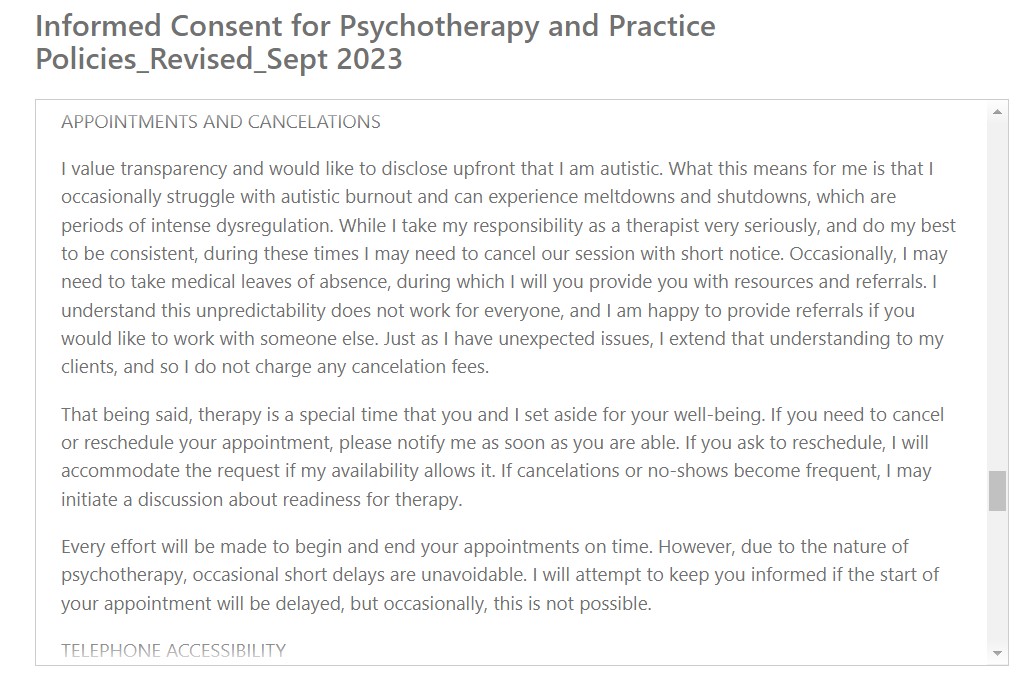
A big risk I took was coming out as autistic, especially professionally. I decided to become a therapist in 2016 and only recently found out I am autistic in 2022. I was just beginning my private practice following licensure. Part of being autistic, for me, is my directness and openness. A significant part of my mental health journey has been learning to unmask and embrace who I am more authentically.
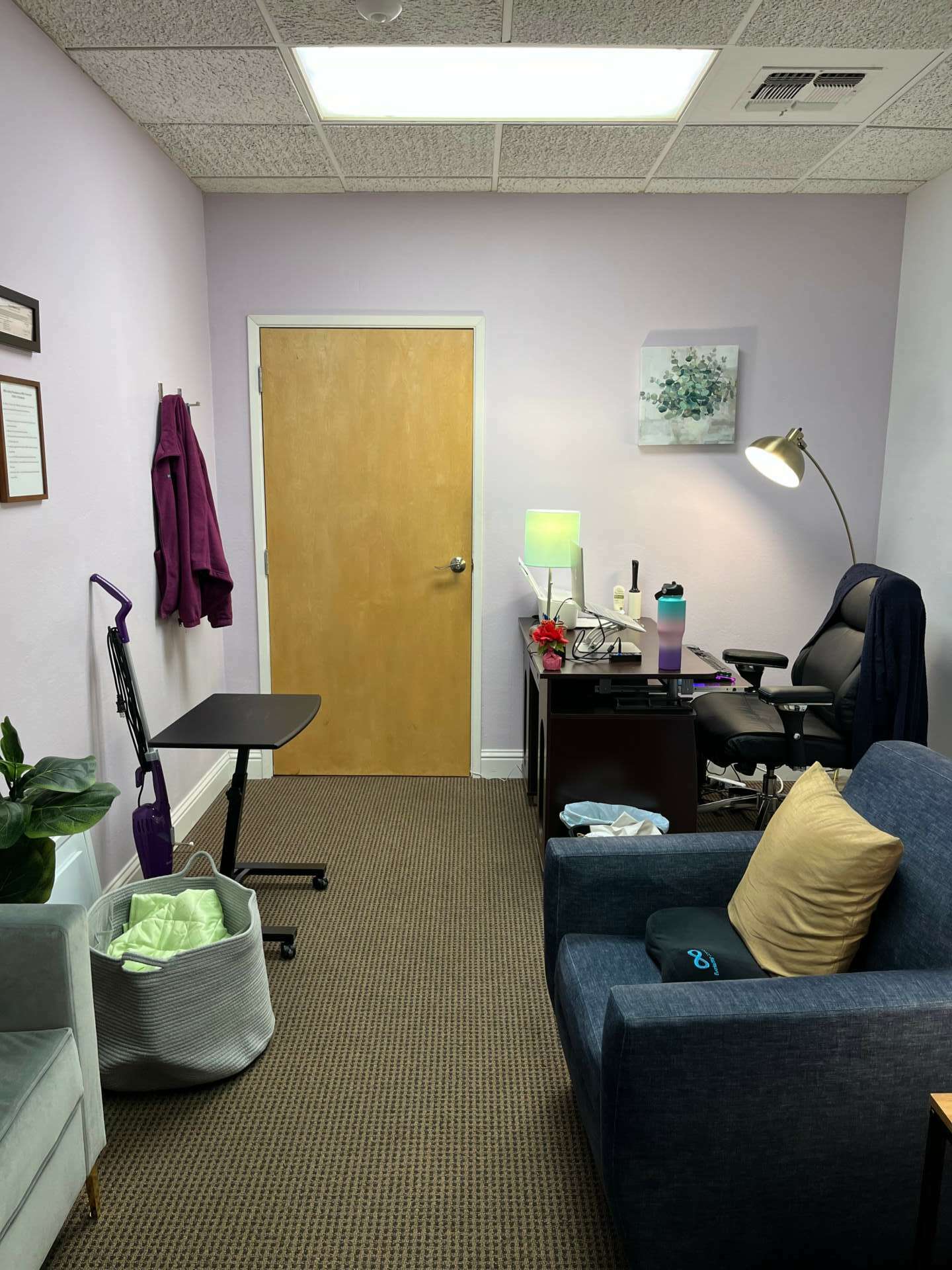
Part of unmasking meant I was finding stims that serve me. Stims are self-stimulatory behavior, which are actions people (especially autistic individuals) take that can be self-soothing, regulating, or just feel natural to us. Wanting to be more neuroaffirming to my clients as well, I created a resource basket with all types of fidgets and objects to meet various sensory needs. Now I can stim in session if I need to, and many of my clients have their favorite objects to use as well!
My autism explains why I have been so variably functioning, or have such a fluctuating capacity. In the years since my diagnosis, I have gone through the stages of grief from not having known such a big piece of the puzzle. After initial relief, I experienced much anger and some depression. I recognized what were formerly called “panic attacks” were actually autistic meltdowns.
Since I struggle with how to handle overwhelm, I was melting down fairly frequently, due to overthinking or sensory overload. Sometimes, this would render me unable to see my clients. I would occasionally have to reschedule some of them last minute. I made the decision that the most just thing to do was to tell my clients about my autism and how it impacts my professional abilities, and then let them decide if that works for them.
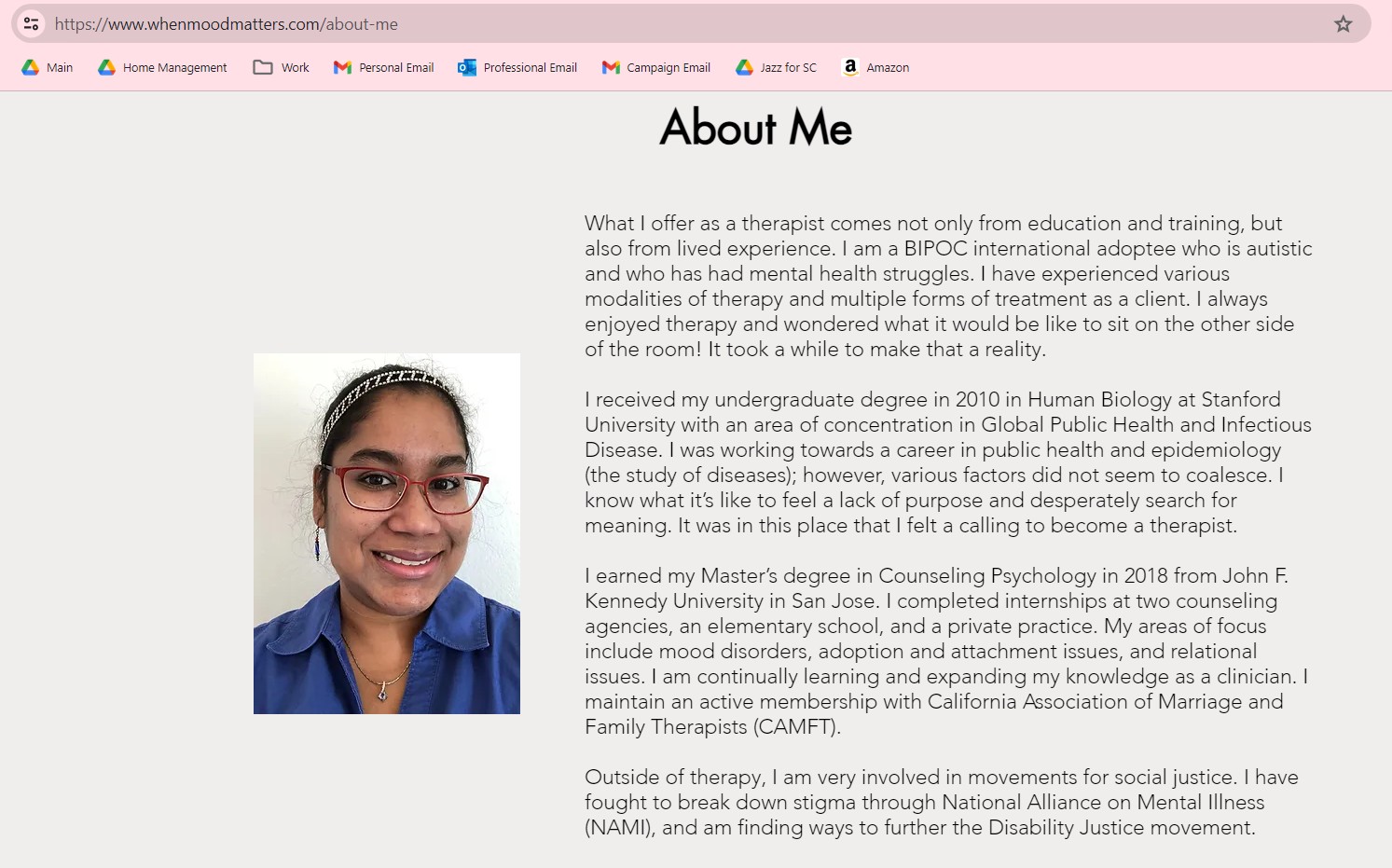
I have since noted that I am autistic on my website, and I have included it as a disclosure in my informed consent. I explain that I may not be the most consistent therapist, and encourage people to tell me if/when that doesn’t work for them and state that I am happy to provide referrals. This was a big risk since there is still so much stigma against autism. I even worried about if I should get to continue to be a therapist! I felt so disappointed in myself for not being more capable. I have since cultivated more acceptance for myself, though it is still a journey.
What was amazing is that all of my clients have responded very well. They either took the news neutrally, like any other part of my informed consent (which illustrates how as a society we are breaking down stigma of autism), or they received me positively. I serve a lot of neurodivergent clients, and many of them reported gratitude that I was so open about being autistic. I have since had people seek me out due to my autism! They know that I have lived experience and thus can potentially understand their experience more deeply.
We learn in graduate school to limit self-disclosure. I think being open about my autism has been a huge benefit to my clients and myself. Now when I am having a hard time, I do not beat myself up as much as I used to for having to reschedule. I also get to model disability justice, in that my disclosure is a form of accommodation for myself.
I feel like this opened up a whole different model. For example, I now don’t charge cancellation fees. I like to have mutual respect with my clients. They understand if and when I cannot show up, and I return the favor. I will note that I have the privilege financially to be able to do this, and I know not everyone can.
I was so scared to first announce my autism, thinking maybe I could even get in trouble. Now, my only regret is not coming out sooner!
As always, we appreciate you sharing your insights and we’ve got a few more questions for you, but before we get to all of that can you take a minute to introduce yourself and give our readers some of your back background and context?
I decided to become a therapist due to my own struggles with mental health. I had been in so much therapy myself that I decided it would be fulfilling to give back and help others on their journeys. I feel that my lived experience, paired with my extensive education and training, has made me a better clinician and also helped me on my personal journey.
I offer individual, couple, family, and group therapy. I am open to any unit of treatment. I usually work with adolescents through adults, and I just got on panel with Medicare to serve older populations. I am strongly client-centered, and use a mixture of modalities that best fit the client in front of me. I work from a trauma-informed attachment lens, and I really believe in the power of the therapeutic relationship as a significant healing factor. I also incorporate a lot of Dialectical Behavior Therapy (DBT) and Acceptance and Commitment Therapy (ACT) into my work. Additionally, I work hard to ensure a neuroaffirming stance and adapt skills and techniques to better fit my neurodivergent clients.
I am most proud of my ability to really drop in and show up for my clients with full validation and compassion. I have been through the mental health care system and had many mixed experiences. I have been told I bring a compassionate stance to my clients. I include self-disclosure when appropriate, and have been given feedback that this shows I understand my clients’ experiences on a more felt-sense. I think by being open with my ongoing struggles, such as how autism affects my professional abilities, I am modeling disability justice.

What’s a lesson you had to unlearn and what’s the backstory?
A huge lesson I had to unlearn was the myth of the meritocracy. I was raised to be a high achiever, and I truly thought if you worked hard enough, you could get where you wanted to go. I found that this was not true. I worked extremely hard in high school to get into Stanford, breaking records for awards for academic achievement, and graduating with a 4.6 GPA. I struggled in college with my mental health, needing to take two leaves of absence while there. I still ended up graduating with a decent GPA of 3.68. Unfortunately, I was never able to find work in my field of study, which was epidemiology. I needed two years work experience to even apply to a graduate program in public health. Thus, I ended up with various administrative and contract positions for years. Finally, I decided to become a therapist.
Even now, as a therapist, I am not traditionally “successful.” I do not work off of a business plan since I have that privilege due to my spouse making most of the money we need. I really feel called to serve people who otherwise cannot afford therapy, so I have a generous sliding scale and also take multiple insurances. My income is not high at all, and I still struggle with feelings of inferiority about this. I have to remind myself that I am here to help people, not to make money.

Have you ever had to pivot?
I mentioned that I had to take two medical leaves of absence while at Stanford. This was a huge pivot from what I had expected, and I ended up graduating a year later than my original class. I felt extreme shame, which wasn’t helped by the blame I got at Stanford. I remember being at a convocation in which Stanford staff told us that if we don’t graduate in 4 years, we are “wasting our parents’ money.” That was obviously never my intention. I also got put on academic probation my Junior year from having to withdraw from all of my classes two quarters in a row due to illness. I was in shock: me, the former overachiever from my high school, on academic probation!? This really humbled me.
I had to slowly rebuild mastery. First, I got a part-time job at Barnes & Noble. Next, I layered in a summer class at Santa Monica Community College. I was able to return for my redo Junior year and earned straight As after that!
Therefore, while my trajectory was not as I had initially planned, I still met my ultimate goal of graduating. While I also did not get into the field I thought I wanted to work in, I am very grateful that life led me to becoming a therapist. I think the take away for me is that life may not work out the way you think it should, but it could be unfolding for an even better calling.
Contact Info:
- Website: https://www.whenmoodmatters.com/
- Linkedin: https://www.linkedin.com/in/jasmeenmiah/
Image Credits
These were all taken by me or a friend. No image credit needed, as these are personal photos from my camera roll.