
We recently connected with Janisse Cuevas and have shared our conversation below.
Hi Janisse, thanks for joining us today. Can you open up about a risk you’ve taken – what it was like taking that risk, why you took the risk and how it turned out?
My career has always come down to one thing: taking what is complicated or chaotic, and making it feel human. That instinct is what led me to the biggest risk I’ve ever taken.
The risk itself wasn’t loud or dramatic. It was quiet, and it played out over years. A few years ago I made a bet that cut against how most large organizations operate. I argued that the way an institution communicates with its own people is just as strategic as how it talks to the press or the public.
At the time, I led communications for a major academic health system and university, home to more than 24,000 people: physicians and nurses, scientists running NCI-designated cancer research, faculty at one of the nation’s top-ranked eye institutes, students, and the staff who keep all of it running. These are some of the most brilliant, in-demand minds in the country, and that is exactly why this mattered. When your workforce is this talented and this busy, their attention is the scarcest resource you have. Yet email was king. Inboxes were overflowing, important messages kept getting buried, and the very people holding this enterprise together often felt like the last to know.
Here was the risk: internal platforms have a reputation for failing. They launch with fanfare and quietly become ghost towns. I was staking my credibility on the opposite outcome, and asking senior leaders to invest in something with no guarantee anyone would show up.
So we built it, and then we did the unglamorous work. Listening, iterating, telling real stories about real people, and making the platform genuinely useful instead of just official.
The turnaround was striking. Adoption more than doubled in a single year, open rates climbed to near-universal, and a channel people once ignored became one they now check out of habit.
What I learned is that the boldest risks in my field don’t look like skydiving. They look like betting on your own people, and trusting that if you give them something worth their attention, they’ll give it back.
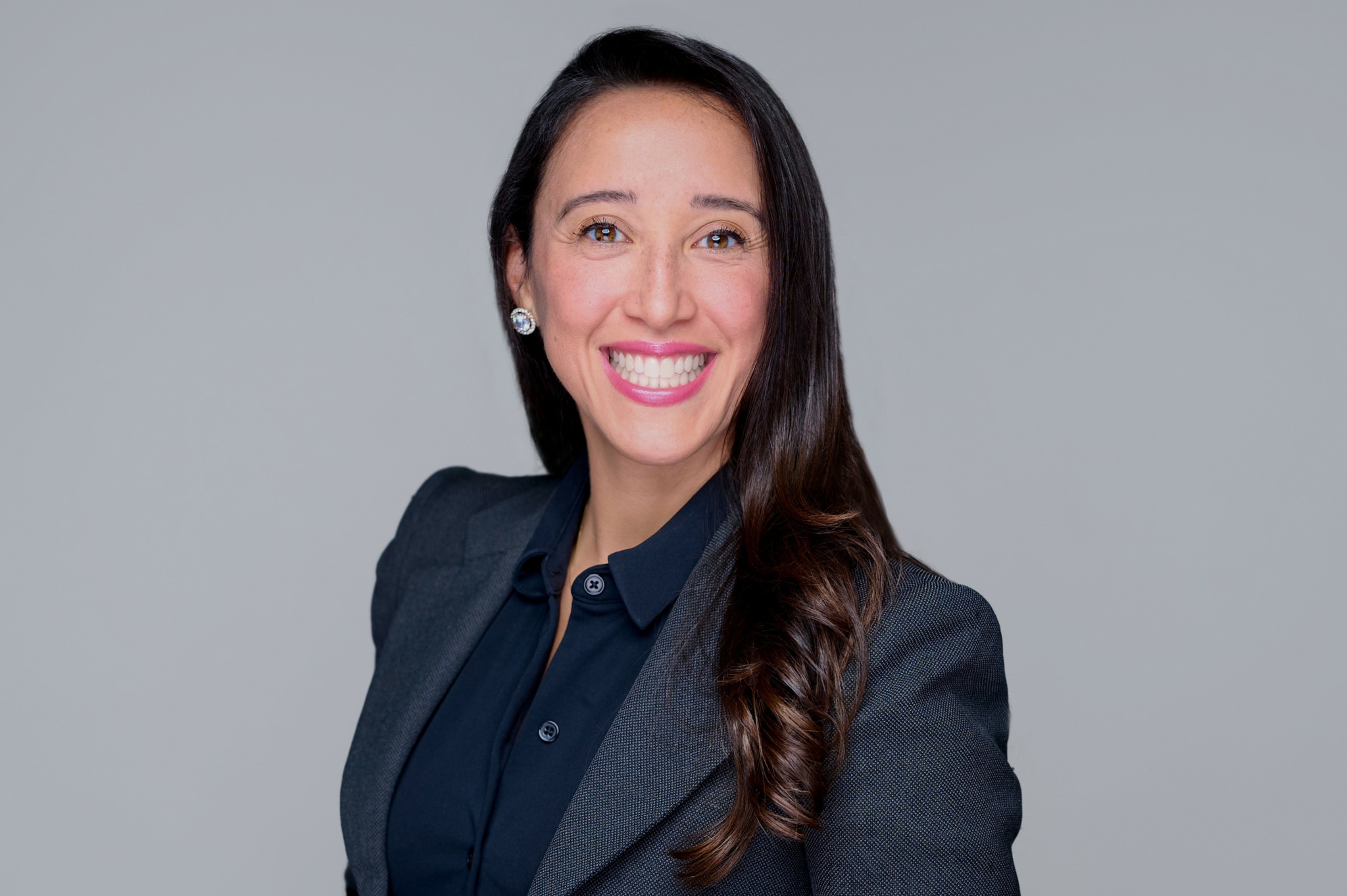
Great, appreciate you sharing that with us. Before we ask you to share more of your insights, can you take a moment to introduce yourself and how you got to where you are today to our readers.
I have spent my entire career fascinated by a single question: how do large, complex organizations actually talk to the people inside them? Most companies pour enormous energy into how they sound to the outside world, to the press, to customers, to the market. Far fewer think with the same rigor about how they communicate with their own people. That gap is where I have built my career.
I am a corporate communications executive, and for the better part of a decade I have led communications at the University of Miami and UHealth, the University of Miami’s health system and one of South Florida’s largest employers, with more than 24,000 faculty, staff, and clinicians. My work spans executive messaging, crisis communications, reputation strategy, and the day-to-day challenge of keeping tens of thousands of people informed, aligned, and genuinely connected to where the organization is headed. Before that, I built my foundation across very different worlds, from a global automaker to Wells Fargo to city government, which taught me early that good communication is good communication, whether you are reaching a boardroom, a newsroom, or a neighborhood.
The problem I solve is one almost every big organization has but few name out loud: the people who hold an institution together are too often the last to feel informed. Messages get buried, important news arrives secondhand, and employees end up feeling like spectators to their own workplace. I build the strategies, platforms, and stories that close that gap, so that the person on the front line feels as informed and valued as the person in the corner office.
What sets me apart is that I am a storyteller, not an announcer. Anyone can push out an update. My focus is on making people care, on turning institutional priorities into narratives that actually resonate. I lead with empathy for the audience and ground my decisions in data, which is also why I earned my Lean Six Sigma Green Belt: I believe the creative side of communication is strongest when it is paired with discipline and measurable results. And I am not afraid to experiment, especially now, as new tools and technologies are reshaping what is possible in this field.
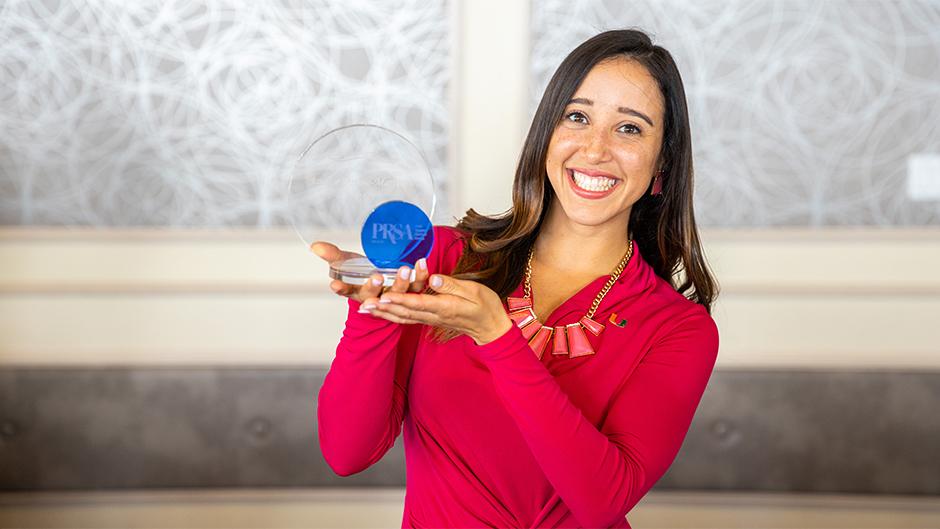
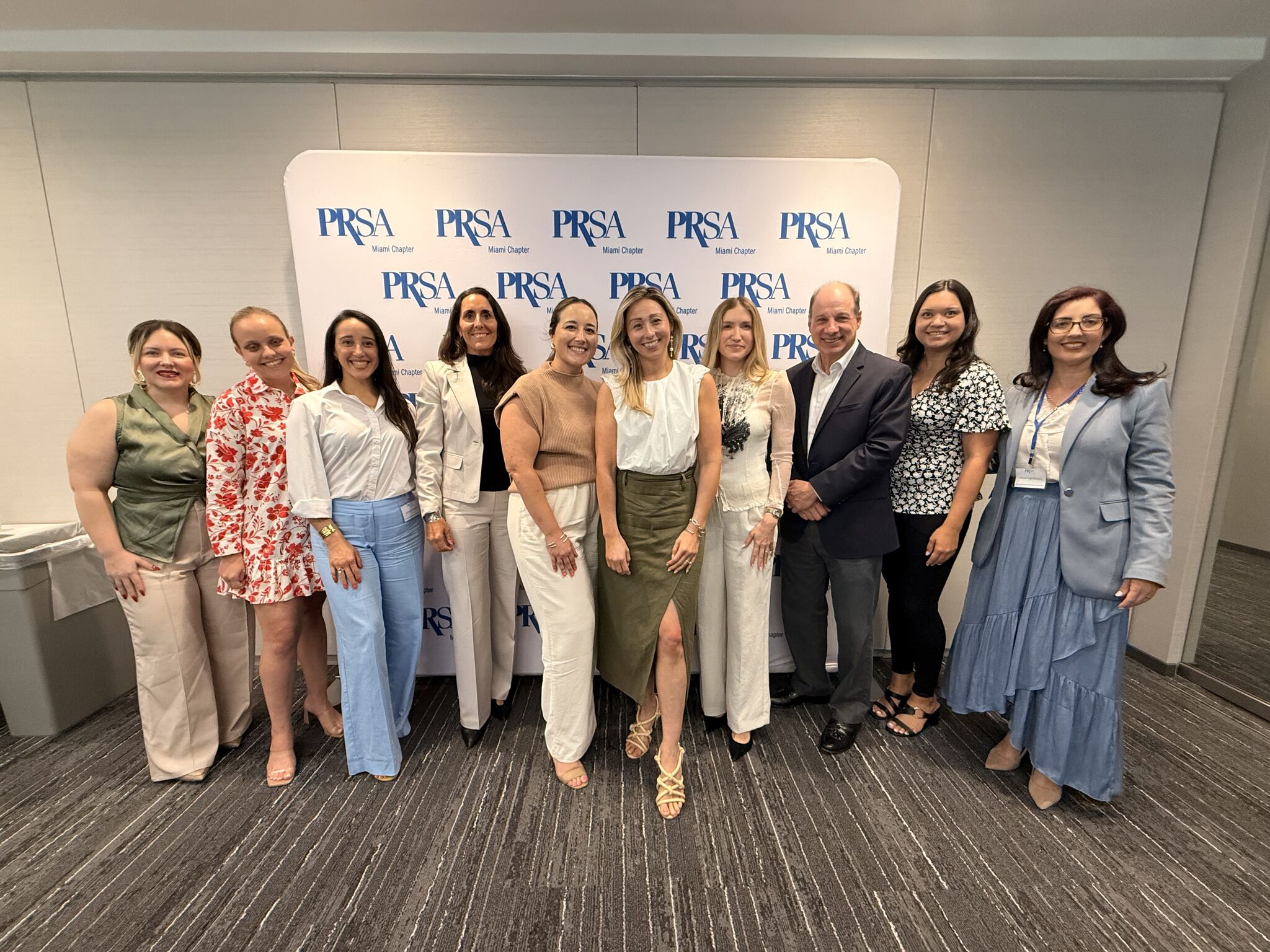
The recognition along the way has been deeply meaningful. I have been honored as Ragan’s Employee Communications Professional of the Year and as one of Ragan’s Communicators of the Year, and selected for Morning Brew’s Leadership Accelerator. One honor that means more to me than most is my connection to PRSA Miami. Years ago, when I was just starting out, they named me a Communicator to Watch. Today, I serve as a committee board member for that same organization, helping support and champion the next generation of communicators. Coming full circle like that, from being recognized to giving back, is something I do not take for granted.
But what I am most proud of is harder to put on a resume. It is the trust I have earned to be in the room when the stakes are highest, and the team and culture I have helped build along the way. When something difficult lands on the organization, people trust that it will be handled with clarity, honesty, and care. If there is one thing I would want a reader to take away, it is this: communication, done right, is not about noise. It is about making people feel seen. That belief has shaped everything I have built.
Learning and unlearning are both critical parts of growth – can you share a story of a time when you had to unlearn a lesson?
Early in my career, I believed the plan was sacred. If I built a detailed enough strategy and executed it flawlessly, success would follow. I had the timeline, the channels, the messaging, all of it mapped. What I had to unlearn is that the plan is not the point. Adaptability is.
This lesson did not come only from work. It came from life. I am a woman of faith, and some seasons teach you the power of surrender. I am someone who tends to want to control every variable, and through deep grief and loss, God has humbled me and taught me that control was never mine to hold. That faith is the quiet foundation under everything I do. It is what allows me to stay steady when a plan falls apart, because I have learned to trust the bigger picture even when I cannot see it.
I learned this leading strategic campaigns across very different organizations, from a global corporation to a city government to nonprofits running on lean budgets and outsized missions. The lesson kept repeating itself: the launch date is almost never fully yours to control. A go-live gets postponed. Leadership shifts priorities overnight. The market moves, or the moment you planned for quietly stops being the moment that matters. The people who thrive, communicators and leaders alike, are not the ones with the most perfect plan. They are the ones who can pivot without losing the thread.
If I had to break it down into something useful for anyone, in any field, it would be three things:
First, build the contingency before you need it. Do not wait for the crisis to ask what Plan B is. I walk into every launch with the next two moves already sketched, and I make sure my stakeholders know them too. When something slips, calm is a strategy, and people follow the person who already has the next step.
Second, when the go-live gets postponed, do not freeze. Repurpose. A delay is not dead air, it is runway. Use the extra time to build anticipation, tighten the message, pre-position your audience, or resequence the rollout so the eventual launch lands harder. The work you did is not wasted. It is waiting.
Third, and this is the one I wish someone had told me sooner: it is okay to break things. In fact, I encourage it. To be clear, I do not mean being reckless. I mean giving yourself permission to experiment, to try something before you feel fully ready, to fail small and learn fast. This is where the leaps happen. We are living through a once-in-a-generation shift with AI, and the instinct is to wait until it feels safe and proven. Do not. Invest in yourself. Try the new tool. Test it on real work. Let it change how you do what you have always done. You will not get it perfect, and that is exactly the point. The people willing to experiment now are the ones who will define what comes next in every industry.
It all comes back to one shift: stop trying to control the plan, and start trusting your ability to adapt when it changes.

Any advice for managing a team?
I lead a small but mighty team, and managing a cross-functional group has taught me that morale is not built on perks or pep talks. It is built on two things: ownership and recognition.
Here is what I have learned. The fastest way to drain the energy out of a talented team is to turn them into order-takers, people who simply execute other people’s requests all day. In communications especially, it is easy to become the office that everyone hands tasks to. So I work hard to do the opposite. I bring my team into the strategy, not just the execution. I want them to understand the why behind the work, to have a voice in shaping it, and to feel genuine ownership over the outcome. People protect what they help build. When someone feels like the work is theirs, the quality and the commitment take care of themselves.
The second piece is recognition, and I mean the real kind. So much of our best work is invisible by design. The crisis that never became a crisis because we got ahead of it. The message that landed so cleanly no one had to ask a follow-up question. That work rarely gets applause, because when it is done well, nothing dramatic happens. So I make a point of naming it out loud. I celebrate the quiet wins, not just the flashy launches, because I want my team to know that I see the full picture of what they do, including the parts no one else notices.
If I had to give one piece of advice to anyone leading a team, in any field, it would be this: protect your people from burnout by giving them purpose, not just tasks. A team that understands the mission and knows they make an impact will outperform a bigger, better-resourced team that does not, every single time. Morale is not something you manufacture. It is what happens naturally when people feel trusted and valued.
Contact Info: