

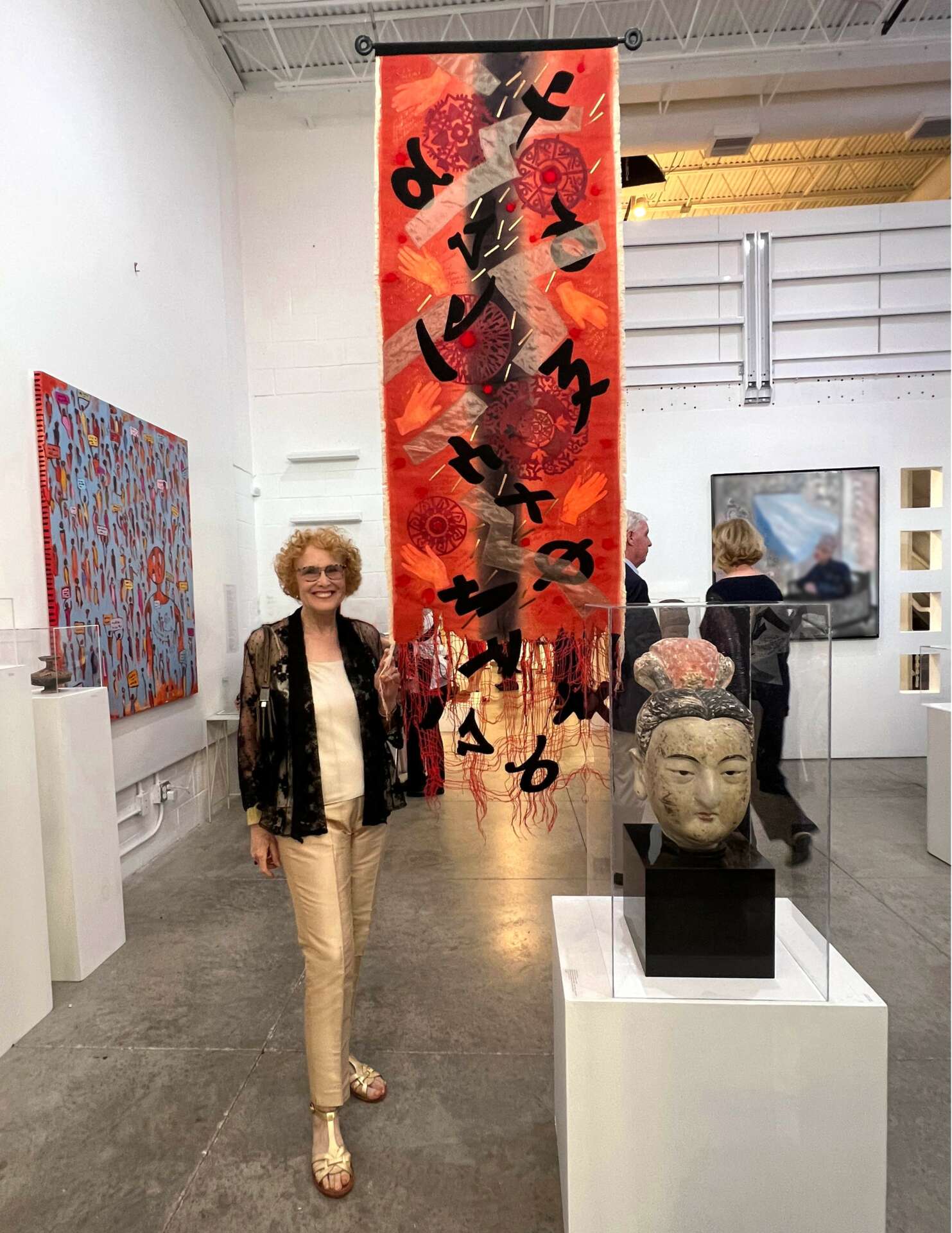

We’re excited to introduce you to the always interesting and insightful Jana Millstone. We hope you’ll enjoy our conversation with Jana below.
Jana, appreciate you joining us today. Earning a full time living from one’s creative career can be incredibly difficult. Have you been able to do so and if so, can you share some of the key parts of your journey and any important advice or lessons that might help creatives who haven’t been able to yet?
I’ve supported myself as a clothing designer, illustrator, jewelry designer and ultimately as Design Director for gift products and home decor at Lenox China. I always felt that I would have rather been painting but have learned that all creative pursuits require the same disciplines. Now as I work full time on my own creative projects I realize that those lessons paved the way to any success I have had. I had to learn how things were made to be able to design them. I had to learn how to plan and manage time. I had to learn how other people’s jobs impacted what I did and what I did impacted other peoples jobs. I had to learn how to present my ideas in order to persuade others to accept them and collaborate in making them a reality. I had to learn what is probably the most important lesson for all creative people, which is to accept other people’s ideas and opinions without taking them as personal challenges. None of this would have been on my radar when I was starting out.

As always, we appreciate you sharing your insights and we’ve got a few more questions for you, but before we get to all of that can you take a minute to introduce yourself and give our readers some of your background and context?
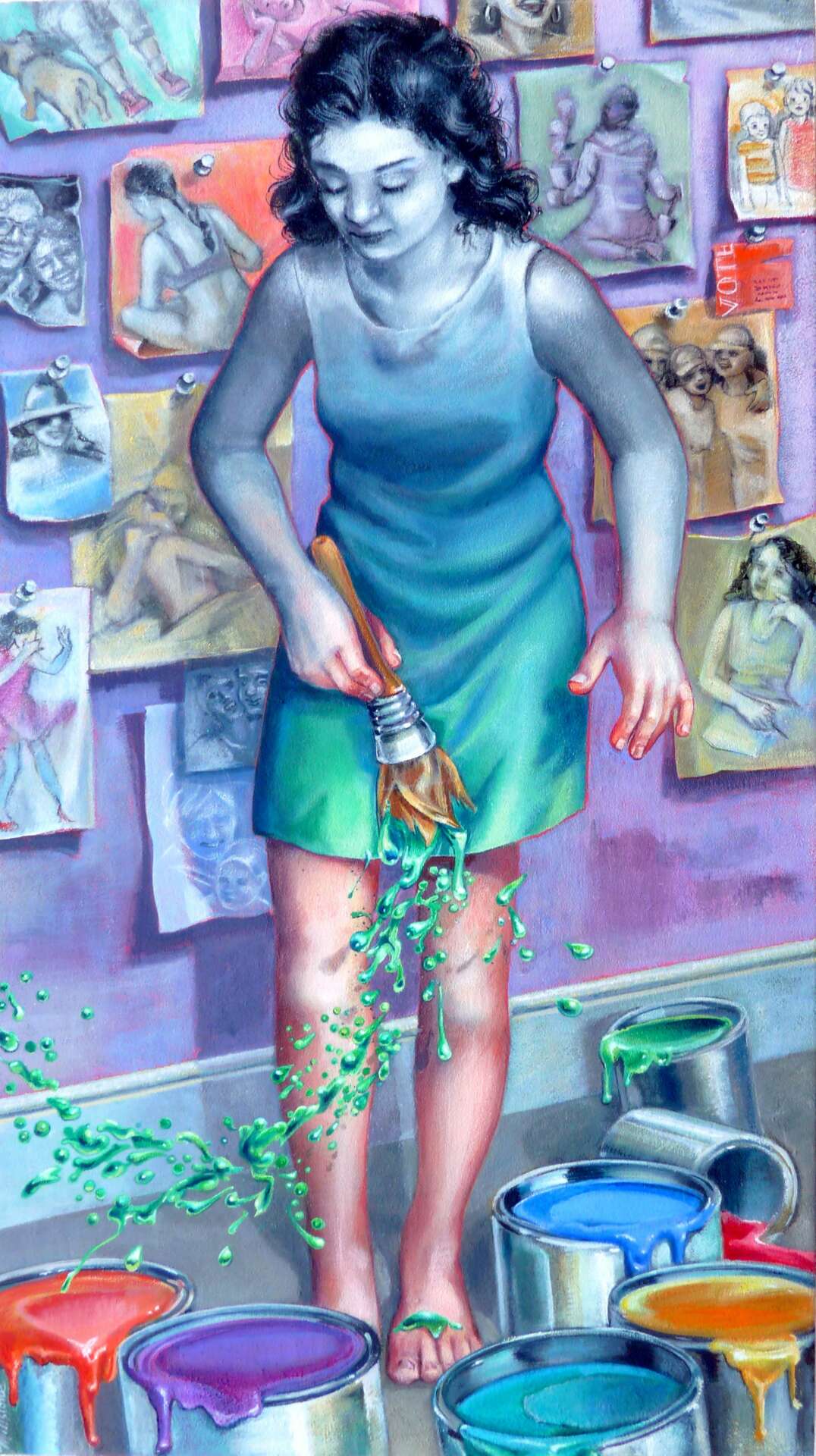
I’m an artist, but also an explorer. I’m intrigued by new ways to say what I want to say. For me there is joy in learning a myriad of techniques to find those that will help my art speak in meaningful ways. People often ask what medium an artist uses. Typically I use paint on shaped panels that I’ve constructed but I’ll use whatever it takes to get the job done.
My art is created in different series inspired by topics that I find compelling.
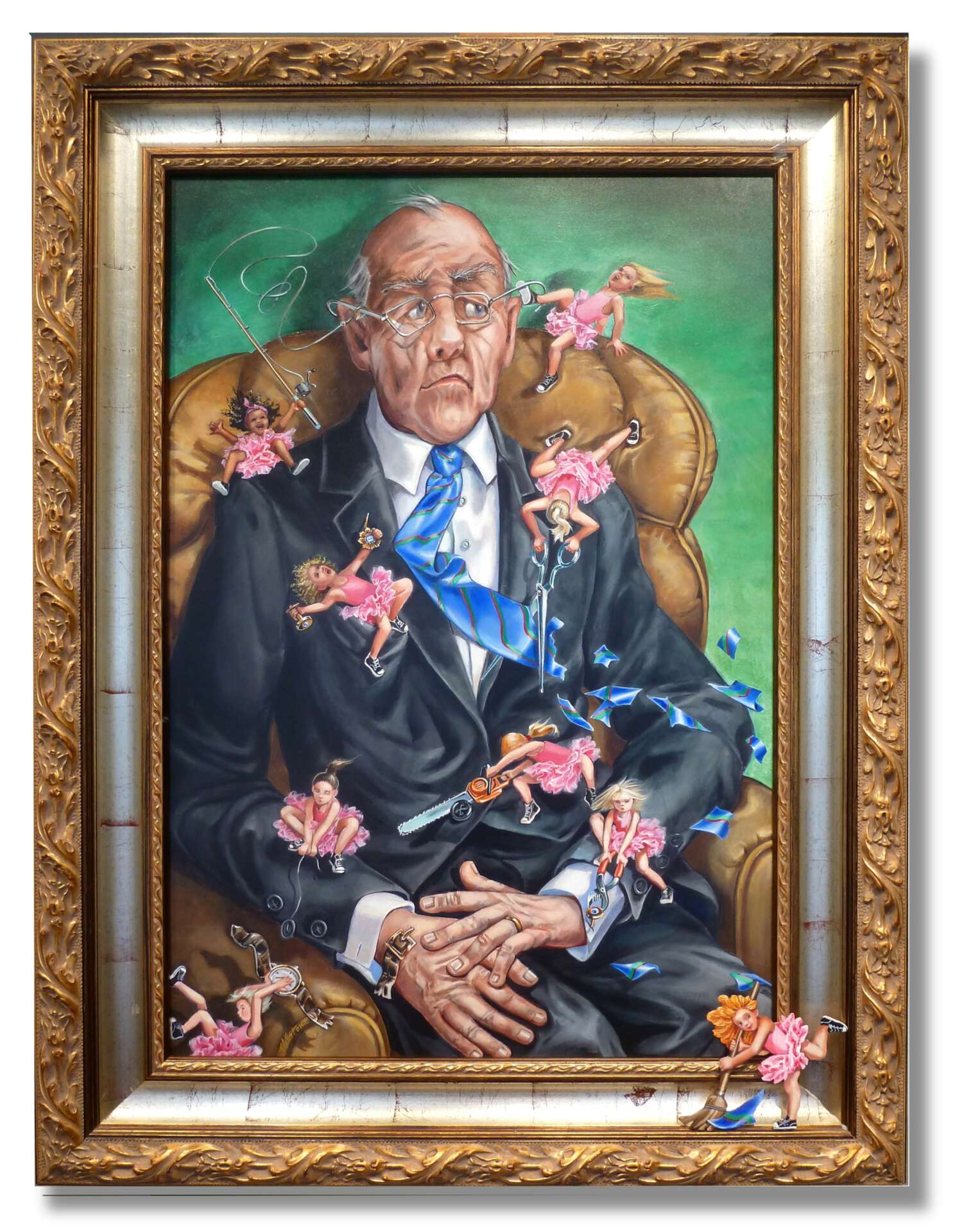
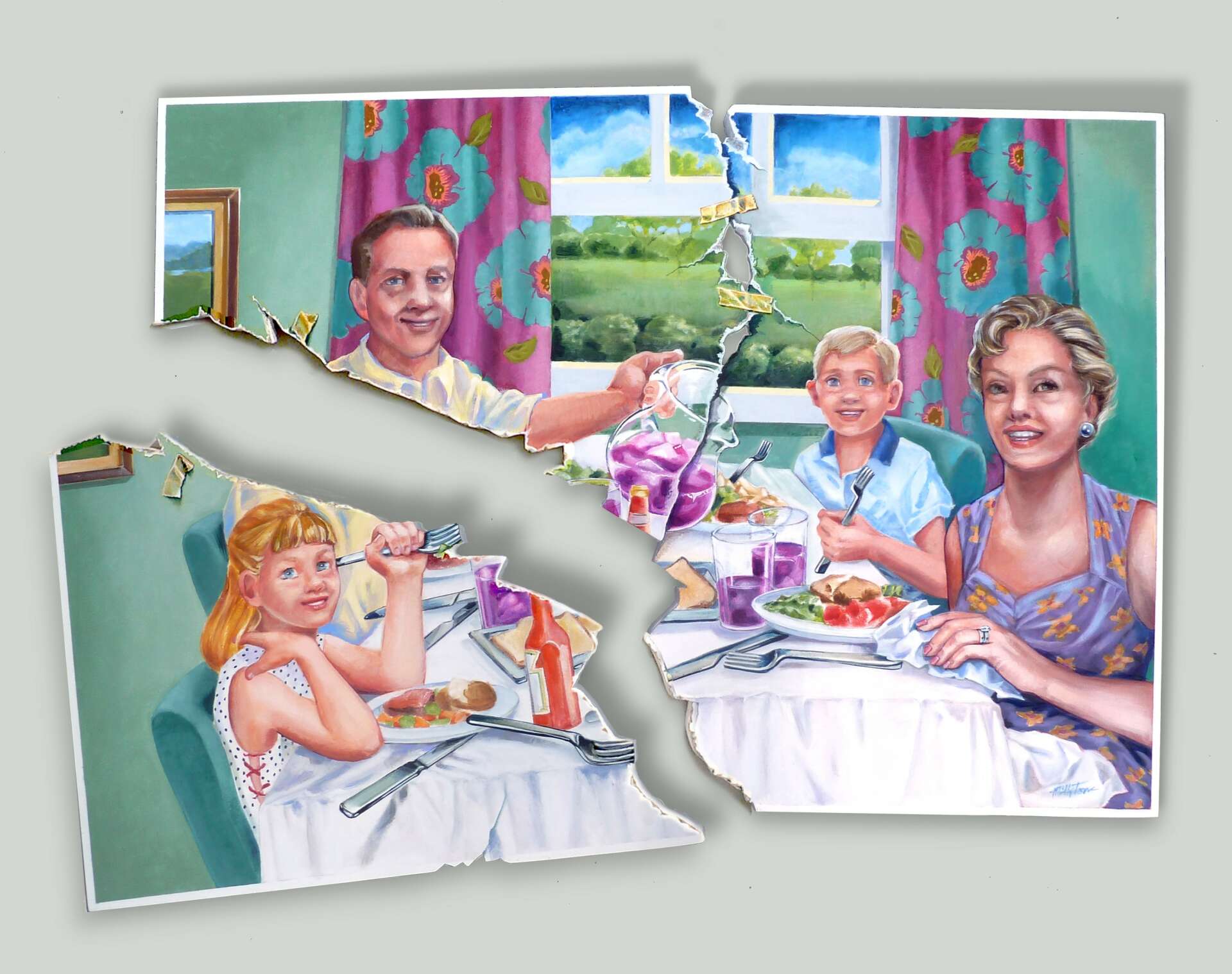
Following are a few examples from these different series. Fables For Our Times series are narrative works I use to tell stories about social and political issues that concern me. They are often brightly colored and comical but address serious themes that comment on women’s rights, family dynamics and the environment. For example: On view at museums are lots of mature, self-satisfied men, the smug captains-of-industry who stare out from gilded frames. If there is a painting of a woman, it is usually made to accompany her revered husband or she is nude. I decided to take on one of those entitled men. And who better to do it than a bunch of today’s promising little girls in tutus and hi-tops as they strip him of all the accouterments of success including the medals, cufflinks and gold watch. This became Iconoclasts – see painting.
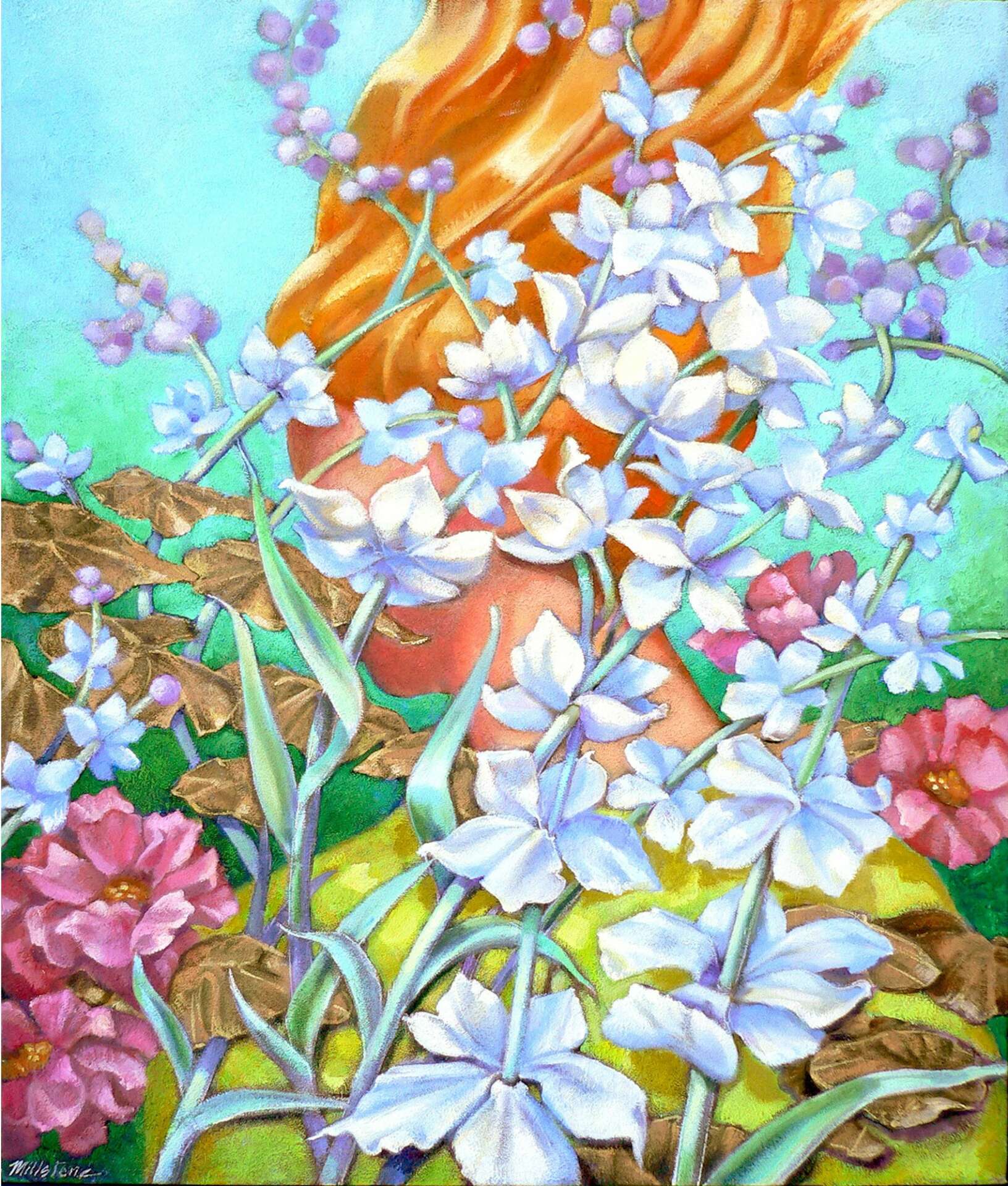
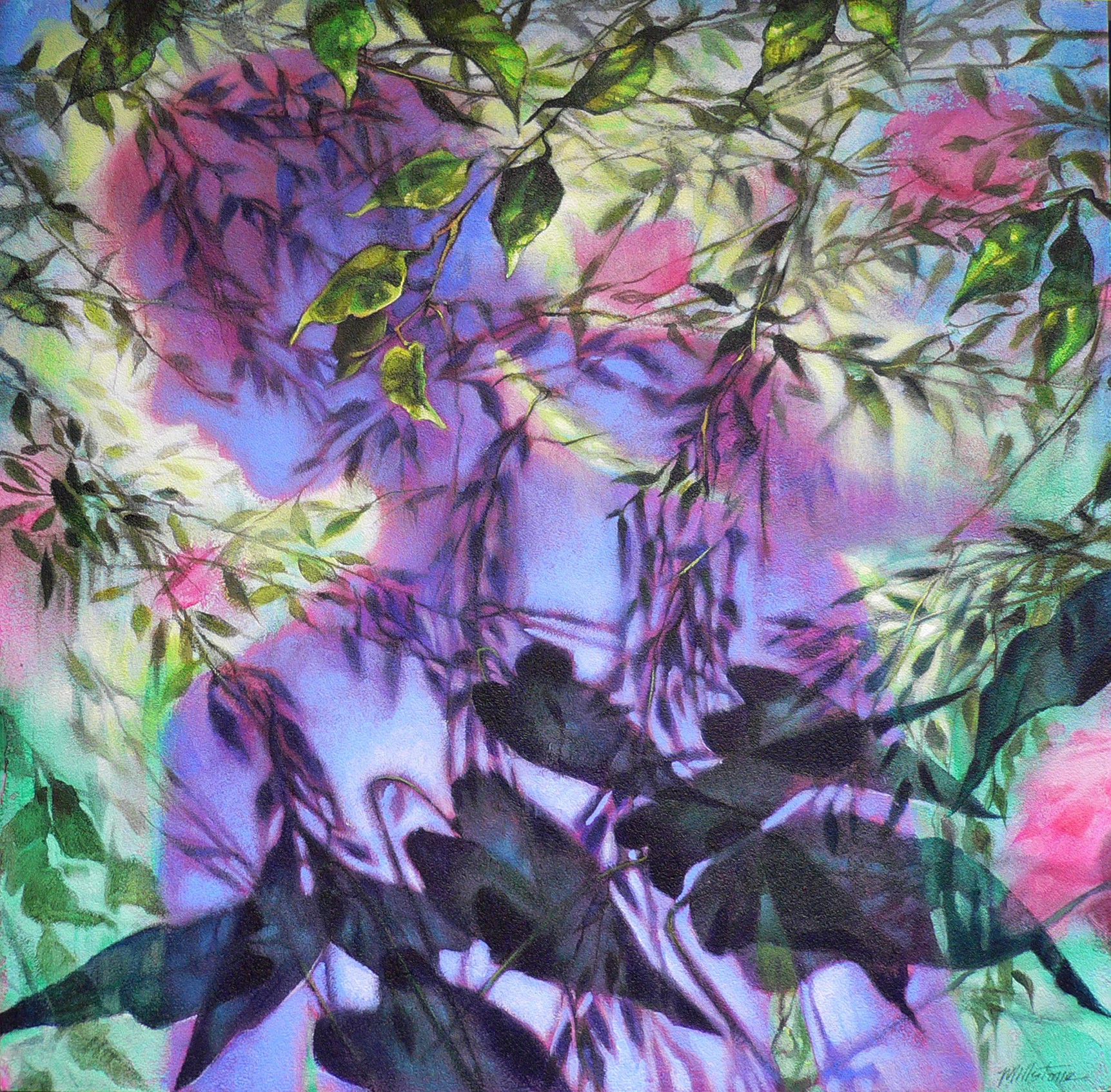
Another series of works called Garden Shadows is an ode to nature, honoring the richly layered botanical world around us, often integrating it with the human form. These paintings are both celebrations of our relationship with the natural world and a plea to sustain it.
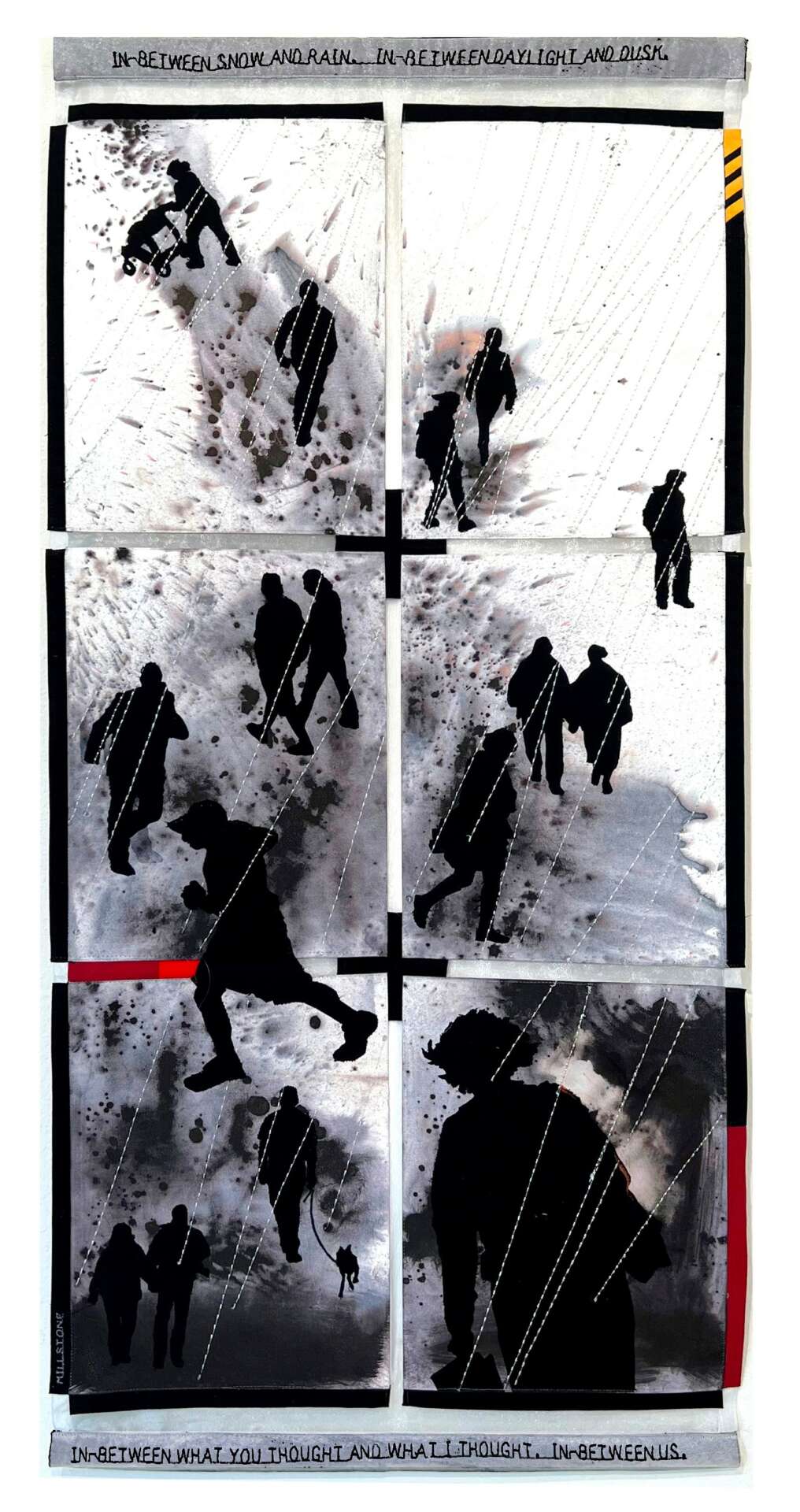
Having worked as a clothing designer, I have loved the tactile and diverse world of textiles. I’m now using those lessons in my art work making fiber works as well.
Born and educated in New York City, I hold a BFA from Pratt Institute with additional studies at Parsons School of Design, The Art Students League and the Fashion Institute of Technology. I’ve exhibited in New York City at Brooks Jackson Iolas Gallery, Porter Contemporary, Site-Brooklyn as well as Susquehanna Museum of Art, PA. Winner of the Society of Illustrators scholarship, I’ve been fortunate to receive numerous awards including the statewide Florida’s Finest first prize. I’m a member of: The Petticoat Painters; Women Contemporary Artists (WCA) and National League of American Pen Women (NLAPW).
Do you think there is something that non-creatives might struggle to understand about your journey as a creative? Maybe you can shed some light?
Well, there are some myths that I like to try to dispel. Most have to do with the hush-hush topic of money. I’ve been told never to discuss politics, religion or money, but I’m gonna step out here because MONEY is central to the whole issue of art-making.
Myth: “Artists like to make art anyway so they don’t need the compensation received for other forms of work.”
Continue that thinking and people who have more pleasurable jobs should get less money than those who have less desirable jobs. Obviously, that is not the way society works. In fact, usually the more physically difficult and taxing jobs net a lower remuneration. People in high paying fields are rewarded for the study and practice they bring to their work.
Myth: “Looks at those prices! This artist must be very rich!”
Some economic realities: Here’s the first hurdle: artists need space to work. There are lots of romantic myths about poor artists slaving away in attics, but you still have to pay for those attics. Artist’s materials are expensive, particularly those that are archival, as it would be wrong to sell a piece of art that is going to fade or fall apart. Professional framing that will protect the work can be expensive. If an artist is fortunate enough to have a gallery exhibit their work, the gallery takes up to 50% of the sale. That may sound high, but galleries also have to mount the exhibit, pay the rent, and publicize the work making sure people come to see it. Break down the hefty price of $10,000 for a work of art and know that the artist may walk away with $5000 for the work that occupied two or three months to produce. Most people don’t realize that when they’re looking at the sticker price. A solo gallery show that exhibits many works is rarely a sell-out. Which means that many of the pieces that have consumed months of work will not be sold. Most exhibits outside large cities are not solo exhibitions but rather feature the work of multiple artists, so the opportunities to show several pieces from an individual artist are limited. Many artists join cooperative galleries where they pay for space to exhibit and sometimes pay an additional portion of their sales to the cooperative. If the work is going to be exhibited in another city shipping expenses and insurance costs need to be added, in case the work is lost or damaged. Transportation for artwork is not the same as tossing a carton on a truck. I’d want people to think about these things as they consider the price of a work of art.
Myth: An artist that is any good doesn’t need a “day job.”
Artists who can spend all their time in the studio and have someone else worry about publicity and sales are rare and fortunate. Artists typically support their art practices by teaching, working in an applied commercial field, galleries or museums and juggling part-time work that allows them time to create. Artists also pay fees to enter competitions to exhibit work. Many artists look to institutions to give them grants, awards, residencies and commissions that help finance their practice and special projects. Often, numerous artists compete for these opportunities; the requirements for application are often quite rigorous for the few slots available. A good part of the artist’s time may be spent writing proposals and soliciting other means of support. A serious social media presence is another task in an artist’s career. Some of the finest artists have never been able to support themselves exclusively by their art. So you can use a financial yardstick to measure the financial success of an artist but it certainly does not measure the art.

In your view, what can society do to best support artists, creatives and a thriving creative ecosystem?
I would say this is largely an economic issue, but it also has to do with education. Many people feel that “Art” is an elitist occupation and enjoying art is reserved for people who know a lot about it and have a lot of money and free time. My own belief is that art is an integral, essential and enduring aspect of society. Everyone benefits from it. Given how expensive it is to make art and to put it out there, it would be nice if the expenses were shared by the community at large. Workspace and exhibition space are great problems, particularly in Florida as the cost of real estate escalates. I’d like to see more incentive for builders to provide exhibition space within their construction projects, as well as tax incentives with proceeds dedicated to supporting the arts. The art centers in our area, do a tremendous job to involve the community in the arts, and offer exposure and education to everyone. In Sarasota where I live, the performing arts are well supported. There has been a herculean effort on the part of arts advocacy groups and organizations like the National League of American Pen Women to sponsor and cultivate emerging talent. But despite numerous groups advocating for them, the visual arts are still struggling though there is a wealth of talented artists here. That was not true in the 1950s when people came here because it was known as an innovative mecca for artists and galleries. I’d like to see a return to that time.
Contact Info:
- Website: www.janamillstone.com
- Instagram: https://www.instagram.com/jana.millstone/
- Facebook: https://www.facebook.com/jana.millstone.1/