



Alright – so today we’ve got the honor of introducing you to Jan Downey. We think you’ll enjoy our conversation, we’ve shared it below.
Hi Jan, thanks for joining us today. What did your parents do right and how has that impacted you in your life and career?
Like most parents, mine didn’t always get everything right! However, the one area they excelled at had an impact on my life, and certainly on my art. As appreciators of the creative process, my parents did not restrict my tendency to experiment, even to the point of making messes and creating chaos. They willingly gave over a “workspace”–our large, chrome edged, formica kitchen table–to my energetic operations, regardless of any apparent outcome. My experimenting ranged far, often involving my dad’s soldering iron, or the clothes iron, as I ironed out wax applied to a batik project. I boiled things on the stove, fashioned mixed media jewelry creations, and of course used copious amounts of paints, inks, pastels, and paper. They never showed disdain, nor did they ever try to dissuade me from attempting some ludicrous concoction. Therefore, I made plenty of errors, had multiple failures of methods and materials, and had to clean up mis-judged outcomes.
What I learned from this freedom to create–and to make mistakes–taught me to rethink, reassess, replan, and retry. Mistakes were and are part of the process of challenging the outer edges of materials, as well as my capabilities. Artists exclaim over “happy accidents,” appreciating a “good save” outcome. Thanks to my parents’ encouragement and hands-off attitude, I have learned to rebound from errors, to make those “happy accidents” work without the angst that often accompanies them. I continue to find great satisfaction experimenting with materials and methods, unafraid of making mistakes.
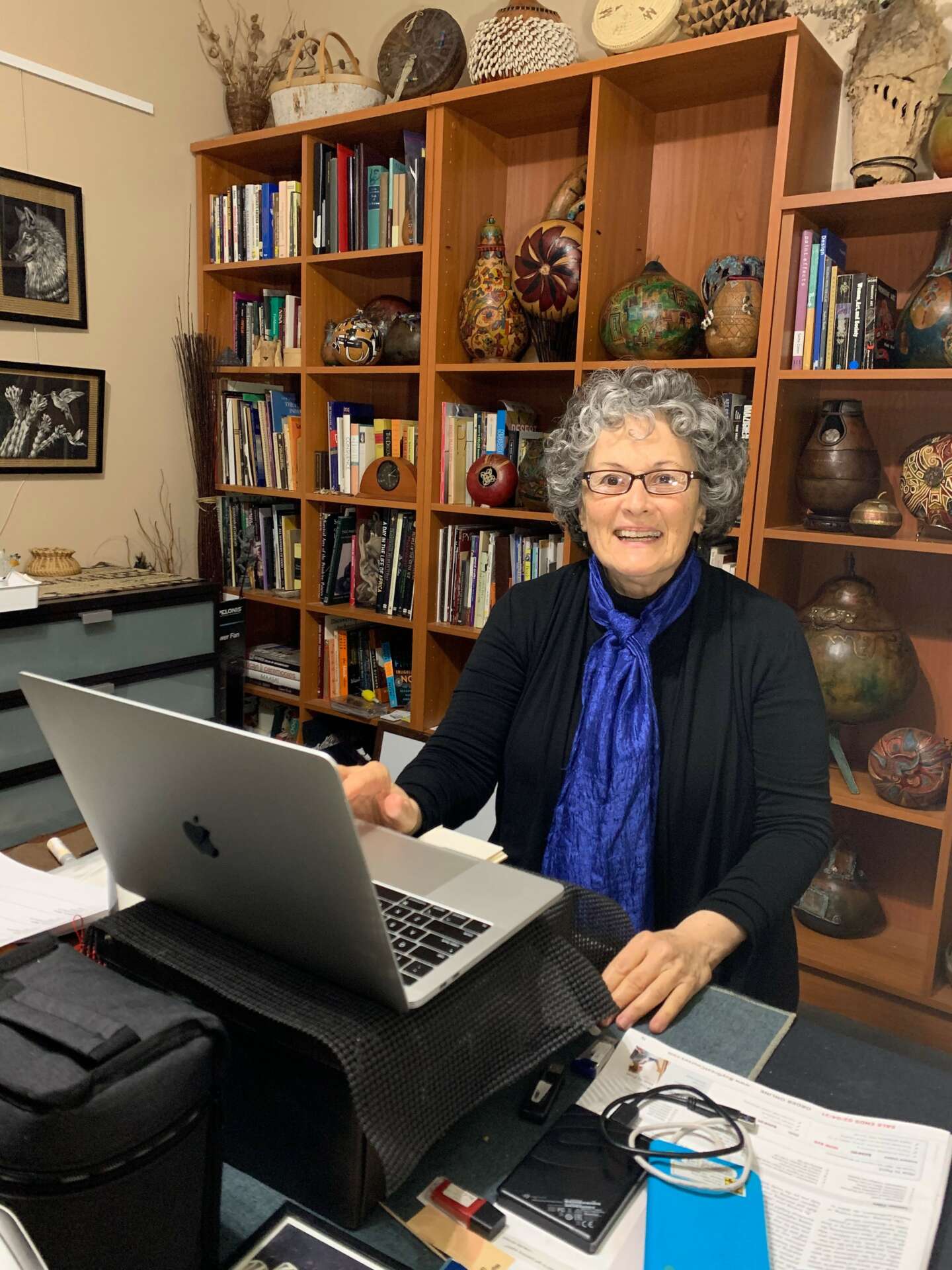
Great, appreciate you sharing that with us. Before we ask you to share more of your insights, can you take a moment to introduce yourself and how you got to where you are today to our readers
Two kinds of experiences while growing up had major influences on the passions I developed and the person I became as an adult. One was the accumulation of hours spent experimenting with materials and tools and methods, as I mentioned above. The other kind of experience was spending many weekend hours with my dad at one or another of the wonderful Chicagoland museums, becoming mesmerized by science, art, and the natural world.
While my parents encouraged my appreciation of the arts, they dissuaded me from pursuing art as a career. I chose a different path altogether. And then, many years later when I was a single parent in a small midwestern town taking classes at the local community college, I took one anthropology class that changed my life. Anthropology: the study of all humans, in all places, throughout all time—I was hooked and anthropology became my second passion. Eventually I completed degrees and fieldwork and became a cultural anthropologist. I loved my career! Through working with people in diverse cultures here and all over the world, I was privileged to experience first-hand the commonalities and differences that make up the range of what it is to be human.
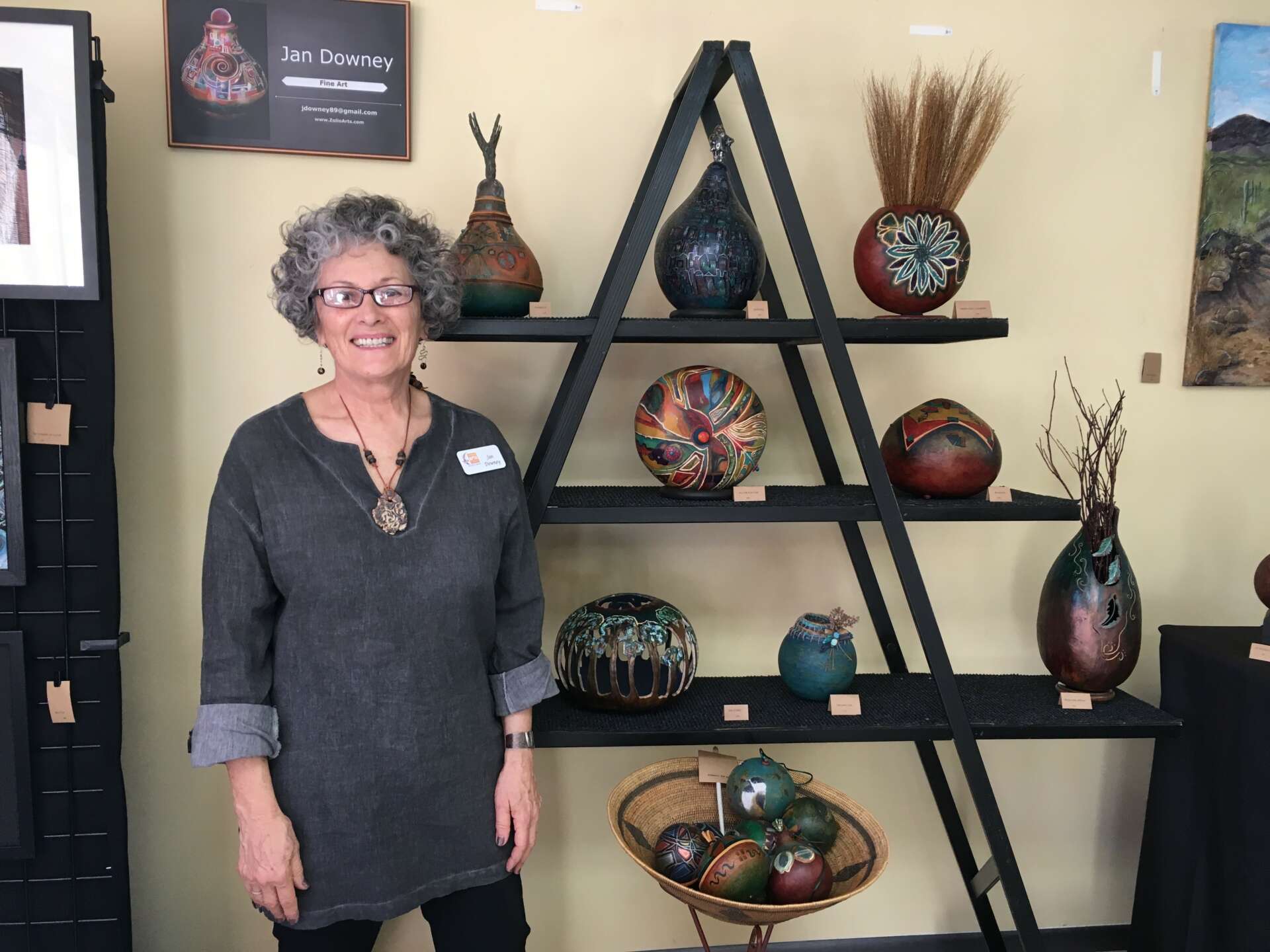
After my career as a cultural anthropologist, retirement’s gift was the ability to revisit the arts. I was attracted to gourds as an art medium and because of the role gourds played in the lives of humans across the globe for eons. I saw them used as water carriers, storage vessels, scoops, musical instruments, and containers of all kinds, even when other materials were available. They are hearty, strong, lightweight, and travel well with people who cross many kinds of landscapes. They grow in many different climates and could be passed down in families. I appreciated how easily they lent themselves to being carved, etched, painted, and embellished.
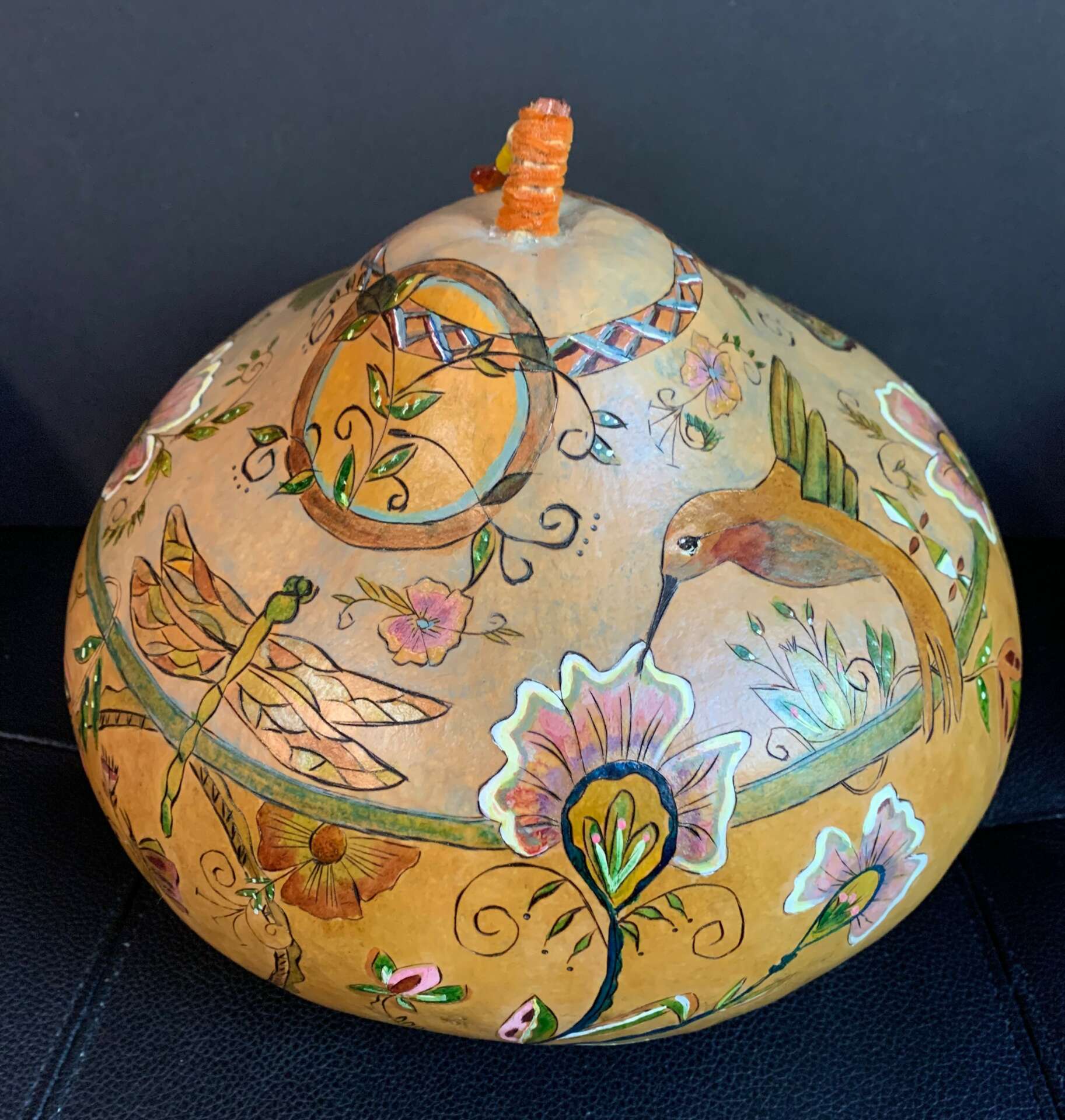
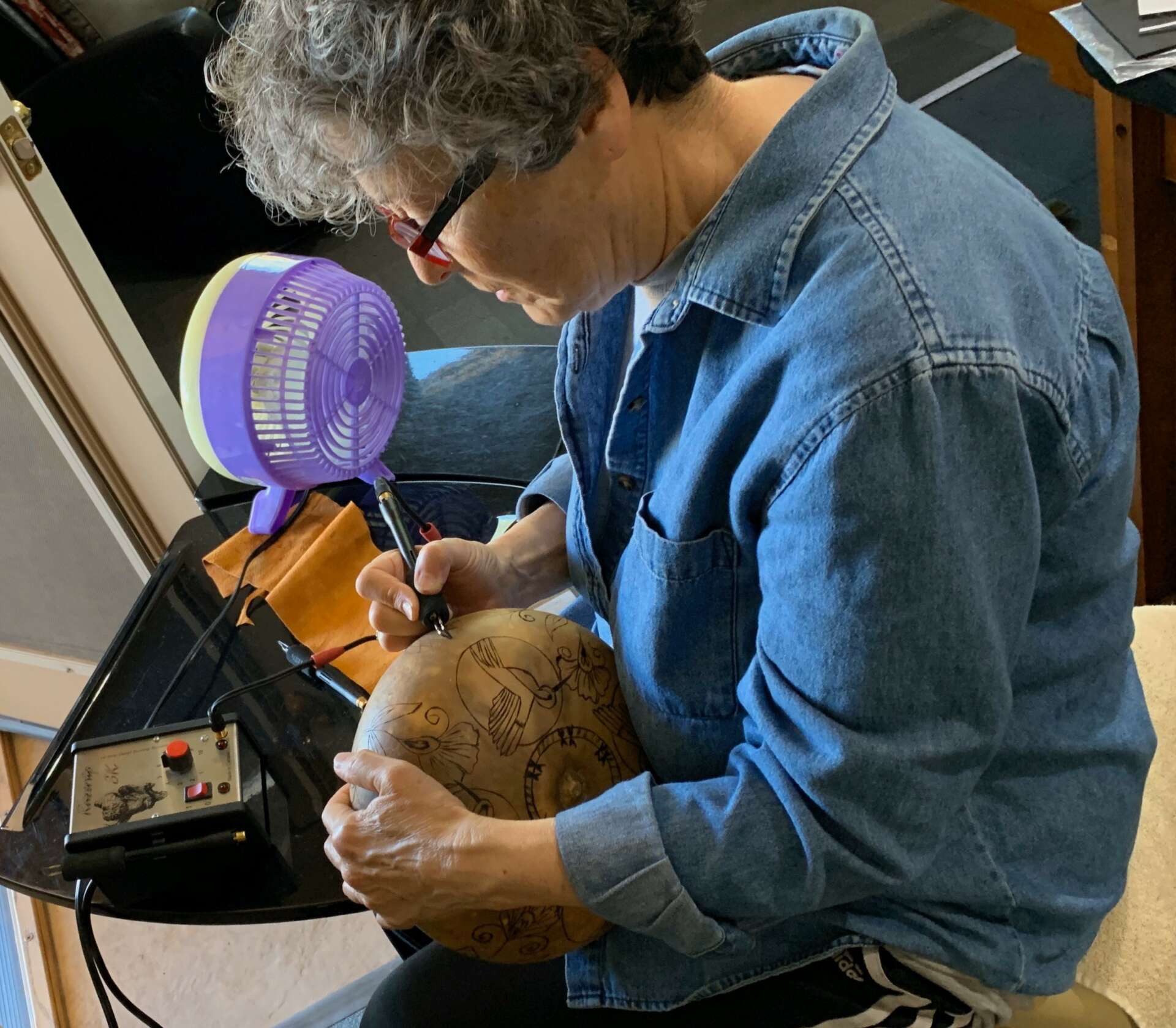
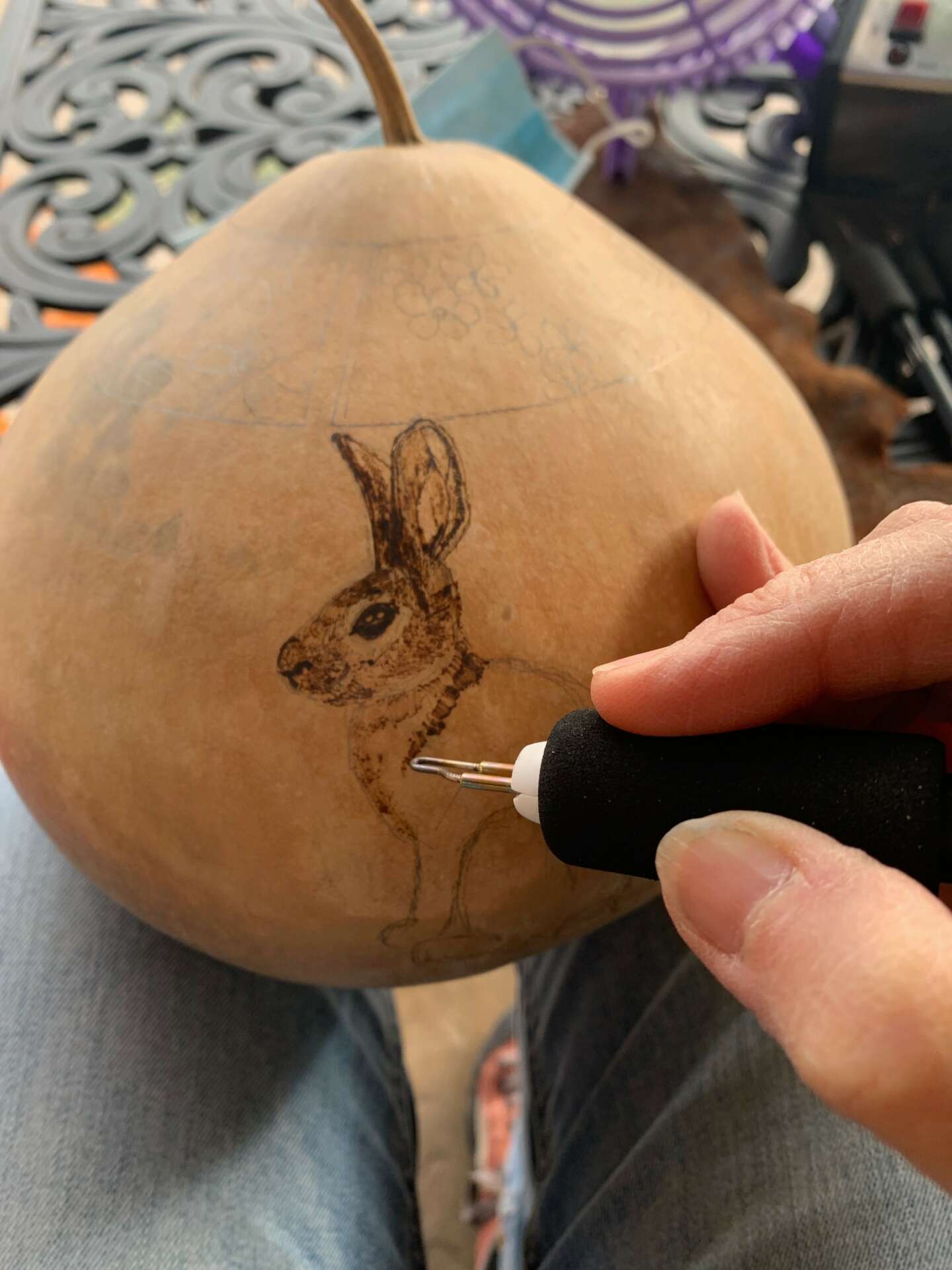
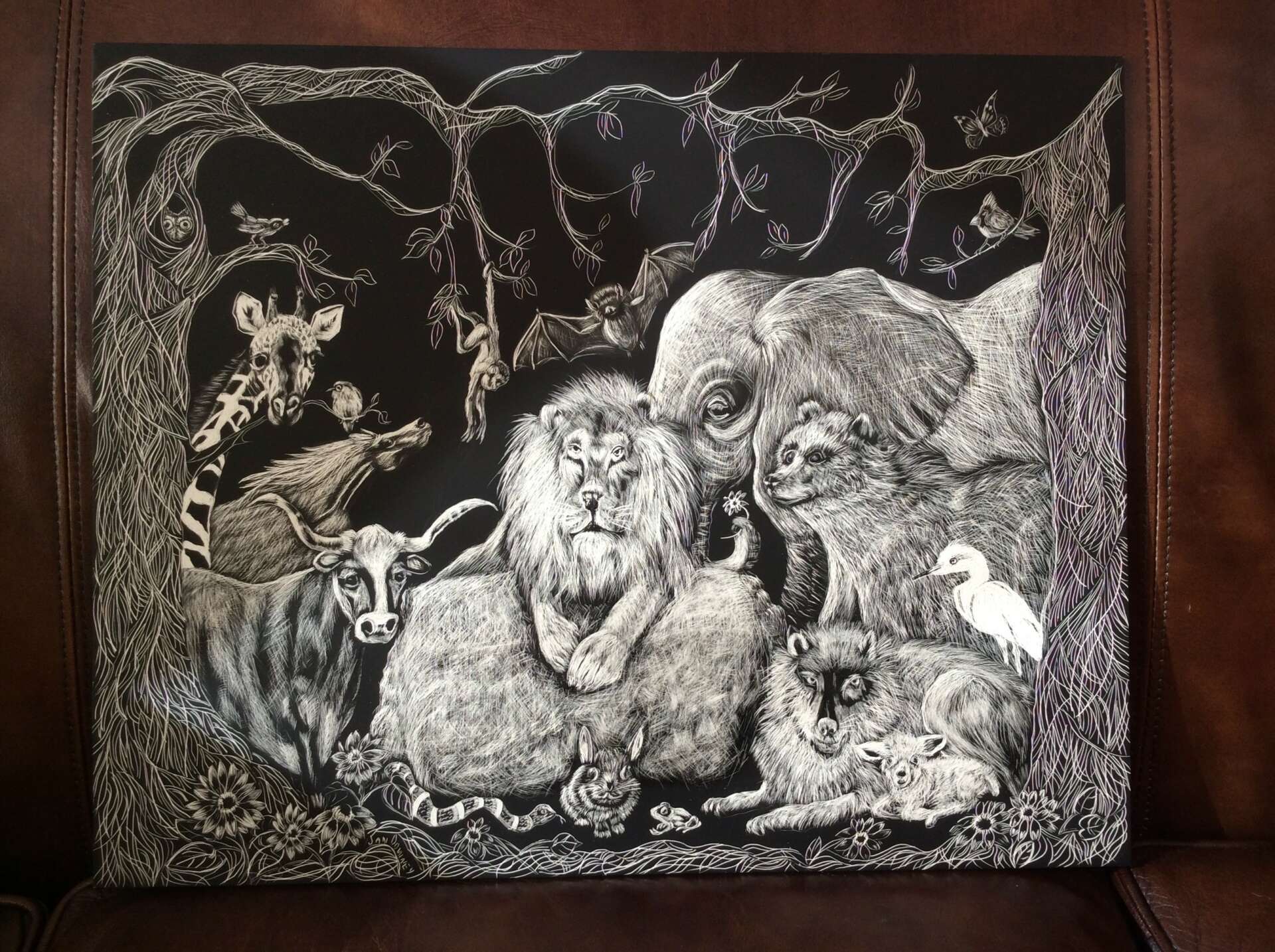
These days, in addition to creating gourd art by applying the previously mentioned methods, I also use the technique of wood burning gourds called, pyrography. My subject matter and choices of design and color are heavily influenced by my anthropological work, although I refrain from representing specific cultures or their icons. I often use the natural environment as a subject because I continue to be amazed at the biodiversity that makes up our world. I certainly credit my early experiences growing up at that kitchen table and in fine museums, plus my work with people all over the world for guiding my artistic endeavors today.
We’d love to hear a story of resilience from your journey.
All that early childhood experimentation learning how to be creative taught me that mistakes will happen, outcomes are sometimes different than intended, and all unintended outcomes are not necessarily failures. In one example from a setback, the outcome actually turned out to be much more interesting than the original project would have been.
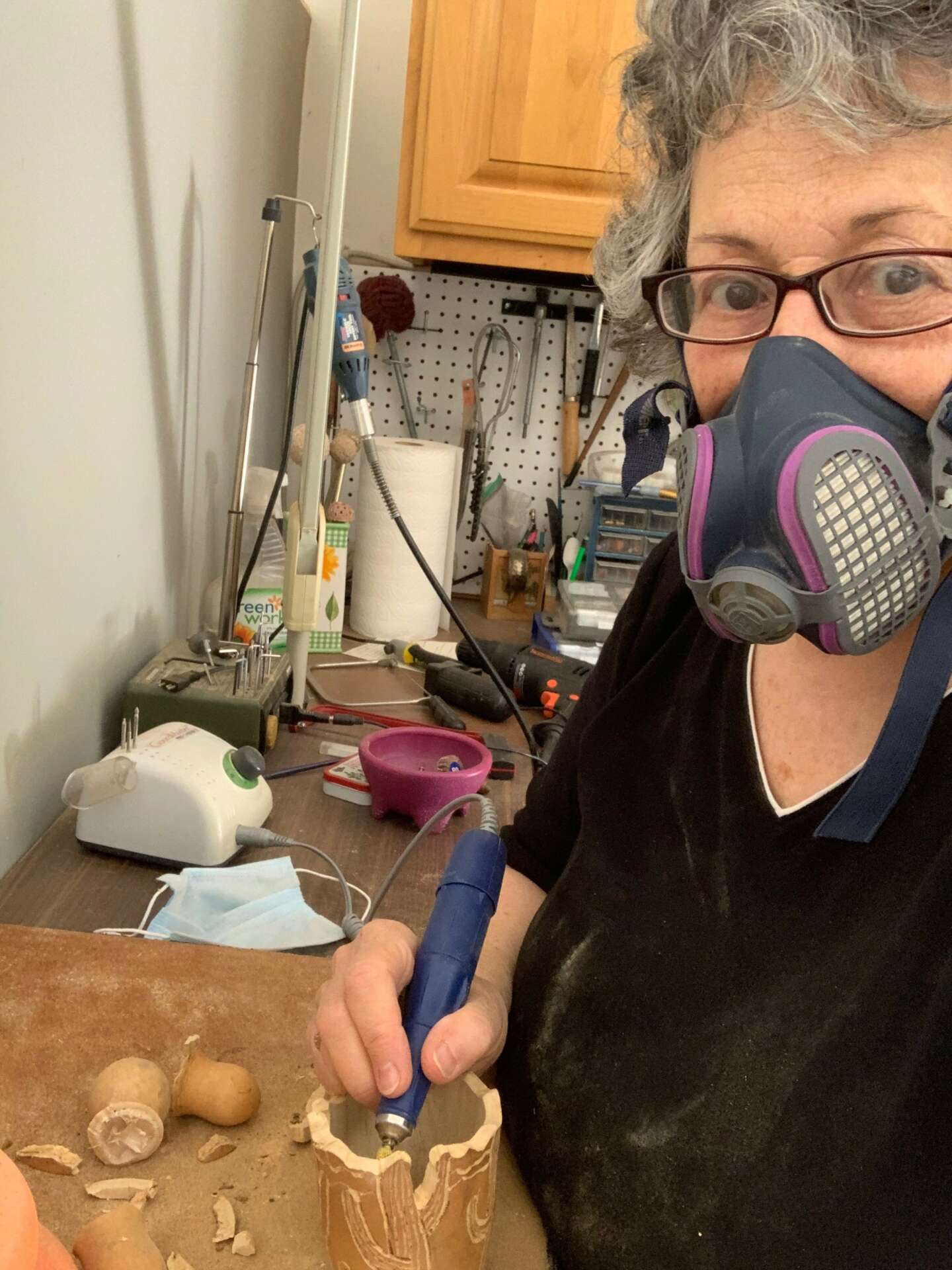
I had a very tall gourd I opened and cleaned out. That part of the process is quite labor intensive, requiring many hours to clean the outside of the gourd and using scrapers and power tools to clean the inside. Then I spent many more hours sanding the gourd, designing, drawing, and finally wood burning a desert design all around the big gourd. As I had done many times, I painted the inside and laid the gourd on newspaper on the floor to dry. After several hours I went to check on the progress and found an amazingly huge split down the entire length of the gourd, right through the wood burned design that had taken hours to create! I had never seen this happen and it took me a day to consider how to –or even whether to–save this gourd. Finally I used my jigsaw to cut the gourd into 3 sections. I reconnected two of the sections at the split line, joined them with a line of embedded crushed turquoise rock, inked in the design and named it, “Lightning in the Desert.” I made it into a wall hanging and it sold immediately upon completion!
Have you ever had to pivot?
Being written in 2022, this pivot will resonate with many others who had to renegotiate life through the years of the pandemic. Prior to that time, I was happily a member of an arts group that met in person for breakfast once a week. We had lively discussions and interactions, and many of us developed friendships beyond the breakfasts. Covid created a problem for those of us who were not comfortable meeting in person and inside restaurants, so we decided to try using Zoom as a new format. Despite the usual challenges of adapting to new technology, the growth of this group and its format has not only sustained us through difficult times, it has evolved into its own entity, one that is more focused, more personal, and more inclusive than the previous in-person meetings.
We have a regular meeting day and time. Under the volunteer coordination of one of our members, we rotate the moderating duties among us, choosing a topic and guiding the discussion during our 1 to 1 and 1/2 hour long sessions. Another member uses her account to host the meetings. Topics range from discussion of art issues, to sharing resources, to personal reflection on a topic, to art critique, to discussion of hypothetical situations, and to whimsical exploration. It has been the force that has kept us connected in a time of great uncertainty, kept us entertained when we needed escape, and provided the “therapy” of sharing our personal stories. It was a pivot that was a lifeline for many of us in our original group and continues to be an important part of our lives.
Contact Info:
- Website: https://www.zolioarts.com/
- Instagram: ZolioArts.com/instagram
- Facebook: https://www.facebook.com/ZolioArts
Image Credits
Sheila Kollasch Jean Anderson