



We caught up with the brilliant and insightful Jacob Gotlib a few weeks ago and have shared our conversation below.
Hi Jacob, thanks for joining us today. Learning the craft is often a unique journey from every creative – we’d love to hear about your journey and if knowing what you know now, you would have done anything differently to speed up the learning process.
For the last decade, my career has been in arts administration, and I think I speak for many of my fellow arts administrators when I say that this is not quite where we imagined our paths would take us! At age eight, as a childhood metalhead, I obviously wanted to be a rockstar. As a teenager, I discovered that beyond playing video games, I could use my computer to create, play with, and arrange sounds — and from that moment, becoming a composer was a path toward a musical life that became increasingly attractive.
Even as I was preparing and training for that dream—earning three degrees in music composition—I was unknowingly practicing the skills that would form the foundation of my career. In high school and college, I organized and promoted shows for my hardcore band, putting together bills with other acts, contacting venues, making flyers, and even helping book tours. In grad school, I formed ensembles and composer collectives, which led to a TA position as a production assistant for our annual June in Buffalo new music festival. After graduating, I worked with a friend to run a venue for experimental music here in Louisville, bringing together all the skills I’d honed up to that point before landing my first full-time position as the Managing Director of the Mizzou New Music Initiative at the University of Missouri.
I was never formally trained or educated to do any of this. To me, these were all just things an artist had to do to get their work into the world. If I wanted my band to play a show, I had to book it myself. If I wanted people to hear my compositions, I had to organize the ensemble and concerts myself. If I wanted to build a community, I had to grow the space for it. I was schooled in making art, but simply creating it wasn’t enough — I still had to cultivate the soil where it could grow. I learned quickly that no one would miraculously drop me onto that stage I dreamed of as a child; if I wanted to play on it, I had to build it myself.
Since 2022, I’ve worked at the Louisville Orchestra — my hometown orchestra, which shaped my musical path immeasurably — to manage the Creators Corps. This program reimagines the relationship between the orchestra, composers, and the community in a radical way and is increasingly recognized by orchestras, composers, and ensembles worldwide. I’m proud to help forge this new path and impact my city and the field in ways I never imagined possible — in ways that I certainly wouldn’t be able to do with just my music.
Looking back, my biggest obstacle was a limiting belief I carried for many years: that the only way to be successful is to be in front of the curtain. Or, more perniciously, that those “backstage” were relegated there because they couldn’t hack it up front: the easiest way to spot a failed artist was to find an administrator or production manager or (heaven forbid) an executive director. I still recall a composer I worked with several years ago, whose residency I organized, muttering, “Ok, but come on — this isn’t really what you want to be doing with your life, is it?” The implication was that if my answer was “yes, actually, it is,” I’d resigned myself to being a failure and a hanger-on for real artists. After all, who hears The Rite of Spring for the first time and says, “Holy shit, that’s it – I’m going to be a program manager”? (the degree of privilege necessary to adopt this attitude is not lost on me)
My training as a composer gave me an expansive view of what music itself could be, but I still had a sclerotic view of what doing music could be. I can only imagine what I could’ve learned, how I could’ve grown, and how much more fulfilled I could’ve been if I hadn’t clung to rigid ideas about what success is supposed to look like, what my education is supposed to be for, and what counts as valid and impactful work in the arts. I’m grateful that through hard lessons, necessity, and luck, I recognized the value of the skills I was building incidentally — and opened myself to the paths that recognition eventually opened.
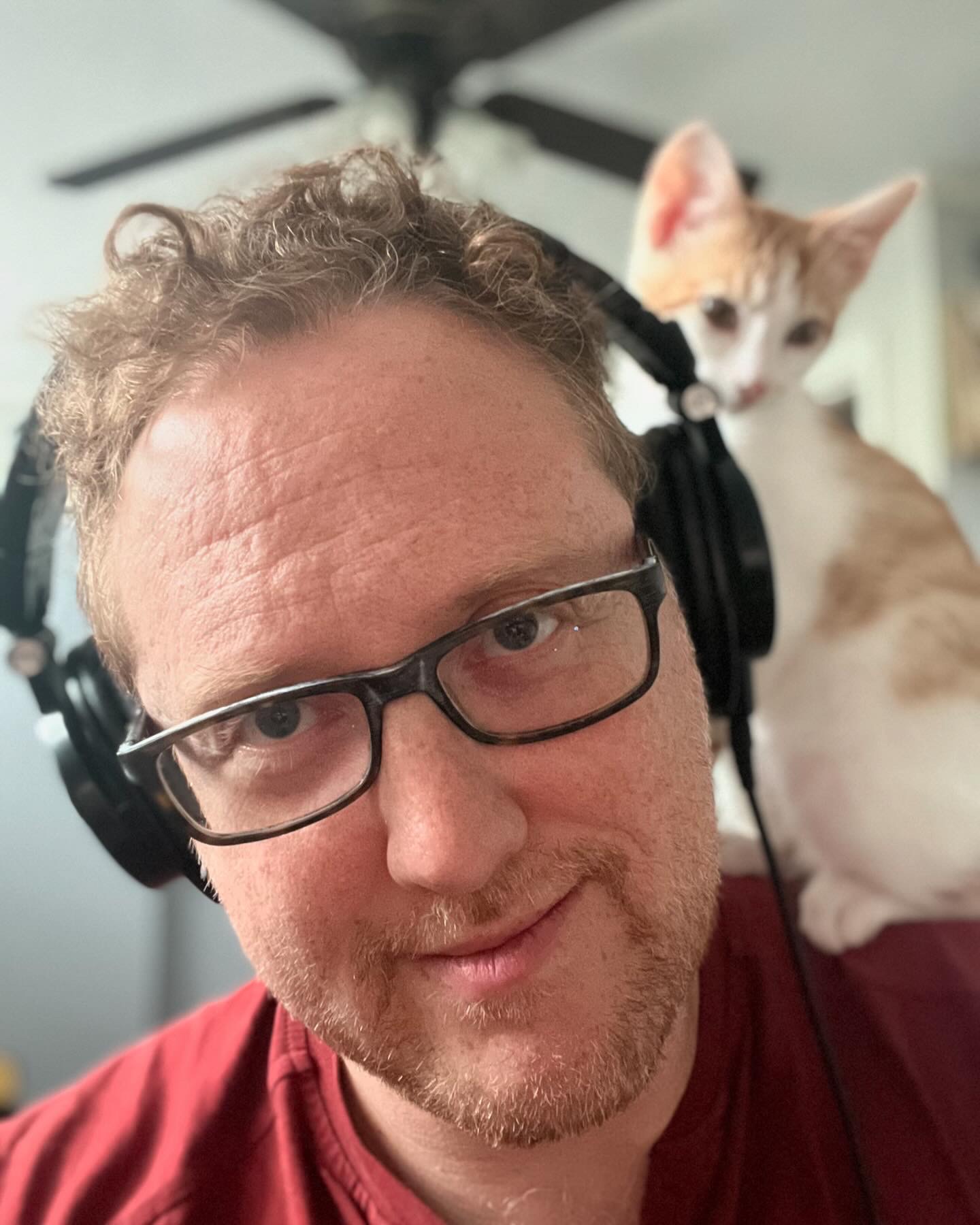
Awesome – so before we get into the rest of our questions, can you briefly introduce yourself to our readers.
I’m the manager of the Louisville Orchestra Creators Corps, a visionary program that — so far — is unique to the Louisville Orchestra: through an application process, we select three composers from around the country to live in Louisville, KY, for ten months and be “staff composers.” We provide each artist with a salary, health insurance, and free housing; they compose new works for the orchestra to perform, work with schools and other organizations on community projects, and become citizens of Louisville. We treat the term “composer-in-residence” completely literally: these artists become fully integrated members of the orchestra and community. It’s a project that looks to the orchestra’s past as a trailblazer in commissioning new music and working with living composers and to the future as a new model for how artists, arts institutions, and communities can reciprocate.
My younger self would cringe at this, but given my field, I’m lucky to have grown up in Louisville, KY. If they’ve heard of Louisville, most folks associate it with bourbon, the Kentucky Derby, and possibly Muhammed Ali. But for composers and those working in contemporary classical music, Louisville has a storied reputation and historical importance as the home of the Grawemeyer Award — one of the most important international awards for living composers — and the Louisville Orchestra, which, in the 20th century, was one of the most vital exponents in the world of new orchestral music by living composers. As a teen, I frequently attended performances of Grawemeyer-winning works (even getting a chance to meet some of the winners) and the LO’s “New Dimensions” series, which presented works by the most important living composers of the time. I often think about how crucial these experiences shaped my path and how honored I am now to continue building upon this tradition in my current role.
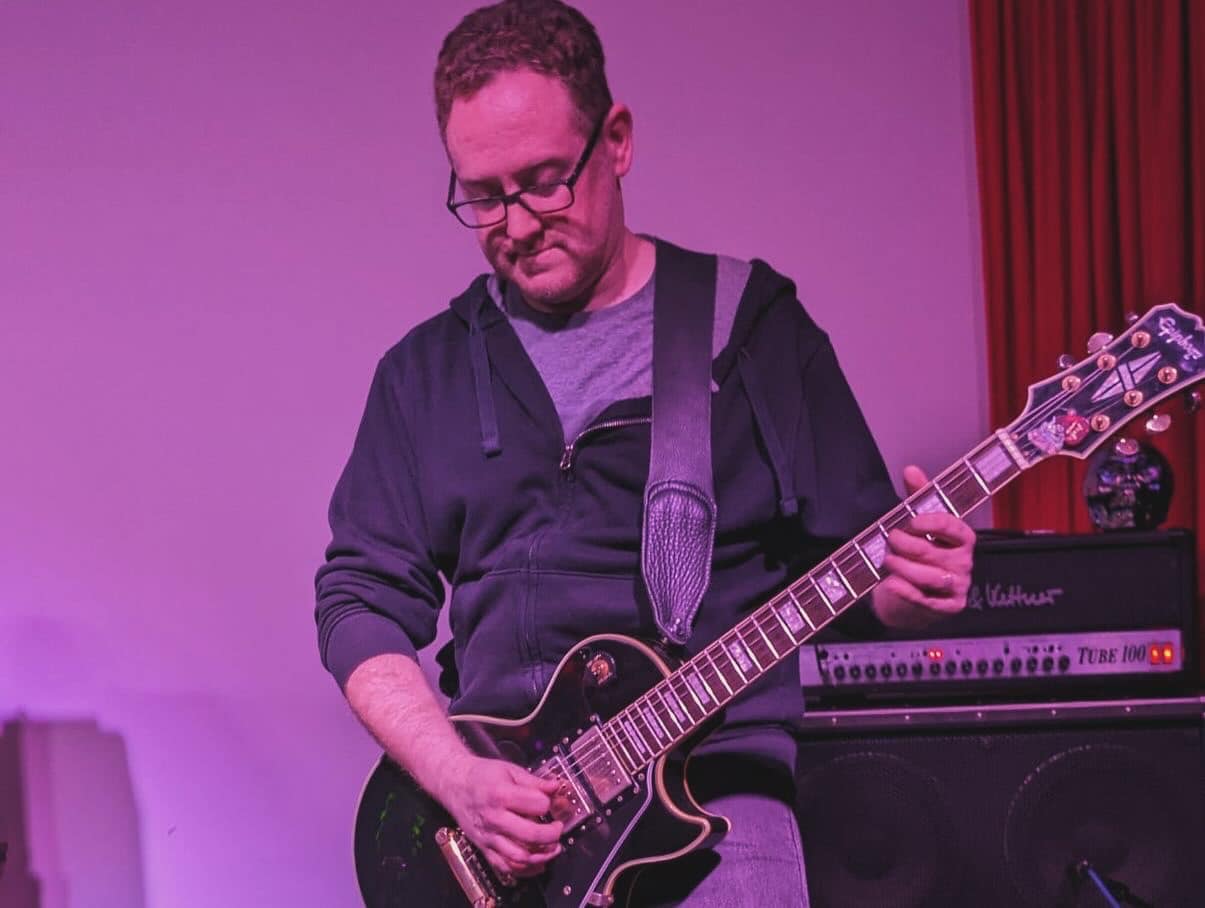
Additionally, I love helping folks grow their love of music by teaching piano, guitar, and composition at the Louisville Academy of Music. We’re the only community music school in Louisville, and I’m so proud of how we’ve grown. I’m also one of three guitarists in the band Decapitron, which I often describe as “Iron Maiden performing the Mega Man soundtrack.” We’ve almost finished our new album, and I can’t wait for everyone to hear it! Finally, while I don’t compose as much as I used to, I still occasionally indulge my desire to conjure and sculpt strange sounds. You can hear some of my earlier music at https://soundcloud.com/jacobgot.
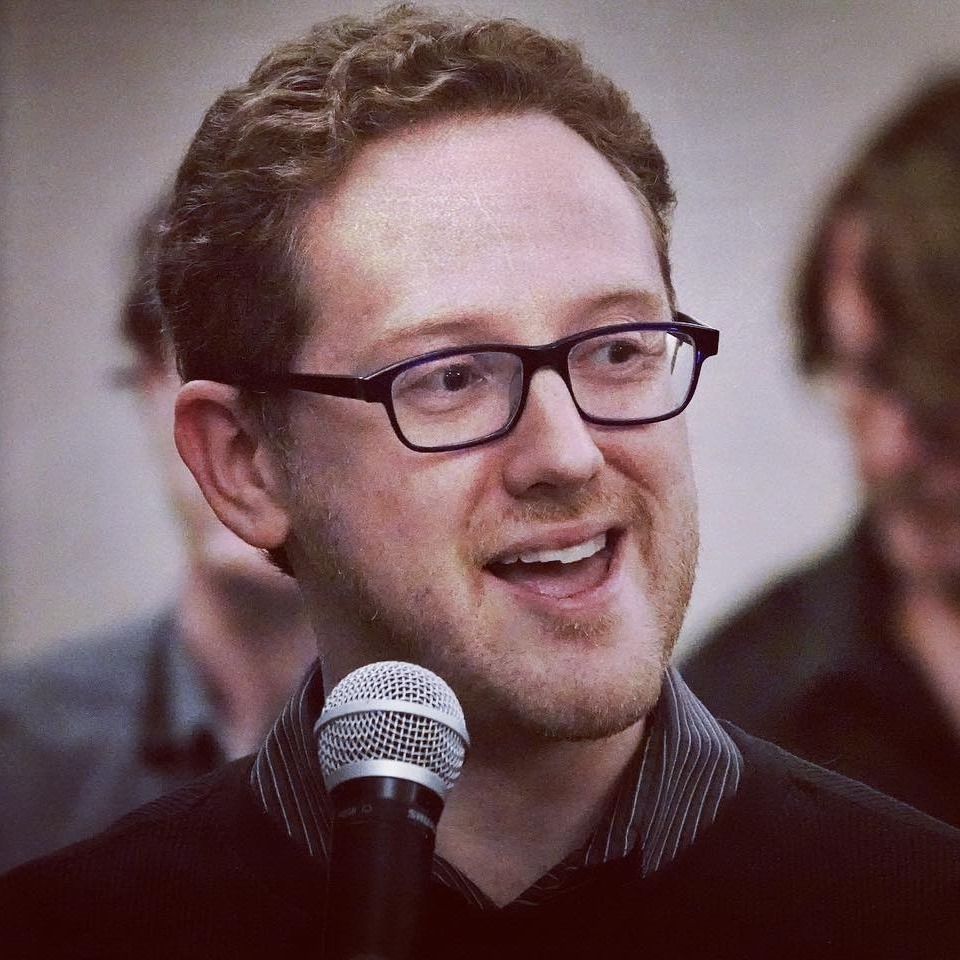
In your view, what can society to do to best support artists, creatives and a thriving creative ecosystem?
I love this question! There are two answers, one obvious and the other less so.
Let’s start with the most obvious answer: the dire need for more financial support from governments at all levels, non-profit foundations, and large private companies for individual artists and arts organizations. The places with the healthiest arts ecosystems are those with governments that explicitly value the arts by allocating resources to their budgets. In the USA, we are in urgent need of significantly increased funding for arts programs at all levels: the federal NEA, state arts councils, and municipal government offices. We must also continue to invest in robust arts programs at all educational levels: pre-K, K-12, and college/university. This is a tributary of a much larger river of social and economic issues, but the goal is to create a society where no artist (or anyone else) is expected to live in precarity.
Those working in what I call the “non-profit arts” — artists and organizations sustained at least partly through grants from non-profit foundations and governments — have witnessed a distressing trend of many large foundations and granting organizations orienting away from conventional arts funding towards more explicitly social or political concerns. While this is understandable — and, given our current climate, necessary in many ways — I would love to see these foundations rediscover the positive social and cultural value that the arts provide to communities in and of themselves, regardless of their ties to specific social or economic missions.
Those working in the “for-profit” arts, meanwhile, have seen the music industry of the 20th century — as unfair and exploitative as it was — replaced by a 21st-century model that systematically places artists at the bottom. Streaming services have created unfair deals with record companies that increasingly reduce the share of revenues that go to artists themselves (Spotify recently announced that they would demonetize all tracks with fewer than 1,000 annual streams) in favor of CEOs. Touring — the conventional way artists have generated income — has become increasingly economically unviable, between increasing travel costs and dwindling audience attendance (a trend that predates COVID). Selling t-shirts is now the primary way many bands earn income. I’m part of a lengthy tradition of those who would love to rebuild a music industry that more equitably redistributes money from recordings away from tech and record label CEOs to the artists themselves. Additionally, I would love for more artists to join a union! Artists are workers like any other, and we’ve learned that workers gain power when they organize.
The second, less obvious answer is that I would like more people to participate in the arts—not as passive observers but as creators themselves. Art saturates our culture; however, artists remain a mystery for many people: their daily lives, the creative process, the business and economics, etc. This has created a situation in which artworks are heavily valued economically and socially, but artists are not — as seen in the many ways artists are underpaid, exploited, and expected to live in precarity as a price for “living their dreams.” Additionally, it perpetuates the harmful trope of the artist as a romanticized figure — possessing creative powers likening them to alchemists or witches — rather than real, everyday workers contributing value to our society. If more people had more direct and sustained experiences playing instruments, composing music, painting pictures, writing stories, acting in plays, producing films, etc., they would not only harness the power of their own creativity but would more intimately understand who artists are and what they do, have a more profound and more engaged experience with art, and be able to advocate for more increased funding. In my utopian vision, we wouldn’t even need advocates for the arts because their value would be self-evident.
To bring this back full circle, there is an obvious place for all of this to start: schools. Robustly funded arts programs and experiences at all levels of education are the foundation for creating a society that understands, practices, engages, and values artists and artmaking.
What’s the most rewarding aspect of being a creative in your experience?
Though my daily life involves doing music in myriad ways, I no longer consider myself primarily an artist — a fact that I still have complicated feelings about! However, when I sit down and create, I’ve been able to reconnect to the impetus that made me want to be a composer in the first place: experimentation and discovery. I love creating sounds I haven’t heard before, discovering beautiful musical situations, or designing situations that “accidentally” create sonic worlds that ignite my inspiration (from which I can then compose more deliberately). The most exciting part of the creative process for me is asking questions: what happens if I do this? What would it sound like if I turned that all the way up/down? Where will this path lead if I take it all the way?
When I was a teenager, I set about trying to find music that sounded the least like music in any conventional sense: work that upended as many traditions as possible, that questioned as many defined notions as possible, that made me feel the least grounded and oriented in what I knew about music at the time. Later, I learned that this approach was a venerable tradition in itself! Still, the music that I want to make strips away as many layers of convention as possible and speaks directly from the most individual part of me to the most personal parts of the listener.
Contact Info:
- Website: https://louisvilleorchestra.org/creators-corps/
- Instagram: https://www.instagram.com/jacobgotlib/
- Facebook: https://www.facebook.com/jacobgot/
- Soundcloud: https://soundcloud.com/jacobgot
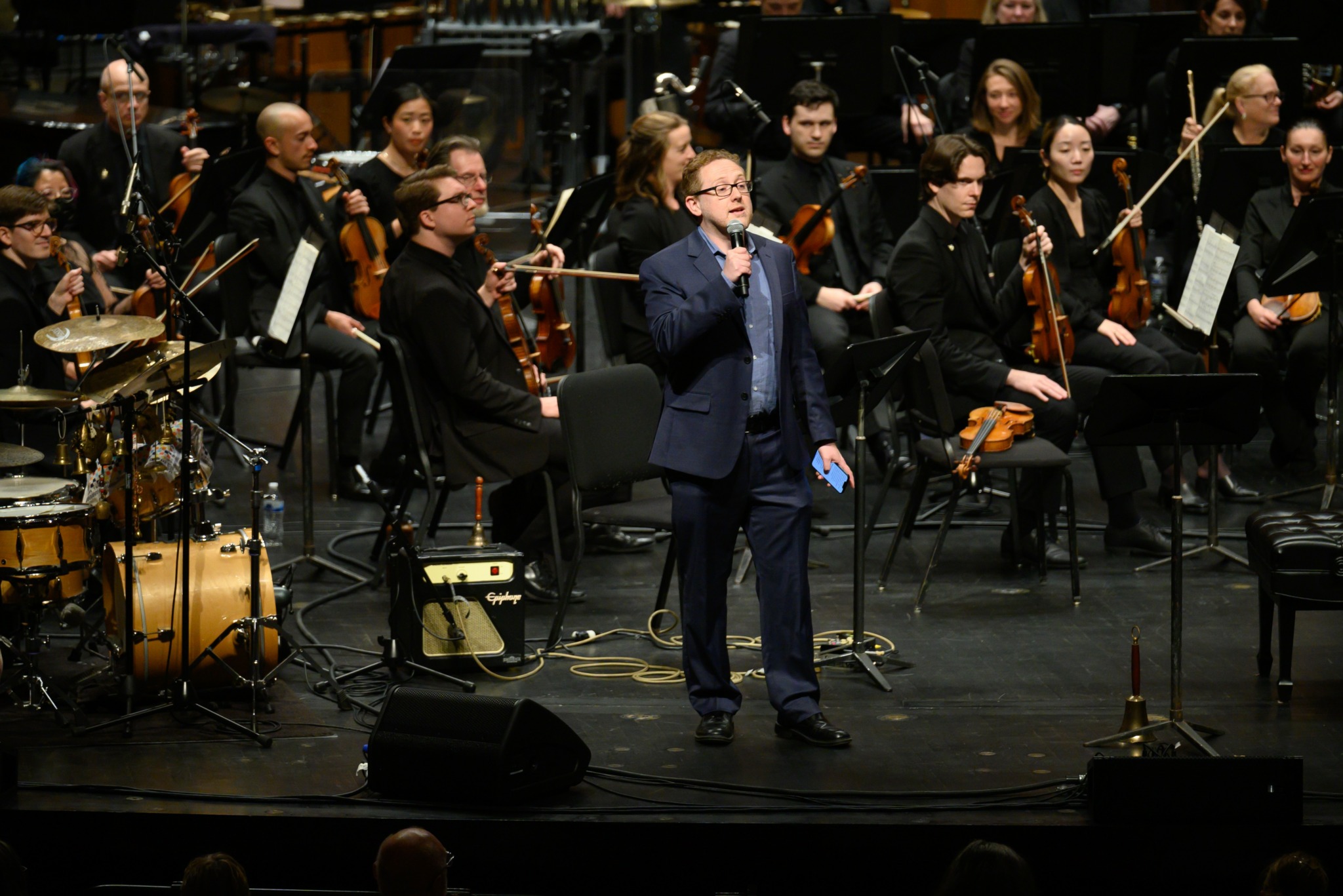
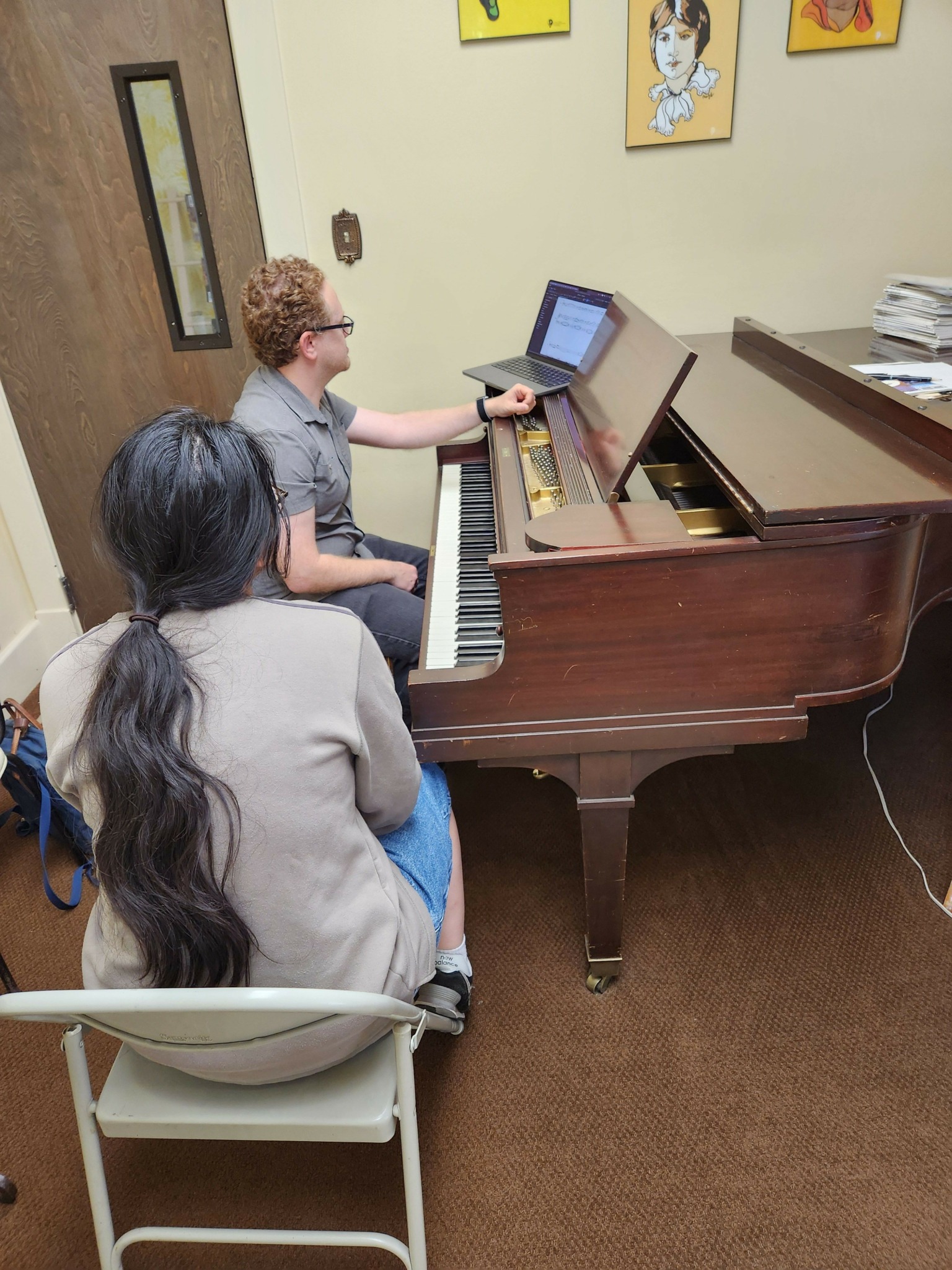
Image Credits
O’Neil Arnold