

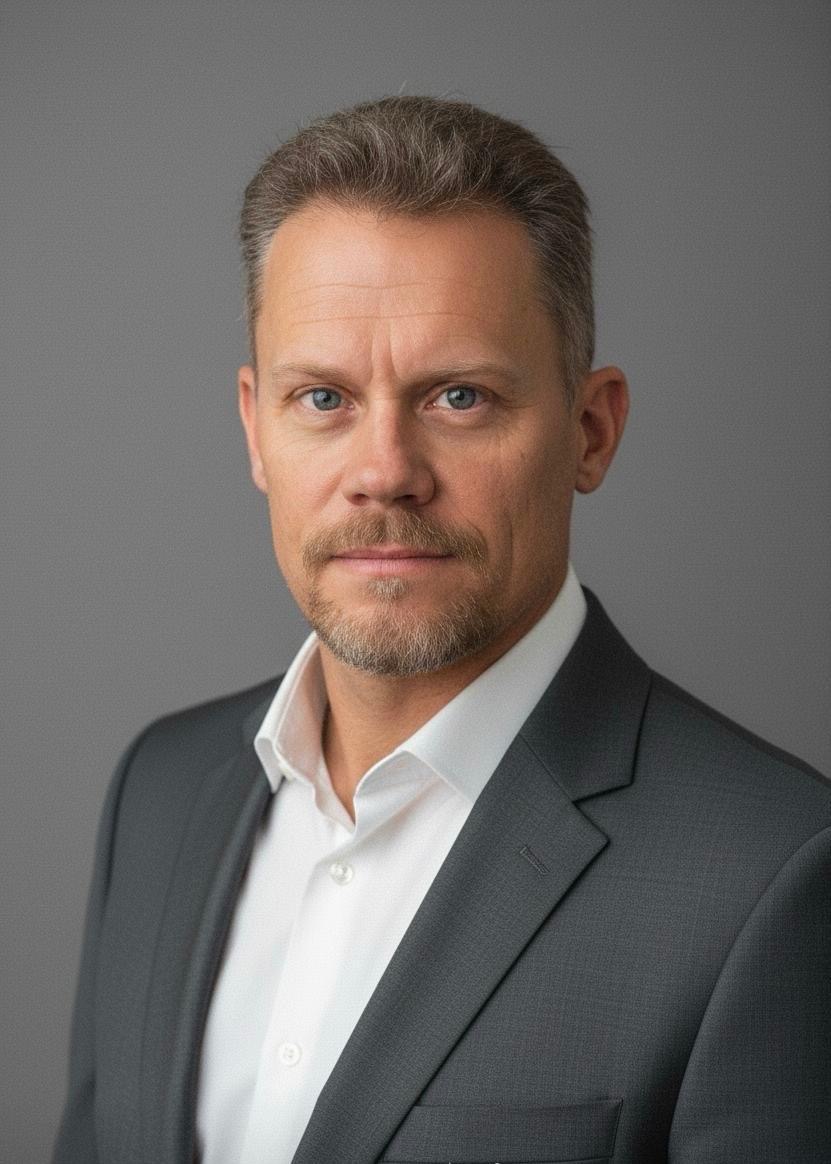

We caught up with the brilliant and insightful Jack Del Soldato a few weeks ago and have shared our conversation below.
Jack, appreciate you joining us today. We’d love to have you retell us the story behind how you came up with the idea for your business, I think our audience would really enjoy hearing the backstory.
This business was born from something I lived on both sides of the glass.
I played professional hockey in Switzerland’s National League (their version of NHL), and as a goalie, every mistake is magnified. I had to figure out the mental game on my own, through trial and error. Nobody handed me a roadmap.
When I moved into coaching at the professional and university levels, I kept seeing the same pattern. Athletes with all the physical tools underperforming when it mattered most, not because of their skating or their technique, but because of what was happening between their ears.
That’s when it clicked. Physical skills get coached obsessively. The mental side gets ignored. And yet it’s almost always the mental game that determines who performs when it counts.
So I got certified as a Mental Performance Coach and built the MASC Method around everything I actually lived, not just what I read in a textbook. Most coaches in this space have credentials or lived experience. Very few have both. That’s the gap I’m filling.

As always, we appreciate you sharing your insights and we’ve got a few more questions for you, but before we get to all of that can you take a minute to introduce yourself and give our readers some of your background and context?
I played at the professional level in Switzerland’s National League and went on to coach at the professional and university levels in Europe. Throughout that entire career, one thing became impossible to ignore: the mental side of performance is almost always what separates good athletes from great ones, and almost nobody teaches it.
That realization led me to earn my Mental Performance Coaching certification and found Mental Advantage Sports Coaching, where I work with youth, high school, and college athletes across all sports, in person in the Scottsdale area and virtually worldwide.
My signature framework is the MASC Method, a five-part system built around what I call Competitive Edges: how to prepare mentally before competition, how to reset quickly after mistakes, how to own your identity as a competitor, how to stay composed under pressure, and how to trust your training when it matters most. These aren’t abstract concepts; they’re practical, trainable skills.
What sets me apart is simple: I’ve lived this. Most mental performance coaches come from the academic side. I come from the locker room. I know what pressure at the highest level actually feels like, and I know how to translate that into tools any athlete can use.
What I want people to know is this: the mental game isn’t a luxury. It’s the whole game. And it’s coachable.

Let’s talk about resilience next – do you have a story you can share with us?
I didn’t grow up as a hockey kid with all the gear, the private coaches, and the elite programs. I started playing at 14, which in hockey terms is practically ancient. Most of the guys I’d eventually compete against had been on the ice since they were four or five years old, with parents who could afford the best training, the best equipment, the best everything.
I was raised by a single mom who worked hard and gave me everything she could, but financial resources weren’t something we had in abundance. I didn’t have a safety net. I didn’t have the head start.
What I had was an obsession. I fell in love with the game late, and I made up for lost time through pure will. When other kids went home after practice, I stayed. When I couldn’t afford certain things, I found another way. I got told more than once, implicitly and explicitly, that I was too far behind to make it.
I made it to Switzerland’s National League. Their version of the NHL.
That journey is actually why I believe so deeply in what I do now. When I sit across from a young athlete who feels like they’re already behind, who doesn’t come from money or the right program or the right connections, I don’t just empathize with them theoretically. I’ve been that kid. And I know firsthand that circumstances don’t determine outcomes. Mental resilience does

Can you tell us about a time you’ve had to pivot?
I’ve had to reinvent myself more than once, and neither time was easy.
The first pivot was leaving competitive sport. When your entire identity is built around being an athlete, and that chapter closes, there’s a grief to it that people don’t talk about enough. You wake up, and the structure is gone. The purpose feels gone. I had to figure out who I was without the game, and that’s a genuinely disorienting place to be. Transitioning into coaching helped, because I was still connected to the sport and could channel everything I knew. But it was still a fundamental identity shift.
Then came the second pivot, and in some ways the harder one. I moved from Switzerland to the United States, a new country, starting over completely. I didn’t have a network here. I didn’t have a reputation that transferred automatically.
Everything I had built professionally over decades was essentially invisible in this new place. I had to rebuild from scratch in a country where I didn’t have the relationships, the credibility trail, or even full fluency in the professional culture.
What those two pivots gave me, though, was clarity. I knew what I was good at. I knew what I had lived. And I knew there was something valuable at the intersection of my experience as a pro athlete, my experience as a coach, and the science of mental performance. So I stopped trying to fit into someone else’s career path and built my own.
Mental Advantage Sports Coaching came directly out of that process.
Contact Info:
- Website: https://www.mentaladvantagesportscoaching.com/
- Instagram: @themascmethod
- Linkedin: https://www.linkedin.com/in/jackdelsoldato/
