

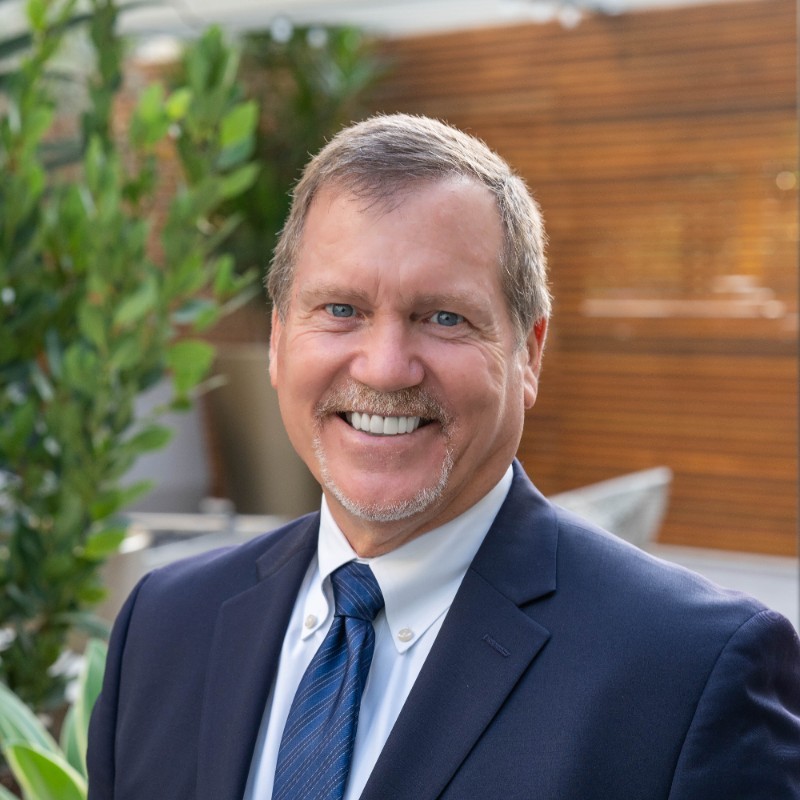

We recently connected with Jack Cline and have shared our conversation below.
Jack, looking forward to hearing all of your stories today. Your ability to build a team is often a key determinant of your success as a business owner and so we’d love to get a conversation going with successful entrepreneurs like yourself around what your recruiting process was like -especially early on. How did you build your team?
Our nonprofit organization, Youth Champions, didn’t begin as a standalone organization. It started as a small incubator program within a much larger nonprofit, AltaMed Health Services, where I’ve served on the Foundation Board of Trustees for many years. From the start, I wasn’t entirely on my own. My wife, Cambria, who has extensive experience in the nonprofit and education sectors and shares the same passion for this work, played a key role. We also had a committed partner, Richard Gomez, who believed in the vision and agreed that together we could create something truly meaningful.
The concept was simple. By creating a program under AlatMed’s umbrella, we could fund the necessary staffing and design solutions from the ground up without having to build an entire infrastructure overnight. Our first initiative was a childhood obesity program, which both Richard and I championed by funding the initial administrator. That administrator grew the program rapidly, turning it into a multi-million-dollar, grant-driven operation. AltaMed remains heavily involved in childhood obesity work to this day.
A couple of years into that success, we noticed a new challenge. Many of the inner-city students we served in Los Angeles were getting into college, but many were struggling to stay in. That realization became the spark for Youth Champions, a program focused on supporting students from 10th through 12th grade with critical life skills that will help them be successful in every category of life. In 2017, we launched a pilot program with 30 students and one coordinator, then grew to 60 students and two coordinators, and the program continued to scale quickly as the need and impact became undeniable.
As Youth Champions continued to expand rapidly, it became clear we needed our own organizational structure, so we transitioned out of AltaMed and officially formed our own independent nonprofit two years ago. Today, we are fortunate to have an exceptional Executive Director who is both highly technical and deeply mission-driven. She oversees our administrative team in the Philippines along with our part-time team here in the U.S. Together, we’ve built a group of highly effective people, each operating in their strengths and contributing to a shared vision.
Looking back, I would not change our approach. We relied on the same entrepreneurial mindset, tools, and systems that helped me run my commercial real estate business, and applying those principles to our non-profit allowed us to build something strong, scalable, and impactful from day one.
Our first Executive Director, Michelle Durand, was someone I already knew well and deeply respected. At the time, she was working as a project manager for the fractional CFO of our Lee & Associates Downtown LA office. She played a key role in launching that office, setting up our accounting systems, establishing bookkeeping processes, and creating strong financial protocols. She understood our operations, our culture, and our expectations, and she executed at an exceptionally high level.
The way she joined Youth Champions was completely unplanned and, in many ways, unconventional. During a visit to our new office, we walked past a photo of me standing with about 150 high school students – the size of our Youth Champions program at that time. She paused, asked about the picture, and that simple question opened the door to a much bigger conversation.
As I explained what Youth Champions was, why we created it, and where we were hoping to take it, I watched her interest grow. By the end of the conversation, without following a traditional recruitment process, I had essentially recruited her as our Executive Director.
Bringing Michelle on board was one of the most fortunate decisions we made. Her leadership, operational experience, and ability to build systems from scratch became foundational to shaping Youth Champions into the strong, scalable program it is today.

As always, we appreciate you sharing your insights and we’ve got a few more questions for you, but before we get to all of that can you take a minute to introduce yourself and give our readers some of your back background and context?
I come from a family that valued and modeled hard work and service every day. My dad worked three jobs as a teacher, janitor, and basketball coach, and my mom was deeply involved in community work, leading the Arcadia chapter of the American Red Cross and co-founding a women’s clinic in El Monte. They didn’t just talk about service; they lived it.
They led by example, always looking for ways to help others, whether it was buying jackets for students who didn’t have warm clothes or stepping in wherever help was needed. They showed me early on what it means to support a community. My path into the nonprofit sector began after building a career in commercial real estate. A close friend invited me to join the board of AltaMed, a nonprofit providing healthcare to underserved communities, and that experience opened my eyes to how impactful well-run programs can be. Through that connection, we helped launch a childhood obesity program that eventually grew into a multi-million-dollar initiative.
Along the way, I partnered with Richard Gomez, who is now on our Youth Champions board. Richard has always been a generous and forward-thinking leader, and together we identified a major issue in our community: students were getting into college but struggling to stay. That insight became the foundation for Youth Champions.
At the same time, I was taking leadership development courses myself and began to realize how powerful those tools could be for young people. Confidence, clarity, direction, and practical frameworks for success aren’t things most students are taught, but they can certainly change their trajectory.
That’s ultimately what sets Youth Champions apart. We don’t just help students get into college or trade schools; we equip them with the mindset, skills, and support systems to persist, graduate, and build meaningful careers in whatever path they choose. We’re not only opening doors, but we’re also helping students walk through them and keep moving forward with purpose.
What I’m most proud of is our students and our alumni. They’re incredible young people who consistently show us what’s possible when they’re equipped with the right tools, support, and opportunities. Many of them tell us how much confidence they’ve gained through our curriculum, the networking experiences, and the field trips that challenge them to broaden their thinking and envision bigger futures. Watching them excel in college and beyond is the greatest reward.
I’m also proud of the structure we’ve built to support them long term. From our Alumni Association to the Alumni Institute and the Facilitator Institute that our Executive Director, Michelle Durand, developed, we’ve created a model that doesn’t just prepare students for the next step – it walks with them well into adulthood. Seeing the measurable outcomes and long-term success of these programs is both exciting and deeply fulfilling.
What I want people to know about Youth Champions is simple. We’re not just helping students get into college, we’re creating pathways for them to thrive academically, professionally, and personally. Our work is about building confidence, leadership, and real-world capability in young people who often haven’t been given the chance to see what they’re capable of. And when they do, they exceed every expectation.
Learning and unlearning are both critical parts of growth – can you share a story of a time when you had to unlearn a lesson?
The biggest lesson I had to unlearn was the assumption that everyone naturally feels the same excitement and urgency I do about helping students expand their possibilities. For me, this work is energizing and intuitive. It feels obvious, of course, you would want to ignite a young person’s potential. But I had to recognize that not everyone sees the world through that same lens, and that passion can’t always be transferred through explanation alone.
What I’ve come to realize is that the real connection happens when donors or volunteers experience our program firsthand. It isn’t my words or our brochures that inspire them; it’s our students. When someone joins us for our UCLA ropes course day, they watch students step off the bus unsure, quiet, and sometimes even fearful. A few hours later, they witness those same young people conquering challenges, encouraging one another, and cheering for classmates they met only moments before.
They see students from dozens of schools interacting with genuine curiosity, kindness, and respect. They see courage take shape. They see leadership emerging in real time. They see community forming right in front of them.
That’s what sells the program. The transformation is visible, powerful, and undeniable. Once people witness that moment – when a student realizes they can do something they believed they couldn’t – they understand exactly why this work matters. And that’s when they feel the same urgency and excitement that I’ve felt from day one.
Are there any books, videos or other content that you feel have meaningfully impacted your thinking?
I read about a book a week, primarily in the business and personal growth categories, and several have had a lasting impact on how I lead and how I think about building organizations.
The Go-Giver by Bob Burg reinforced the idea that success is rooted in value creation and service. The more you focus on giving and genuinely helping others, the more success follows.
The Ultimate Gift by Jim Stovall shaped a lot of my thinking around gratitude, purpose, and the importance of instilling foundational life principles in young people. Its themes align closely with what we try to model for our students.
What the Heck is EOS? helped me better understand how to implement strong organizational structure and accountability systems. The Entrepreneurial Operating System has been invaluable in both my businesses and Youth Champions, bringing clarity, alignment, and efficiency to both organizations.
And 10x Is Easier Than 2x by Dan Sullivan challenged me to think bigger rather than simply work harder. It’s a reminder that exponential growth comes from focusing on our highest-value strengths and being willing to let go of everything else.
Each of these resources has shaped my approach to leadership, strategic thinking, and the way we build and scale Youth Champions. They’ve influenced not just how I manage teams, but how I think about developing people, including the students we serve.
Contact Info:
- Website: https://youth-champions.org/
- Instagram: https://www.instagram.com/youthchampionsorg/
- Linkedin: https://linkedin.com/company/youthchampions