

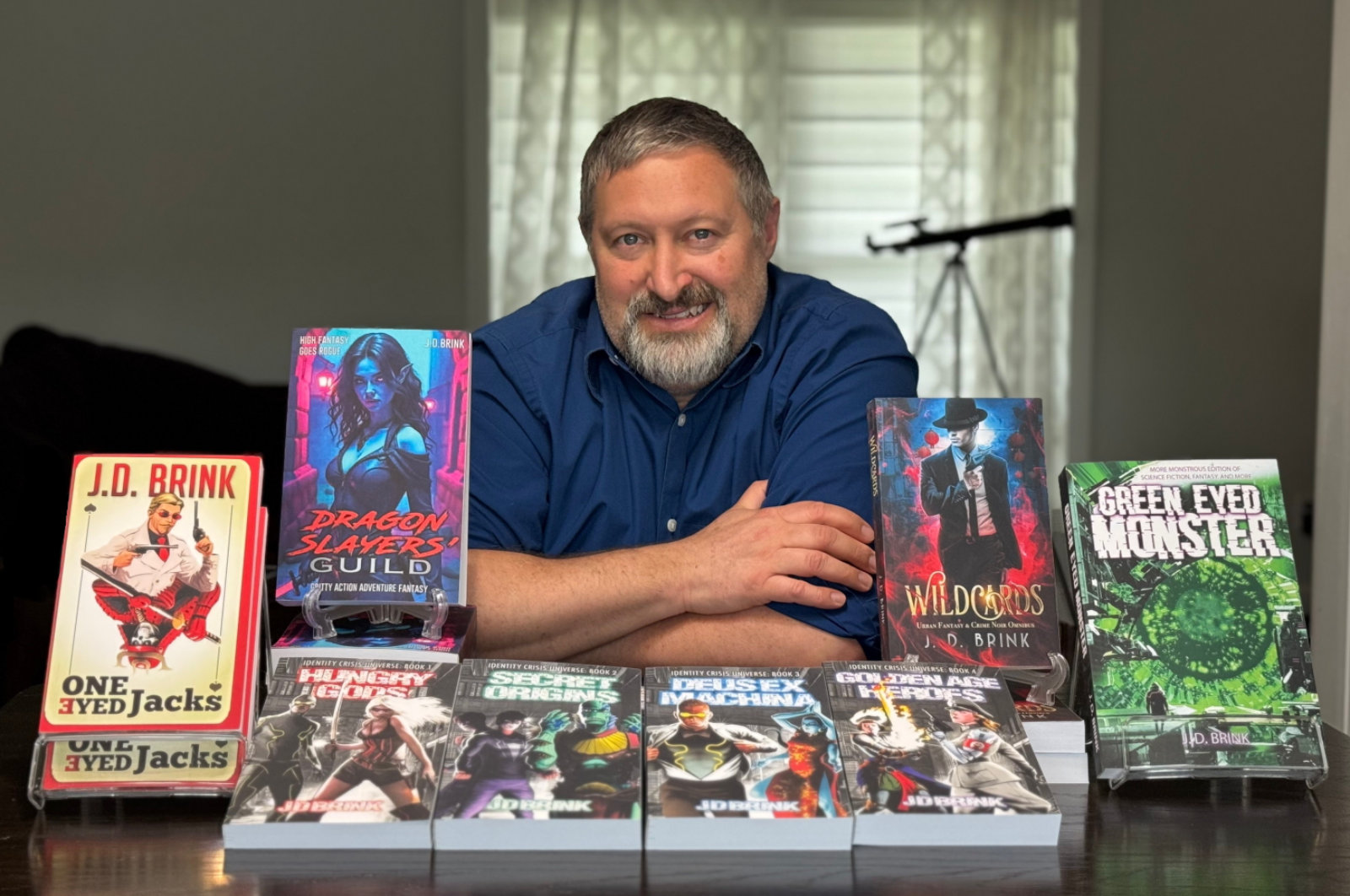

We recently connected with J. D. Brink and have shared our conversation below.
Alright, J. D. thanks for taking the time to share your stories and insights with us today. Earning a full time living from one’s creative career can be incredibly difficult. Have you been able to do so and if so, can you share some of the key parts of your journey and any important advice or lessons that might help creatives who haven’t been able to yet?
I actually don’t earn a living with my writing, far from it. But I’m glad you asked!
I believe (without really knowing for sure) that there’s a very small percentage of self-publishing indie writers who do make a full-time living from their creative work alone. (Heck, from what I’ve heard, even the big-time traditional publishers don’t pay out fat contracts like they used to.) Of course, everyone has their own goals and own ideas of what “success” looks like. We’re not all striving for the same thing. But for many of us, that is the dream. I am a 13-year Navy veteran, a registered nurse, and a full-time nursing school instructor. I think most people would say I’ve done a lot of worthwhile things, and I’ve enjoyed and am proud of those, but none of that has been “the dream.”
The dream is to have so many readers that you can create all day long, send your favorite characters on wild adventures, and make a comfortable living doing so.
And I think I have that in common with the vast majority of my fellow indie authors. We all dream of that and feel discouraged because we don’t yet have it. Despite there being so many factors that are out of our control—timing, trends, AI algorithms, just getting noticed in the vast sea of literally millions of possible reads on the mega book websites, etc. And so, we probably all feel like failures to some degree. We put ourselves down because of it.
But this is all hush-hush. We don’t talk about the negative aspects because we have to give the illusion of success (whatever “success” is).
There are online groups and communities for writers. One in particular is very big and popular. And very good. They are helpful and supportive and even hold annual in-person events that help build up all writers. Their motives are in the right place. But in their quest to always push the positive, I feel like a false front is created. One that seems to say, “Everyone here is making it but you.” And while the intent is to encourage—and it does do that—I also feel that sometimes it does the opposite. Compulsive positivity doesn’t leave room for your individual struggles. “Look how well everyone else is doing. Nothing but rainbows. You must be the only one not making your dream come true.”
Forgive me. It must be the nurse in me that’s hijacked your good natured question, Canvas Rebel, and turned it into a group therapy session. But I’d like to take this opportunity to tell my peers:
“You’re not the only author not sipping margaritas on the deck of your book-bought yacht. Not by a long shot. And that’s okay. Keep doing what you do. Keep stealing away precious minutes from the day to write those couple pages. Keep putting out your best quality work. And maybe the masses won’t notice, or the New York Times best-seller list, but your readers will, however big that group may be. Keep driving toward that dream. You haven’t been left behind.”
So, finally, to answer your question (properly this time): Do I make a full-time living from my creative work? Heck no. Wish I did, even though my day job is enjoyable and important work (I make new nurses). Even though that’s the dream, let’s instead call it a retirement plan. And if I can retire early (decades early would be nice), so much the better.
I’d also like to add: THANK YOU, Canvas Rebel, for giving me the opportunity to express that, for myself and my fellow indie writers. It’s a perspective I feel is too often kept in the shame closet for no one to see.
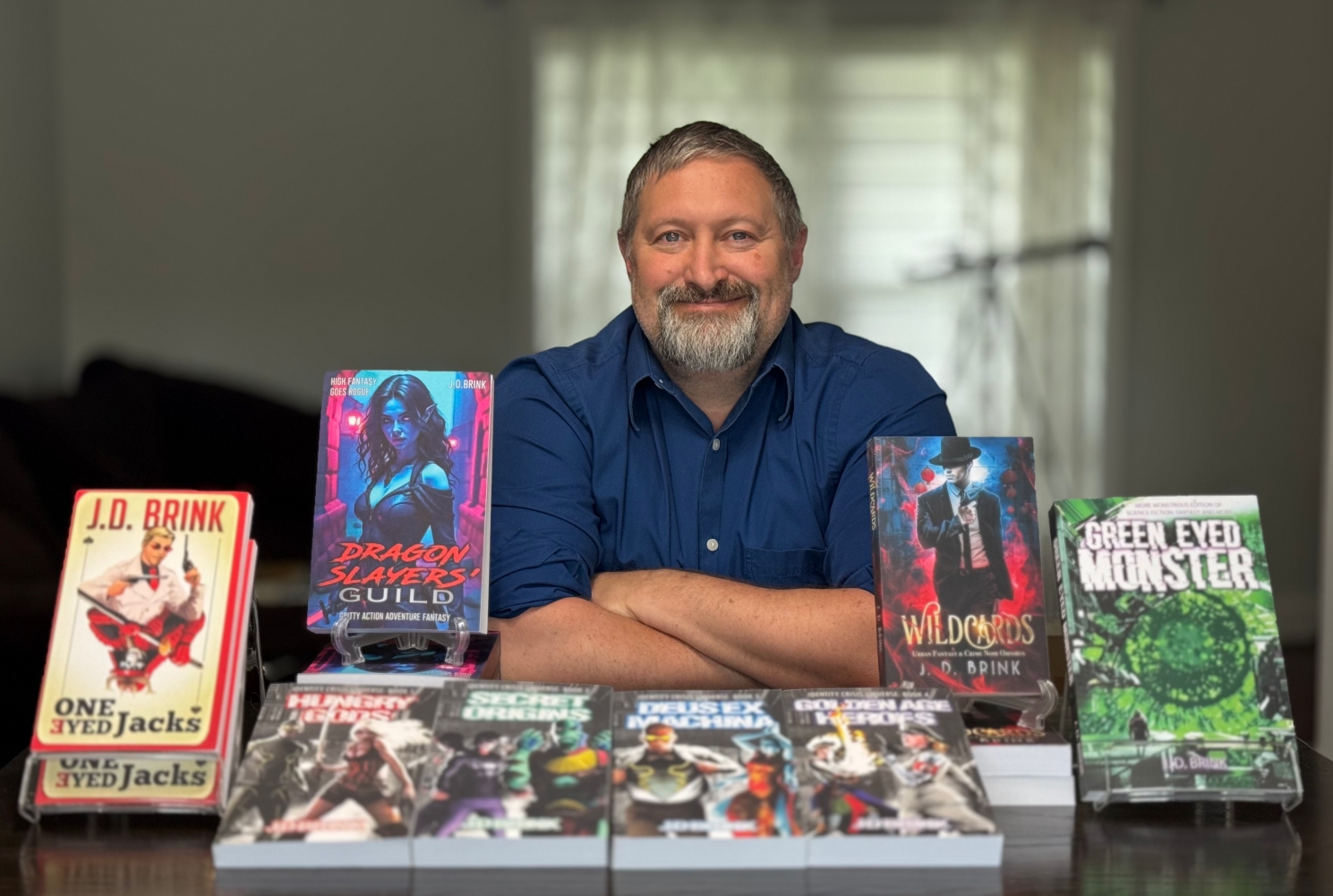
J. D., love having you share your insights with us. Before we ask you more questions, maybe you can take a moment to introduce yourself to our readers who might have missed our earlier conversations?
In general, I write fantasy and science fiction. But to get more specific, I’ve written high fantasy, low fantasy, urban fantasy, dark fantasy, horror, superheroes, space opera, space pirates, military sci-fi, dystopian, crime noir, and probably a few more besides. I’ve been self-publishing for about 12 years, have been published by several magazines and e-zines, and been a finalist once and honorable mention many times in the international Writers of the Future Contest.
Being so “prolific” (dare I describe myself so?), however, is a double-edged sword. I like a wide range of genres and themes, and so I’ve written in them all. The good side of this (besides me just enjoying it) is that if you like any shade of speculative fiction, I’ve got a story for you. The bad side is that instead of channeling 12 years of books and short stories into one genre or series, I’ve spread myself thin, like scattering chicken feed around a big field. The kernels are out there–and they’re sure tasty–but there’s one here, one over there, another back behind the barn, etc.
What sets me apart?
For one thing, I bring an equally wide range of experience to my stories. I grew up in a small Midwestern town but have been stationed in big cities around the globe. I was in the Navy twice (codebreaking/intel on a warship while enlisted, nursing and teaching as an officer), have visited several foreign ports, lived 5+ years in Japan, earned two degrees (one in creative writing and one in nursing), have raised other peoples’ kids in the military, taught children and adults in the classroom, am a family man myself… I miss the more adventurous life but am also glad to be (mostly) settled.
I bring all of that into my characters and their stories. I like to write gritty, realistic characters yet still sprinkle in humor between action sequences. I think the Marvel Cinematic Universe has a great formula: developed characters, big action, and have fun while doing it. I also like to challenge the norms. (Uh oh, I feel another rant coming on…) One of the tenants going around the indie author circles is that, if you want to sell a lot of copies, you need to basically do what everyone else is doing. Your covers should not stand out, your fiction should not stand out. Follow the tried and true tropes and formulas.
Man, I hate that. It goes against my grain. The artists we remember most are the ones who stand out, who do it differently, who blaze new trails not just maintain the ones others have laid out. I cringe every time I see a movie trailer these days because it seems like 90% of what Hollywood is willing to produce is sequels, prequels, and remakes—nothing new! With more creative people able to get their art to the masses than ever before in human history, why are we just churning out the same stuff over and over again? Dare to be different!
Okay, rant ended.
My written work is generally multiple genres blended together. My sword-swinging fantasy tackles the grittier side of coming-of-age, misfit saviors, and glory versus horrors of war. My superheroes for grownups series features a universe of characters, mixing Marvel movies with zombies, James Bond, World War Two, and more. My dark fantasy ranges from vampires, witches, and werewolves to futuristic private eyes and murderous mobsters. So far my science fiction has been mostly short stories, but I have multiple novel series in mind for space opera, void-faring buccaneers, cyberpunk, and galactic military espionage.
I’ve also recently started making my own 5th-edition fantasy role-playing game material. That’s Dungeons & Dragons, the core rules of which are available for everyone to add to, and I’ve had surprising success so far. In fact, I’m working right now on my second such project, a long campaign of adventures for other players’ characters to experience called “Circus of the Damned,” which I’m launching on Kickstarter.
I’ve also recorded some of my stories as audiobooks but haven’t gotten the processing completing or the files published yet. Being a one-man operation means almost-never getting everything done that you intend to.
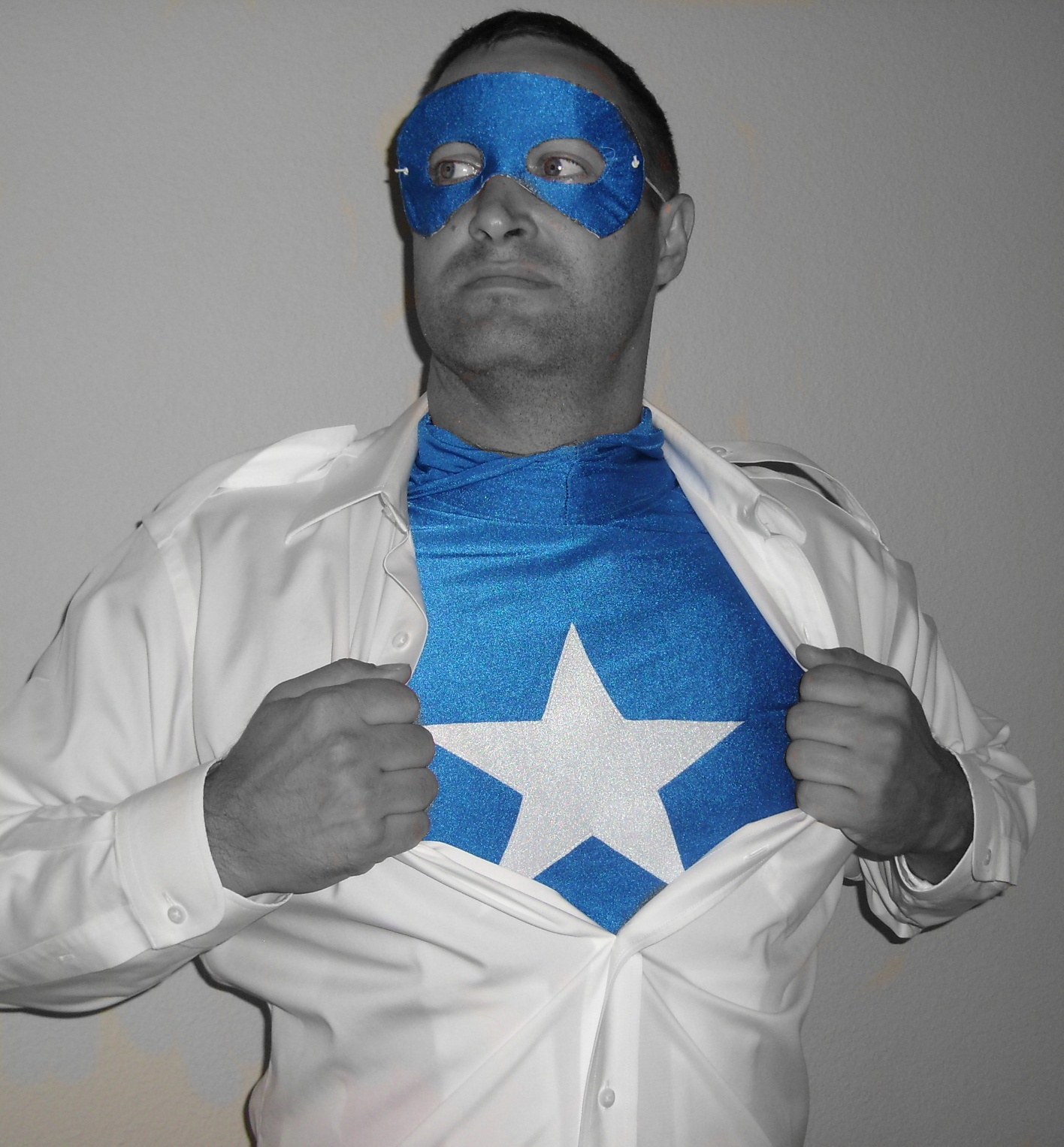
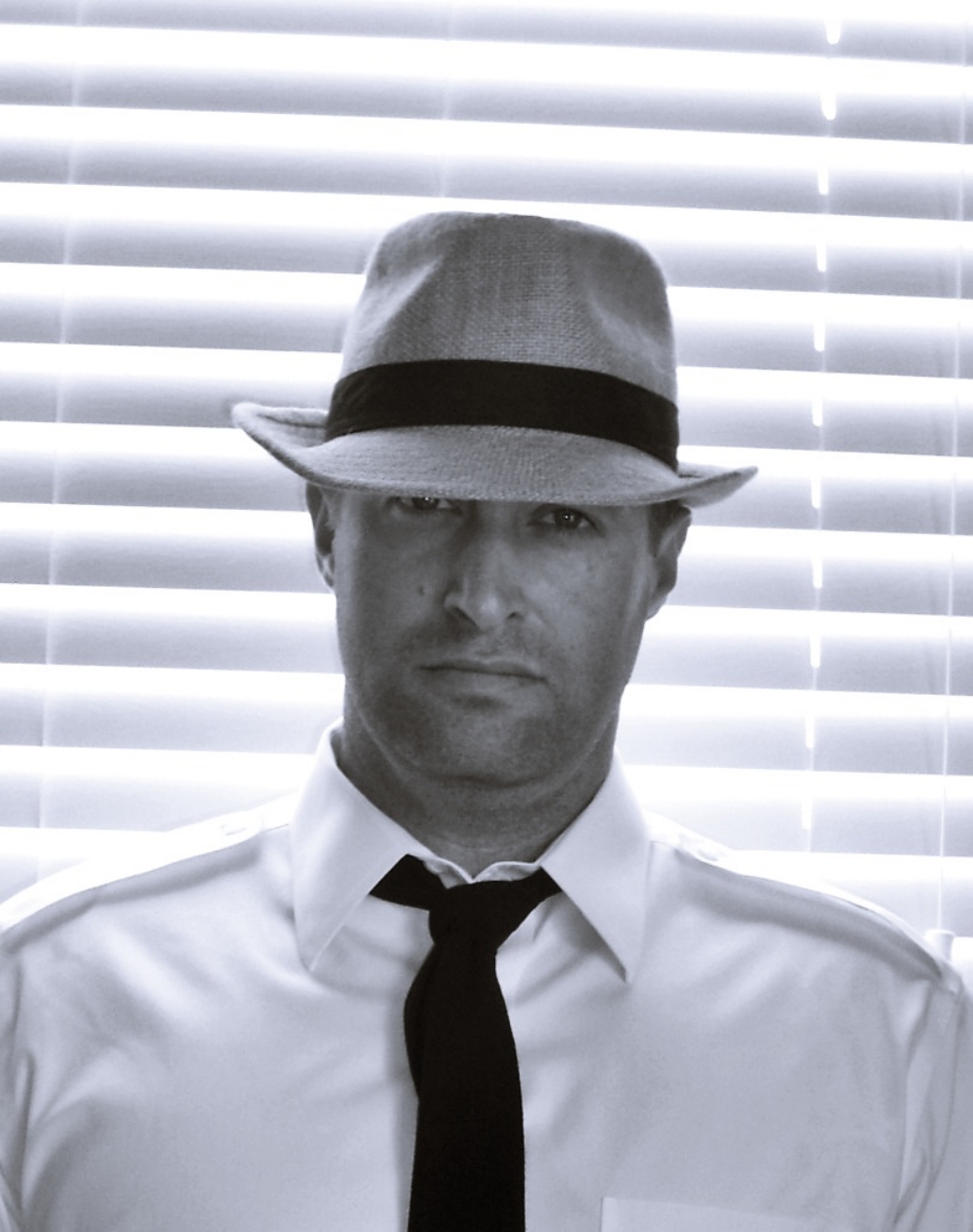
Also in my quest to stand out, you might notice my author bio pics. I have a different, fitting pic for each genre I write in and I’m willing to embarrass myself to be memorable. You might think, “Wow, what a doofus,” but next time you see those pictures you’ll also say, “Hey, I remember that doofus!” And that’s good enough for me.
Do you think there is something that non-creatives might struggle to understand about your journey as a creative? Maybe you can shed some light?
I think something less-creative, not-as-ambitious dreamers might wonder is how we can keep butting our heads against the same obstacles over and over and not just give up. When you spend a year of your life fighting to squeeze out a book in the very few spare moments of a busy life, finally present your hard work to the world, and very few readers take notice, it hurts.
So it’s not that we don’t try to give up. Some of us try over and over again to throw in the towel!
I know that sounds awful, but I think it’s true of many of us. The struggle is real. The frustration is painful. I’ve said aloud more than once, “That’s it, screw it! Why bother? I’m done!”
But what’s the alternative? To just sit idle the rest of my life and NOT tell these stories? To ignore all these characters and their adventures that have been patiently waiting in my mind for years and are still waiting? What else would I do? Just because I pretty much find no time to write doesn’t mean I don’t have time to think. And I’m not interested in drowning out my own creative thoughts with other peoples’ inane color-coded games and cat videos. On my deathbed, am I going to look back at all the time I wasted staring at an electronic box accomplishing nothing? Or am I going to look back and know I did the most with the time I had?
It still won’t be enough. I still won’t get every story out no matter how much time I get, but I’ll be damned if I don’t try.
It’s a slow trudge uphill, in the blowing snow. Occasionally a one-ton boulder rolls down and catches me in the face. But after about five minutes of sitting at the bottom and crying about it, I’m bored and disappointed with myself. Time to start climbing again. There are more stories to tell.
In your view, what can society to do to best support artists, creatives and a thriving creative ecosystem?
In my view, a lot of the classic dystopian science fiction paradigms are coming true. In Ray Bradbury’s novel Fahrenheit 451, books are outlawed because the state doesn’t approve of independent perspectives or imagination. People live out soap operas in a simulation room in their homes, ignoring the world outside and even their families to live in a digital fantasy. They stick in earplugs that play music constantly so that they never have to be left alone with their own thoughts. In William Gibson’s Neuromancer, mega-corporations and artificial intelligence run everything, leaving just the scraps for the rest of us to fight over.
The best science fiction makes us take a critical look at our own world. And the very best predict what is to come. I think both of these are strong examples of that.
So my advice is to unplug once in a while. Set down your phone, for goodness sake! Stop giving all your attention to game apps and TikTok videos. Stop giving all your money to Amazon and Walmart.
Support yourself and your neighbors by reading a book by someone who’s not a household name. Watch an independent film instead of another remake of a 40 year old movie you’ve already seen. Shop at the local store downtown instead of ordering everything online. Go walk through an art gallery instead of scrolling through gossip pics on Facebook.
Purposefully select what you are consuming—both products and art—and pick things by real people, especially people in your community. Don’t just take the low-effort, high-yield fed to you by giant online retailers and sneaky AI algorithms. Buy, read, and share human and local.
Contact Info:
- Website: https://www.jdbrinkbooks.com/
- Instagram: https://www.instagram.com/jdbrinkscifi
- Facebook: https://www.facebook.com/JDBrinkBooks
- Youtube: https://www.youtube.com/@JDBrink/videos
- Other: author email: [email protected]
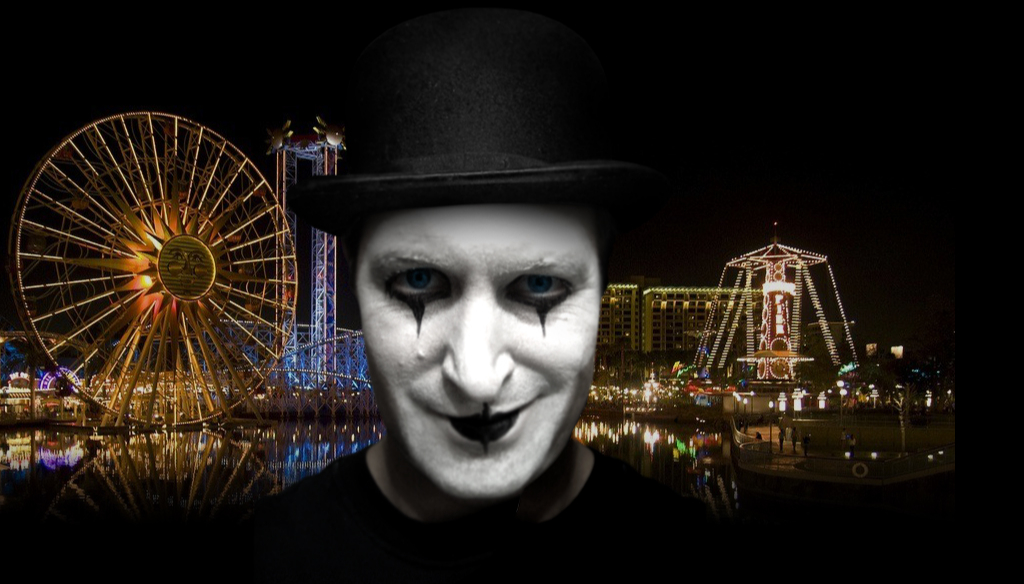
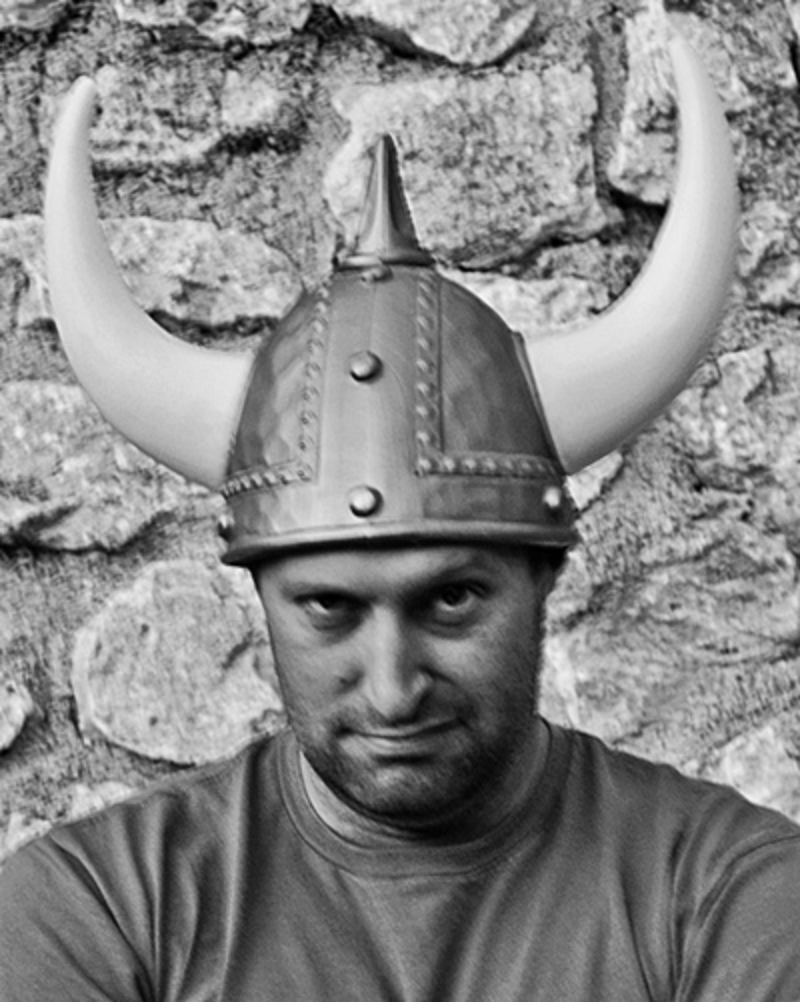
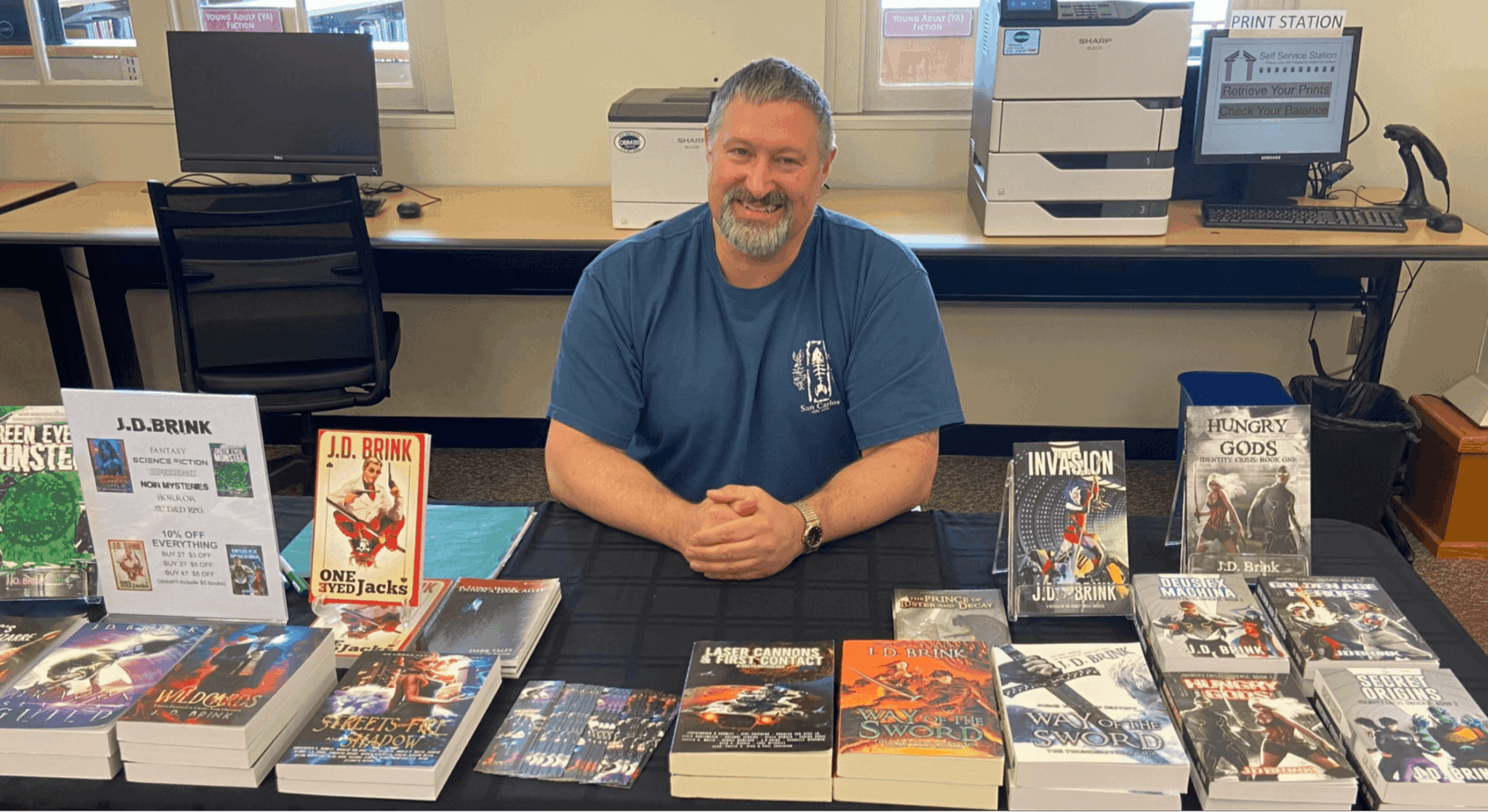
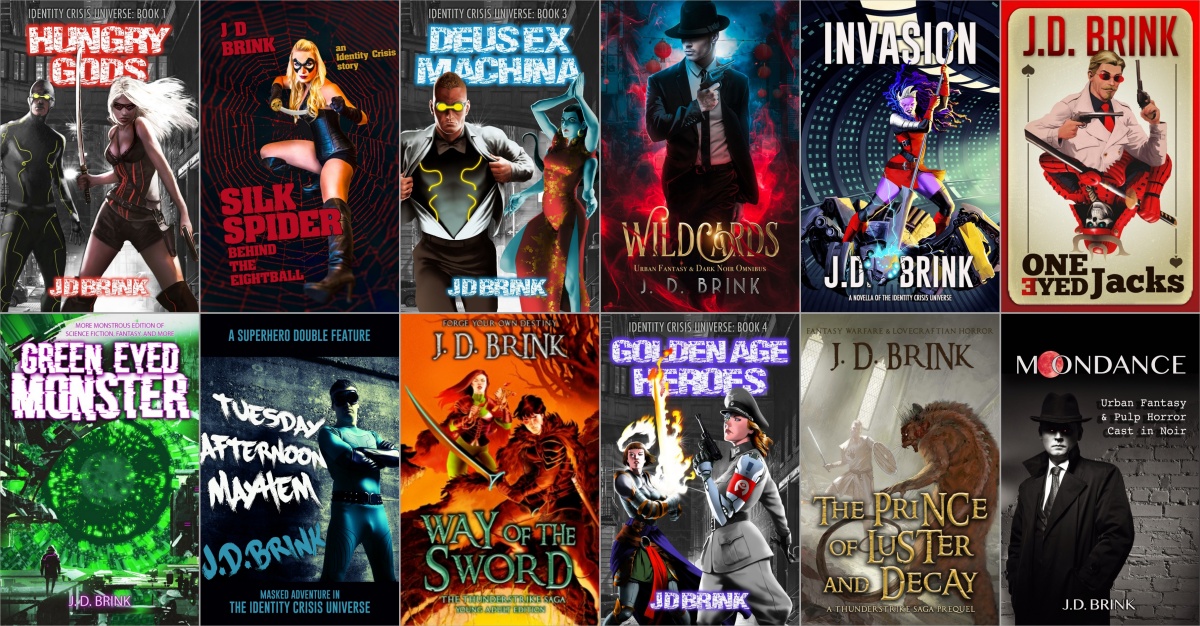
Image Credits
Images are copyright to J. D. Brink, most pictures taken by my wife America Brink.
The scary clown had his hat added digitally by my life-long friend Dan Michael.
The local library book sale shot was taken with my phone by a fellow author there; I don’t know her name.