



Alright – so today we’ve got the honor of introducing you to Ivy Delacy. We think you’ll enjoy our conversation, we’ve shared it below.
Ivy, thanks for taking the time to share your stories with us today We’d love to hear about when you first realized that you wanted to pursue a creative path professionally.
When I was four years old, I played a Sega Genesis for the first time at a family member’s home. I was instantly hooked on the bright colors and silly cartoon charm of Bubsy, a 2D platformer featuring a cat who attempts to defeat alien invaders that want to steal his collection of yarn balls.
On my next birthday, I fell at school and sustained an injury that required stitches. When I awoke in the hospital, groggy from anesthesia, I was presented with birthday gifts: a Sega Genesis of my very own, along with the Lion King and Aladdin games. I was thrilled. I didn’t even want to go to my birthday party that evening; I wanted to go home and play my new games! (But I put on my pink princess costume and went to my party, nonetheless.)
Most early video games were action-oriented with narrative components akin to set dressing rather than fully-formed stories with proper narrative arcs. As the years went by, I found my way into the world of RPGs, where the narrative was treated as a vehicle that drove the game forward. This eventually blossomed into a deeper love for storytelling.
My interest in games, in art, in writing, in comics and animated media are all branches of a tree whose heartwood is made of storytelling. I have always known that I needed to exist in a creative space.
Ivy, before we move on to more of these sorts of questions, can you take some time to bring our readers up to speed on you and what you do?
Despite having a lifelong interest in video games, my path to development was unusual and nonlinear.
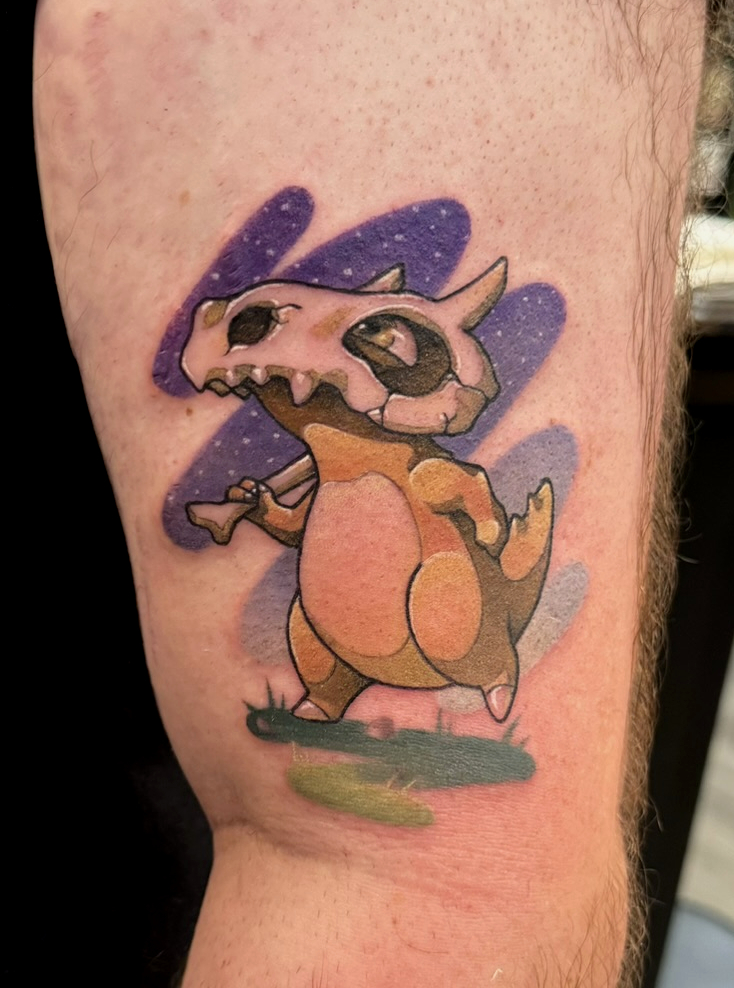
After a few years of cleaning and office jobs, I ended up landing a tattoo apprenticeship, and started my career in tattooing. I’d never considered tattooing as a possible career path, but in the absence of a clear way forward toward my end goals, going somewhere was better than going nowhere. About seven years into my tattooing career, I finally made the leap into indie development, using tattooing as a means to pay my bills while I poured my effort into learning and building games. Though I truthfully started my career in tattooing as a stepping stone to game development, I came to deeply love the craft along the way and wouldn’t trade it for anything.
Interestingly, the principles I needed to learn to be an effective tattooer had a significant degree of overlap with the skills required to be a functional artist in a game production environment: efficiency; design composition; and the ability to execute quality work within a set of guidelines informed by another party. From this perspective, both practices are a bit like puzzles (and I do love a good puzzle).
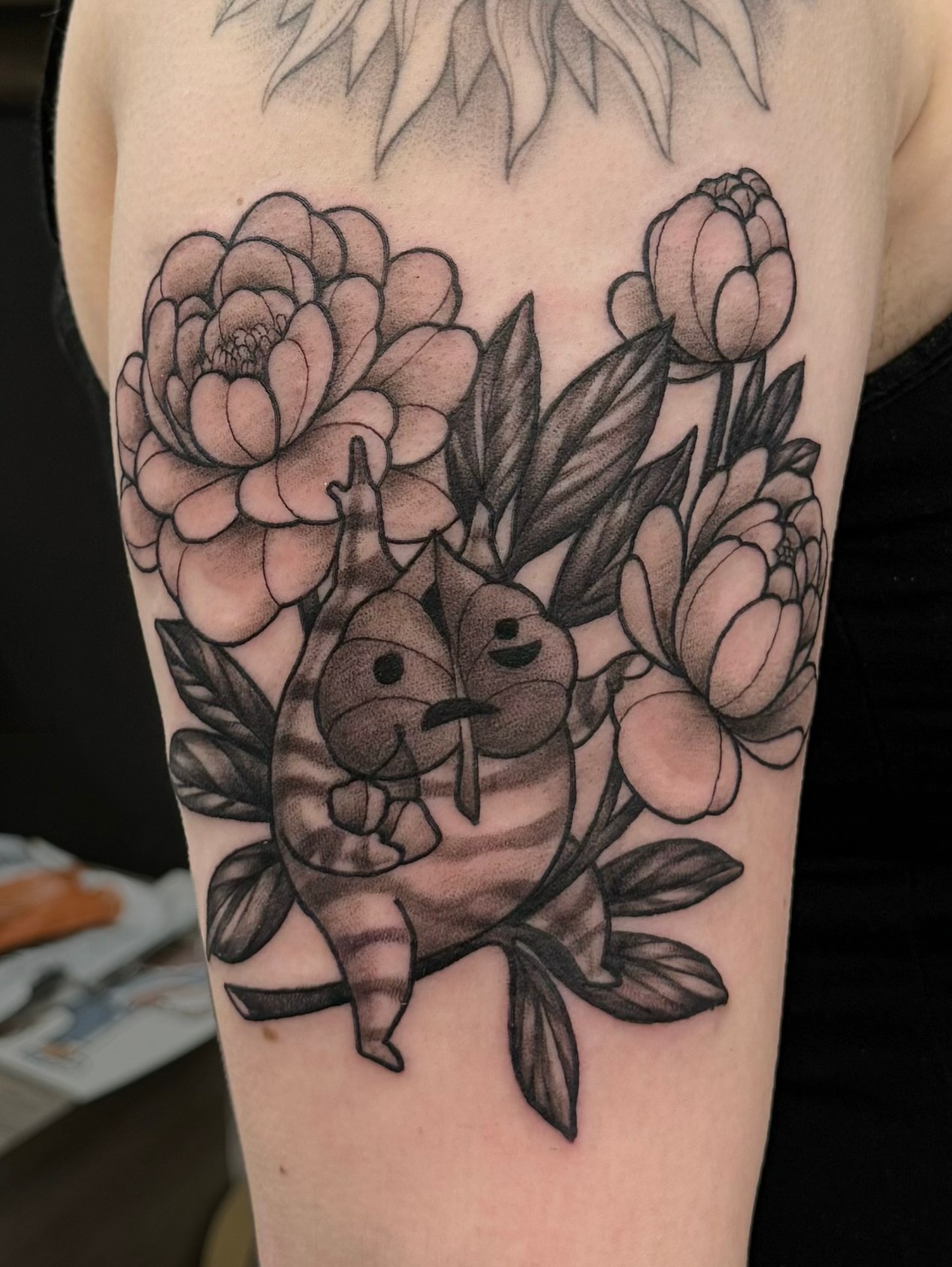
Both in tattooing and game development, my favorite things to work on are pieces where I have a genuine interest in the subject matter. It’s more enjoyable to work on, the end result feels better, and clients and coworkers appreciate the enthusiasm I can bring to the process. I’m a curious person by nature; while I tend to do a lot of fandom tattoos, lots of concepts can and do pique my interest.
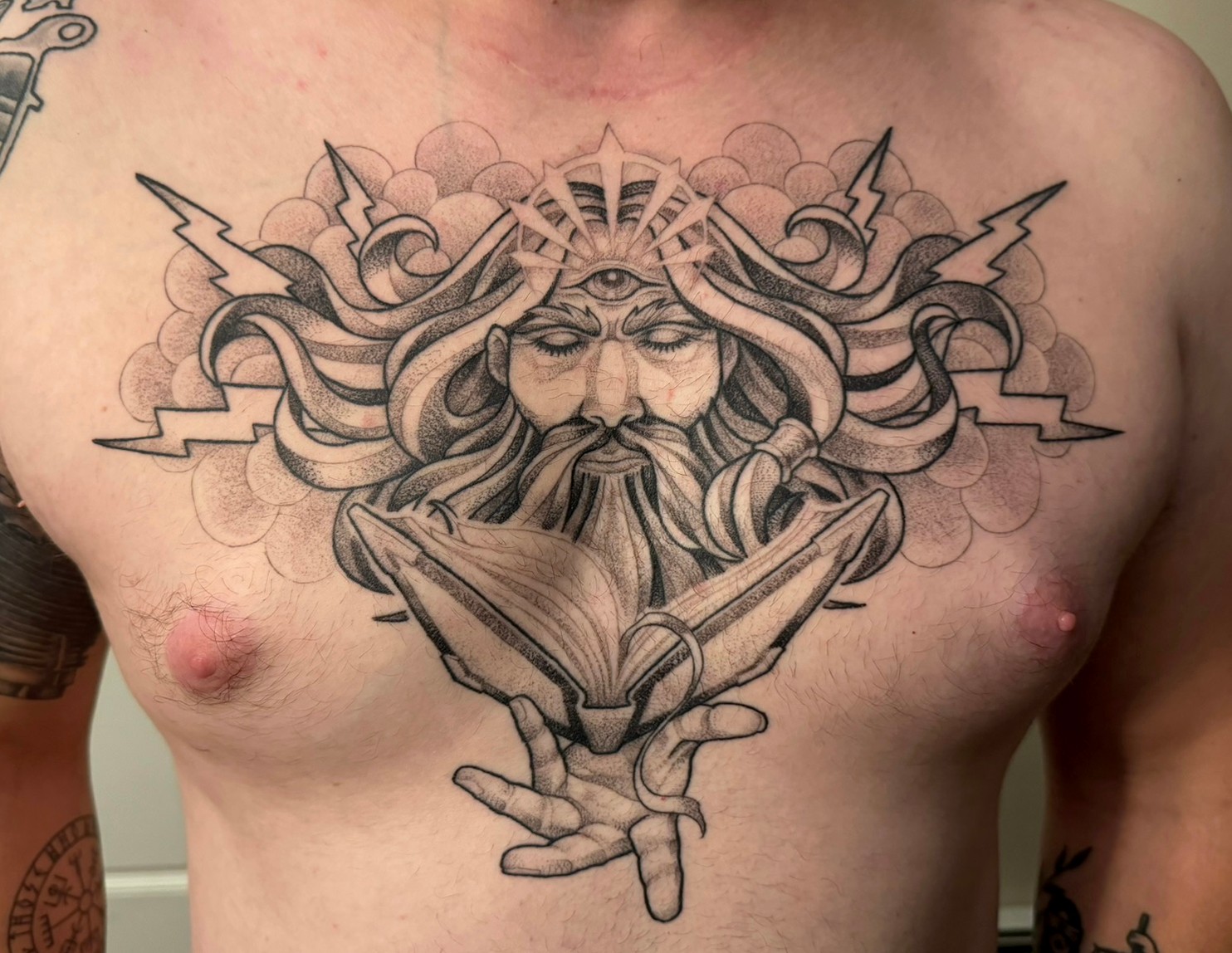
Both practices also lead back to my interests in storytelling. While it’s a little more straightforward with games, a good tattoo—especially a larger project piece—should also invoke a story. Visual storytelling (composition, flow, placement) is a strong suit of mine, and I love to convey that in everything I work on.
Learning and unlearning are both critical parts of growth – can you share a story of a time when you had to unlearn a lesson?
A lot of standard, recognized art principles need to be tossed out the window when it comes to tattooing. Skin as a medium functions very differently from paper or canvas; the body’s natural chemistry and how it interacts with ink needs to be taken into account.
Someone educated in the arts knows you shouldn’t shade with black; tattooing demands it for functionality. Expectations for lighting and color fly out the window in favor of clarity and legibility of the design. The real litmus test is how well you’re able to break the “art rules” and still have the end result look good.
Do you think there is something that non-creatives might struggle to understand about your journey as a creative? Maybe you can shed some light?
There is a siren voice in the back of my head that croons ever long. She whispers to me in the morning when I awaken, pulls me aside mid-sentence, and sings a vibrant melody in my dreams. Each idea is a thread in a greater tapestry, and the only way to weave it is to accept the gifts she proffers. Each thread must be explored; if it does not serve this tapestry, perhaps it will suit another. The threads can come from anywhere, anyone, and anything; not even sleep can quell her voice. Whenever she is piqued, then must I listen. It does not stop; I must always keep weaving.
Contact Info:
- Website: https://vextera.com
- Instagram: ivydelacy



Image Credits
Jullian Valadares