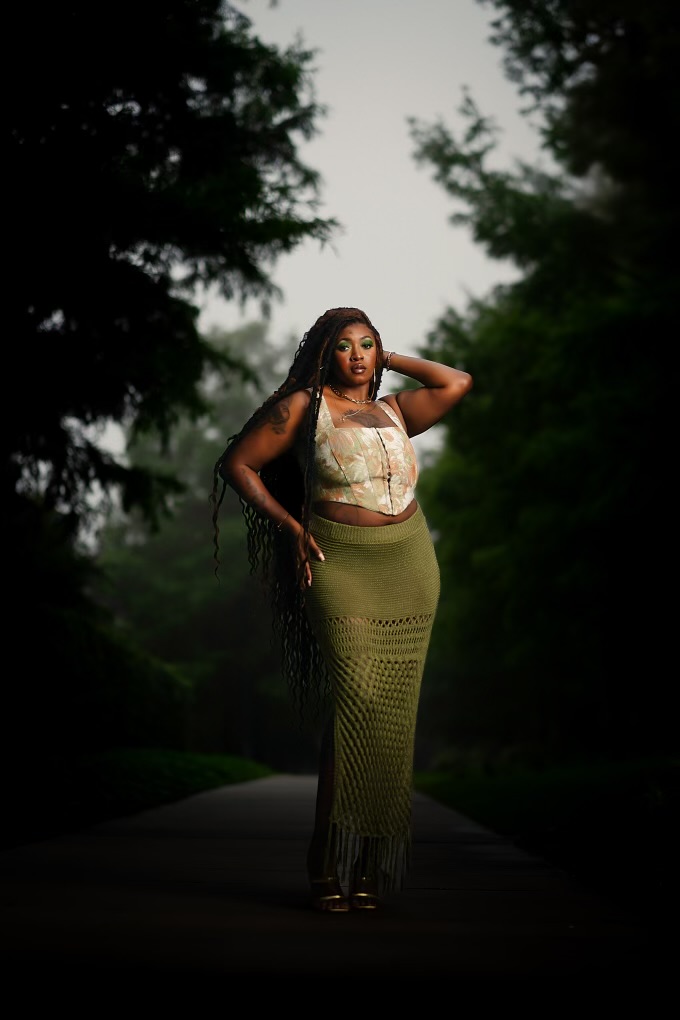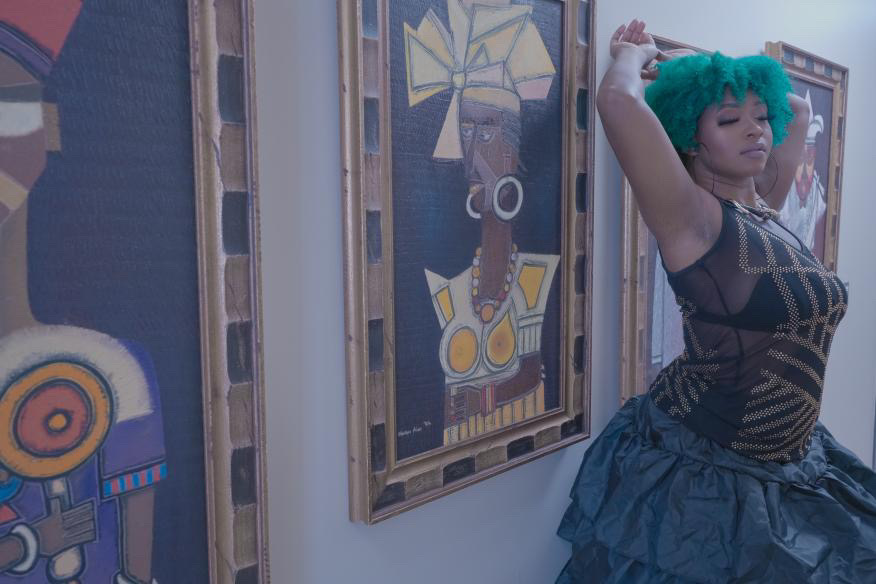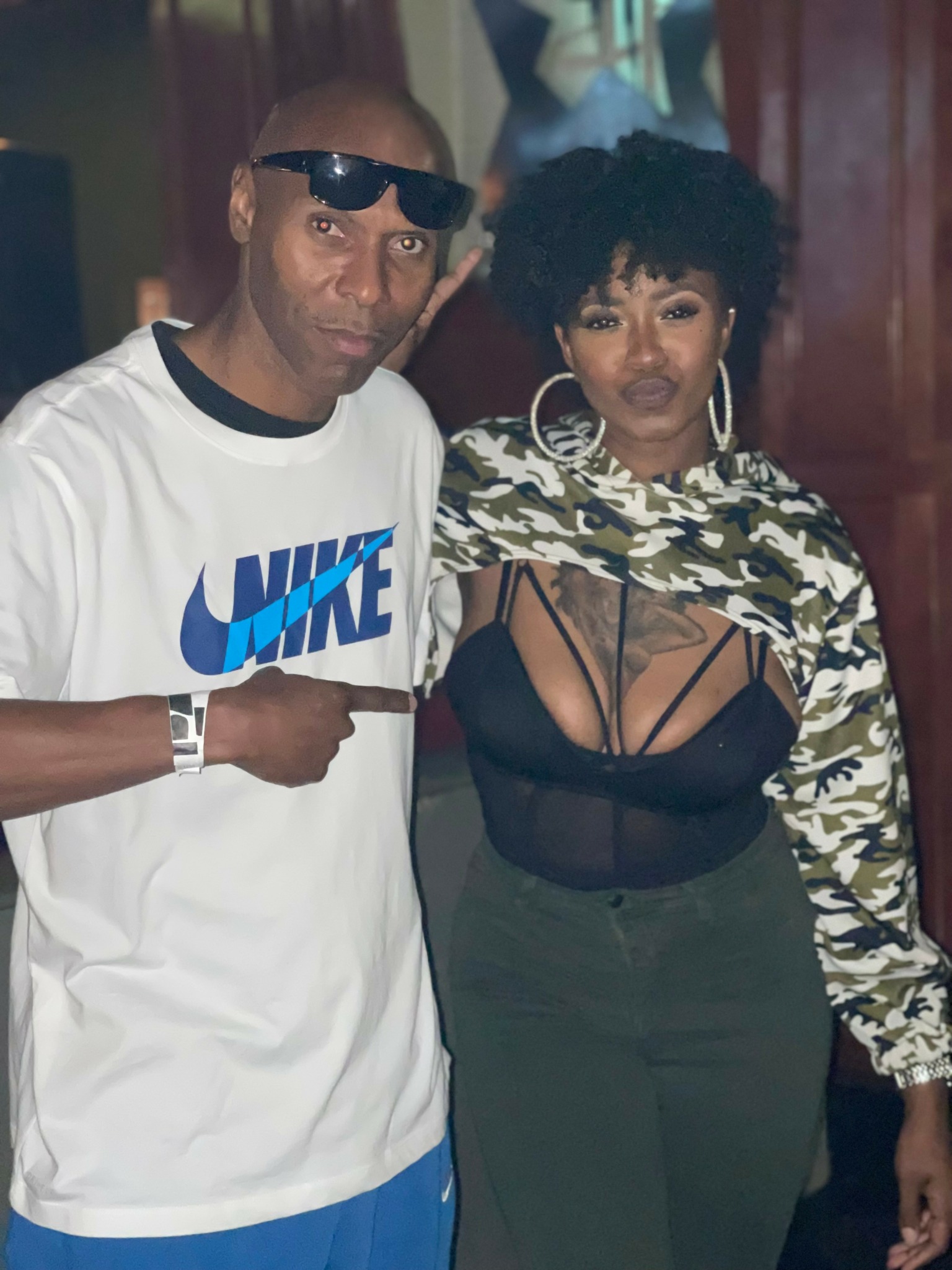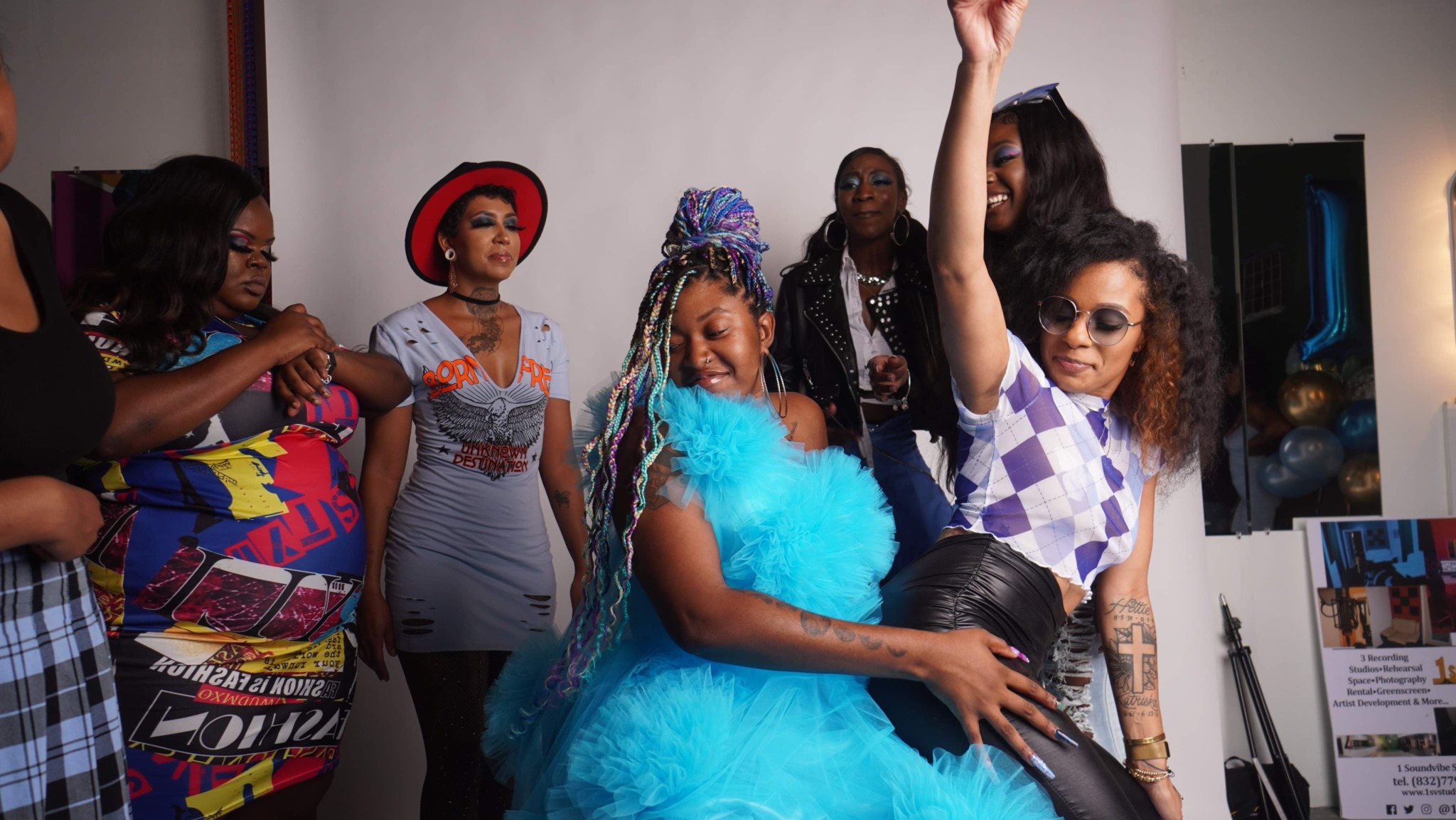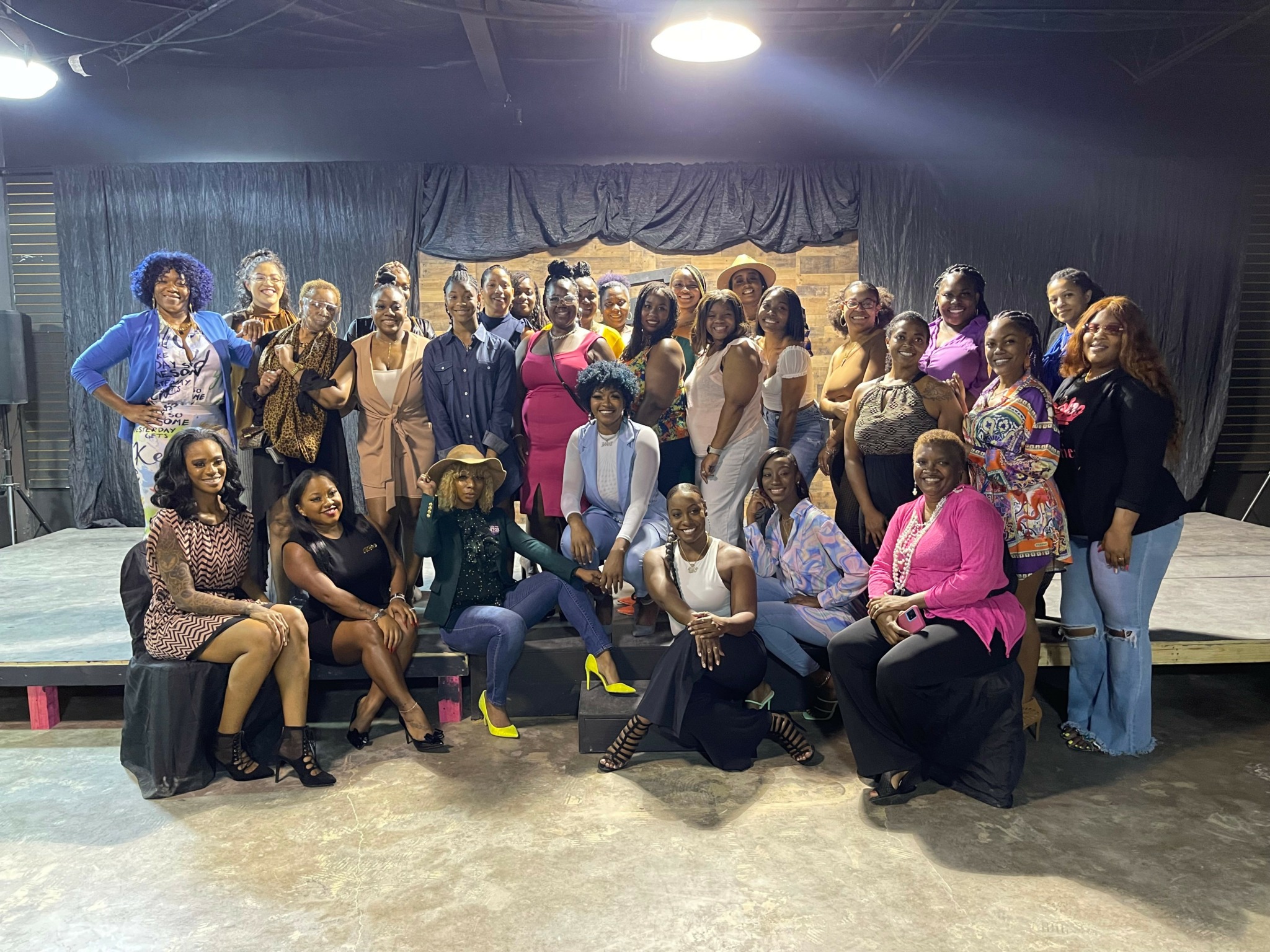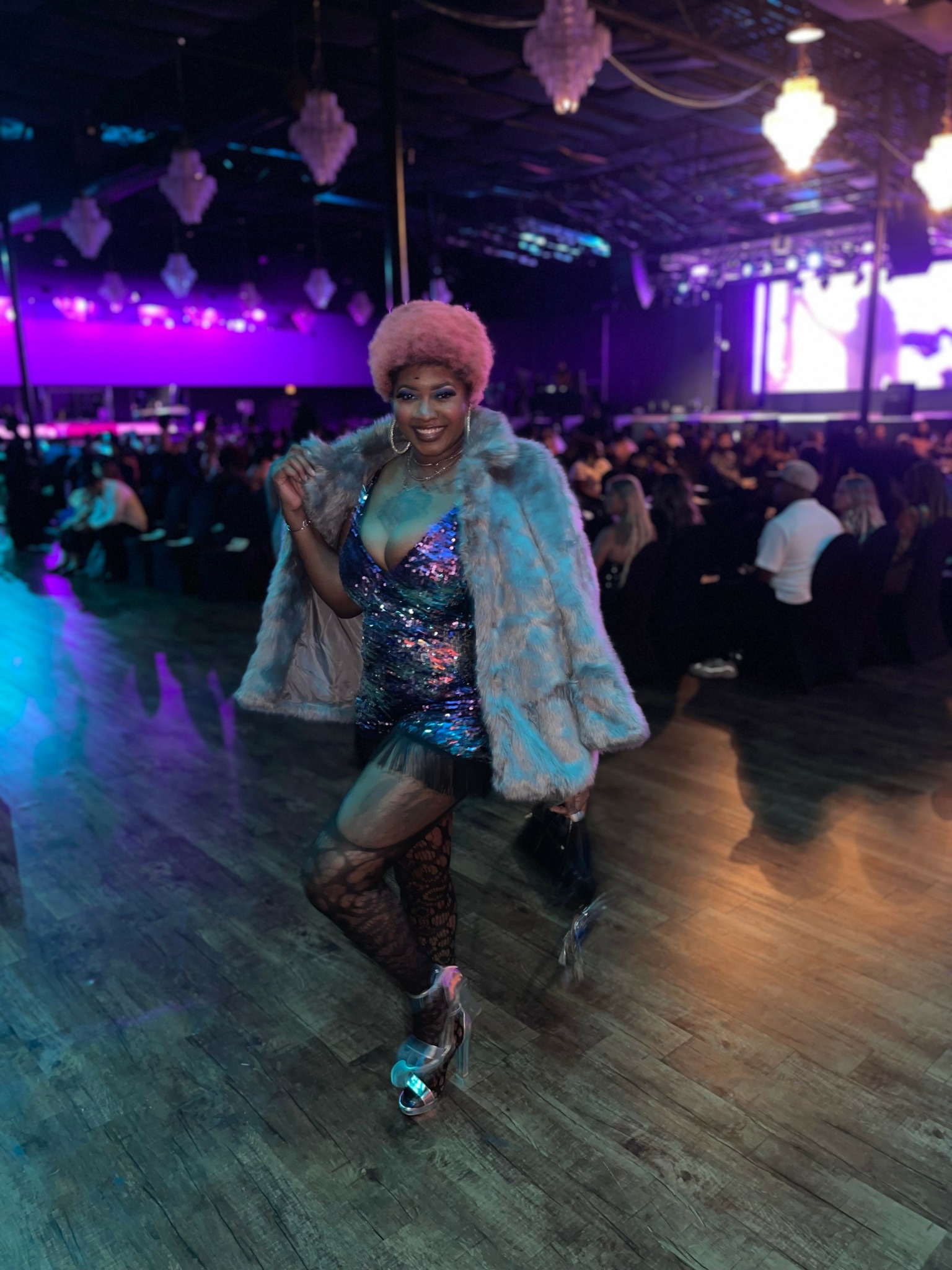

We recently connected with Imani and have shared our conversation below.
Imani, appreciate you joining us today. Coming up with the idea is so exciting, but then comes the hard part – executing. Too often the media ignores the execution part and goes from idea to success, skipping over the nitty, gritty details of executing in the early days. We think that’s a disservice both to the entrepreneurs who built something amazing as well as the public who isn’t getting a realistic picture of what it takes to succeed. So, we’d really appreciate if you could open up about your execution story – how did you go from idea to execution?
The idea behind The BleuPrint Creative Services Agency came from me realizing that my business is my artistry. I express myself through the art I create, the experiences I create, and by putting other people in position to create art and profit from it too. I desire to be surrounded by people making money doing what they love, what they’re passionate about, and what their purpose is.
What made me execute it was realizing that I spent two years running multiple hobbies into the ground and calling it a business. I didn’t realize it wasn’t a real business until I tore my ACL and my meniscus and I lost everything because if I didn’t run, neither did my business. Losing my effectiveness took a serious toll on my mental and physical health and I had to rebuild stability again. For me, that looked like getting on indeed and finding a boring but consistent full time customer service job. Unfortunately, during the two to three years that I worked that job, I almost lost myself twice. I realized everything I thought I was doing and everything I thought I was building didn’t matter at all and had almost nothing to do with the woman God put me here to be.
After being on FMLA for like six months to a year, I finally felt that God had released me from that position and I quit that job with no plan, just a Holy Spirit promise that God was going to use my purpose to provide for me and my family and help others do the same. So, after I quit, I jumped headfirst back into my old business, and I realized quickly that the business I built at 23 was not the business I wanted to continue at 28; and it damn sure wasn’t going to be the business that retired me and provided resources to multiple communities. It had transformed and evolved just like I had. I had been doing the really, really deep work — talking to God, discovering who I am, and figuring out the woman I want to be. I had no choice. He had literally stripped everything away from me so that all I could see was Him and his vision for my life.
That helped me see that obedience is better than sacrifice — every time. As soon as I surrendered to the will of God, everything became crystal clear. I still hadn’t figured out who my audience was, how I was going to scale, who my mentor should be, and what services I actually wanted to provide— but I decided to blindly follow direction and watch it all fall into place. I realized I was not ever going to make a million dollars as a solopreneur service-based business. I had to learn how to put myself into the mindset to receive more. All of that led me to build a system for a past version of myself — the version of me who needed direction, structure, and a framework for her neurodivergent brain.
Executing this rebrand has taught me that I’m different and it’s okay for me to be different. Of course my business isn’t going to look like anybody else’s, because I’m truly a uniquely wired individual — and that’s exactly why it works. I learned that if your business doesn’t provide a solution to a real problem, it’s not going to work. I learned that I’m necessary, and that what I’m producing right now is completely untapped in the market. Only I can do this, because this is my unique, uncommon calling.
As always, we appreciate you sharing your insights and we’ve got a few more questions for you, but before we get to all of that can you take a minute to introduce yourself and give our readers some of your back background and context?
I got into this industry through modeling. I got signed to Paige Parks Modeling Agency when I was 9, and swore to the world I was going to grow up and be a Victoria’s Secret model. Unfortunately, life had other plans for me early on. After I graduated high school, I finally had some control over my modeling career. But they say God laughs at you when you make plans so I know He was up there in stitches the way my life was panning out. It was all necessary though because I realized that as much as I loved being in front of the camera and on stage, I love being behind the scenes, producing these amazing works of art, just as much, if not more!
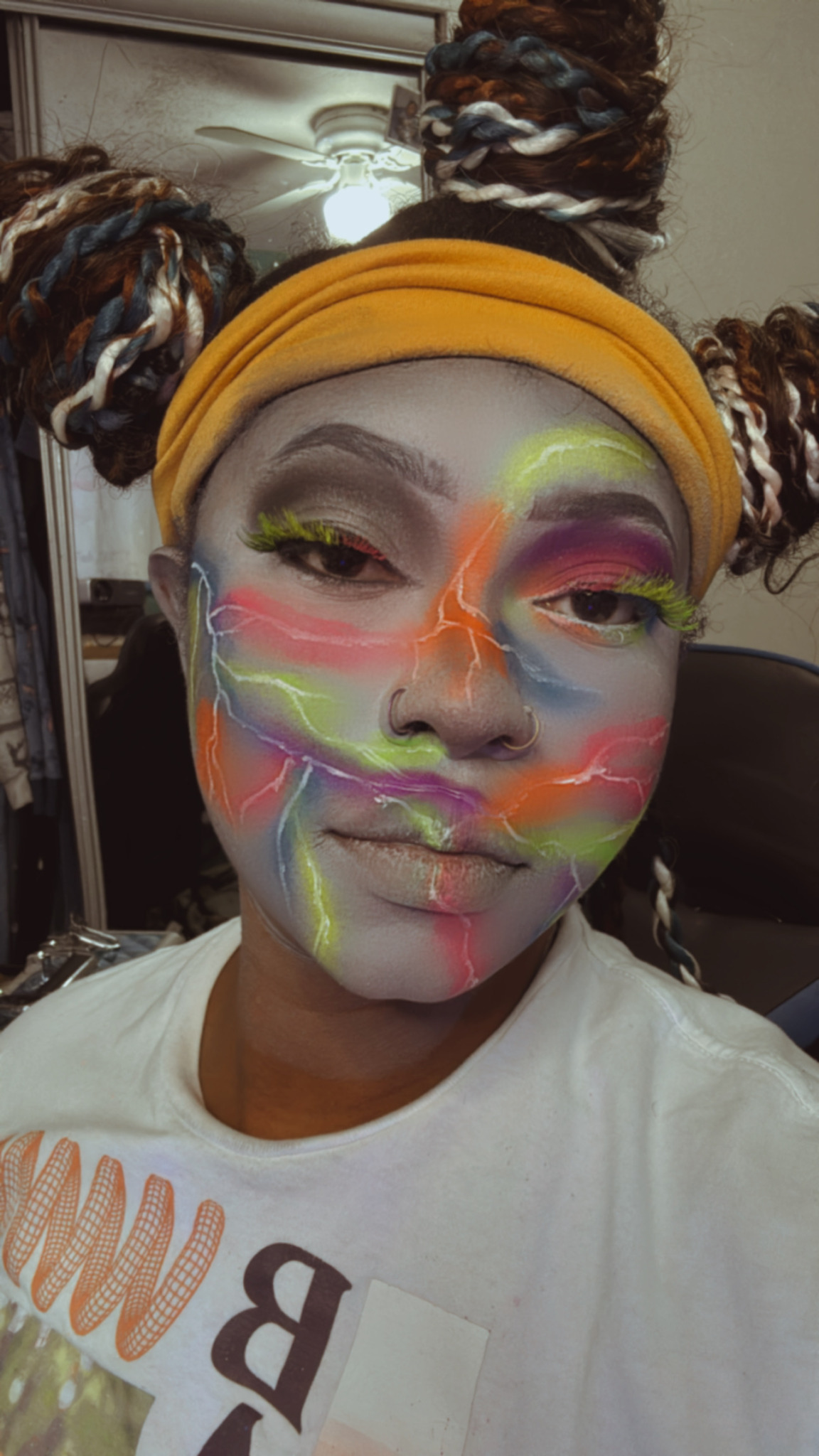
I was 19 years old when I did someone’s makeup professionally for the first time. I used to stay cool with the designers because the makeup artists would have me looking crazy as hell at some of the biggest shows. I also have ADHD so I would ask for little tasks to keep me busy during our down times. Eventually they just let me show up makeup-ready as long as I stuck to the look guidelines. Next thing I know, I’m doing multiple models’ makeup, helping them dress, running errands, and helping photographers set up at the same shows and shoots I was booked to model for. My work ethic was unmatched! At 23, I turned my talent for makeup, fashion, and creative direction into a business.
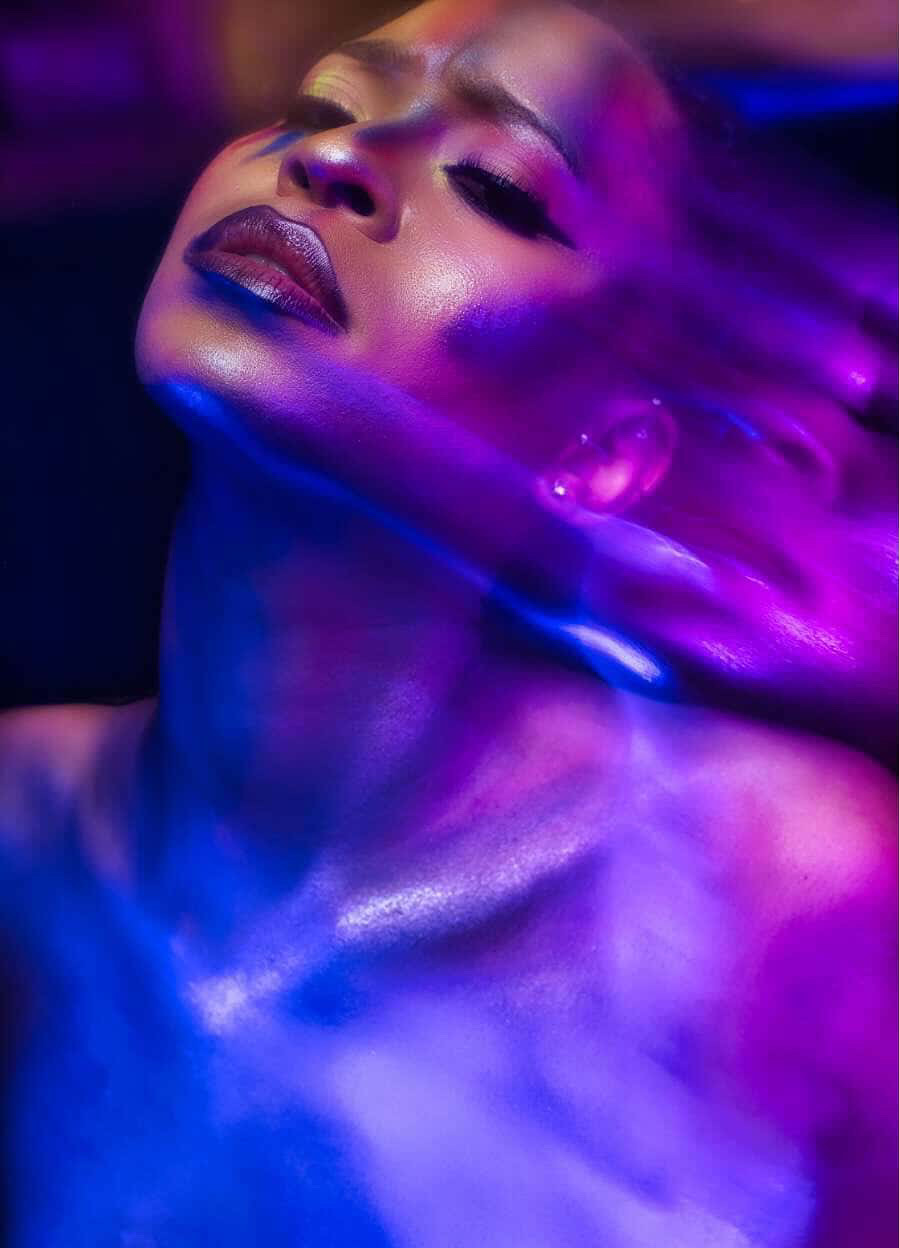
Today, my work includes creative and editorial makeup artistry for magazines, photoshoots, music videos, and album covers. I also do creative direction and curation for photoshoots, art, fashion and music-based events. Outside of that, I create digital products — like my Chaos to Canvas Bundle, the Chaos to Canvas Blueprint Ebook, and the BleuPrint Muse Machine, all tools designed to help neurodivergent creatives break through executive dysfunction and actually activate their ideas. I’m also in the process of building The Chaos Club, a community for neurodivergent artists and creatives to share work, share opportunities, and be surrounded by a tribe of like-minded individuals.
Clients come to me for two reasons: my creativity and my specific level of execution. I’m known for making skin look like skin, elevating natural beauty instead of redesigning someone’s whole face, and translating a client’s vision into reality with style and structure. For events, people trust me because I can create full experiences, not just gatherings — and I can do it beautifully even if resources are limited.
My digital products solve creative blocks caused by executive dysfunction, overwhelm, and the “I don’t know where to start” feeling. Most neurodivergent creatives are extremely talented — they just need activation, structure, and a push. My tools give them simple frameworks that help them take ideas out of the stratosphere and put them onto a canvas so they can actually move their businesses forward.
What sets me apart and what I’m most proud of coincidentally happens to be the same thing. It is my ability to pivot and keep moving forward. I may pause for clarity, but I don’t quit. I’m forever a student of my craft. I’ve had to wear several hats across Houston’s art, beauty, fashion, and music scene, and instead of scattering me, it has only sharpened my eye. Every detour redirected me. Every setback pulled me closer to my purpose. I pray all the time that God puts me in a position where I get paid to be exactly who He created me to be — and I’m proud that I stayed the course long enough to finally become the woman God was trying to grow me into.
I’m not trying to fit into anyone else’s blueprint.
I’m building my own — and I’m building it for people like me.
What’s a lesson you had to unlearn and what’s the backstory?
The lesson I had to unlearn is that motion equals success.
They actually don’t correlate at all.
In the first decade and a half of my business, I let every person and every opportunity get my “yes.” This, of course, led me to some very unpleasant situations, but the good definitely outweighed the bad — or so I thought. When everyone is calling, inviting, requesting your presence, it’s easy to misinterpret access as value.
As soon as I stopped being able to show up in a way that was pleasing to my peers, I looked around and I was alone in a hotel room — broke, broken, and burnt out — with nothing to show for it but a couple social media posts and a phone full of memories. It led to me taking two years off my business so I could recalibrate and really figure out what Imani wanted and what God was asking of me.
Don’t get me wrong, that time was necessary. I learned my fair share of how this industry works and how to conduct my business the proper way. But what is the destination when you’re running in place? I spent so much time and energy trying to be present and available that I wasn’t doing the backend work that actually mattered — like marketing my business to paying customers, instead of showing up at the beck and call of my industry peers who “loved me and my work”, but didn’t value it enough to pay for it or show up for me when it was my turn.
These days, I understand that obedience feels better than sacrifice — and it produces much better results. I’m more confident in my “no,” and I use way more discernment with my “yes.” It’s helped me weed out what was draining me and made room for the abundance God already had in store for me. It’s hard to see what God is trying to do when you keep stacking your own plans in front of Him.
I’ve taken great pride in letting go of the reins this year and letting God build the business He wants me to have. I’m relearning how to navigate, but I’m expectant for what the rest of quarter four and 2026 have to offer me.
Being neurodivergent, burnout is expected — but at least the exhaustion I’m experiencing now is for the betterment of myself, my family, and my community. Those invitations may have stopped, but the fulfillment is real now. And honestly? I’d rather be here than where I was five years ago.
Are there any books, videos, essays or other resources that have significantly impacted your management and entrepreneurial thinking and philosophy?
I’ve always been a seeker of knowledge — that’s really the foundation of my entrepreneurial philosophy. If there’s a masterclass — I’m in it.
If there’s a panel on business, finances, real estate, marketing funnels — I’m there.
Fashion? Digital products? Social media strategy? I’m watching all the videos. I’m reading all the books. I’m going to all the workshops.
I’m a student of my craft and my business because I genuinely want to be a good business owner. All of this has taught me strategy, how to scale, how to think like a high-earner, and how to move intentionally.
Asia Abston was the first person who opened my eyes to the world of passive income and the idea that freedom is a legitimate business goal. Being in her mentorship group exposed me to women building businesses in ways I had never considered, and it pushed me to rethink what I wanted my own life to look like. That’s also how I came across We Should All Be Millionaires by Rachel Rodgers, which completely shifted the way I thought about money. Hearing a Black woman talk so boldly about wealth, mindset, and ease made me realize that if I want to help people the way I claim I do, I have to expand my capacity — spiritually and financially.
YouTube has always been my most valuable resource. Anything I’ve ever wanted to learn, I went searching for it: business, makeup, hair, productivity, social media marketing, fashion design— all of it. That’s how I found Myron Golden, and he, along with my pastor Dharius Daniels, shaped my understanding of money, stewardship, and purpose. They teach business from a biblical place, grounding everything in purpose and scripture, and that always hits home for me. God is the center of my business. My business is my art, and my art comes from God. So my strategy has to align with what He’s asking me to build. Through their teachings, I learned that I can’t build a true empire through a purely service-based model that drains me. I have to create things that make money without requiring my physical presence 24/7 — so I can serve at the level I’m called to.
All of these resource, including my current mentor, has helped me stop thinking of my business as “what I can do” and start thinking in terms of “what problem I solve.” Creatives can be unintentionally self-centered, building everything around our gifts. But people buy what they need. So now I focus on creating systems, products, and experiences only I can offer — the things that support neurodivergent creatives the way nobody else has figured out how to do. My philosophy now is simple: stay teachable, stay led by God, and build a business that evolves with the people I’m called to serve.
Contact Info:
- Website: https://stan.store/ImaniHasiina?utm_source=ig&utm_medium=social&utm_content=link_in_bio&fbclid=PAZnRzaAOJyxBleHRuA2FlbQIxMQBzcnRjBmFwcF9pZA8xMjQwMjQ1NzQyODc0MTQAAafaCPksHVYgZjh1cEeDBMPvk1zgmtI6pOe3vwAefP4OhrIJPhg1ynoUhC3s6A_aem_UOtbcKXeWT5gOZ1LlrWjhQ
- Instagram: https://www.instagram.com/imani_hasiina?igsh=MWp1cWM3aHA4eHR1eg%3D%3D&utm_source=qr
- Youtube: https://youtube.com/@ih_thebleuprint?si=pyzneB6CxiFnl71g