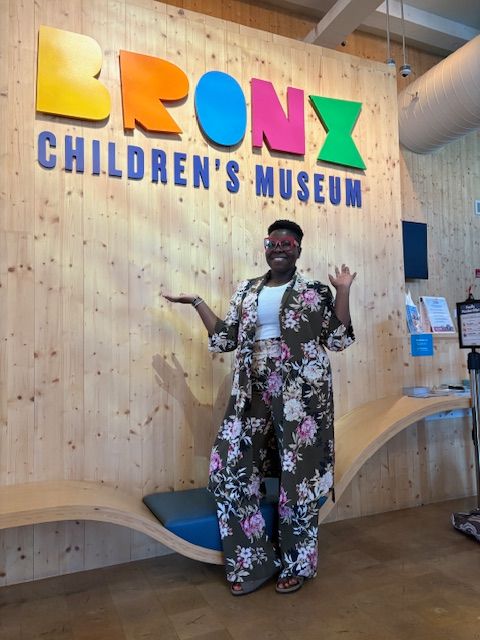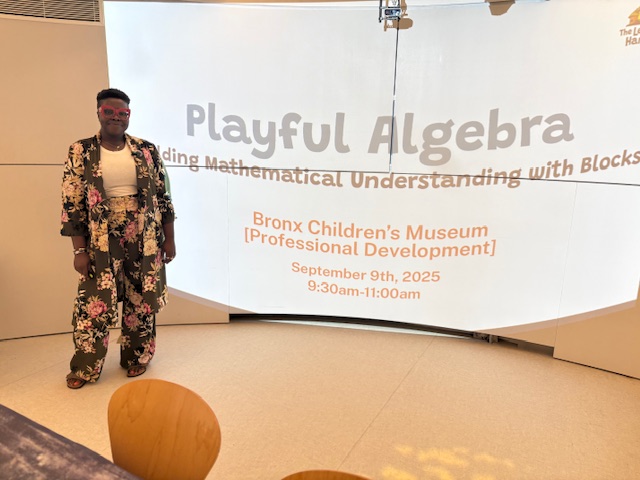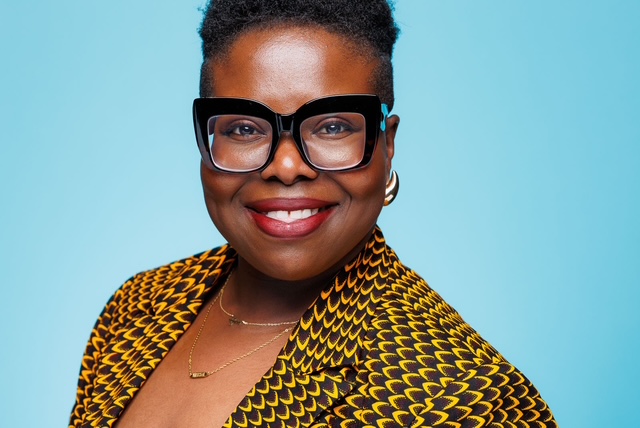

Alright – so today we’ve got the honor of introducing you to Ifeyinwa. We think you’ll enjoy our conversation, we’ve shared it below.
Alright, Ifeyinwa thanks for taking the time to share your stories and insights with us today. What’s the backstory behind how you came up with the idea for your business?
The Learning Hamlet began as a very personal journey that started when I was looking for a school for my son. I wanted to find a place that honored curiosity, play, and a deep sense of community, while offering a rich early childhood experience that nurtured mathematical thinking from the start. What I quickly realized was that while there were many nurturing spaces, few were intentionally connecting early play to mathematical understanding in meaningful, developmentally appropriate ways.
That search led me not just to find a school, but to begin partnering with one. Through that partnership, I was introduced to block play, and it completely transformed my perspective on how children learn mathematics. I saw how blocks offered children opportunities to explore ideas of shape, balance, measurement, and spatial reasoning in authentic, joyful ways. It became clear that math wasn’t something to be “taught” later; it was already present in every thoughtful interaction children had with materials, space, and each other.
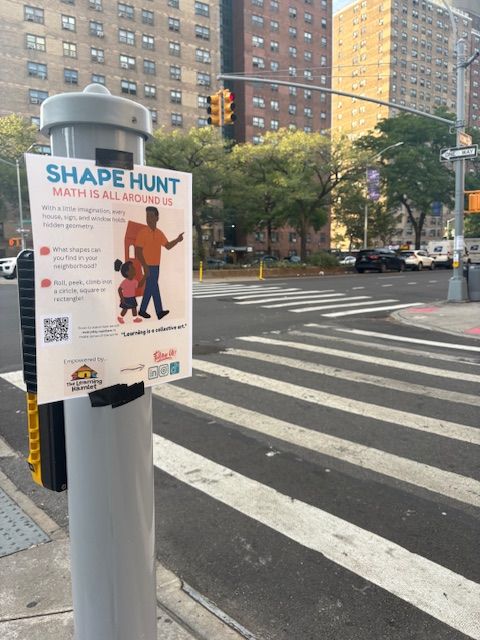
From that foundation, The Learning Hamlet was born. It started as a way to connect families, educators, and communities around joyful, hands-on learning. Over time, it expanded into community activation projects such as Math Lives Here—a series that celebrates how math exists in everyday spaces—and Walk and Wonder, a family-centered community event that turns neighborhoods into outdoor classrooms.
Today, The Learning Hamlet continues to grow, enhancing the community learning experiences we already have and making them better through targeted, engaging support. Whether through workshops, curriculum design, or public activations, my mission remains rooted in that first search for my son—to ensure every child, family, and educator can experience mathematics as something living, beautiful, and woven into the fabric of daily life.
Awesome – so before we get into the rest of our questions, can you briefly introduce yourself to our readers.
My name is Ifeyinwa “Ify” Anako, and I’m an education consultant, mathematics content coach, and the founder of The Learning Hamlet. This community-driven learning initiative bridges early childhood, family engagement, and mathematics education. My journey into this work began as both a mother and a secondary mathematics educator, where I witnessed significant gaps students experienced in their education journey.
My teaching experience, coupled with my search for a preschool for my son, sparked a deeper inquiry into what early mathematical thinking really looks like. After partnering with my son’s school, I was introduced to block play—a discovery that transformed my understanding of how young children develop mathematical reasoning. I saw how play, conversation, and construction offered natural entry points into geometry, spatial awareness, problem-solving, and collaboration. This realization inspired me to create The Learning Hamlet, where community, content, and culture intersect to support educators, families, and children in reimagining what math learning can feel like.
Through consulting, coaching, and community activation projects, I work with schools, leaders, and families to strengthen learning cultures and instructional practices. My services include math coaching for teachers, curriculum design, professional learning workshops, and family engagement programs that make learning joyful and accessible. Two of my flagship initiatives—Math Lives Here and Walk and Wonder—bring math into everyday community spaces through posters, outdoor challenges, and family-friendly learning events. These activations help families see that math is not confined to classrooms—it lives in grocery stores, parks, and daily routines.
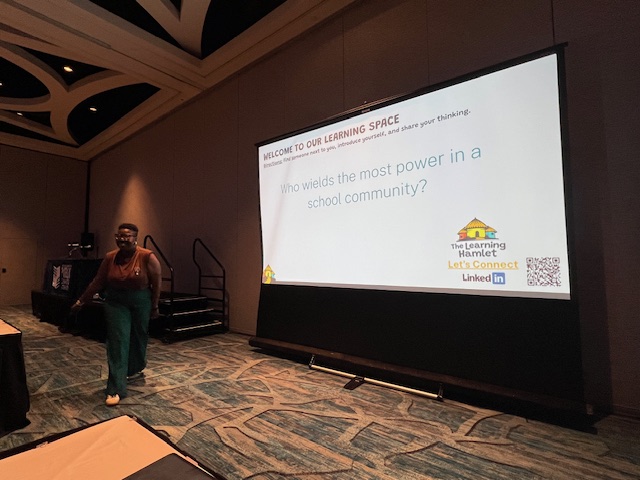
Can you share a story from your journey that illustrates your resilience?
One story that really captures my resilience comes from a season of transition in my life. Shortly after getting accepted to the University of Pennsylvania with hopes of pursuing graduate studies in education leadership, I found myself navigating new motherhood and postpartum recovery. As much as I wanted to continue my academic journey, I had to acknowledge that graduate school wasn’t realistic at that time —not because I lacked passion or ability, but because I needed to prioritize my mental and emotional well-being.
That moment could have felt like a setback, but I chose to see it as a redirection. Instead of stepping away from my purpose, I redirected my energy into the community right in front of me—my son’s preschool. Over the next year, I offered year-long professional development to the teachers, focusing on mathematics through play, and helped design and build a block playroom that allowed children to experience math through construction, storytelling, and collaboration.
As a lifelong learner with an insatiable curiosity, I didn’t wait for a formal title or a degree to validate my work. I didn’t ask for permission—I trusted my instincts, my community, and the belief that meaningful learning starts where you are. That experience taught me that delay is not denial. Sometimes the detours are where the most authentic, community-rooted learning begins.
Any stories or insights that might help us understand how you’ve built such a strong reputation?
What has helped build my reputation within my market is the breadth and depth of my work across the educational continuum—from early childhood to secondary mathematics. Having coached teachers and leaders in secondary schools across New York City, I’ve developed a clear understanding of where students’ educational journeys are headed and what mathematical thinking they’ll need to be successful beyond the classroom.
That long-range perspective allows me to approach early learning with intention. I don’t see preschool math as isolated from algebraic reasoning or problem solving later on; I see it as the foundation. This ability to connect the dots between block play in preschool and conceptual understanding in high school algebra has shaped the way I design professional learning, curriculum, and community-based math experiences.
My reputation has also grown through consistency—showing up for schools and families with curiosity, empathy, and a commitment to partnership. Whether coaching a team of Algebra 1 teachers or facilitating a block play workshop for preschool educators, I help others see that math is a language of relationships, reasoning, and joy. That throughline, from content to culture to community, has made my work not only relevant but deeply resonant across diverse learning spaces.
Contact Info:
- Website: https://www.thelearninghamlet.org
- Instagram: @thelearninghamlet
- Linkedin: https://www.linkedin.com/in/ifeyniwaanako
- Youtube: https://www.youtube.com/@TheLearningHamlet