



We recently connected with Hillel Teplitzki and have shared our conversation below.
Hillel, looking forward to hearing all of your stories today. Was there an experience or lesson you learned at a previous job that’s benefited your career afterwards?
I’m a composer for media, creating music for film, television, and video games—a dream career that I’ve worked hard to turn into a reality. I’ve been fortunate to contribute to over ten AAA video game franchises and even compose for a Disney+ animated series, making music my sole source of income. But it wasn’t always like this.
One of the most surprising elements that helped me build my career was something seemingly unrelated—working as a waiter for a large chunk of my 20s. There’s a common stigma in the entertainment industry about having a side job, as if it somehow diminishes your credibility as an artist. But the reality is that most of us, myself included, start our careers while juggling other jobs to make ends meet.
In 2017, for example, I was already gaining recognition in my home country, My score for God of the Piano earned me a nomination for the Ophir Award, which is Israel’s equivalent of the Oscars. Despite that honor, I still had to wait tables just to pay my rent and save enough money to pursue a master’s degree in Composition for Film, TV, and Video Games at Berklee College of Music.
Those years of waiting tables, however, taught me more than just how to carry a tray or memorize orders. They sharpened my interpersonal skills—how to read people, communicate effectively, and manage difficult situations with grace. These soft skills have been invaluable in my career as a composer. Networking, collaborating with musicians, and building long-term relationships with clients require more than just musical talent; they demand empathy, adaptability, and a genuine connection with others.
Looking back, I realize how pivotal those experiences were. Without them, my career might look very different today. Every interaction—whether with a game developer, a film director, or another composer—is an opportunity to build trust and create something meaningful together. And much of that trust stems from the lessons I learned outside the studio, in a restaurant where I was just trying to make rent while chasing a dream.
Awesome – so before we get into the rest of our questions, can you briefly introduce yourself to our readers.
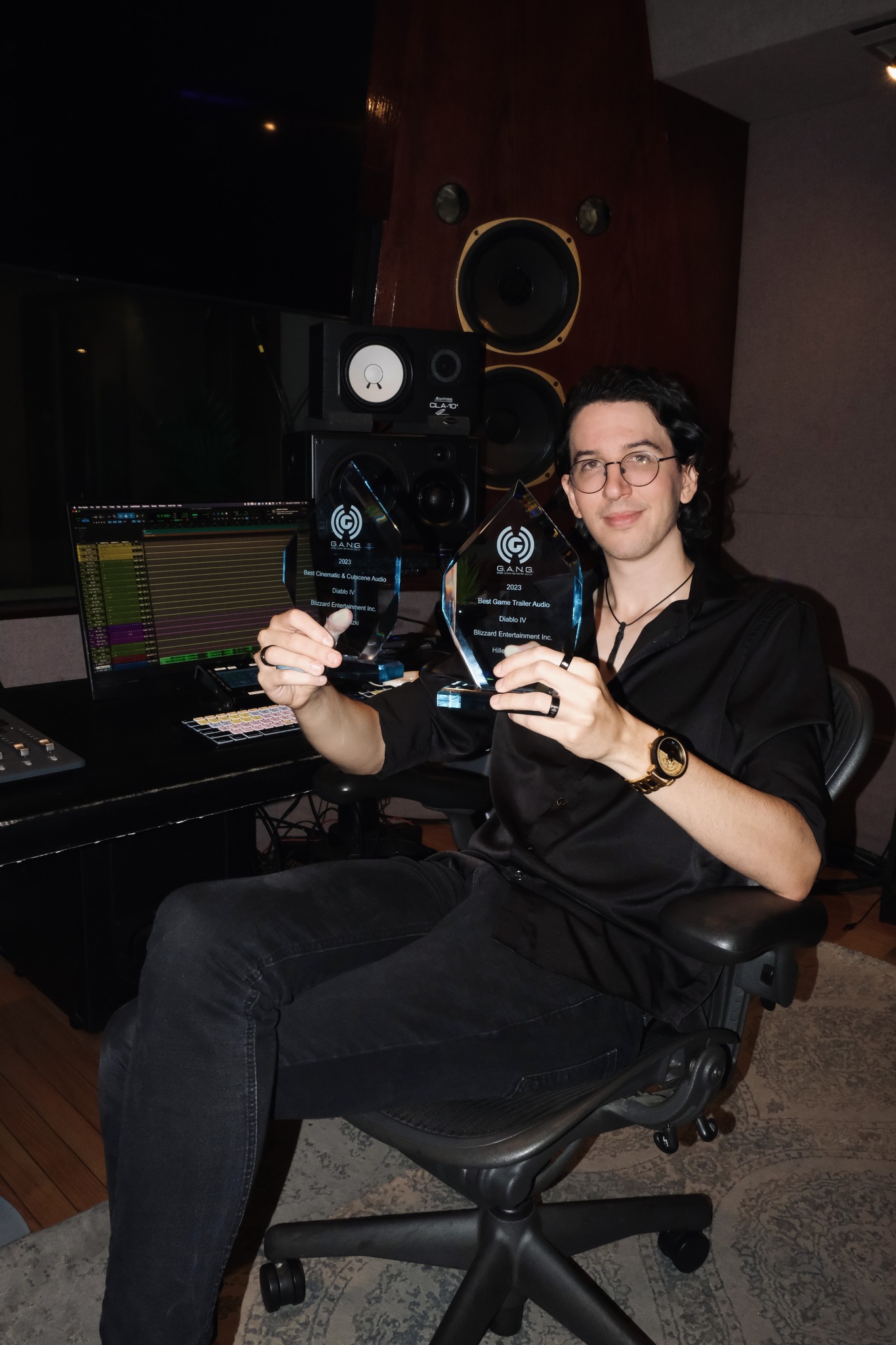
Hi! I’m Hillel Teplitzki, and like I mentioned earlier, I’m a composer for film, TV, and video games. You might’ve come across my work in franchises like World of Warcraft, PUBG Mobile, and Destiny: Rising. One of the coolest moments of my career was working with Blizzard Entertainment—a total full-circle experience because, like so many other nerds, I grew up absolutely loving video games.
My time at Blizzard was truly special. It was one of the first places where I got to combine my love for video games with my skills as a composer on a larger scale. I worked in the music department, where I contributed to several of their flagship projects. Blizzard is known for its incredible attention to detail, and being part of that culture taught me how to push myself creatively and professionally. Though I must admit that there were definitely some pinch-me moments where I’d look around and think, “Wow, I’m actually working alongside the people who created the soundscapes I grew up with.”
When I left Blizzard, it was to pursue more freelance opportunities and collaborate with friends in the industry. I wanted to work on a variety of projects across different mediums, from mobile RPGs to AAA titles and even television. That decision opened doors I hadn’t imagined, allowing me to contribute to more diverse and exciting projects.
That said, it wasn’t all smooth sailing. Like any creative career, mine came with its fair share of risks. Moving to Los Angeles and saving up for an artist visa and a master’s degree at Berklee College of Music wasn’t exactly easy. But every step taught me something valuable.
If there’s one takeaway from my journey so far, it’s that passion is important—but persistence, adaptability, and building real connections with people are what really make the difference. This industry thrives on collaboration, and some of my most rewarding experiences have come from working with others who share the same love for storytelling through music.
Have any books or other resources had a big impact on you?
I think we all have different ways of learning, but for me, one of the most impactful resources has been something simple: asking friends and colleagues for their honest feedback. I know it sounds almost too basic, but I genuinely believe that a huge part of my growth as a composer comes from embracing feedback—not just tolerating it, but actively seeking it out and valuing it.
Early on, I’d ask anyone who would listen—family, classmates at Berklee, anyone—for their thoughts on my work. And I wasn’t looking for polite responses like, “Oh, that’s nice.” In fact, if someone gave me a vague or overly nice comment, I’d ask them to try again. I wanted the real stuff—the constructive feedback that would help me grow, even if it stung a little.
As my career progressed, so did the caliber of the people I surrounded myself with. Today, many of my friends and colleagues are working at an incredibly high level in the industry, and I can’t overstate how invaluable it’s been to simply hang out, swap ideas, and nerd out about everything from our favorite software tools to our studio setups.
In fact, seeing how some of these composers organize their sessions or approach their workflow has been like unlocking a treasure chest of knowledge. It’s the kind of insight you can’t always find in a textbook or a tutorial—it comes from real, human connection and shared experiences.
What’s even better is how this approach has impacted my ability to collaborate. Understanding how my friends work has made it so much easier to collaborate with them on projects later down the line. And honestly, collaborating with friends has become my favorite part of the job. There’s something incredibly rewarding about building something together, knowing you’ve learned from and supported each other along the way.
Let’s talk about resilience next – do you have a story you can share with us?
One story does come to mind.
At the end of 2019, I was wrapping up my studies at Berklee College of Music and considering my next steps. I wanted to move to L.A., but without a job lined up, it felt impossible. Around that time, Berklee announced a new scholarship to financially support one student in relocating anywhere in the world to work as an assistant—a perfect opportunity!
But Berklee is a huge school, and I didn’t even have an internship in mind yet. So, I started reaching out to Berklee alumni in L.A. and found Xueran Chen, who had interned at Konsonant Music and had great things to say about the experience. I set up a Zoom call with Andrew Gross, the head composer, and we immediately hit it off.
Andrew offered me the internship, but I explained I couldn’t afford the move without the scholarship. That’s when we came up with the idea to include a video of Andrew explaining why my skills were a great fit for his team. I submitted it with my application, and shortly after, I was awarded the scholarship.
It’s a great reminder that sometimes a little creativity and extra effort can lead to amazing results!
Contact Info:
- Website: https://www.hillelteplitzki.com/
- Instagram: https://www.instagram.com/hillelteplitzki/?hl=en
- Facebook: https://www.facebook.com/hillel.teplitzki
- Linkedin: https://www.linkedin.com/in/hillel-teplitzki-684a3b94/

Image Credits
Nina Teplitzki, Nir Shor, Shalev Alon, David Bone