



We recently connected with Hillary Taylor and have shared our conversation below.
Alright, Hillary thanks for taking the time to share your stories and insights with us today. We’d love to hear about a project that you’ve worked on that’s meant a lot to you.
The Posthumous Pardon Project is something we sort of stumbled into as an organization. Aside from actively working to stop all executions in South Carolina, I believe it’s the most important work we are doing at SCADP.
Between 1912-1972, South Carolina executed 239 people (mostly African American men). Based on what we know about the death penalty’s racist history, it’s very likely that many people were executed for crimes they did not commit. The Posthumous Pardon Project is a way for SCADP to assist decedents of wrongly executed people and help clear their ancestors’ name. When families come to us, we pair them with a lawyer and a team of law student researchers who work with them to build a case and fill out the necessary paperwork for a posthumous pardon. If families wish to escalate their ancestor’s case within the SC legal system, we help them navigate those next steps. Our program is a partnership between SCADP, the pro-bono programs at USC Law School and Charleston School of Law, and some incredible lawyers throughout South Carolina.
The Posthumous Pardon Program sort of fell into our laps. In January 2023, I received a call from a former South Carolina resident who was completing a lot of family history research. One of her relatives was a lawyer who left some old papers about a very high-profile death penalty case in her hometown. After researching the case, she realized there were some serious doubts about whether the accused committed the crime (especially because the case was rife with racial bias against the defendant). Fast-forward two months, I was having another conversation with a local faith leader, who shared with me that his relative (a young Black man) was also executed for a crime he didn’t commit. It was in this moment I asked myself, “How many other people had this happen to their relative? How can families heal this particular past trauma by seeking justice in the present? What would it look like for South Carolina to really reckon with the racial bias of its death penalty history?” In that moment, the idea for the Posthumous Pardon Project was born, and we’ve been diligently working on it ever since.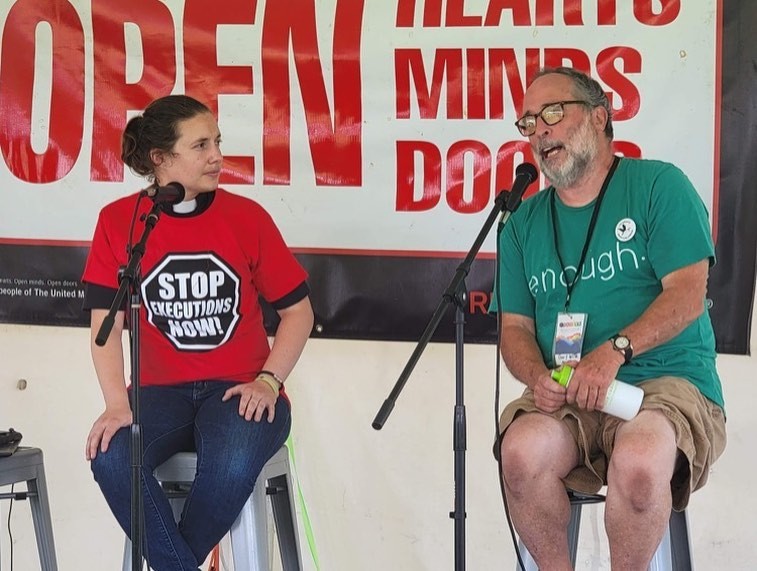
Awesome – so before we get into the rest of our questions, can you briefly introduce yourself to our readers.
My name is Rev. Hillary Taylor and I am the Executive Director of South Carolinians for Alternatives to the Death Penalty (SCADP). Our mission is to abolish the death penalty and catalyze criminal justice reform. We seek to rehumanize those on death row, mobilize communities through education about the death penalty’s legacy, advocate with legislators for death penalty abolition and alternatives, and restore those impacted by the death penalty to healing and wholeness.
SCADP has existed for over 40 years under different leaders. However, the organization was restarted in June 2021 after the SC General Assembly passed the “Firing Squad Bill.” This bill (S. 200) created the firing squad as a method of execution and forced those on death row in South Carolina to choose between the firing squad and the electric chair if lethal injection was an unavailable method of execution. I’m a United Methodist Minister by training and was connected to the reformed SCADP because I’m also a pen-pal to someone on SC’s Death Row. I had some time between jobs that summer, so I decided to help hold the newly formed organization together. What started out as volunteer work became a full-time job within 14 months.
Aside from focusing on the death penalty, what sets SCADP apart from other non-profits is our ability to hold space with everyone impacted by violence. We are obviously connected to all the guys on the SC’s Death Row and their legal teams. At the same time, we are connected to murder victim family members, death row family members, and person who have worked on death row for the SC Department of Corrections. If we are going to abolish the death penalty in South Carolina, SCADP needs everyone’s voice to join our movement. We recognize the intersectionality between death row residents and victim family members. For example, most of the guys on death row are also victims of profound trauma and violence. And many corrections employees build connections with those on the Row, which is why participating in their executions is so traumatic. Seeing everyone’s common humanity is key to our work, as is understanding
A lot of people might not think of activism as a kind of art, but I would disagree. Art is about reimagining the world. It can provide critique about the way things are, and it can cast hope for a better future. That’s how I want SCADP to function. In terms of critique, our job isn’t only to say that the death penalty is ineffective, but why it’s ineffective, and how it reflects the prejudices of our society. The death penalty is disproportionately given to poor people, people of color, people with disabilities, people with white victims, and people with inadequate legal representation. If these factors are better predictors of a capital punishment charge than any other metric, our system is extremely broken. What’s more frustrating, however, is the way the state promises victim families “closure” with executions. If executions actually brought closure for families, we would use the death penalty for every homicide case. The sad reality, however, is that the death penalty is a way for the state to deliver “cheap justice” without actually addressing the trauma and healing of victim families.
At the same time, our job is to cast a vision where our Department of Corrections invests in a system that nurtures life, restoration, and transformation of harming parties and harmed parties alike. In 2015, capital cases reportedly cost the state approximately 1.3 million more dollars than cases with “life without parole” sentences. What if South Carolina stopped spending money on expensive capital litigation costs and used that money to pay college tuition for orphaned children? What if instead of paying hundreds of thousands of dollars for lethal injection drugs, we invested that money into violence prevention programs? What if we stopped punishing someone who caused extreme harm and actually made them accountable for causing the harm in the first place? All of these are alternatives to the death penalty, and they would be cheaper and more effective in preventing capital homicide cases than the system we currently have.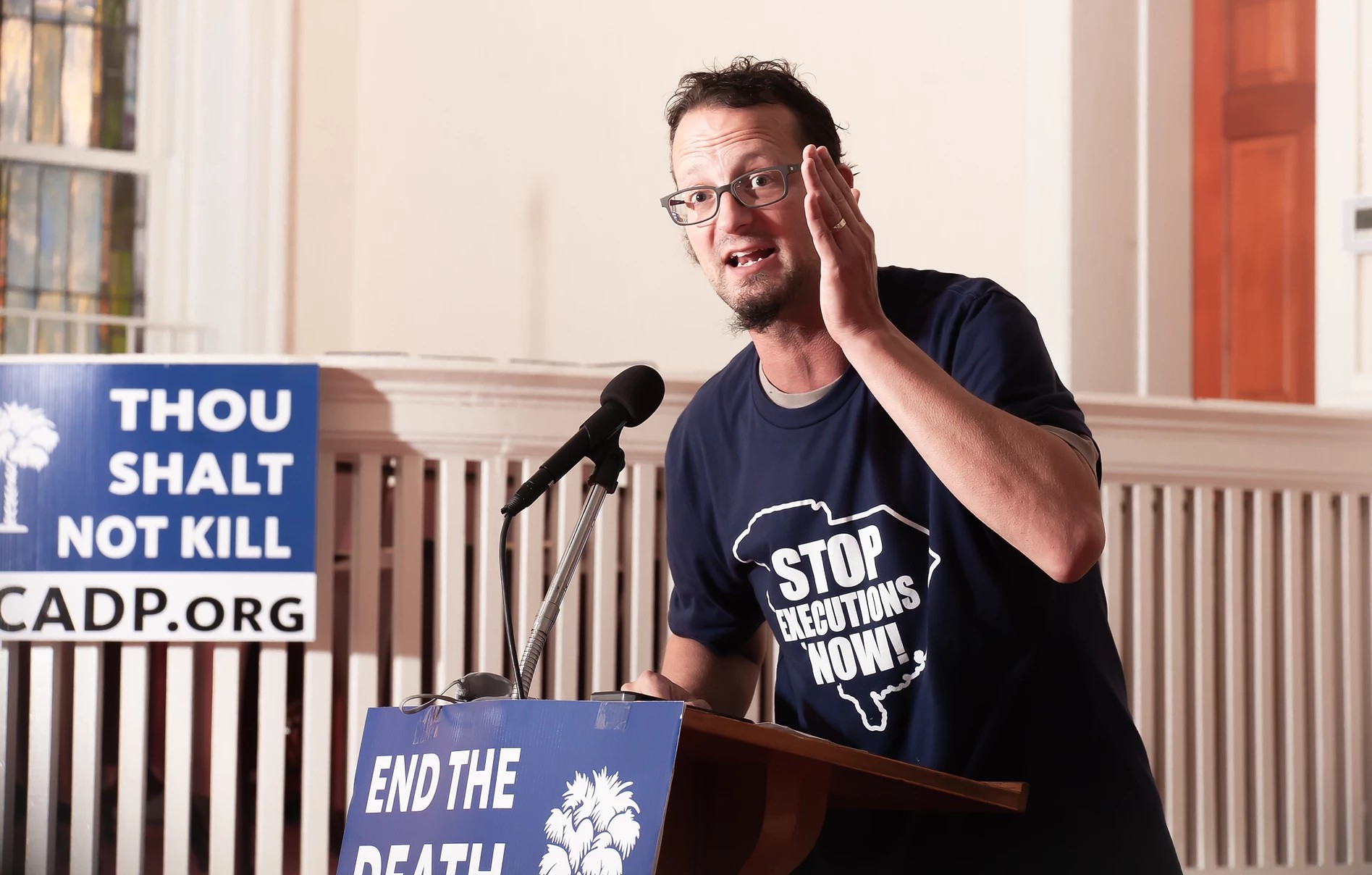
Are there any books, videos, essays or other resources that have significantly impacted your management and entrepreneurial thinking and philosophy?
The “Managing to Change the World” class from the Management Center has been extremely helpful. I can’t recommend their program enough, and I’m excited to take more of their courses. They also have some incredible free resources that I encourage everyone to check out!
As a Chaplain, I have a lot of training in Family Systems Theory, which I find very helpful when thinking about how I relate to my Board and also to other non-profit leaders and organizations. “The Dance of Anger” by Harriet Lerner changed my life (this is an especially helpful book for female-identifying leaders). “Friedman’s Fables” is a classic book. Anything you can read by Irvin D. Yalom is also helpful.
“Until We Reckon: Violence, Mass Incarceration, and a Road to Repair” by Danielle Sered isn’t a management book, but it guides a lot of my thinking about how I want SCADP to function with other community partners.
Finally, the books below are some important “classic reads” for anyone who wants to learn more about the death penalty in the United States:
“Just Mercy” by Bryan Stevenson
“Executing Grace: How the Death Penalty Killed Jesus, and Why It’s Killing Us” by Shane Claiborne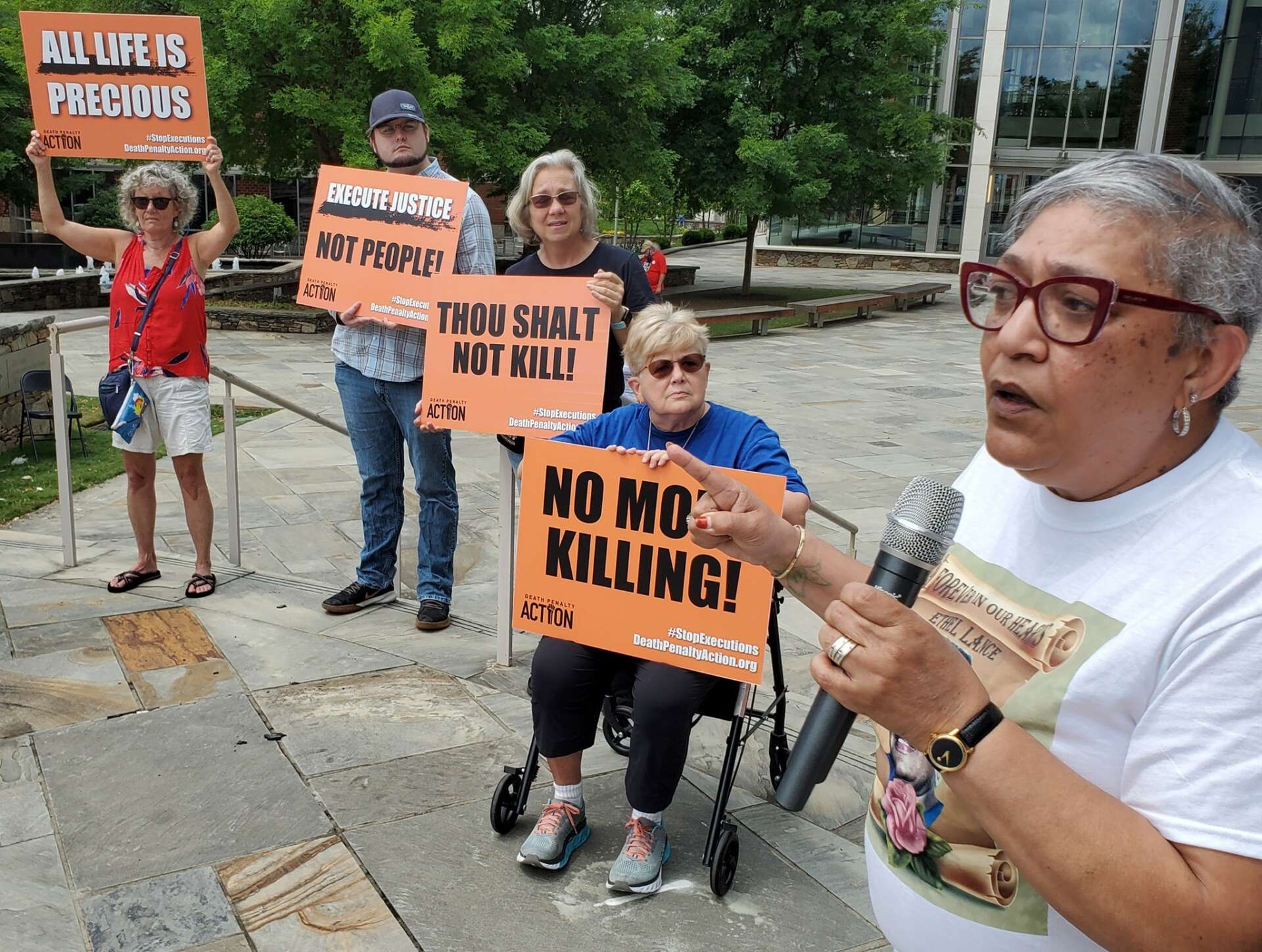
For you, what’s the most rewarding aspect of being a creative?
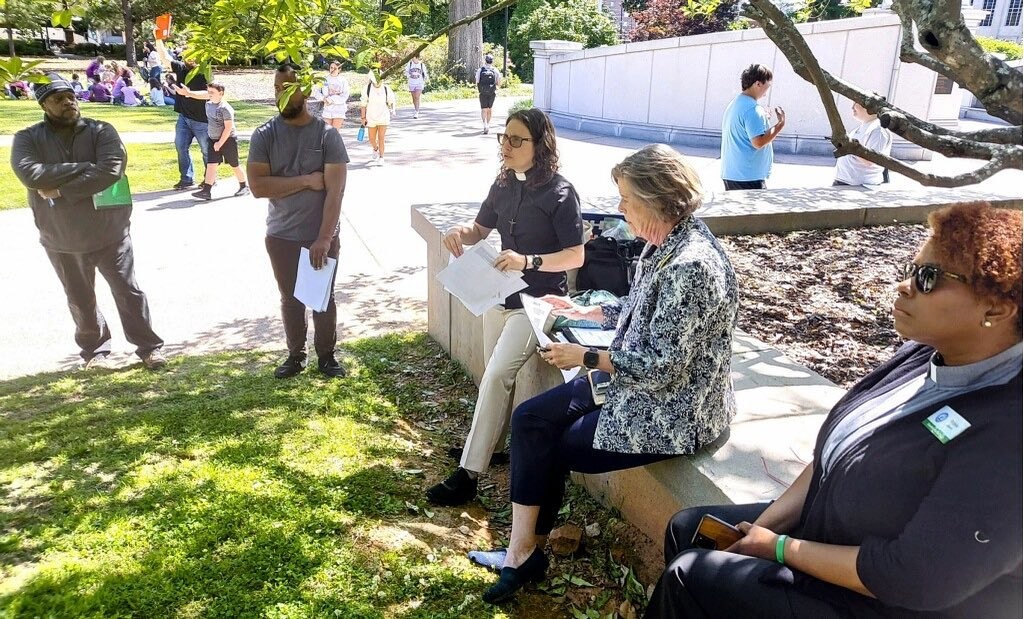
This is a pretty straight-forward answer: seeing other people catch your vision for a better world. And then when they see that vision, they join in…and they make it better through their participation. 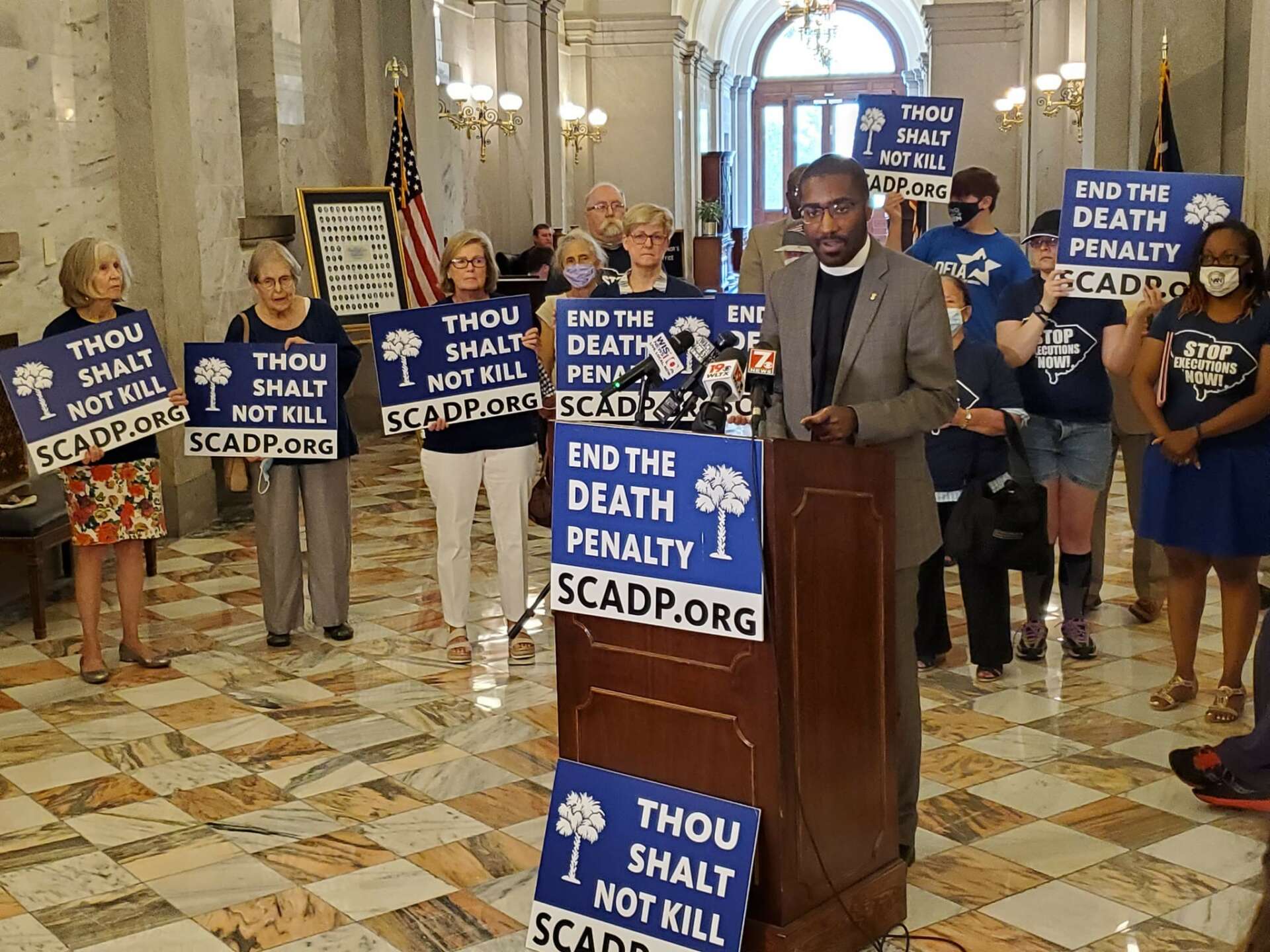
Contact Info:
- Website: https://www.scadp.org/newsletter
- Instagram: https://www.instagram.com/scadeathpenalty
- Facebook: https://www.facebook.com/scadeathpenalty
- Linkedin: https://www.linkedin.com/company/south-carolinians-for-alternatives-to-the-death-penalty/
- Twitter: https://www.twitter.com/scadeathpenalty
- Youtube: https://www.youtube.com/@sc4alternativestothedeathp219
Image Credits
Jackie Jackson, Abe Bonowitz, and Christopher Green