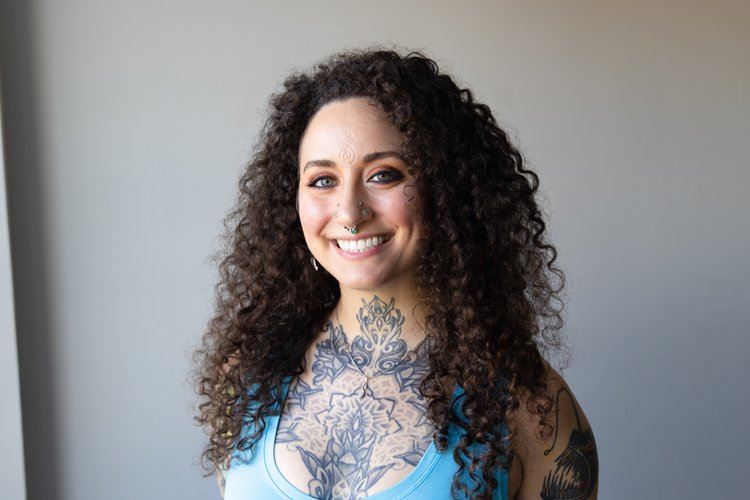

We’re excited to introduce you to the always interesting and insightful Hannah Cherry. We hope you’ll enjoy our conversation with Hannah below.
Hannah, looking forward to hearing all of your stories today. Can you open up about a risk you’ve taken – what it was like taking that risk, why you took the risk and how it turned out?
Before I became a yoga teacher, I was a body piercer for 11 years. I owned a successful business I had built for myself over the years. Unfortunately, standing all day for long hours and leaning over customers while piercing/changing their jewelry had taken such a toll on my back. I didn’t have any type of wellness/self-care practice, and my body was suffering. I remember nights where I would go home after work, take 5 ibuprofen and fall asleep on my heating pad. At one point, a yoga studio opened right below the tattoo shop I was working at. The owner came in to buy jewelry from me, and she was kind and inviting. I started taking some classes at her studio intermittently. It was so difficult for me as my mobility was very limited at the time. I was never a naturally flexible person. I stuck with it and my back pain did get a lot better, but I wasn’t fully committed. I had trouble staying consistent, and I would stop for long periods of time and then my pain would come back. I realized that I needed something that would motivate me to stay committed to my practice, so I signed up for yoga teacher training. This was very different than anything I had ever done before and it was scary for me, but it wound up being one of the best things I ever made myself do.
Awesome – so before we get into the rest of our questions, can you briefly introduce yourself to our readers.
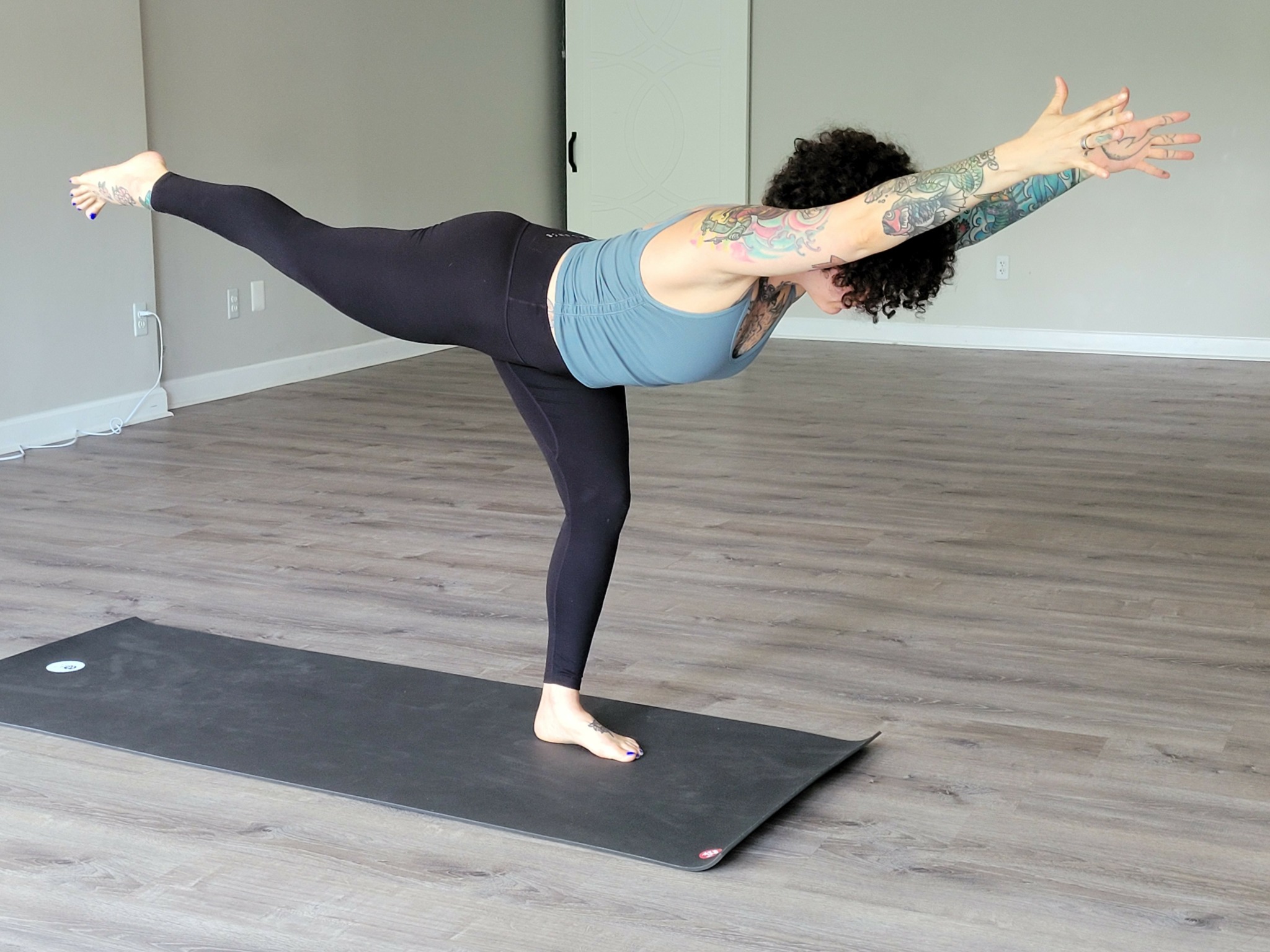
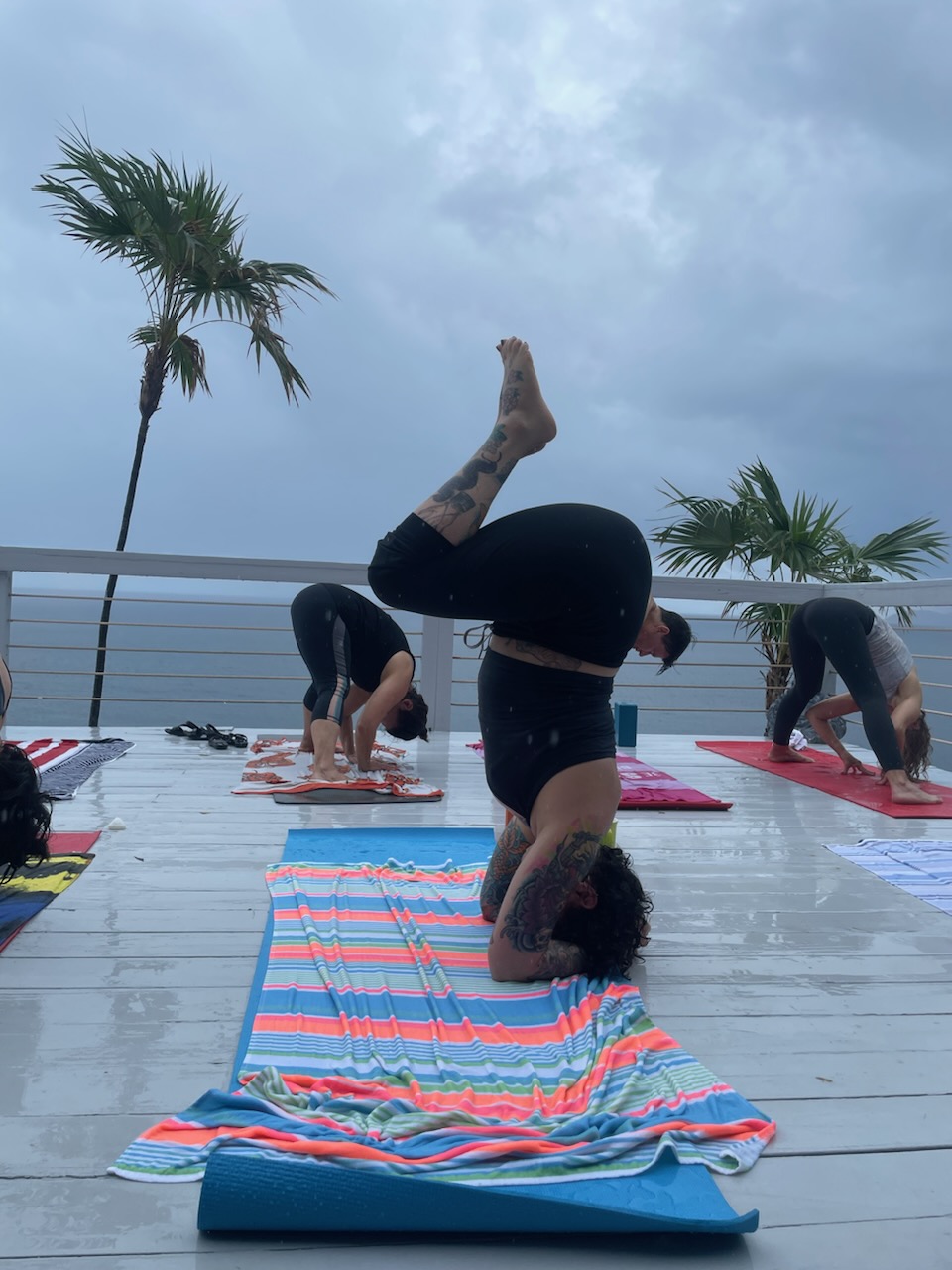
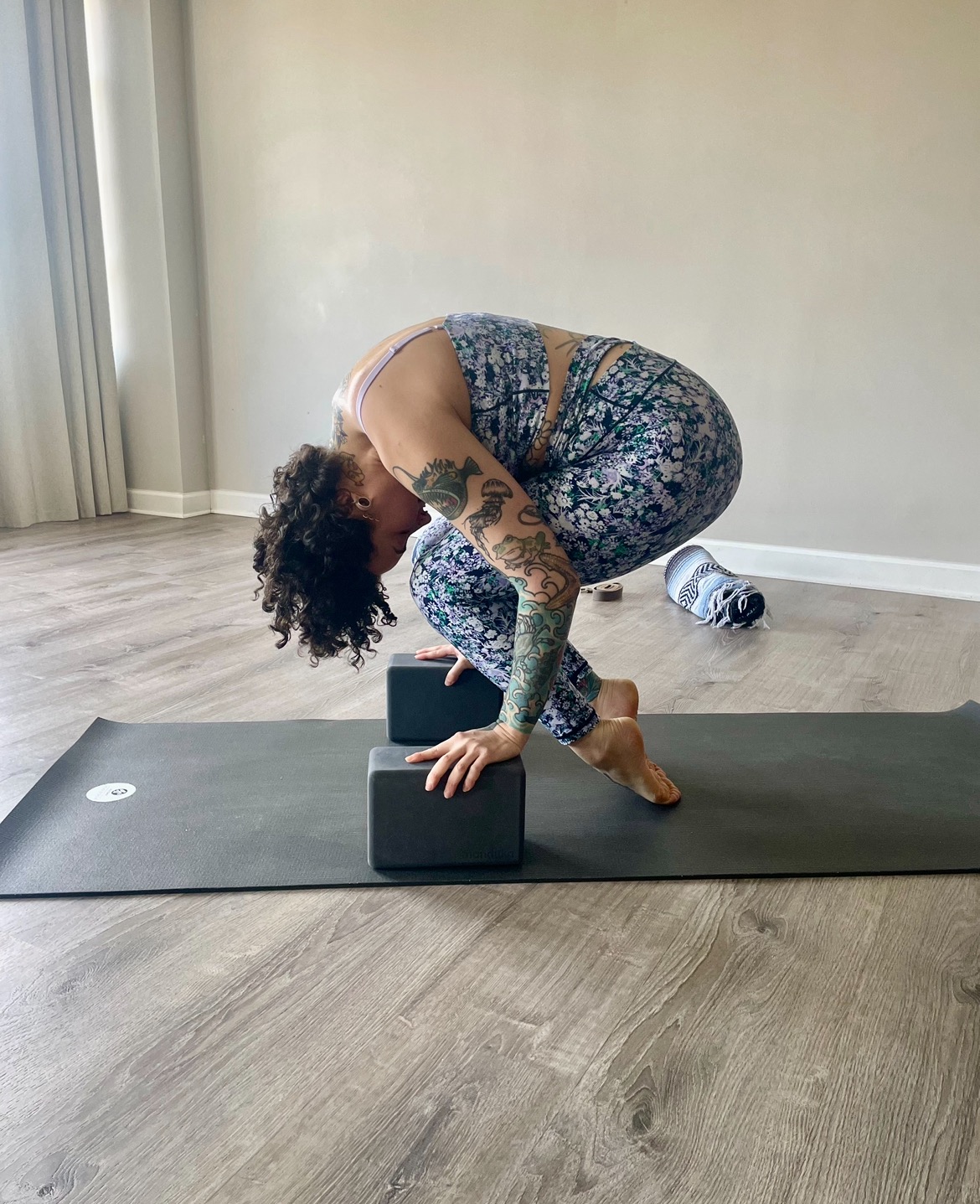
I initially did my yoga teacher training with the intention of deepening my practice. I did not plan to teach at the time, but I felt like I was really taking to it. I benefited so much from yoga mentally and physically, that I decided I wanted to help others with whatever they needed from it as well. Everyone comes to yoga for different reasons, and I think that I try to reinforce that idea to my students a lot; It’s okay to want different things or have different goals, and everyone can benefit in some way from yoga. I think probably, what might set me apart, is that I work very hard to make yoga accessible to every type of student. Some teachers are pretty rigid in the way that they think a yoga practice should look, and they feel that we have to 100% adhere to old traditions or else it isn’t “real” yoga. I understand that perspective, but I find that it more often than not makes students feel very alienated or discouraged if they aren’t able to do things perfectly or if something is not working for them. I think it’s okay for yoga to evolve and change with the times, granted the teacher understands and has taken the time to learn the history and origins to fully appreciate it. Everyone’s body is so different, that I think it’s a bit silly to try to make everyone do a pose the exact same way. It’s just not going to work for everyone. I try to show students how to use modifications and props to get the most out of the postures for them.
Training and knowledge matter of course, but beyond that what do you think matters most in terms of succeeding in your field?
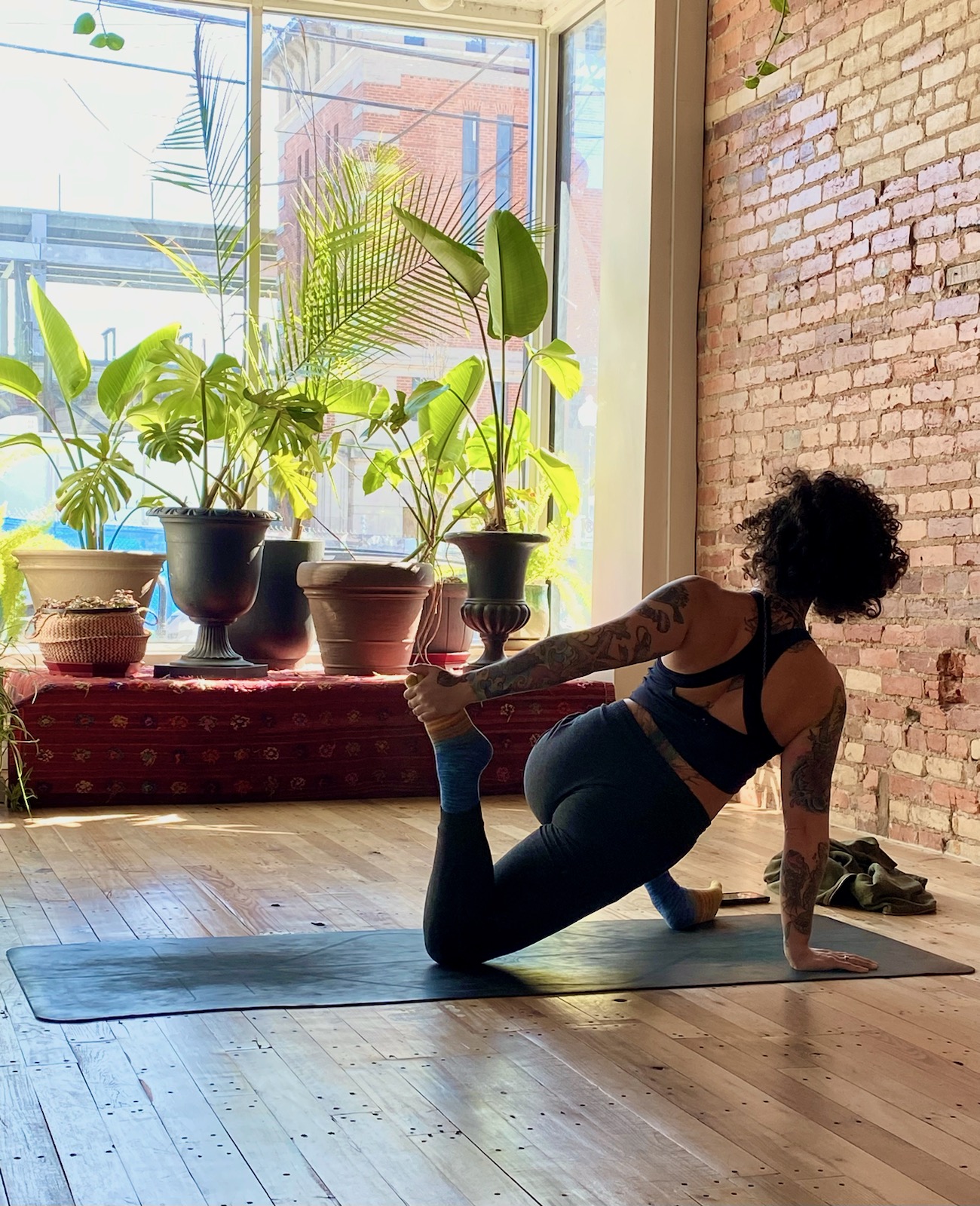
Continuing your education. So often in yoga, I see teachers who have done their initial 200hr ytt, and think they “know it all” at that point. They never work to become better than that point in their training. I think to be the best teacher you can be, you have to always keep learning and be willing and open to changing and adapting. Being open minded and open to change is so important. I think it’s also so important to take classes from other yoga teachers, as difficult as that might be sometimes. When we have busy teaching schedules, it can be tough to get to classes, but you can always learn something new from every class you take, even if it’s learning how you DON’T want to do something.
What’s a lesson you had to unlearn and what’s the backstory?
You can’t help everyone. In my teacher training, we learn how to cue and help people with their form. Form is obviously very important, but when you start teaching regularly, you realize not everyone wants your help. You can drive yourself crazy trying to correct a student or give them a modification that would deepen their practice, but if they aren’t looking for advice or correction it’s a waste of your teaching energy. They will ignore you over and over. Some people just come to class to get out of their brains and into their bodies, and as much as we might cringe to see someone doing something wildly incorrect or even unsafe at times, they have to be open to help and open to change. If you’re spending a ton of energy trying to “fix” someone in a specific pose, in the end they are just going to dislike you.
Contact Info:
- Instagram: looks_that_kale
- Facebook: looksthatkale