

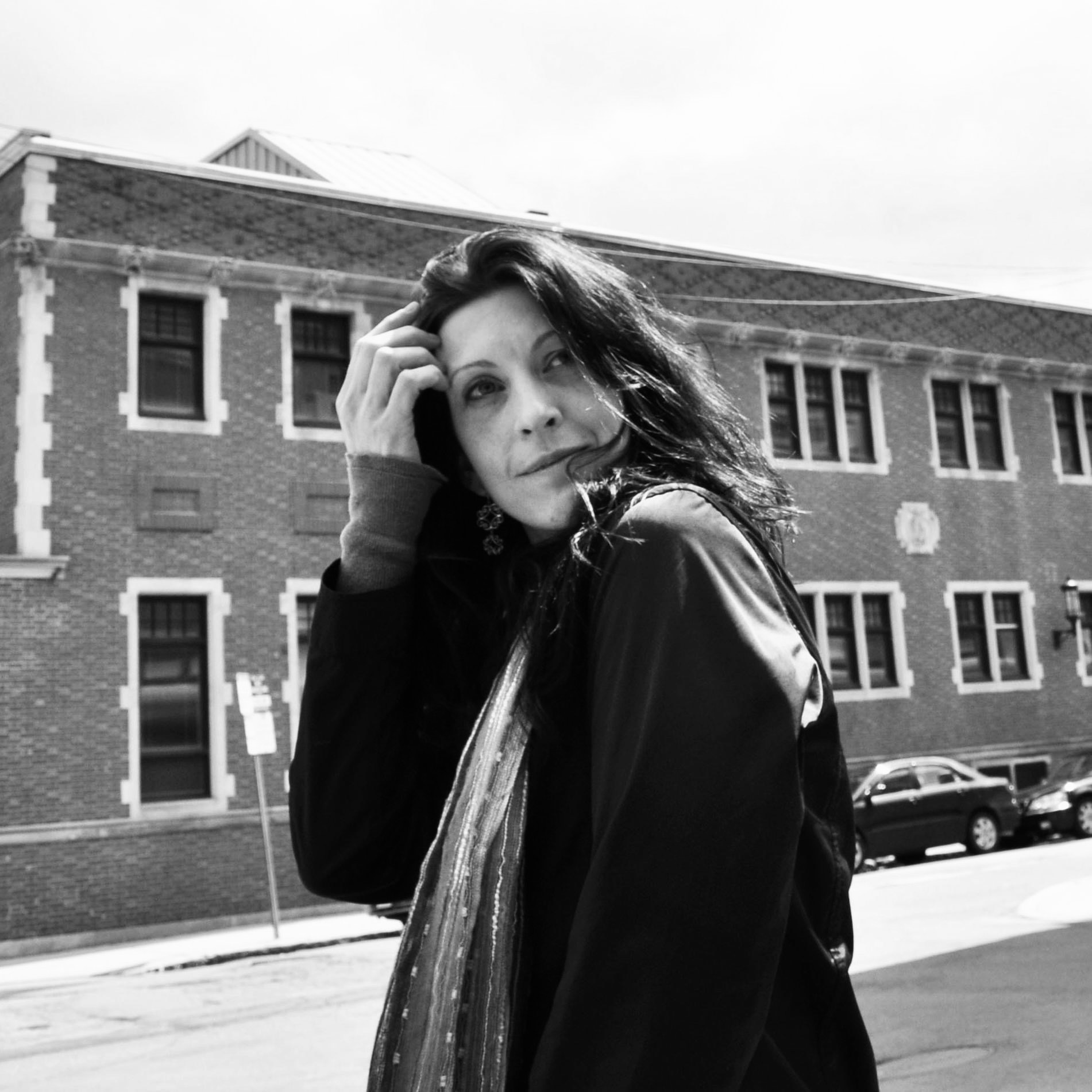

We recently connected with Gwyneth Amy and have shared our conversation below.
Alright, Gwyneth thanks for taking the time to share your stories and insights with us today. When did you first know you wanted to pursue a creative/artistic path professionally?
When I was little, I often created art out of found objects and drew pictures to give as gifts to family. Sometimes, that was a little rock painted with an image that became a cherished object or a picture I drew that was carried for decades in a wallet. As I grew and started taking art classes at school, I could not get enough of it, often also spending countless hours at night painting or drawing only to have a few hours of sleep before heading back out the door to walk to school. I lived in the art department and refused courses that were not needed to graduate just to have more time in the art rooms. My teacher and mentor, Johnathan Hewey, encouraged me and pushed me forward at every step, ensuring that I had chances to show my work and didn’t miss submitting art to the scholastic art competitions. To have someone rooting for me helped me to believe in myself. At 16 I had the opportunity to see an exhibit of Robert Longo’s work. It inspired me and made the career of ‘Artist’ seem viable for the first time. My parents endured my year or so fixated on charcoal drawing as a result of the exhibit, and bless them; I got charcoal dust everywhere! I had the opportunity to try many mediums which only furthered my desire to be an artist. For me, being an artist became ‘who I am’ in those early years. When life would eventually test my passion or require me to step away, the one thing that got me through was something my teacher told me. He said, “It doesn’t matter how long you don’t create, even if it’s ten years, you will always be an artist.” It became a mantra to help me give myself grace when needed and to push myself when I needed that push.
As always, we appreciate you sharing your insights and we’ve got a few more questions for you, but before we get to all of that can you take a minute to introduce yourself and give our readers some of your back background and context?
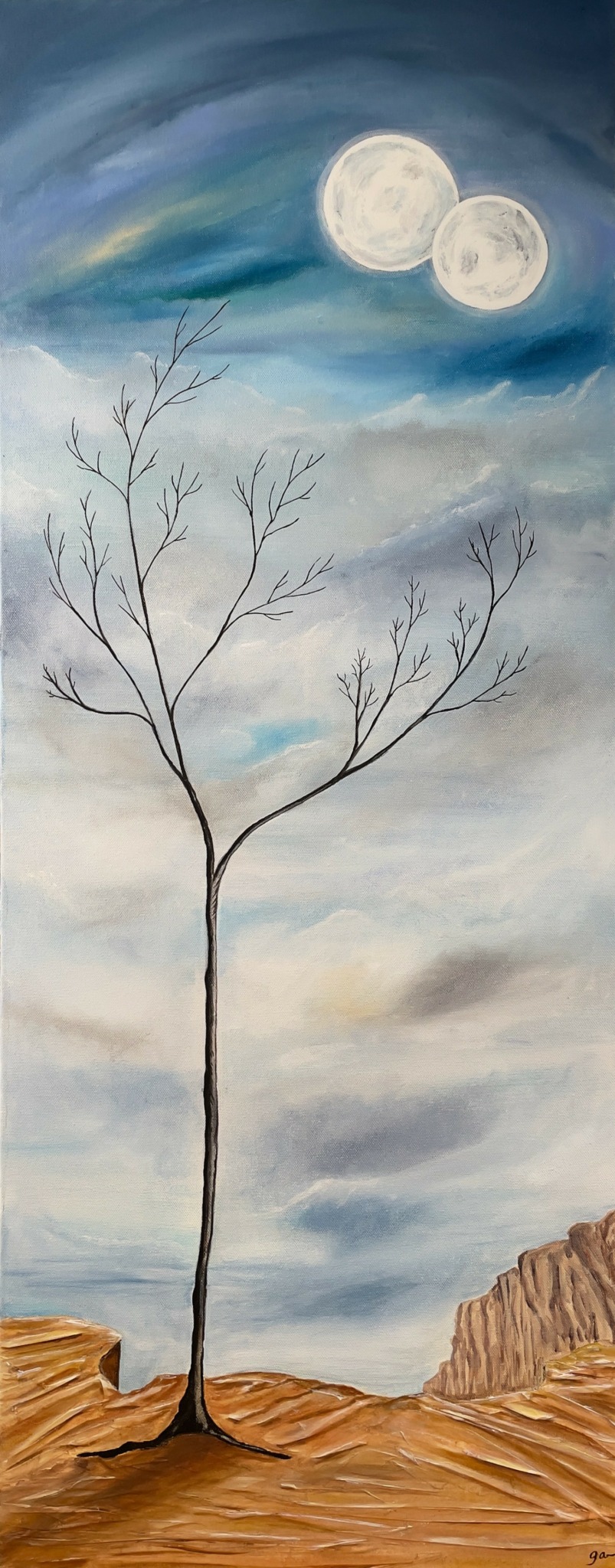
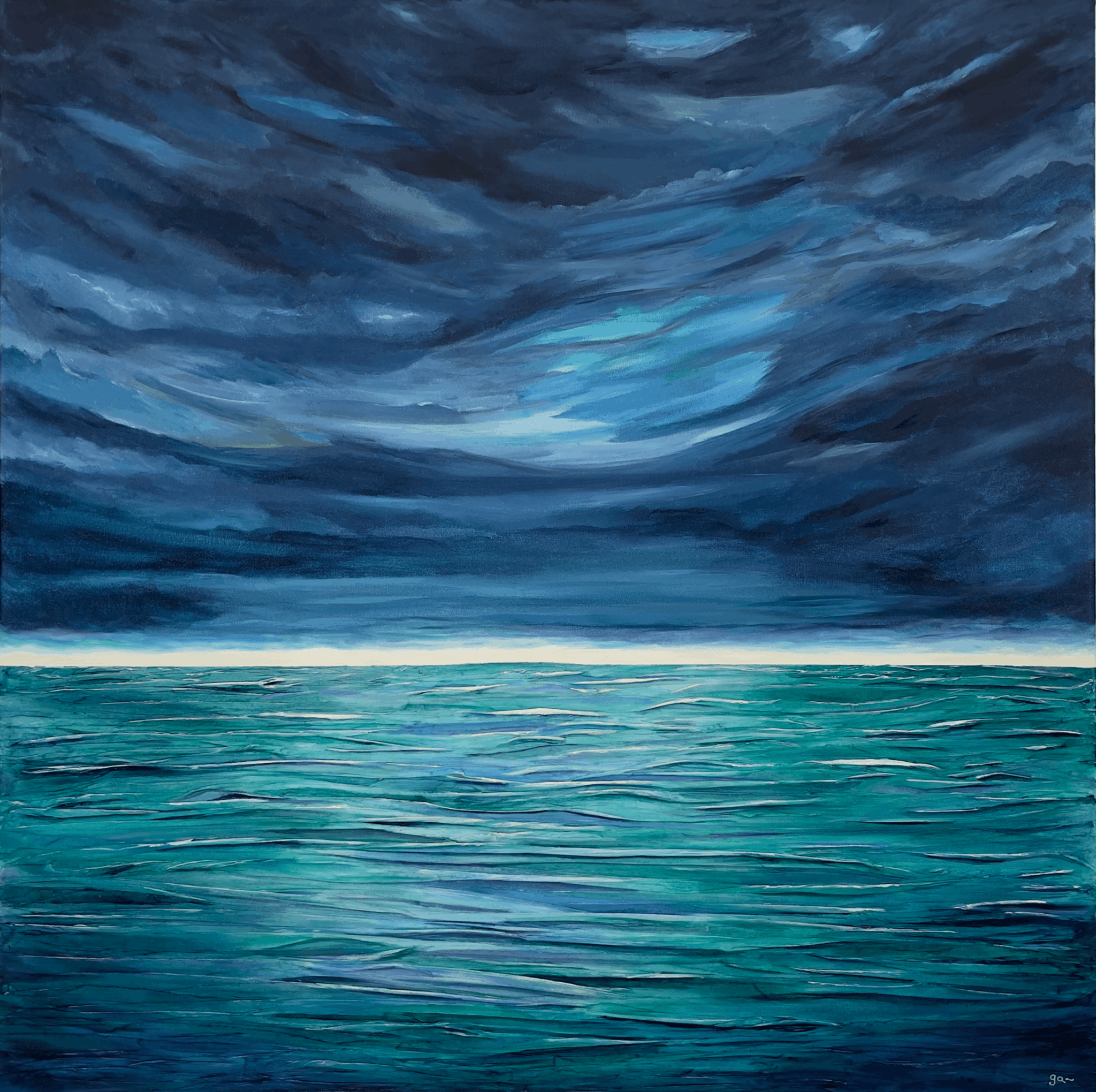
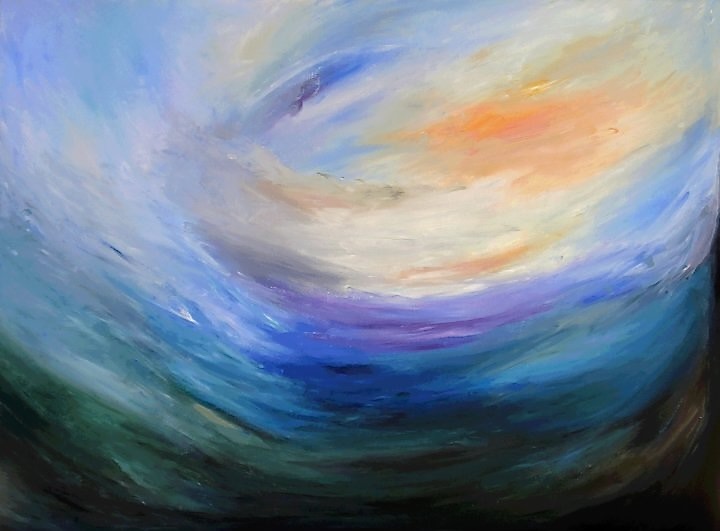
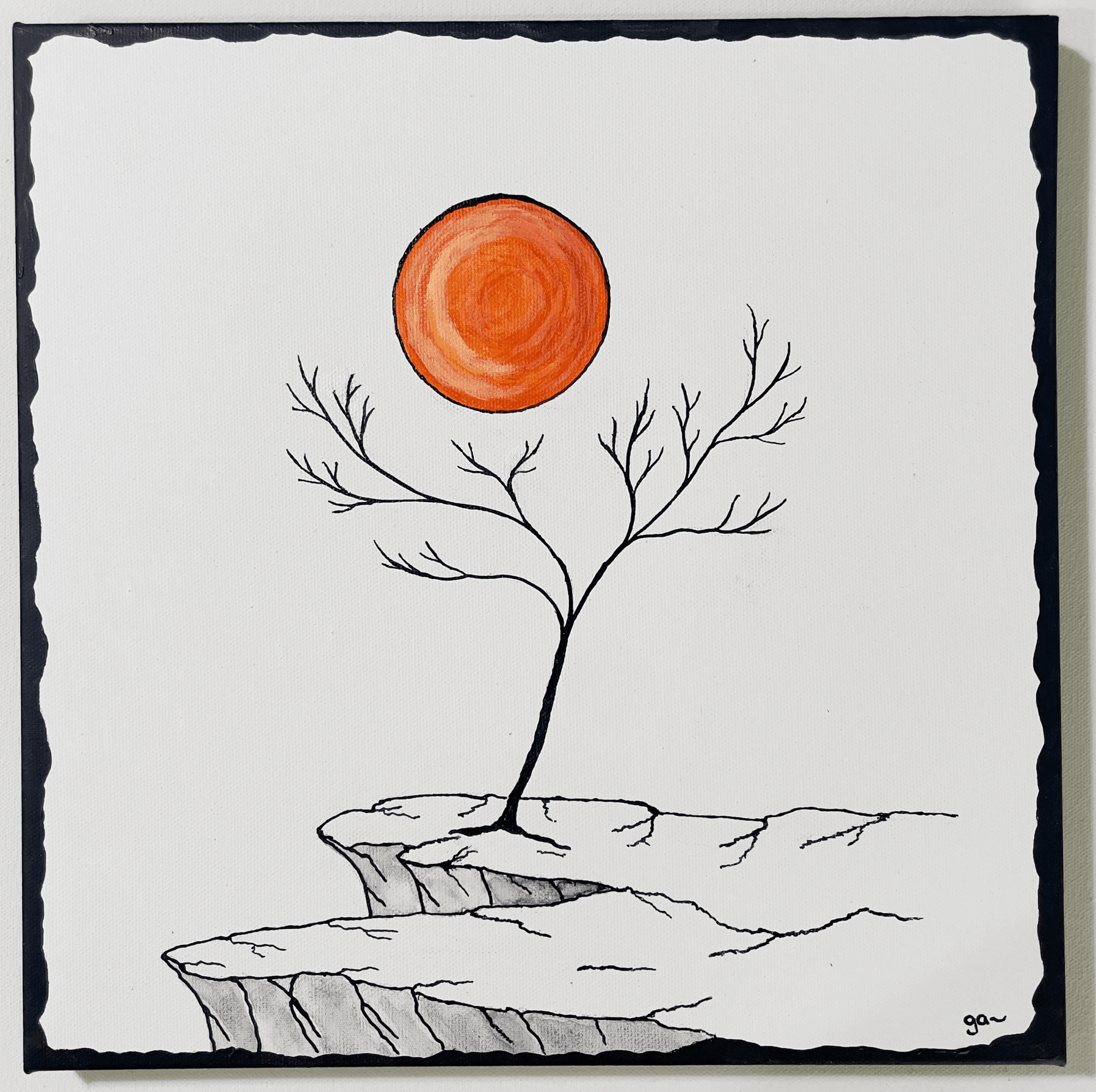
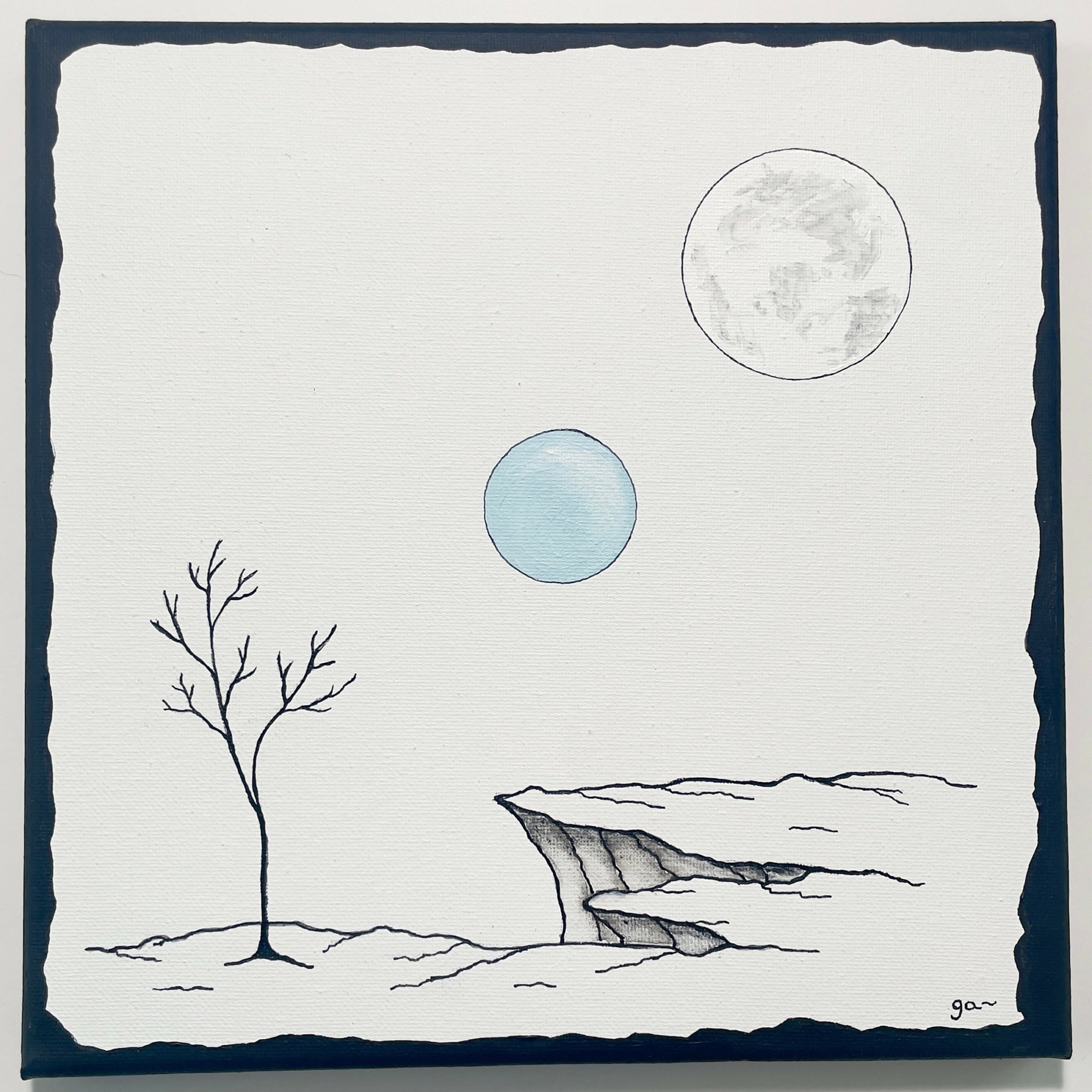
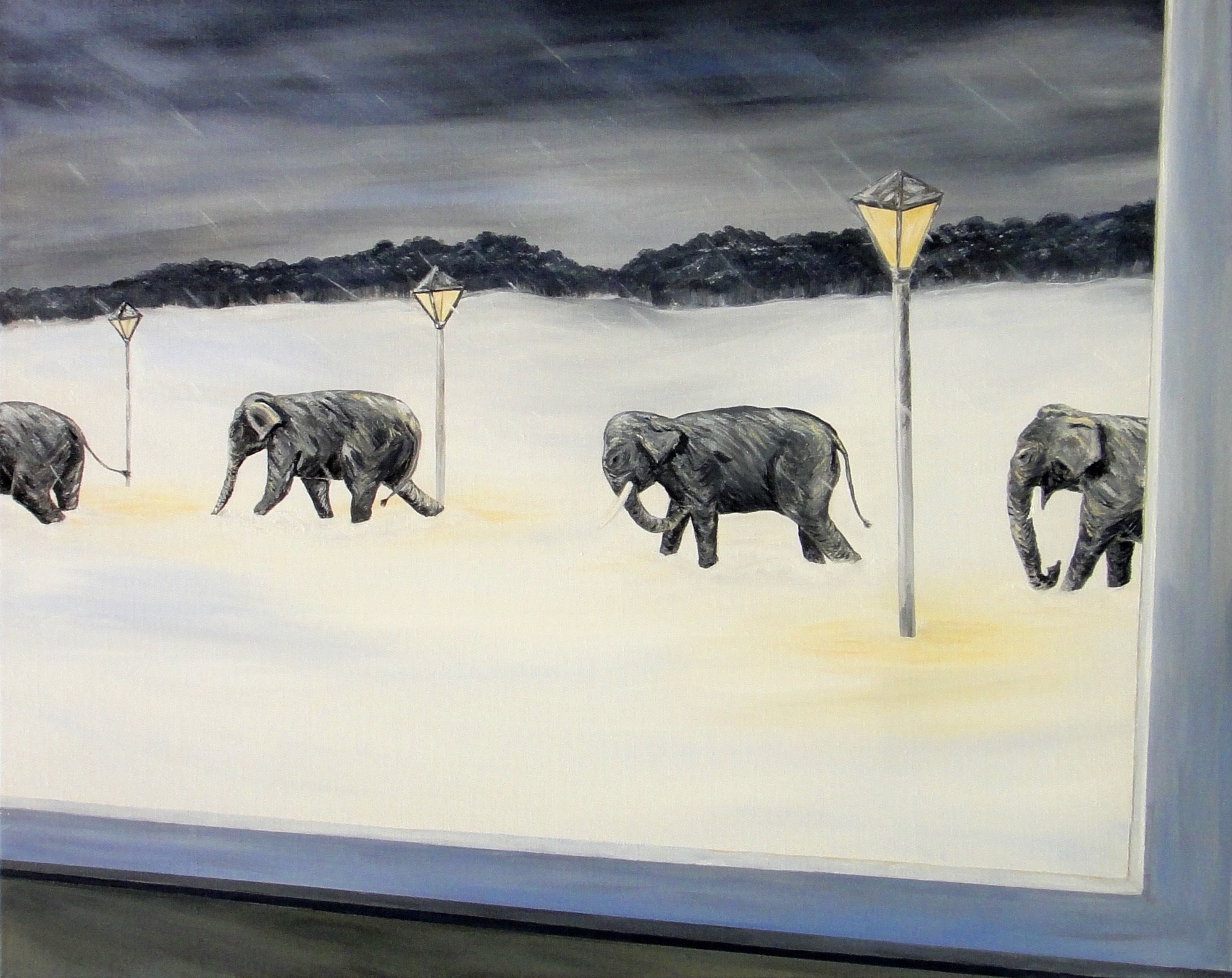
I’m a fine arts painter from New England. I’ve been creating most of my life. I grew up surrounded by musicians and theatre, and though I tried musical instruments and theatre from time to time, I found early on that my true passion was for the visual arts. I mostly work in acrylics and ink, but I have explored many mediums through my artistic journey, including sculpture, photography, metalworking, clay, and oils. Through my artistic work, I try to process and document the human experience—exploring themes of love, loss, struggle, and triumph—utilizing the imagery of trees, moons, cliffs, oceans, and suns. I work mainly on canvas and have developed a way of creating texture and 3D elements to my work utilizing rice paper. I began using this method while creating cliffs for my trees on canvas and then expanded into using this method to build up oceans. Another style of painting I do from time to time is a series of what I call ‘Painted Song’. These works are created by listening to one song on repeat and then creating large abstracts based on the colors I see from the music I hear, the emotions created from the music finding their way in the movement of the painting, many times without the use of bushes, opting for using my own hands. In 2021, I was the victim of a life-changing car accident that damaged my visual cortex, leaving me with permanent double vision. Through therapies and trial and error, I have found a way to continue to paint in detail and now paint full-time. I wouldn’t call it the biggest thing I’ve overcome but finding I could still paint after such an event has given me the drive to continue creating. I exhibit my work mostly in New England, though it is collected internationally. I enjoy when my work resonates with the viewer and they create their own connection to my work. One of my other passions is giving back to my community and nonprofits in my area, which I’m grateful to have been able to do so through my art.
What can society do to ensure an environment that’s helpful to artists and creatives?
One of the best things you can do to support artists is to show up. Go to arts events, gallery openings, attend musical and theatrical performances. Talk to the artists (if you can) and take a moment to learn about them. If you’re a business owner, reach out to artists in your area when you need someone to create for your business. When you’re shopping for gifts, or looking for yourself, go to small businesses first; you’ll be helping artists like me to provide for their families and supporting a community. Share with others about the artists, performers and creatives you enjoy, you may very well be helping an artist to further their career. Supporting the arts, supports our culture, and community in ways that are a benefit to everyone.
What’s the most rewarding aspect of being a creative in your experience?
What is rewarding to me is the ability to constantly grow and learn through my art and the community of artists and friends that comes with being involved in the art world. I love to create and use my art to process the experiences of life. I also really cherish experiencing others enjoying art. It’s hard to narrow it down to one thing. Beyond what I just mentioned, I would say that being determined to succeed at what I love doing, I hope, encourages my children to see their potential and never lose sight of their own dreams and passions. And, I get to do something that I never have to retire from. Imagine doing something you get excited about being able to do your entire life. That’s a gift!
Contact Info:
- Website: http://www.gwynethamy.com
- Instagram: https://www.instagram.com/gwynethamy
- Facebook: https://www.facebook.com/gwynethamy.artist
- Other: https://www.creativeground.org/profile/gwyneth-amy
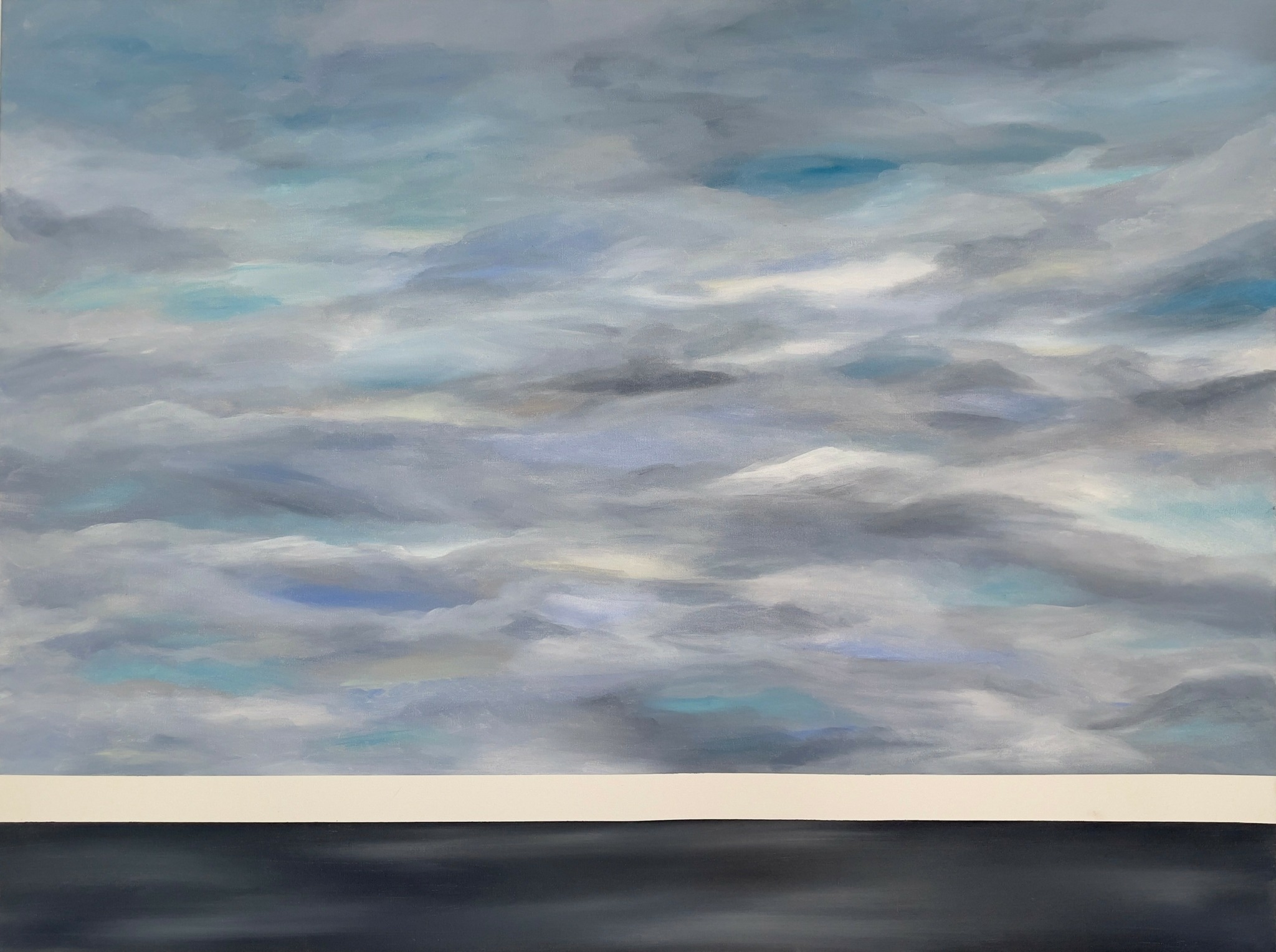
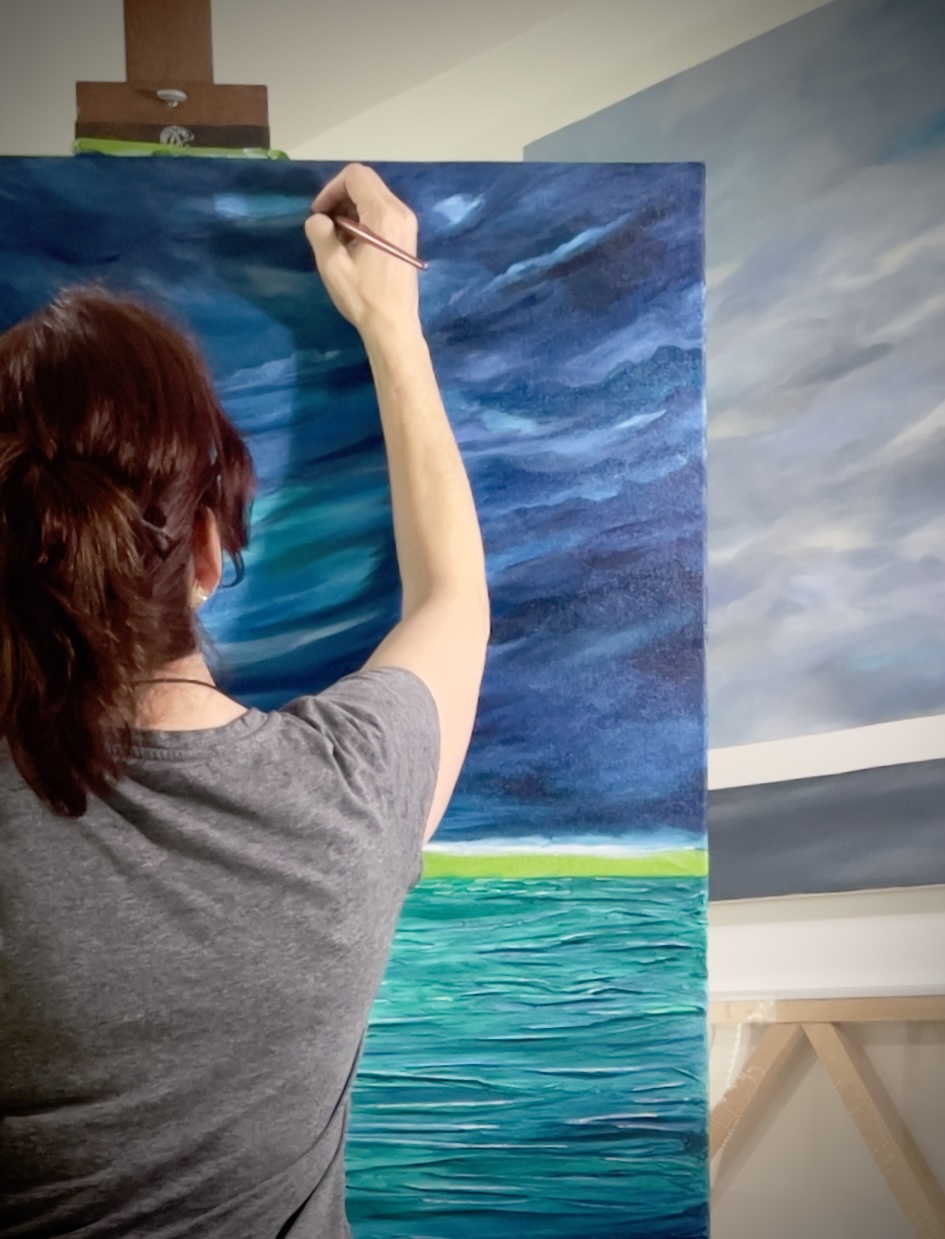
Image Credits
Gwyneth Amy