

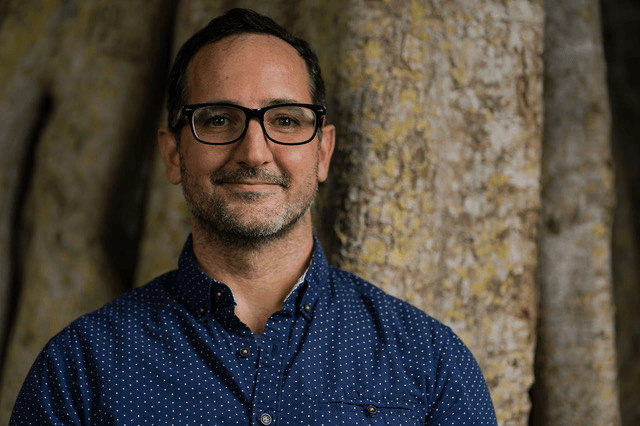

We caught up with the brilliant and insightful Greg Nardi a few weeks ago and have shared our conversation below.
Alright, Greg thanks for taking the time to share your stories and insights with us today. It’s always helpful to hear about times when someone’s had to take a risk – how did they think through the decision, why did they take the risk, and what ended up happening. We’d love to hear about a risk you’ve taken.
I began teaching yoga in 1996 at 22 years old. As both a career and a vocation I’ve taken numerous physical and emotional risks in my pursuit of physical, emotional, and spiritual growth including annual trips to India over a decade to pursue deeper learning from masters in the country of yoga’s origins, to starting my own yoga and wellness business in the the U.S., to developing an international network of yoga studios that I presented educational workshops on topics in yoga and wellness. The risk I would like to talk about today, was a choice that I made late in my career to switch from an entrepreneur in the private yoga sector to taking full time employment as a program director in the non-profit sector. I had always felt that yoga had the potential to help not only individuals and communities, but it could be a revolutionary force for positive change in the world. In 2019 I went for additional training as a yoga therapist and I came to deepen my understanding of yoga as a philosophy and the mechanisms through which it improved mental and physical health. It became clear to me that I wanted to have a role in extending the reach of yoga into communities and to individuals who might encounter social, economic, and physical barriers to accessing yoga. I found an organization called Yoga 4 Change that does just the work I was passionate about and began teaching part time while maintaining my own yoga business. A position in the organization opened up for a part time program manager and I became curious about how I could get more involved in the organization so i applied for the position thinking it would give me the flexibility to maintain my own business while having colleagues that shared my passion for social justice and social service. At the end of the interview, I was offered a full time position as the S. Fl. Program Director. This opportunity gave me a lot to think about since it would require that I scale back my private business to accommodate a full time schedule. I’ve been in the position now for about 1 year and I couldn’t be happier. I am learning and growing which feels great after being in my field for over 25 years. I’m also doing work that I am passionate about for a forward thinking organization and with a smart and innovative team. We do the work of honoring the traditions of yoga while teaching in cultural sensitive ways in a variety of communities. We often work with groups of individuals navigating traumatic life circumstances. The positive impact of our classes in the community feels especially meaningful when we are able to offer supportive tools for people to meet their circumstances with resilience and foster their current and future transformation
Awesome – so before we get into the rest of our questions, can you briefly introduce yourself to our readers.
My name is Greg Nardi. I am the South Florida Program Director for Yoga 4 Change. Yoga 4 Change is a non-profit that offers evidence based, trauma informed curricula that fosters holistic wellbeing, transformation and growth for individuals and communities. We serve veterans, first responders, active duty military, youth, people who are justice impacted, and people living with behavioral health challenges. We train and support our teachers to go into the community and offer our curricula of classes at the facilities of various community partners to serve their members free of cost. We offer specialized curricula in mindful movement, breathing, and meditation for adults and youth. We also collect anonymous data on the experience of mood, stress, and pain for those who attend our classes to show the impact of attending classes over time.
Yoga and mindfulness practices have been shown to help those struggling with trauma in dealing with some of the symptoms associated with trauma such as insomnia, emotional dysregulation, depression, anxiety, memory problems, intrusive thoughts, flashbacks, dissociation, and disembodiment, etc… Studies have shown that trauma is ubiquitous and nearly 70% of adults have experienced some type of traumatic event at least once in their lives. While our classes don’t ask anyone to reveal or identify with trauma, we hold an awareness that at least some people in our classes are living with the results of traumatic events and we follow best practice protocols to create a safer space for people to explore the techniques of mindfulness and yoga.
We often hear about learning lessons – but just as important is unlearning lessons. Have you ever had to unlearn a lesson?
When I first encountered yoga I was a young adult entering the workforce. I was passionate about the effects that yoga was having on me mentally and physically and the meaning it was able to provide for my life both philosophically and spiritually. I quickly decided to become a yoga teacher because I wanted the majority of my time to be devoted to the study, practice, and teaching of yoga. As I pursued yoga as a career I was always careful about balancing my vocation and my profession in a way that was balanced. However, inevitably I began to approach my yoga through the lens of perpetual progress and growth which at times led to burn out and dissatisfaction. At some point, it became important for me to separate my professional life from my personal practice. I let my personal yoga practice become supportive of the work I do as a professional and guide me towards work life balance. I am a huge fan of personal growth and strive for greatness in all that I do, and now I understand that doing more is not always what greatness calls for.
Training and knowledge matter of course, but beyond that what do you think matters most in terms of succeeding in your field?
While training and knowledge are important aspects of expertise, as a service provider, I find that expertise is the background of how I show up for my clients. It’s important to develop presence, empathy, compassion, and neutrality in showing up. Ultimately, as wellness providers, our role is to support the experience of our clients. For many years when I would teach workshops people would come to me after to say how impressed they were with how much I seemed to know about my topic. While I was happy to be validated there was always something about that compliment that didn’t sit right with me. Over the years, I’ve changed my style to be more interactive and to encouragement participation and engagement. I am curious about what will emerge every time I teach and confident that my expertise and skill will allow me to facilitate a good experience. I’ve learned that embracing what you do know transparently can sometimes be the greatest space to encourage learning.
Contact Info:
- Website: https://www.y4c.org
- Instagram: @y4c_official
- Facebook: Yoga 4 Change South Florida
- Youtube: @yoga4change83