



We recently connected with Greg Kucera and have shared our conversation below.
Greg, thanks for taking the time to share your stories with us today Let’s kick things off with a hypothetical question – if it were up to you, what would you change about the school or education system to better prepare students for a more fulfilling life and career?
Both of my parents were middle-school teachers. I was raised in public schools. We had choices for various arts offerings from band to choir to art classes. For me, those elective arts courses were formative in seeing the arts as a livelihood possibility. I couldn’t sing and had no aptitude for music but visual art was my salvation. I was an artsy kid and I was encouraged by each of my arts teachers all through junior high and high school.
Jim Wear at Chinook Junior High in South Seattle made art history day every Friday in his art classes along with standard art making like calligraphy, perspectival drawing, and still life painting. Lowell Schaeffer at Thomas Jefferson High School in Federal Way taught us jewelry making and ceramics. We had pottery wheels, and a centrifugal metal casting apparatus. More importantly, he encouraged me to start going to art galleries in Seattle in 1972 when I turned 16. I fell in love with the gallery world there.
I went to the University of Washington, with the hopes of becoming an art teacher because these were my heroes. Somewhere along the way, I realized I wasn’t a very good artist compared to other kids. I had easy facility but no original talent. I became intrigued with the gallery world.
If I hadn’t had such inspiring and encouraging art teachers, I might have missed my opportunity to become a gallerist. I recently had the chance to personally tell each of these two men how much they had meant to me and my path to success and adventure. I was moved by these opportunities to speak with my former teachers, adult to adult.
Educating young kids in the arts seems crucial to me and I hate to see schools cutting back on the arts curriculum. Encouraging creativity is of paramount importance as we descend into a culture that seems more interested in artificial intelligence rather than creative mind building. Much of social media suggests that we all should want the same things and aspire to similarity. Creative acts, learning from our canons, building change into our culture, seem rooted in having the arts be accessible..
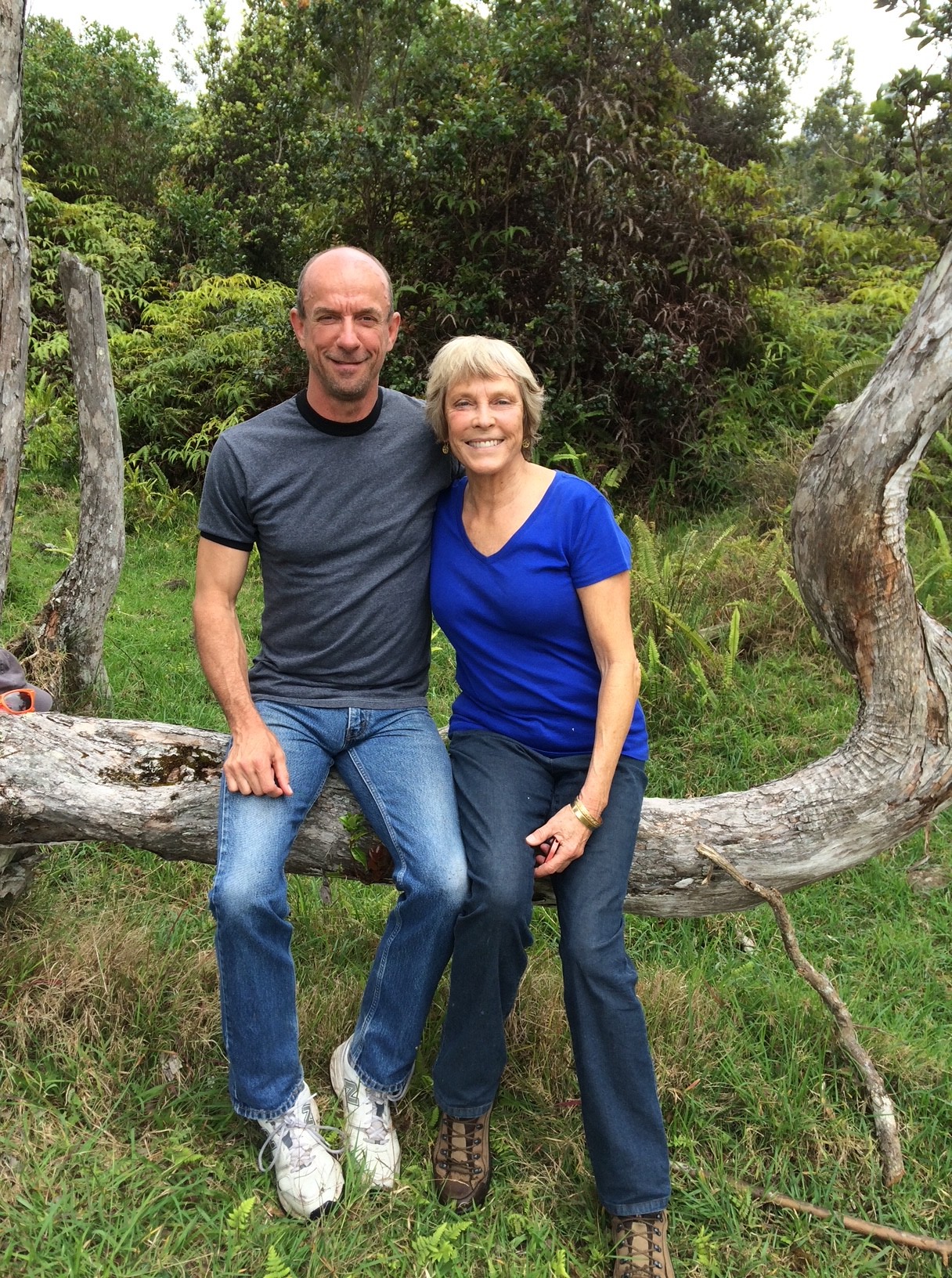
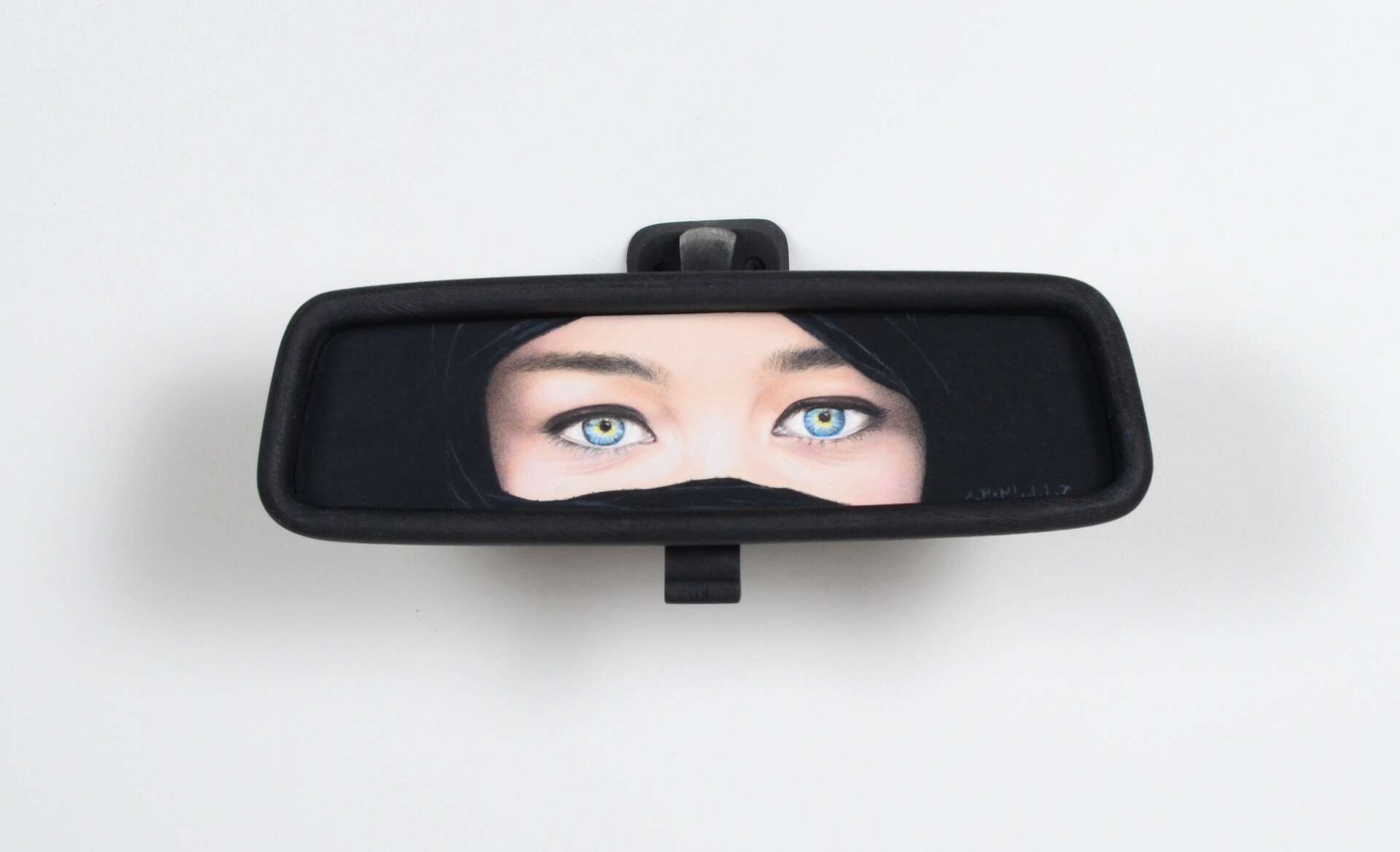
Greg, love having you share your insights with us. Before we ask you more questions, maybe you can take a moment to introduce yourself to our readers who might have missed our earlier conversations?
I had been selling men’s shoes all the way through my university years from 1975-1980, working for Florsheim Shoes, Frederick & Nelson department store, and then a high quality shoe store owned by an inspiring businessman, George Grashin. In my senior year at University, and picking up on my sales skills, I was lucky enough to be offered a job at Seattle’s Diane Gilson Gallery. She knew me by face but not by name as I was in her gallery every few weeks in rotation with visiting all of the other galleries. She stopped me one day and asked, “Young man, I wonder if you could help me get this painting on the wall? I have a client coming in in a few minutes to view it and I can’t hang it myself.” It was a Frank Stella “ascending/descending spectrum” diptych composed of two 72 x 72 inch panels. Amazingly enough, I was able to hang it so the two parts abutted properly and were completely level. A week later she offered me full time work.
When that dealer closed a few years later, at the age of 27 I got the idea of opening my own gallery in 1983. Within 5 months, I was open for business in a cheap but quite large space. $350 monthly for 2,000 square feet. A lucky break for a beginner but located in a rough block in Seattle. I was in that space until buying my present and much larger 6,000 square foot space in 1998. Both locations were in risky locations which both became arts focal points in the ensuing years. Now the gallery is 40 years old and, though I’m slowly stepping back and selling my business to two employees, we are still making a difference in the art world in Seattle.
We represent a stable of mostly regionally known artists but, through art fairs and outreach, we are helping them to gain larger recognition. We also present artists from elsewhere to provide a fuller focus and international context.
The Gallery began with a modest group show of artists which included established NW artists such as Alden Mason, Gene Gentry McMahon, Karin Helmich and John F. Koenig. A number of younger artists were quickly added including Mark Calderon, Jody Isaacson, Ross Palmer Beecher, and Ed Wicklander. We then began working with Roger Shimomura, an already established artist who began his career in Seattle. The gallery also soon began to show prints and works on paper by Robert Motherwell, Helen Frankenthaler, Richard Diebenkorn, Jim Dine and artists making prints with ULAE, including Jasper Johns, Robert Rauschenberg, Terry Winters and Elizabeth Murray.
For the first decade the gallery exhibitions rotated between emerging regional artists shown alongside emerging artists from New York or elsewhere such as Kiki Smith, Darren Waterston or Cheryl Laemmle. We also created a series of exhibitions devoted to internationally known artists like Susan Rothenberg, Roy Lichtenstein, Mimmo Paladino and David Hockney. It was my intention to create a context for printmaking alongside other forms of expression, such as drawings and paintings, by these artists. We worked with new editions coming from major printmaking studios such as Gemini G.E.L., PACE Editions, Crown Point Press, Tyler Graphics, Ltd, and U.L.A.E.
We began doing art fairs in 1985 with the Chicago Art Fair and then the Los Angeles Art Fair in 1986. We added occasional art fairs in San Francisco and New York as opportunities arose. In each of these fairs we showed the mixture of artists from the gallery’s stable as well as a cross section of our current inventory.
Through the 1980s we showed prints by well-known artists, riding the crest of interest in contemporary artists and their prints. The gallery began to acquire inventory as the market for this material heated up. By the time it peaked in 1990 we had sold an amazing volume of prints by artists such as Johns, Stella, Motherwell, Diebenkorn, Winters,Rothenberg and Frankenthaler. As the market for this work swelled the print prices increased exponentially and the gallery’s print inventory became a significant asset and a source of constant revenue.
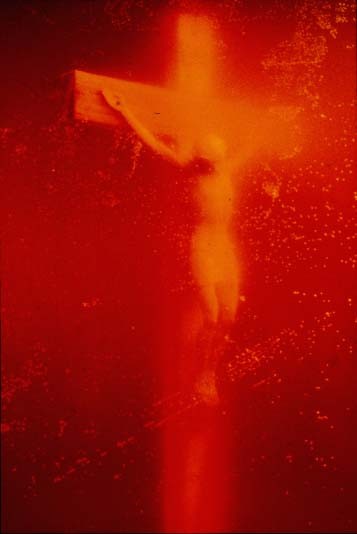
The gallery began a series of politically themed exhibitions in 1989 with “Taboo,” a look at the momentarily incendiary artworks by Andres Serrano, Robert Mapplethorpe, Sally Mann and others. This was followed over the next few years by “God & Country” and “This Is My Body” and “SEX” and “Bad Politics,” all of which examined other aspects of contemporary political art. These exhibitions garnered the gallery attention in many different arenas.
Nationally known artists, dealers and collectors who had become aware of the gallery through art fairs and my business trip travels, now saw the gallery in a less “regional” context. We found that we suddenly had access to a different group of increasingly more important artists.
In the late 1980s and early 1990s we began to work with mid-career nationally known artists such as Deborah Butterfield, John Buck, Jennifer Bartlett, Robert Colescott, Mark Lere and Jane Hammond. Everything changed. Now we were showing a significant roster of well-known artists, emerging artists and local talent, examining the political motivations and cultural attitudes of our world.
We continued to open up the field of artists we would work with, taking on Anne Appleby and doing significant early shows for Ann Hamilton, Kara Walker, Lesley Dill, and Kerry James Marshall. We also did shows in the late 1990s for Bill Traylor and Morris Graves as a way of broadening the scope to include these older, venerable or deceased artists.
Over the years, we have continued to bring new artists into the roster. And we’ve continued to show in art fairs. And we still maintain an exhibition space given to artists who want to have one-person exhibitions.


Conversations about M&A are often focused on multibillion dollar transactions – but M&A can be an important part of a small or medium business owner’s journey. We’d love to hear about your experience with selling businesses.
I am now in the process of selling my business to two employees. One of them has worked for me for nearly 25 years. His spouse has worked with us for nearly 4 years. I wanted to let myself out of the business in a slow fashion but I was ready for the change. It will take several years for the sale to be complete so we are partners for that period of time. I’ve never had partners in my business but I’m enjoying the process of living elsewhere and still working online and on the phone every day.
In order to make the sale work, and to bring the cost of the sale down considerably, I took our significant owned inventory out of the business and then reconsigned it back to the gallery for my new partners to work with me to resell.
We are celebrating our 40th Anniversary on October, 2023, with a show pairing one early work and one contemporary work by each artist as a way of connecting the past with the present, looking toward the future.
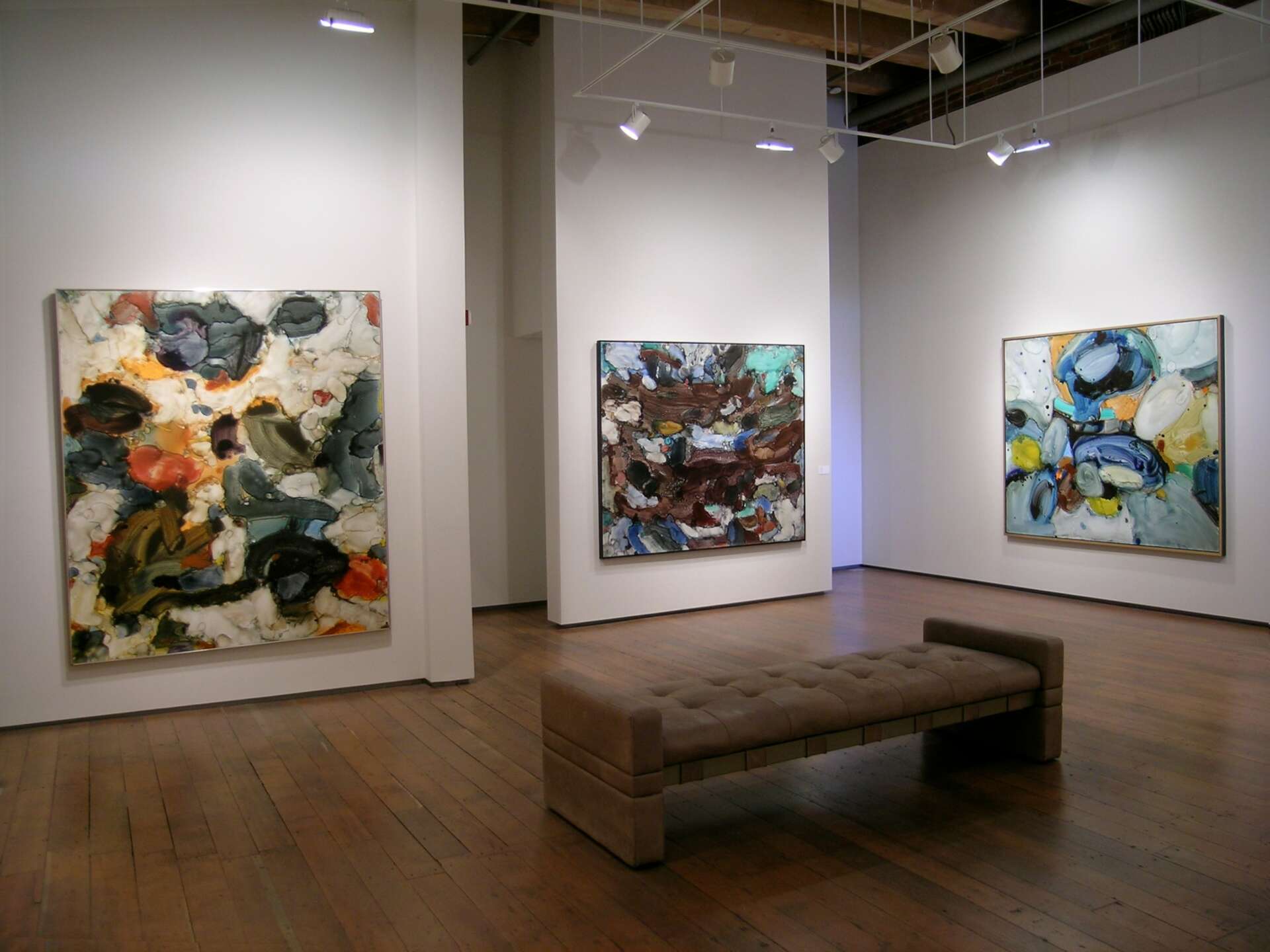
Any fun sales or marketing stories?
I have always loved Matisse’s “Jazz” portfolio of pochoir prints from 1947. They are so unlike any other set of prints and appear, due to the stencil process, more like watercolors than prints. In 1994, a bastard set of these prints came up for sale at Sotheby’s in New York.
It was a full set of all 20 images but it was a somewhat irregular portfolio in how it was editioned as a set of proofs aside from the regular editions. About 15 of the images had been intended for the flat set which had been published in an edition of 100. Others, mostly the half-page images, had the text intended for the folded set published in an edition of 250 but, significantly, had not ever been folded.
My immediate thought was, “If you were ever going to show a set of these prints that could be broken up and sold separately, this is that set.”
So, I acquired a bank loan for this project, and I went to New York with a blank check, and a great deal of determination. Luckily, I bought the set for $112,000 which was a fantastic price. (By 1996, more typical sets of “Jazz” were selling for about half a million rather easily. They have been up and down slightly ever since.)
It was one of the most exciting exhibitions we ever did at the gallery. We had better traffic than some museum exhibitions that month. People loved the chance to have single prints from the set but others bought more than one image.
And it opened up a new avenue of business for us moving back in time a bit away from contemporary art.

Contact Info:
- Website: www.GregKucera.com
- Instagram: GregKuceraGallery
- Facebook: Greg Kucera
Image Credits
Serrano image, courtesy of Andres Serrano All others, courtesy of Greg Kucera Gallery, Seattle.