


We were lucky to catch up with Gina Brehm recently and have shared our conversation below.
Gina, appreciate you joining us today. We’d love to hear the backstory behind a risk you’ve taken – whether big or small, walk us through what it was like and how it ultimately turned out.
I was working in a pretty dreamy job in 2015 – I really liked my clientele – but I hopped into a job opportunity in Switzerland which was a complete left turn. During that 9 months of my life, I realized that my dream job was to help families exactly as they needed to be helped; I wanted to go beyond just an individualized approach at a clinic, I wanted to expand into their home and their community and really target the entire family unit. In 2017, I started Functional Interplay and it was extremely fun and successful. Fast forward to 2019 at a conference about childhood trauma. That is where I learned about Neurofeedback. In 2020, when everything was once again up in the air, I expanded my licensure to include Neurofeedback over the next 4 years.
My dream job just continued to evolve, and that evolution required a risk each time. I can say now after being an Occupational Therapist for over 10 years, that the risks I have taken have allowed me to define exactly what I want in my career: focused on the brain, focused on mental health, focused on children and adults, focused on families, while also maintaining my autonomy as a competent therapist.

Gina, love having you share your insights with us. Before we ask you more questions, maybe you can take a moment to introduce yourself to our readers who might have missed our earlier conversations?
I graduated with my Masters of Occupational Therapy from Xavier University in Cincinnati, OH in 2013. As an OT, I specialized in Sensory Integration, Childhood Trauma and Attachment, mental health, and overall neurodevelopment. During the pandemic, I decided to further my education to include my board certification in Neurofeedback which allowed me to expand my knowledge base about the brain while still maintaining my ultimate goal of helping people holistically, and really getting to the root of an issue rather than just taking a bandaid approach.
I often am told by my clients that I am the first person to validate them and their needs. And going further, I am often the professional who finds the missing piece for them – whether its directly through my services, my knowledge, or linking them with the correct professionals and plan of action.
I have always felt like a dedicated and unique OT, and Neurofeedback is really unique, too. I am proud that I have set myself up in a way that allows me to be an extremely effective therapist with unique modalities and a cool toolkit. I am probably most proud of my ability to continue to learn and expand my skill set when it comes to all things “brain development”. I feel like I am a living example of what this type of therapy can do for someone despite their childhood, obstacles, mental health struggles, setbacks, etc.
I want people to know that if they are feeling “stuck” in a pattern, whether it be emotional patterns, thought patterns, physical well being, etc, that Neurofeedback is something to try.
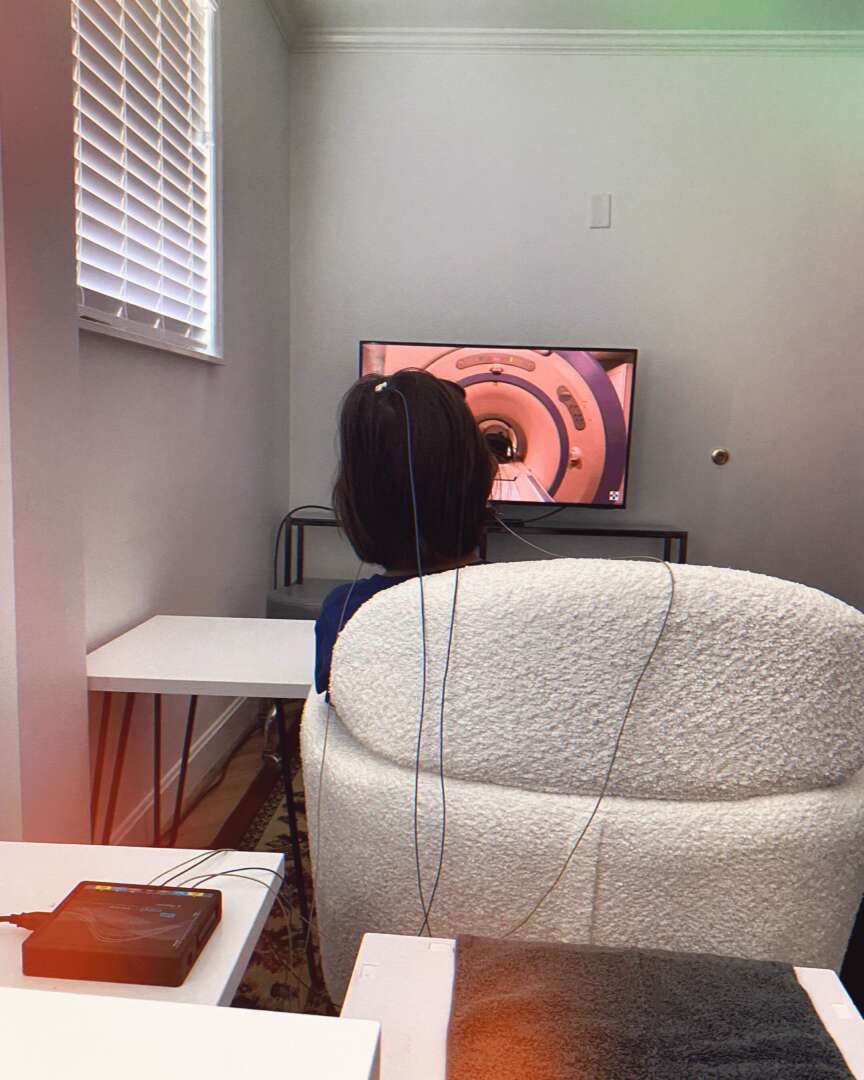
Which then leads to the important note of “what is Neurofeedback” – and the best way to explain it is “a non invasive approach to teaching your brain how achieve better regulation by training the brain waves, by training the speed and power in which your brain is producing and firing its signals”. Neurofeedback is an alternative to a pharmaceutical approach and can make changes for sleep, anxiety, depression, ADHD, executive functioning, PTSD, OCD, weight loss, and peak performance (read: amplifying mental and physical skills).
We figure out what the individual needs in terms of speeding up or slowing down parts of the brain by first collecting data from a QEEG or brain map. The brain map is the guide, but my expertise in occupational therapy is what makes the approach even more individualized.
How’d you build such a strong reputation within your market?
I think my interest and knowledge of the brain and neurodevelopment is the basis of my reputation. I can connect with people in a synergistic way. It’s why I named my business Functional Interplay. I am always trying to effect the interplay between my brain and a clients brain, and then their brain and their body and their lived experience. I want to give useful, use-right-now strategies to make their day to day life easier. When I first started out, I was working mainly with children. Some difficult behaviors can be huge obstacles to family life, social interaction, school, etc. I took it upon myself to create rapport and really attune to their needs and interests. From there, we could work as a team and reach goals and create palpable and sustainable progress. Working with children and having a deep understanding a child’s neurodevelopment allows me to understand adults on a deeper level, too. When I expanded my business to include Neurofeedback, it’s like I took that understanding to the next level.
What’s been the most effective strategy for growing your clientele?
I think that sometimes my business could be “bigger” or more successful but my rule has always been: I am not an Island. If I want to truly help people then I have to understand that not everyone is for me. When I get a parent who calls about their child or an adult who calls and are in desperate need of care, I want to help. I want to be the one to help. However, there are people who need other professionals before they can access my care, or who need resources that lead them away from me for whatever reason. The conversation with that person could end there – but I make sure it doesn’t. So even though I am not their therapist, I am working very hard to find the right referral for them. I am giving them resources, names, numbers, questions to ask, hyping them up to be their own or their child’s best advocate.
It speaks volumes. I want the business, but ultimately I want to help. So, I grow my business through that mentality. People can feel that. If I pour that effort into helping people find the right path, I am pouring that same effort into my clients. It’s authentic through and through. And by doing that for clients, and other professionals I am leading my example so that people do that for me. To me, that is what healthcare should be about.
Contact Info:
- Website: https://www.functionalinterplay.com
- Instagram: FIT_neurofeedback_Cinci
Image Credits
Gina Brehm | Functional Interplay Therapy