
We recently connected with Geremy Dingle and have shared our conversation below.
Geremy, thanks for taking the time to share your stories with us today. Can you talk to us about how you learned to do what you do?
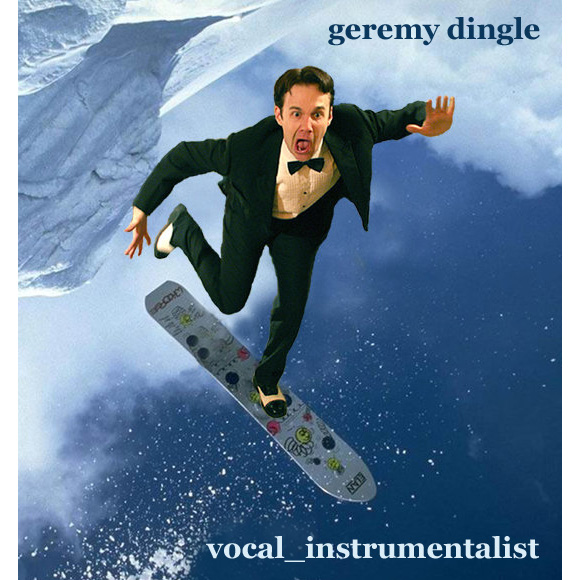
My pleasure. Firstly, an element of what I do vocally is not taught in schools. Actually, I’ve never seen it taught privately either. The most concise way to describe it is vocal instrumentation. Or the art of vocalizing musical instruments really well. And please understand this up front: what I do is an homage to instruments, not an attempt to diminish their value. Also, I have much respect for those who spend the time it takes to master any practical instrument.
Now if you study the most renowned jazz vocalists of the 20th Century; you might come across brief passages of a practical instrument like a trumpet being performed vocally. Alas, it’s usually just a couple of playful bars within a song that comes across as spiffy seasoning at best. It’s a rare art form that to the best of my knowledge hasn’t ever been commercially categorized or marketed as such. This makes it a very difficult sell on its own.
As a result of all that and to answer the question, I’ve learned and developed vocal instrumentation on my own. It came to life as a party trick of sorts and evolved into a quest to expand upon the art form perchance to legitimize it on a broader scale. Basically, I wanted to run with something in the creative arts that virtually nobody else was doing.
Given the unusual nature of what you do vocally, is there any way to speed up the learning process?
Well, when developing something novel or unique there’s no speeding up of the learning process other than being diligent about experimentation and practice. Creating your own road map means you’re liable to make some poor navigational choices along the way. But a benefit of striving to concoct something new is that every mistake stands to help light the way.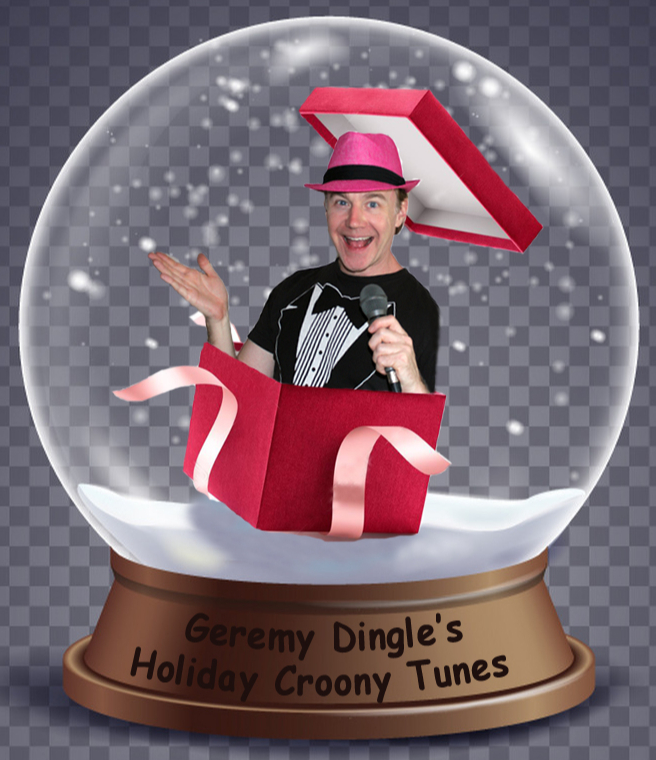
What are the most essential basic skills needed to do what you do as a vocalist?
I’d say the most essential basic skills involve having strong musical rudiments and exposure to live performances of any nature. In elementary school, I became fascinated by the versatility of the human voice and began to explore my own abilities (often to the amusement of my peers and annoyance of my teachers). My ability to emulate sounds and discover how to create anything vocally no matter how obscure or complex came to light. Naturally –as with practically all things– getting better required much practice. Whether it was animated voices, sound effects, or musical instruments, I constantly strived to improve my accuracy and range. A purposeful albeit lonely pursuit that required determination and self-discipline.
Can you tell us about obstacles you have encountered over the years?
My feeling about obstacles is that they often exist to force us out of our comfort zones. When faced with one, we’re prompted to go above and beyond. If we had no obstacles and could easily attain any goal we set forth, it would diminish the accomplishment. In terms of obstacles that prevented me from learning more… not having a mentor, I suppose. There are vocalists whom I’ve admired and drawn inspiration from, but not having an in-person teacher-student connection may have hampered my ability to learn even more. Where to practice vocal instrumentation effectively was also something of a challenge, so I sought out anyplace that had amazing acoustics. Underground parking garages were a free 24-7 rehearsal space. I’d wander around doing musical scales as various brass instruments hoping I wouldn’t be reported and tossed into the nearest sanitarium. Beyond that, one of my biggest challenges remains finding live settings to perform in, specifically venues that suit my energy and persona.
For readers who may not be familiar with you, please share some of your background. Tell us a bit about you and how you got to this place.
About me… I’m a professional performer who got started as a child actor. Being part of a theatrical community was integral to my development, and it became very clear to me by middle school that it probably also saved my life. And so, I dedicated myself to becoming a career performer, come what may.
As a young actor, comedy spoke to me deeply. I was fortunate to book some film roles and TV commercials but was most satisfied making audiences laugh in live settings. Music entered the picture during high school as an extension of my performer skillset, which meant learning how to read music, sing, and play piano and trombone. That –along with the school’s ambitious theater program– kept me very actively engaged in live performances.
Not knowing what to do after graduating, I auditioned for a spot in a four-year conservatory degree program and was accepted. There, I was able to learn more about practically every element of the performing arts that interested me: acting, music, writing, comedy, producing, directing… I couldn’t get enough and immersed myself in as much as possible.
Then it was real world time. I tried the usual avenues, auditioned for practically anything, attempted to get an agent, and quickly found myself nowhere and in a corporate day job that I absolutely loathed. Not one to give in to a lackluster existence, I wrote and produced a one-man Hamlet which debuted at a summer theatre festival in Toronto. It was the best way I could think of to showcase a multitude of characters and vocal acrobatics within the context of a parody of one of Shakespeare’s greatest writs. Industry folks told me the show was remarkable but completely unmarketable while critics compared me to Jim Carrey. And so, with nothing to lose, I took my act on the road and within a couple of years wound up becoming a paid regular at the Hollywood Comedy Store. There, not being a traditional comic didn’t matter so long as I provided audiences of any size or denomination with a steady slew of sharp, fresh comedy.
Not long afterwards, a faction of the Hollywood community took me for a carousel ride. This is an apropos metaphor used to describe how the industry copes with the sheer number of performers who breeze into town with something to offer. In my own experience, the process began when a casting insider took notice of me and figuratively set fire to my shoes, which attracted just enough attention for me to book an array of cameos and guest star roles. Once it appeared I had a shot at breaking through in some capacity, I was heartily encouraged to join the performer’s union. There was momentum, the heat from my shoes had spread, and it looked like I was on course to landing something significant if my team would stick with me long enough for luck and timing to coincide… however, before really having the chance to take flight, the red carpet was pulled out, my team absquatulated, and the carousel ride was over.
My advice? Pick yourself up, dust off, and keep going. Or quit and go back to Kalamazoo.
Obviously, you kept going.
Yes, a fateful pivot got me into LA’s jazz scene for a spell as a trombonist and vocalist. It was a transition that served as a testament to not knowing what’s around the next corner in life. At any rate of inflation, I hastily went from doing unorthodox stand-up routines to playing jazz and crooning with professional musicians. This fueled my drive to further develop vocal instrumentation in a strictly musical context rather than as a comedic shtick. In order to really put myself on the scene in that guise, I began producing shows as a “vocal acrobat” — a term I devised to describe what I was doing, hopefully without being pretentious. Essentially, I compiled a mix of classical and jazz selections with live piano accompaniment and featured different vocal instruments in each piece, weaving the shows together with clever interludes.
And then Covid shut down the world. Relegated to zoom concerts and singing through face masks. A most unpleasant shift in reality that we will hopefully not need to revisit again. In the aftermath, we awoke in a vastly politically erect era with the entertainment industry essentially on life support. Still, I prevailed to make good on the gifts bestowed upon me by the almighty and remain steadfast in my desire to move forward somehow.
Which brings us to your latest creative project?
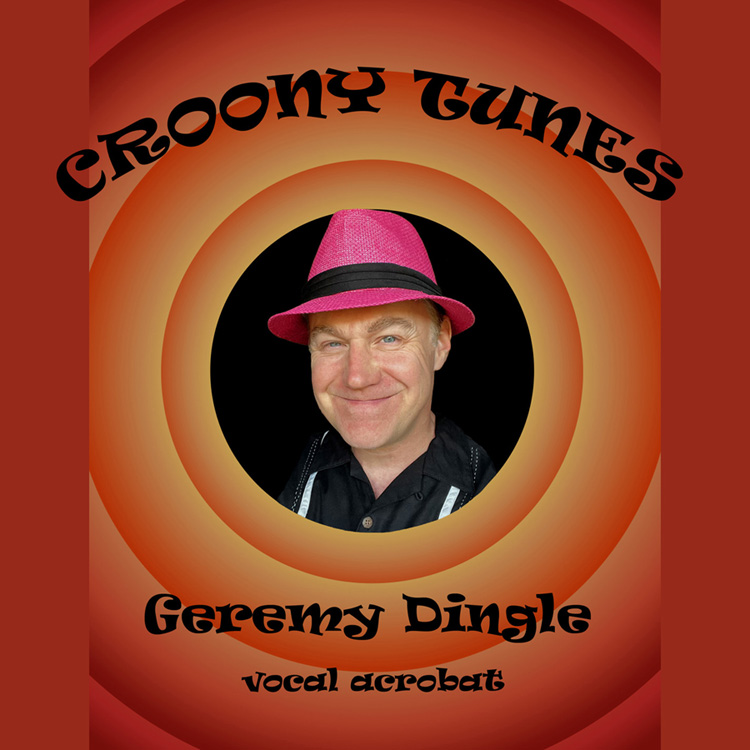
Right. I just produced a new promotional album called “Croony Tunes.” It’s my fifth album and I explored a variety of crooner songs from 2 eras of the 20th Century: the 20’s to the 40’s and the 50’s and 60’s. Each song features a different crooner and there’s a healthy assortment of vocal instrumentation as well.
Where can we find it?
It’s on my YouTube page to stream as it’s not available for purchase at the time of this interview. Feel free to link over and have a listen.
In your view, what can society do to best support artists and creatives?
Society clearly needs artists. People consume entertainment ravenously, and everyone has their preferences. So, whether you are into music or films or live shows or fine art exhibits, the act of experiencing something in the arts supports its very existence.
Where the majority of creative artists need the most support is financially. The “starving artists” label has sadly become something of an accepted stigma in society. But why should doing what you love and are compelled to do (providing you’re positively contributing something) equate to living on the edge of poverty or even homelessness? Consider that about 1% of the world’s population owns half the total global wealth. On a similar scale, less than 1% of the world’s artists are gainfully employed at any given time. Sadly, there is a huge disparity of financial affluence in our world.
If society at large can manage to define and implement a better balance between those with too much and those with not enough, I believe it would be universally beneficial.
Is there a particular goal or mission driving your creative journey?
Since graduating from university, my goal has been to make a living as a performing artist with as much consistency as possible. Regarding my journey as a vocal acrobat, my mission is to take an art form that has been sampled in the periphery of musical expression and establish it as a bona fide entree.
As always, we appreciate you sharing your insights. We’ll post your links below.
Contact Info:
- Instagram: https://www.instagram.com/geremydingle
- Facebook: https://www.facebook.com/geremydinglevocalist
- Youtube: https://www.youtube.com/user/GeremyLive