

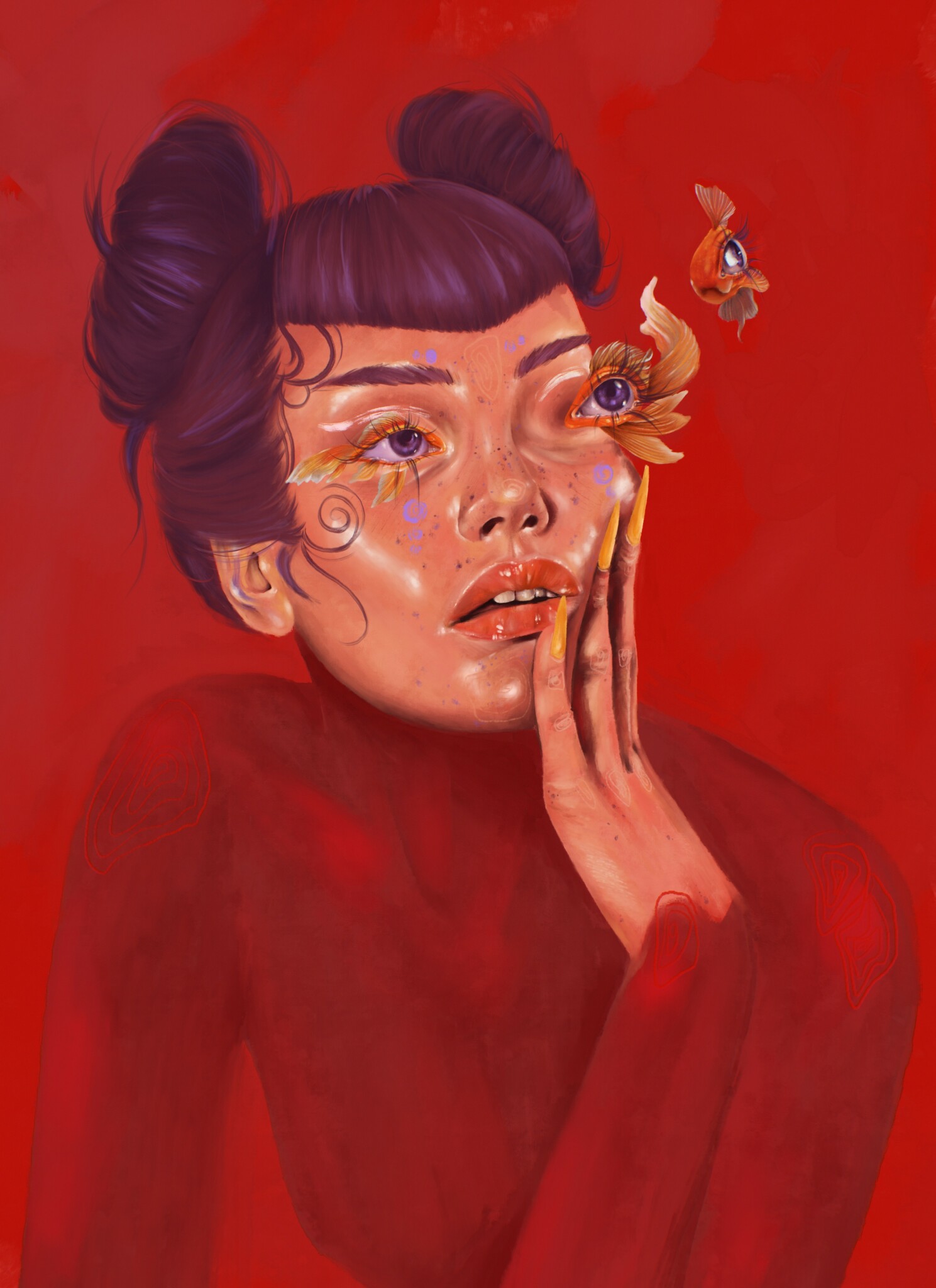

We’re excited to introduce you to the always interesting and insightful Georgya Mazier. We hope you’ll enjoy our conversation with Georgya below.
Georgya , appreciate you joining us today. Learning the craft is often a unique journey from every creative – we’d love to hear about your journey and if knowing what you know now, you would have done anything differently to speed up the learning process.
I was a quiet kid growing up, spending a lot of time in my room drawing. It started with doodles of cartoon characters from computer games I’d play to movie characters and costumes for book characters. I would create my own versions to pretend that I was a part of that movie/ book, as I did theater and would love to imagine myself in my favorite roles.
The first time I remember proper drawing technique was when I had geometry lessons as part of my learning curriculum, where I was taught how to properly hold a pencil and how to hold my arm to prevent fatigue, which has been a life saver as I had always crushed my pencil and my wrist and thumb would start cramping hard, which still happens to this day when I am so into my project I instinctively crush my pencil or my paintbrush.
Other wise, I would spend hours alone looking through books of the Masters, copying figures from Renaissance and Baroque paintings. I spent, again, more time drawing my favorite movie, and this time, comic book characters which helped me learn anatomy as well. Seeing the progress from then to now is huge, sometimes it blows my mind that I did that on my own.
Some times I don’t think there would be anything that I could’ve done differently to speed up my learning process, things happen in life and there would be times when I wouldn’t do any art for months at a time. I learned at the speed I did, and it’s only up to me how fast I learn things. Things in life get in the way, my attention span has gotten much shorter as I’ve gotten older, chores around the house, work and being burnt out from it.
The easiest part is the inspiration, it will hit me at random times and then I think that I could totally do that and get it done, then I will sit down to do whatever my idea is, and I can only do so much at a time because excuses are so much easier than actually doing the work to either improve or finish a project. I can’t begin to count the amount of unfinished pieces I have sitting in my room.
Awesome – so before we get into the rest of our questions, can you briefly introduce yourself to our readers.
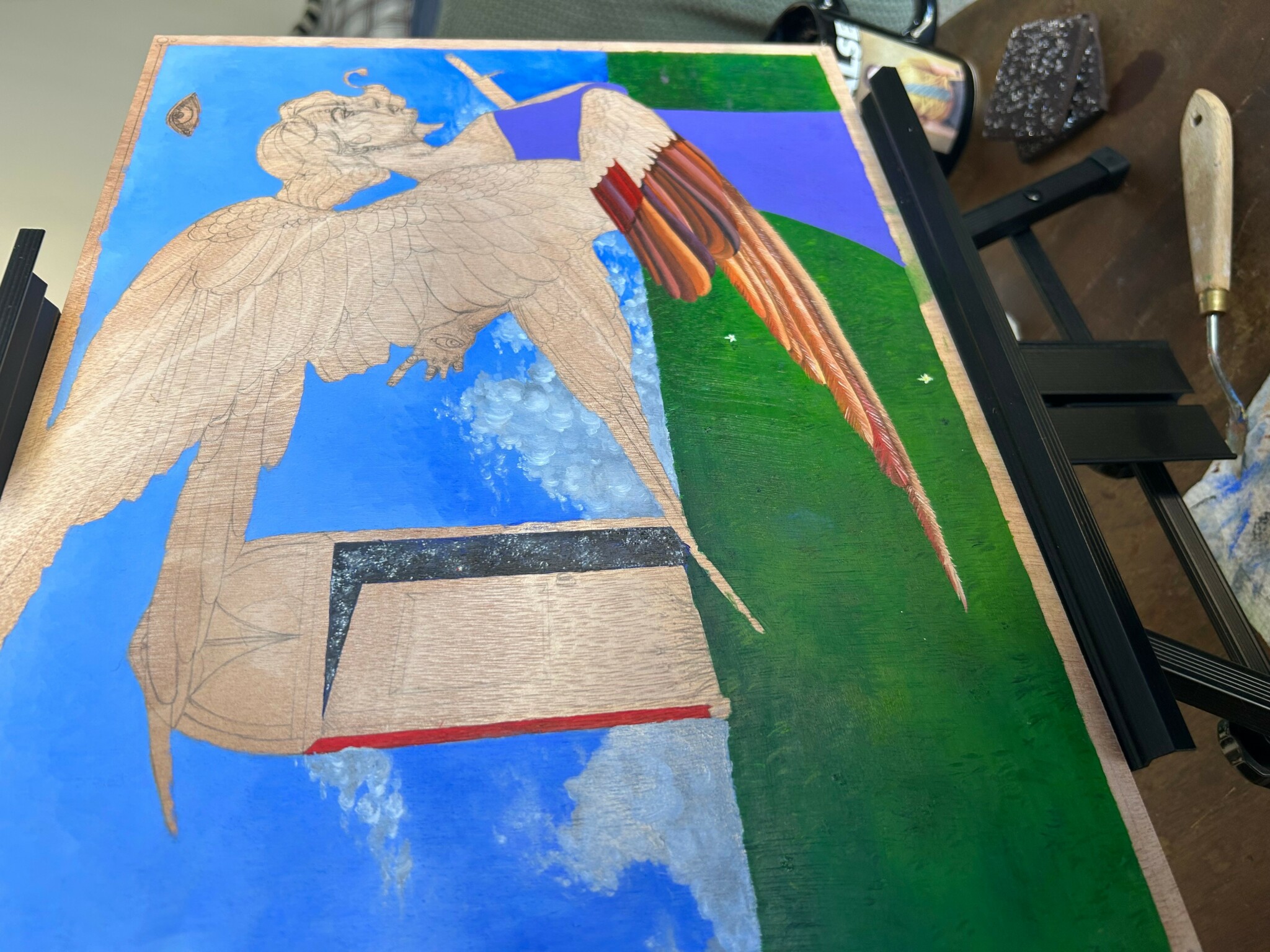
I am a self taught artist, currently residing in Maine. I work in digital and oil pieces, both commission and my own.
I have prints sold at an oddities store in Bangor, ME, The Rock and Art Shop. Theyre a great store, selling items from independent brands/ artists, and they took me in.
It isn’t easy getting into the art industry, you need to know the right people. networking is key, there is a lot of rejection, and understandably one’s own art style is not for everyone, so making a living is not the easiest. However, keeping it as a side hustle is nice because I want to keep my art enjoyable, an escape from my everyday and my full-time job.
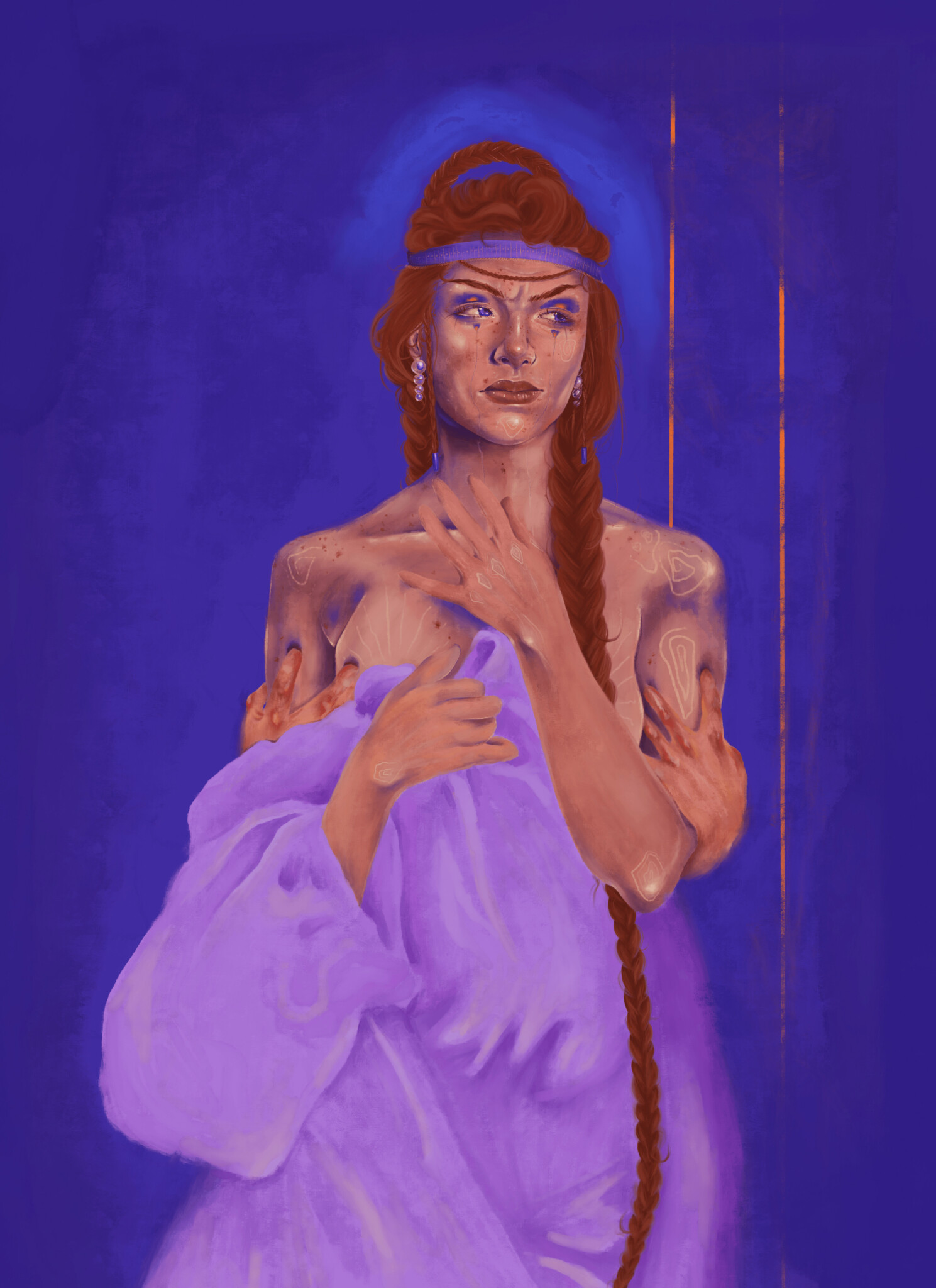
I specialize in portraiture, surrealism, animals/pets, and I’ve done digital backdrops for local theater. Digital is typically the easiest, fastest and cheapest option to provide people, and oil is more expensive as I also paint on wood panels.
I am most proud of my journey into my own style, learning techniques and anatomy, and the messages I add into my pieces. Most of what I create is inspired by life events or mental health, and I think that whatever darkness life will throw at me, there’s a beautiful piece to come out of it to provoke emotion in others, what dealing with mental health issues day to day is like, and what it’s like to take creation out of that.
I’d say at first glance most art is exciting; it looks pretty. Behind that however, is what goes on in someones mind, what they go through, what they experience. A lot of my art is inspired by depression. It sounds light hearted yet going through it every day is not. My biggest sources of inspiration are loneliness, self-loathing and paranoia.
We often hear about learning lessons – but just as important is unlearning lessons. Have you ever had to unlearn a lesson?
I think the biggest lesson I’ve learned in my journey was the importance of style. Growing up, everyone pounded into my mind that realism or hyper-realism was the most impressive you could get in art. Not that realism isn’t impressive in itself, I think it has its place in everyones path in art. Photo realism is cool, yet if it’s un-inspired, it’s not particularly interesting. I had to unlearn realism to actually find my art style, it’s ok for things to look illustrative or geometric. It stands out so much more, and personally I think someone’s journey to finding their own style is so much more impressive as it takes a loooooong time. It isn’t easy to be truly unique.

What can society do to ensure an environment that’s helpful to artists and creatives?
I have noticed to people who aren’t creatives, that art seems so easy, so accessible, and fast. It truly is the opposite, and understandably people don’t want to pay thousands of dollar for a singular canvas, however the amount of time and work that goes into a piece is forgotten. Not just for paintings but most art pieces, it’s a lot of time that is underrated. I think the other thing that goes hand in hand with that is the rise of AI and people turning towards it for business and personal use, instead of turning to professionals who have spent years fine tuning their craft. Ai is never going to be perfect, there’s always mistakes, but talking to an artist will provide all your needs and listen to everything you want. And the best part about that experience as well is that you’re supporting someones livelihood! And helping them live their dream and the years behind their work.
Contact Info:
- Instagram: @alternativedisciplesart
- Facebook: Alternative Disciples
