



We recently connected with Geoffrey Stein and have shared our conversation below.
Geoffrey, thanks for joining us, excited to have you contributing your stories and insights. If you could go back in time do you wish you had started your creative career sooner or later?
I have always made art. I made wood and metal sculptures as a kid, worked as a photographer for the local newspaper in high school, and briefly studied product design at Parsons School of Design. I ultimately transferred to Bard College, completing a liberal arts degree. Having graduated during the recession of 1982-83, I fled to law school.
Almost from the beginning of my legal career I was looking for a visual creative outlet to balance the tedium of my legal work. While working as an insurance/reinsurance litigator, I took drawing and anatomy classes all over New York City at night, on weekends and during vacations. (I was working full-time as a lawyer, going to art classes half time, and because I wasn’t busy enough, training for the NYC Marathon.) I spent 10 years failing to successfully combine art and practicing law. In 1999 my wife heard me complaining, again, about being a lawyer. She said, “If you want to paint, go paint. But if you don’t, you can never complain about being a lawyer again.” So in February, 2000, thanks to some tough love, I quit my law job and started painting full-time at the New York Studio School.
I was 39 when I made the transition to full-time painter. Since then, people often ask me if I wish that I had started sooner rather than after practicing law for over a decade. My view has always been that I quit my job and became a full-time artist when I was ready to do so. Prior to February, 2000, I was not ready to handle the uncertainty of a choice like this. Rather than being a disadvantage, the time spent before becoming a full time artist has given me a trove of experience and skills to use as an artist, and I think has made me a better painter.
Geoffrey, before we move on to more of these sorts of questions, can you take some time to bring our readers up to speed on you and what you do?
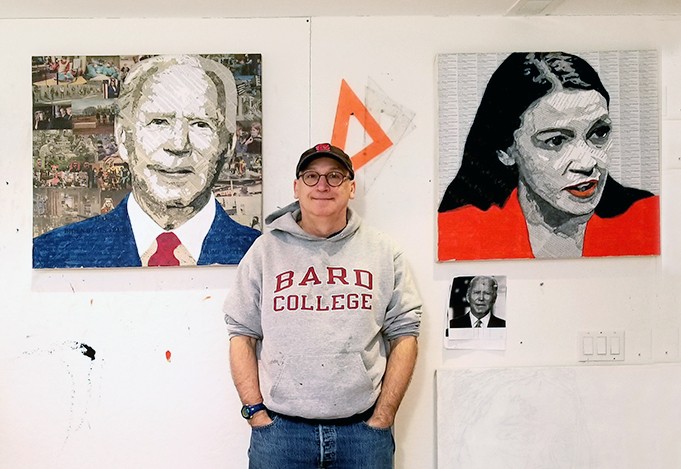
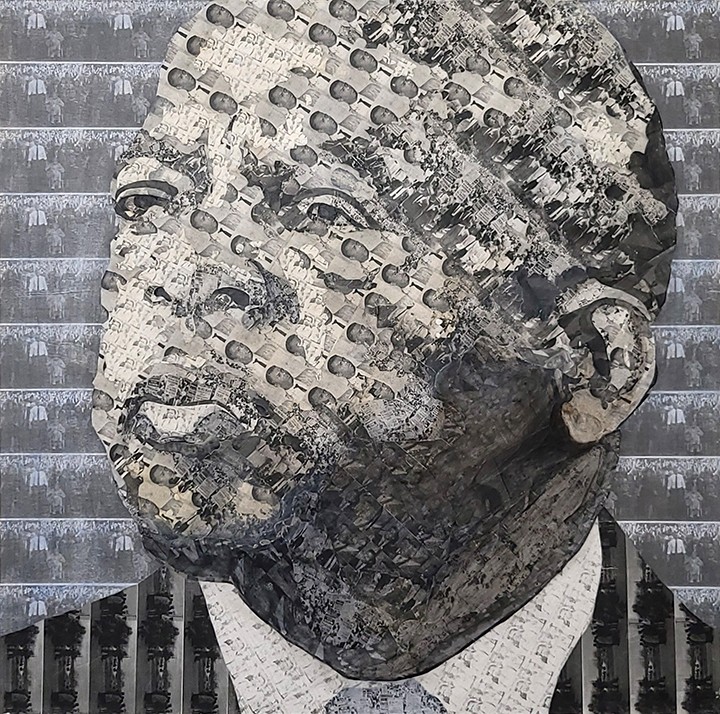
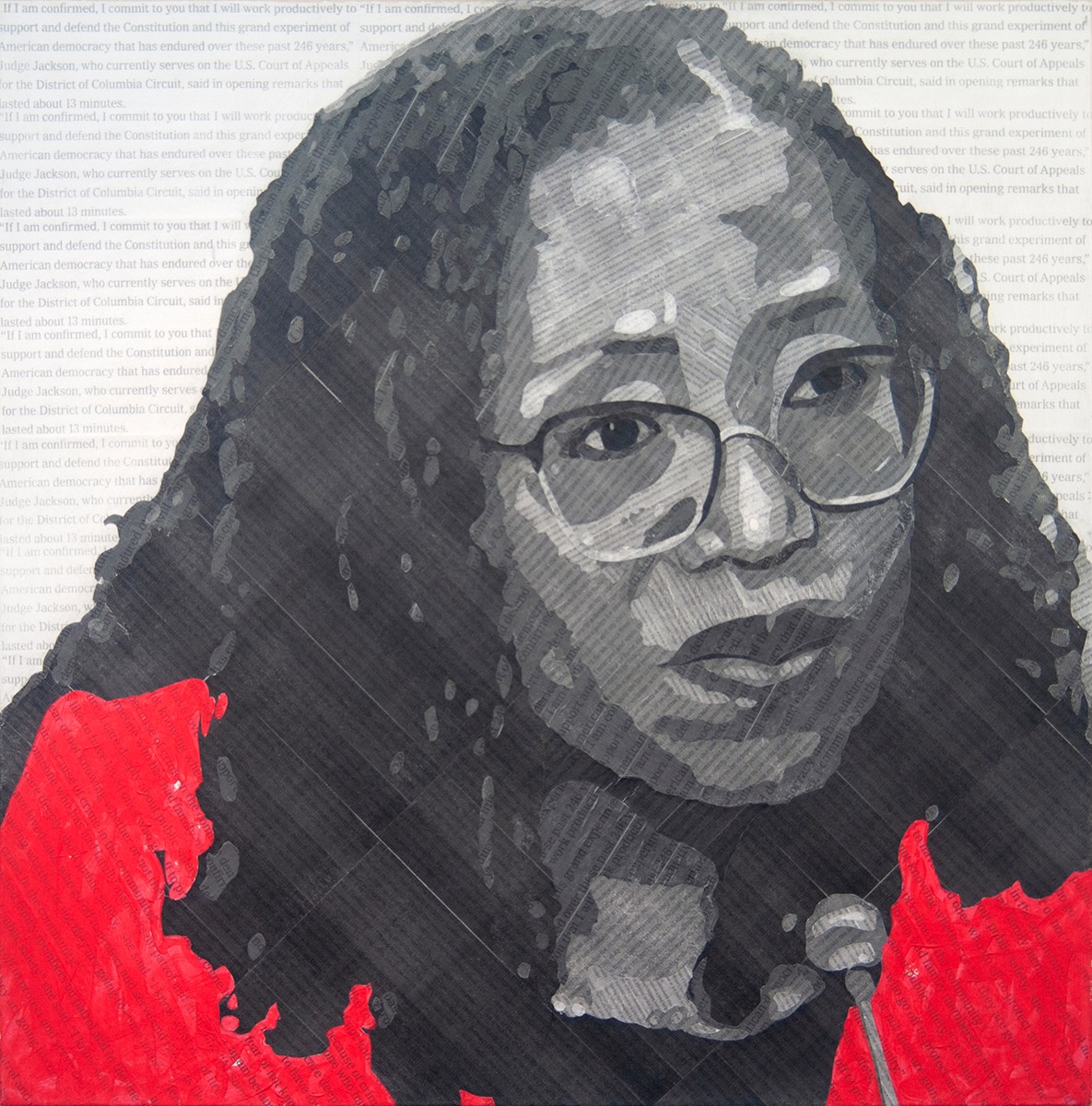
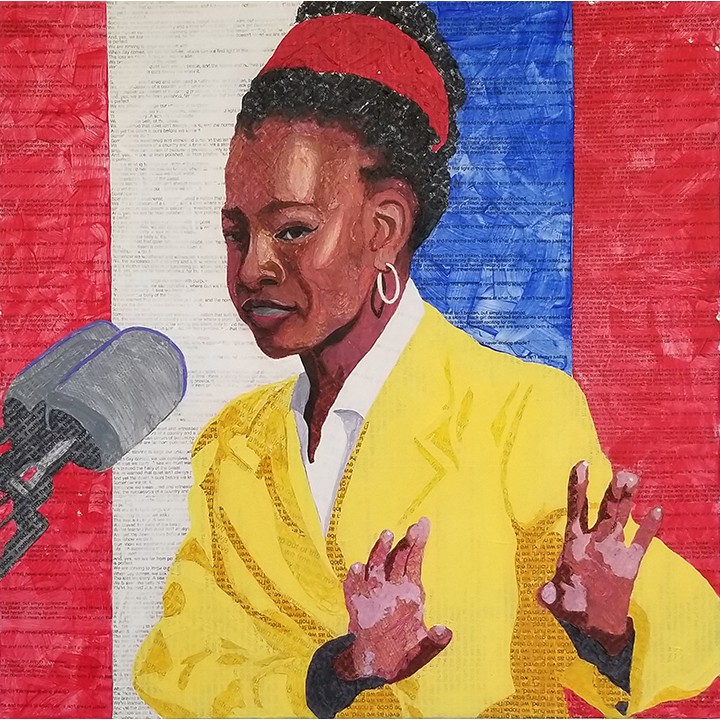
My collage portraits offer a unique blending of realistic image and likeness, with a conceptual understanding of the subject and their involvement in our world.
As a painter, I initially focused on finding points in space to create realistic portraits. I was interested in the translation of three-dimensional life into a two-dimensional image. Out of the painting came experimentation with using collage material (often newspaper text) as tone in a painting. This experimentation led to an increasing focus on making portraits using collage material from the subject’s world. This is my modern take on the Renaissance era trope of illustrating the attributes of the subject with a symbol, for example books to show the subject was educated. Instead, I use materials and text from the subject’s world to create their likeness. For example, my portrait of R.B.G., Dissenting, is made with collage material from the text of one of her dissents. Dr. Fauci’s portrait is made with text from the New York Times published during the height of the COVID crisis and documents from the Center for Disease Control.
I love doing commissions, which allow me to interact with the subject and discover new and interesting collage materials from their world.
In your view, what can society to do to best support artists, creatives and a thriving creative ecosystem?
Having studied at the Slade School of Fine Art in the U.K. where there is universal healthcare through the N.H.S., I think that one of the main obstacles holding back many artists is the lack of readily available, affordable healthcare. Without some form of universal healthcare, artists are forced to work essentially full-time just to have necessary health insurance. This prevents artists from directing their full energies to their studio practices.
Or, people just buy more art!
We often hear about learning lessons – but just as important is unlearning lessons. Have you ever had to unlearn a lesson?
So, my father was a child psychiatrist and in our house when I was growing up, there was a not-so-subtle discussion that one should not constantly draw attention to oneself (as young kids are wont to do). I think my father’s point was to get us to focus on other people in the world and not so much on ourselves. Thirty years later, I find myself a full-time artist attempting to get shows in galleries, publicity and to sell my work. Given this background, I am uncomfortable marketing. I am trying to unlearn the notion that marketing my work is narcissistic. I am trying to embrace my discomfort with contacting collectors, galleries and publications.
When I need to market to someone in person, I usually lead by saying “I’m really bad at this …” and then present my work. I find that the more I step out of my comfort zone to market, the easier it gets.
From my discussions with other artists, I find this to be a common issue.
Contact Info:
- Website: www.geoffreystein.com
- Instagram: @geoffreystein
- Facebook: https://www.facebook.com/geoffrey.stein.9
- Linkedin: www.linkedin.com/in/geoffrey-stein-8a794713
- Twitter: @G_Stein_NYC
Image Credits
Image 1: Photo by Rosie Lopeman Image 2, 3 and 4: Photos by Geoffrey Stein