

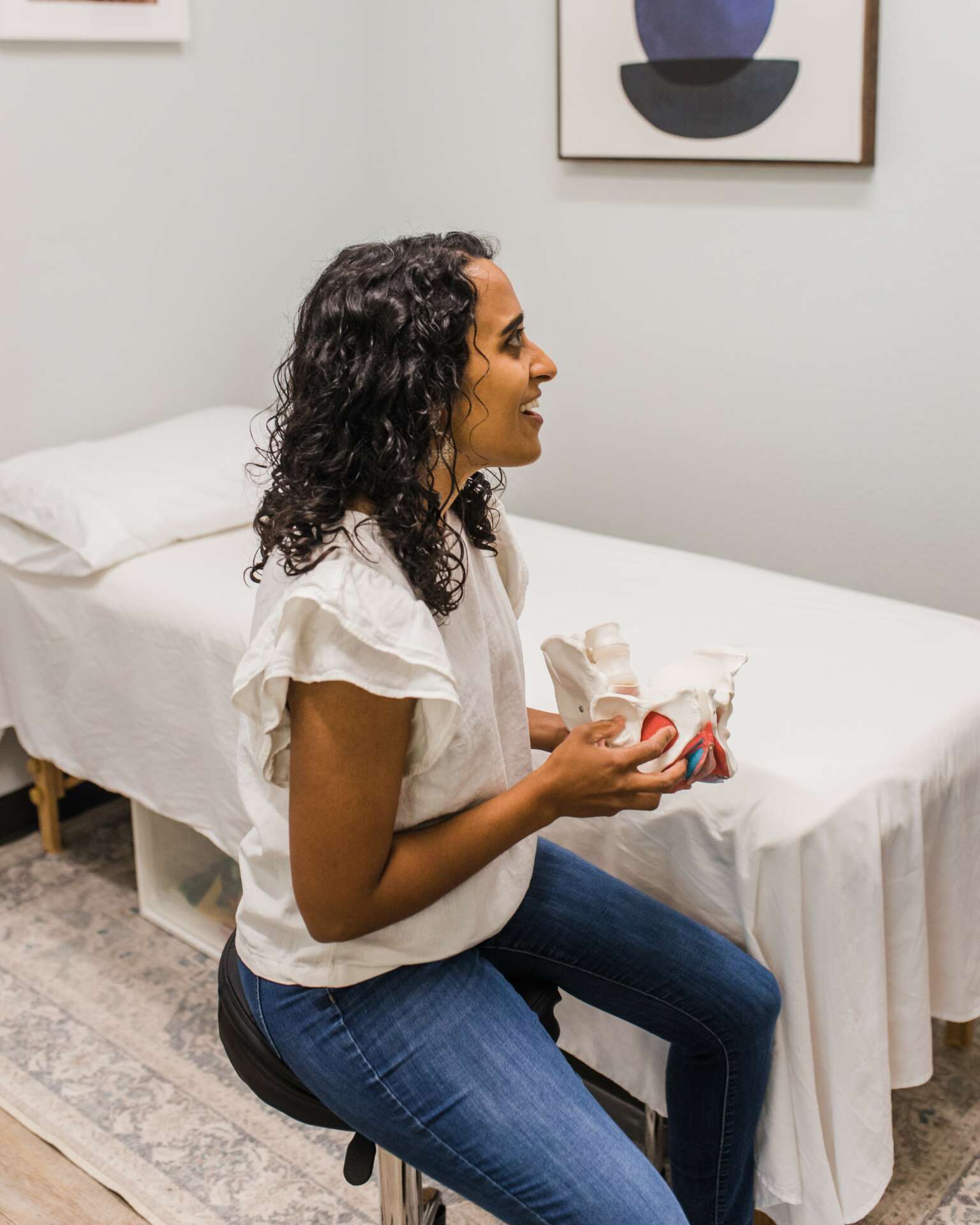

Alright – so today we’ve got the honor of introducing you to Geetha Beauchamp. We think you’ll enjoy our conversation, we’ve shared it below.
Geetha, appreciate you joining us today. If you had a defining moment that you feel really changed the trajectory of your career, we’d love to hear the story and details.
I have been an Occupational Therapist for almost 13 years. I have treated along the lifespan from infants to geriatrics. One thing that always stuck out to me was maintaining independence with what many people deemed to be the most embarrassing thing ever – incontinence. No one wanted to talk about it or treat it. It was often the notion of let’s stick a bandaid on it (or in this case diapers or pads). I had learned basics about incontinence in graduate school and did what I thought was good for my patients. The defining moment of my professional career was actually when I had my own babies and started hearing from other mothers about their “sneeze pee” or “laughing until I peed” problems that I knew this was a problem. The moms I met figured they could not do anything about it. Doing research into incontinence 7 years ago, I discovered pelvic floor therapy. None of my patients had ever been and nor had any of my friends at the time. At that point, I decided that my pediatric, adult, and geriatric patients deserved more from their healthcare providers in regards to pelvic floor issues. I switched course and dived head first into the pelvic floor therapy world. I’ve learned that if there is a functional problem, we need to dive deeper into the root cause of the problem even as therapists.


Great, appreciate you sharing that with us. Before we ask you to share more of your insights, can you take a moment to introduce yourself and how you got to where you are today to our readers.
I am an Occupational Therapist (OT) and Certified Lactation Counselor (CLC). I specialize in treating women, transgender men, and non-binary people with ovaries and a uterus with a variety of symptoms related to pelvic floor dysfunction. I decided to specialize in pelvic health after my own births and the lack of care I received from my own healthcare providers. I barely knew the specialty or the need existed until my own experience. While home with my two children, I took multiple post-graduate courses to educate and further myself in this speciality.
I enjoy treating patients in the pre- and postpartum time frame, pelvic pain, urinary or fecal incontinence, difficulty urinating, urinary frequency, constipation, pelvic pain, painful sex, coccyx (tailbone) pain, hip pain, lower back pain, diastasis recti (separation of abdominal wall muscles), pelvic organ prolapses, endometriosis, pudendal neuralgia, vaginismus, vulvodynia, and painful C-section or perineal scarring.
One thing I want potential patients to know about me, is that I look at each case differently. You are not just a symptom. I like to look at you as a whole which include your habits, roles, and routines and create a therapy plan that works for you at your current stage in life.


Do you think you’d choose a different profession or specialty if you were starting now?
If I could go back, I would choose this specialty earlier in my career. The reason why is that pelvic health has changed how I treat the body. The pelvis is such an important part of the body and it often gets overlooked. I think back to so many cases in my 13 years as an Occupational Therapist and think about how I would have treated my patients differently based on a pelvic health perspective.
Training and knowledge matter of course, but beyond that what do you think matters most in terms of succeeding in your field?
My Occupational Therapy masters degree was for generalizing, like many health care provider degrees. For specializing in pelvic health, it was taking courses offered, having mentors that have helped me succeed in treating my patients, reading research, and books from patient perspectives on the diagnoses I treat.
Contact Info: