



We were lucky to catch up with Francesco Andriani recently and have shared our conversation below.
Francesco, thanks for taking the time to share your stories with us today Coming up with the idea is so exciting, but then comes the hard part – executing. Too often the media ignores the execution part and goes from idea to success, skipping over the nitty, gritty details of executing in the early days. We think that’s a disservice both to the entrepreneurs who built something amazing as well as the public who isn’t getting a realistic picture of what it takes to succeed. So, we’d really appreciate if you could open up about your execution story – how did you go from idea to execution?
How did you actually start – what was the process of going from idea to execution – walk us through some of the main steps that allowed you to launch your business? Tell it to us as a story – you had the idea, then what happened? What was the next day, hour, month or year like? What did you have to figure out, look into, setup, etc. in order to move beyond the idea phase and actually launch?
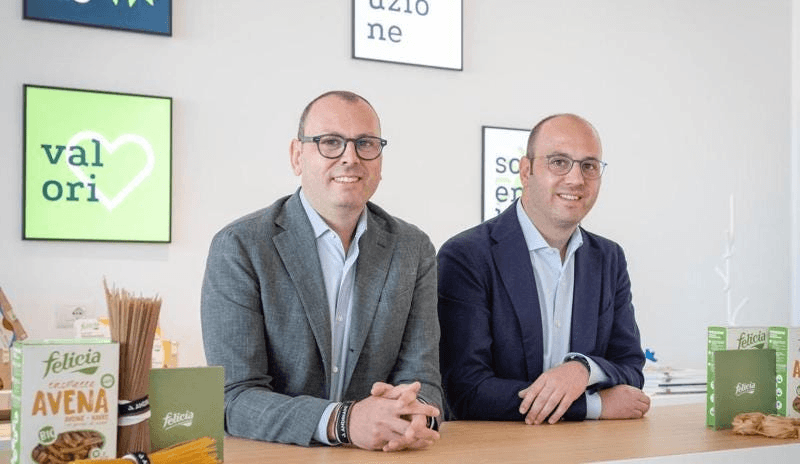
In 2009, my brother Michele and I founded Andriani S.p.A Benefit Corporation, which is a dynamic, certified B Corp company based in Gravina in Puglia, Italy. We learned most of what we know about food from our father, who has over 40 years of experience in the milling business and is deeply ingrained in the technology side of the industry. By way of the knowledge, passion and entrepreneurial spirit he passed down to us, alongside our own experience, we saw a gap in the better-for-you, gluten-free pasta market. When looking at the data and evaluating consumer preferences, we found an overall lack of quality and a demand for something better. Consumers pay attention to the nutritional facts of food, as well as the origin of the ingredients, favoring products that are good for their health and for the planet. We wanted to create something that eliminated unhealthy ingredients, maintained a clean label and was made using raw materials from the earth. After a few years, and through a series of trial and error, experimenting with new technology and our valuable manufacturing partnership with Buhler Group, Felicia was born. Felicia is a better-for-you, vegan pasta that is crafted with 100% organic ingredients that are naturally rich in nutrients such as spirulina, buckwheat, oat, brown rice, chickpeas and red lentils.
In addition to being distributed in over 40 countries throughout Europe, Felicia recently launched in North America.
Awesome – so before we get into the rest of our questions, can you briefly introduce yourself to our readers.
It has been an incredible opportunity to lead Andriani alongside my brother. We are fortunate to have witnessed the company become a key player in the healthy pasta market in Italy and a point of reference in food innovation. We aim to bring our passion for the industry to consumers through Felicia, and we wanted to create something that represents joy and community. Hence, the Italian translation of Felicia is associated with happiness – it’s easy to pronounce and symbolizes something that everyone
can enjoy.
From the beginning, I have sought to truly understand consumer needs and how we can meet them. We wanted to innovate the food industry, starting with what we know consumers love – pasta. Offering a new concept of Italian eating, with Felicia, healthy food becomes simple, convenient, tasty and easy to share. We saw the opportunity to do something different and used our extensive knowledge and background to get us there. Additionally, my love and curiosity for travel and culture helped me build the brand into what it is today. Every visit to a new place and every meeting with different people has been an opportunity to learn about other ideas, colors and flavors to experiment with.
What are you most proud of and what are the main things you want potential clients/followers/fans to know about you/your brand/your work?
One of the many things we are proud of is our sustainability and biodiversity efforts. Our continuous road to the sustainable development of food is a shared journey towards a more ethical, environmentally friendly supply chain model that sets new paradigms to integrate into our business model. There are a few ways we do this:
1. Protecting native soils and contributing to biodiversity by leading the widest sustainable legume supply chain in Italy which helps reduce emissions of greenhouse gases into the atmosphere.
2. Utilizing a photovoltaic system within a trigeneration plant to produce clean and efficient energy to power manufacturing processes.
3. Adopting a cyclical cultivation process for key ingredients like spirulina where the water used for pasta production is reused for farming the superfood. Additionally, the photosynthetic activity of the spirulina microalgae also sequesters and absorbs CO2 from the air. As a pioneer in innovative food, Felicia is more than just pasta. It’s an inclusive approach to embracing better, healthier and more colorful options for both people and the planet. Felicia prioritizes sustainable production and manufacturing, the conscious management of natural resources and the use of upcycled materials from a circular economy. We’re proud to be a startup that is innovating the pasta category in a responsible way – something that consumers are increasingly looking for in the brands they support and the food they eat.
Our company is a B Corp and Benefit Corporation; therefore, our commitment is to pursue overall wellness rather than maximizing profits. Our Food Transition Model is designed to foster the health and wellbeing of people and the planet through innovation in food, the Mediterranean diet and nutrition science. This is at the core of the “Colorfood Revolution” we want to spark. Our company signature is “Leading the Food Transition,” clearly expressing that we are taking a responsibility to lead the transition toward new and more sustainable food models. To further promote these new and more sustainable nutrition models internationally, in 2025 we will open a new pasta factory in Canada, which will allow us to be more effective, efficient and sustainable when serving the North American market.
Can you share a story from your journey that illustrates your resilience?
As for many other companies, the COVID-19 pandemic was a unique time for us. While consumers were clearing out grocery store shelves in a panic, there was a hysterical demand for the product and pasta in general. The food industry was suffering worldwide, struggling to meet demands and keep up with the ever-changing, uncertain environment. Manufacturing processes were significantly delayed, and many companies did not have the workforce they needed. As a team, we tried to be flexible and find solutions to challenges while supporting our employees as best as we could. Today, we offer them an articulated welfare strategy that is designed to encourage and facilitate a positive and inclusive work environment, aiming to support everyone’s physical and emotional wellness.
Can you talk to us about manufacturing? How’d you figure it all out? We’d love to hear the story.
Yes! We bring Felicia to the end consumer by way of our onsite manufacturing plant, which is the only Italian facility that is 100% allergen-free and gluten-free. It is equipped with an integrated multigrain mill – among the biggest in Europe – and designed according to the strictest quality and food safety protocols. The bulk of the inspiration for our innovative manufacturing processes stemmed from our father’s experience and knowledge in the milling business.
We place a strong emphasis on quality and food safety to protect the people buying the products. Andriani is the only Italian pasta company with this type of mill, which allows us to closely monitor and manage the entire process, from the grain or legume to the final pasta product. This total control we have over the supply chain, combined with our in-depth search and selection of raw materials to make the pasta, gives us a significant competitive advantage in the market. Thanks to an integrated value chain system that is fully designed from the manufacturing to the distribution and post-sales service, we ensure that waste is limited, quality is top-tier, and time to market is compressed.
Our manufacturing know-how and investment in the most up-to-date machines aids in this effort, such as using the Ecothermatik dryer – a revolutionary system to make long pasta cuts – which the company was the first to install.
When we first partnered with Buhler Group to support our manufacturing, the technology that we use today did not exist. We wanted to involve an innovative company to help us revolutionize the market. Together, we put extensive time and effort into our processes and product innovation.
When starting a new way of production, it’s crucial to have a deep knowledge of the ingredients you are using. Food innovation is a key fabric of our DNA, and for this reason, we have always invested significant resources in research & development. We aim to test new ingredients and raw materials to make pasta, always trying to select the best varieties to create products that offer nutritional benefits while delivering a great taste experience.
One example of this is our use of spirulina. In 2021, we opened “Spirulina Park” at our Italian headquarters, a facility dedicated to growing these precious microalgae by using the water resulting from the pasta-making process. The water is cleaned and reused, fostering a virtuous circular economy process. These algae are then used to make our Felicia pasta with spirulina and brown rice. By doing this in-house, we have total control of the supply chain for these unique ingredients – something that other companies aren’t always able to achieve. Spirulina, which was known in the ancient days as the “food of the Gods,” is rich in nutrients and has a low environmental footprint, so much so that it is described by the Food and Agriculture Organization (FAO) as the “food of the future.” It contains the highest vegetable protein content available (about 60-65%), has all the essential amino acids (unlike other protein from vegetable sources) and maintains a low content of calories and cholesterol.
Felicia pasta differentiates itself from others for its many important functional benefits, from the fiber content of wholegrain pasta to the protein content of the organic legume pasta. These are naturally free from gluten, rich in precious nutrients, and most often made with a single ingredient: buckwheat, brown rice, oats, chickpeas, lentils, peas and more. Since the beginning, we have put tremendous effort into constantly renewing our offerings, and with Felicia, we can offer the broadest variety in the healthy pasta market.