

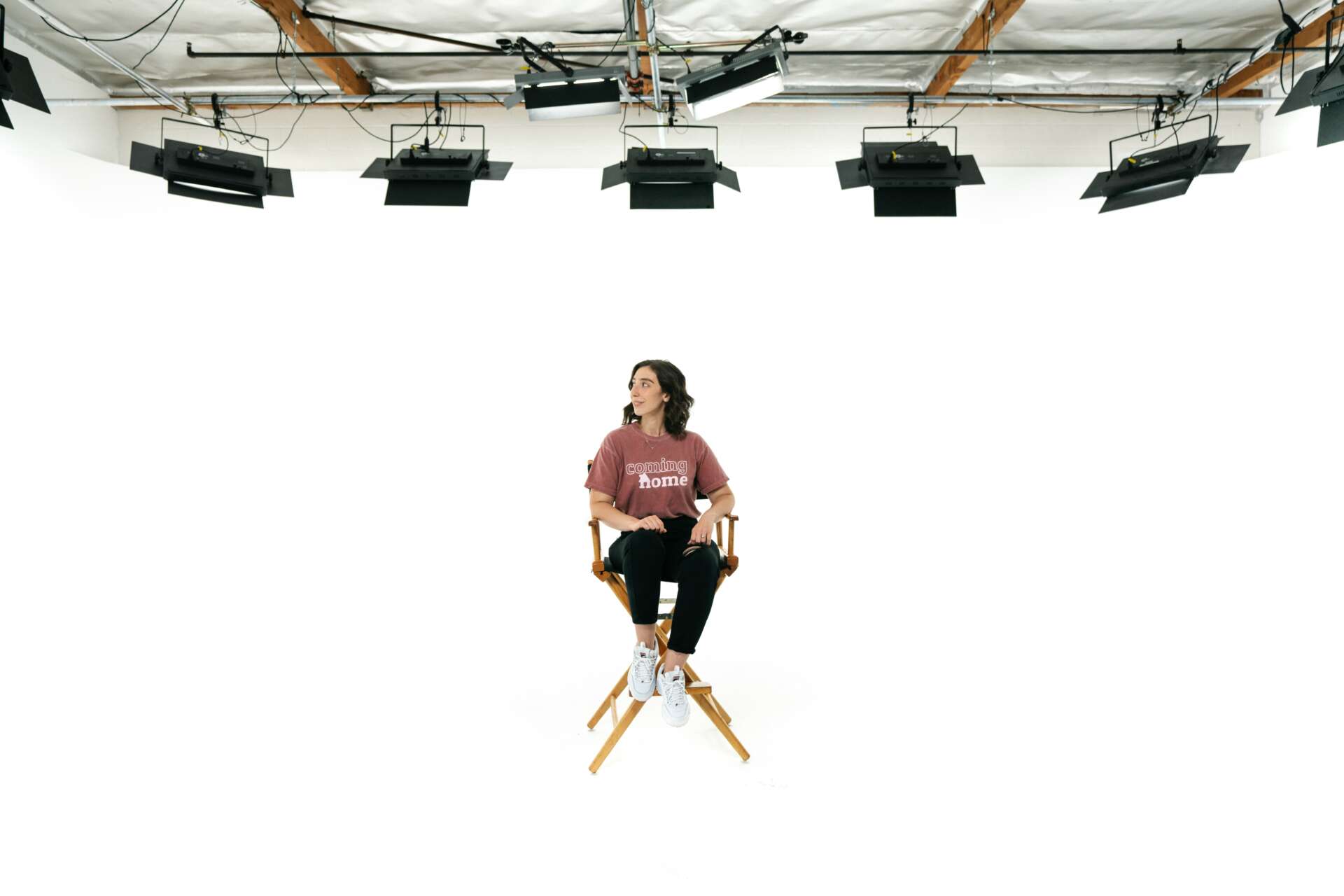

We were lucky to catch up with Francesca Patrón recently and have shared our conversation below.
Alright, Francesca thanks for taking the time to share your stories and insights with us today. What did your parents do right and how has that impacted you in your life and career?
When I was little, my mother used to play classical music in the car. She would use the music as a score to make up stories that went along with the compositions. As I got older, I began taking turns, and would create stories inspired by music as well. It was simple and silly, but taught me at a young age to learn to take something as abstract as music, and formulate a clear point of view in response to it. This kind of abstract thinking is something that all children possess naturally, and never ceases to blow my mind. My hope is that as children grow into adults, they learn to see the value that play and creativity has in their adult lives, as well.
Whether you work in a creative field or not, the ability to engage and provide clarity to abstraction is vital to anyone in a leadership position. This is the kind of thinking that makes you a more innovative, creative problem solver.
Fostering your own imagination allows you to envision new ways of doing things, provides you the ability to clearly communicate with others, and teaches you to move your goals forward under any circumstances. I’m so thankful I had a mom who taught me to exercise my ability to create meaning and expression at such a young age.
Awesome – so before we get into the rest of our questions, can you briefly introduce yourself to our readers.
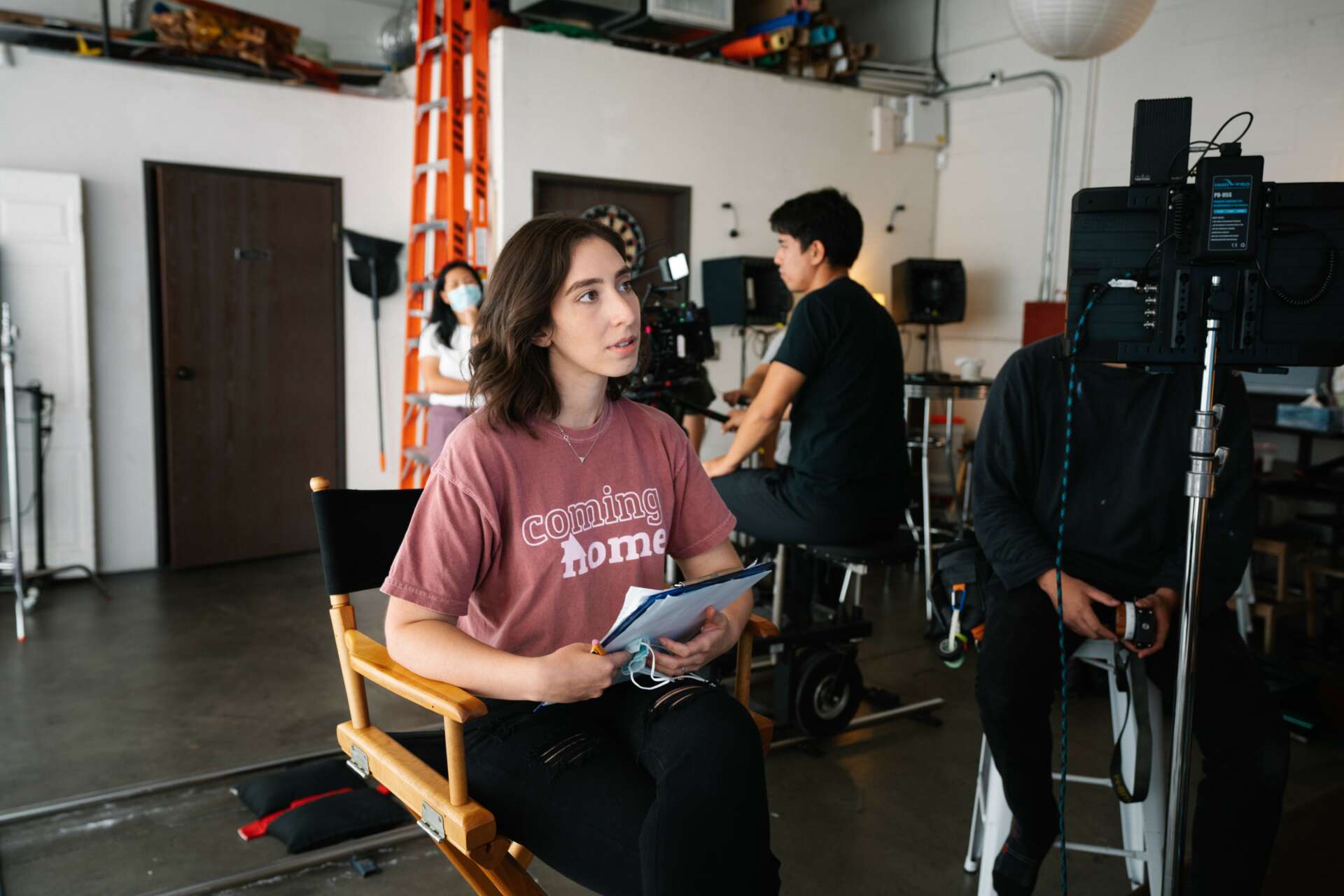
I am a Chicago-based theater and film director who specializes in physical theatre and new works. I am also an educator who teaches acting theory, physical theatre, and theatre directing. currently, I am a second-year MFA directing candidate and adjunct faculty at Northwestern University. I have a high value for collaboration, and always try to build a team of artists and makers who are willing to explore the work, communally. I run my rehearsal rooms like a dinner party- typically gathered around some good food and cheap wine, in hopes of making space for each collaborator to bring the fullness of themselves to the work. I believe in collaborative storytelling, and stylistically my work tends to be impressionistic, ensemble-oriented, and embodied.
In terms of the kinds of stories I tell, I have worked closely with immigrant and refugee communities most of my life and thrive getting to see marginalized communities centered on our stages and screens. I come from a family made up of first, second and third-generation immigrants and love finding ways to revisit euro-classical pieces through a Latinx lens.
Is there a particular goal or mission driving your creative journey?
Since 2020, I have been obsessed with exploring and creating a practice centered around healing. The absence of a collective gathering space during lockdown made it evident to me that something healing happens when we gather together for a unified purpose. Storytelling is as intrinsic to our human identity as breathing, and is a practice that can be traced back throughout all of human existence. There is a reason we relate, connect, communicate, and process using oral storytelling. In recent years, I have been particularly interested in how that collective gathering of both audiences and artists can create avenues for healing. With isolation, disillusionment, and hopelessness being at what feels like an all-time high, I hope to use storytelling to provide communities with an outlet for communal catharsis. What might we gain from using theatre as a gathering place for processing collective grief and trauma? I’ve found space to process the pain from the last few years outside of the internet difficult to find. My hope is that live theatre might provide more avenues for processing, healing, and growing in the context of a local community. Art is sneaky like that… it has a way of moving past words and into the heart of a matter if we allow it to. It can connect us and provide both release and belonging. In my work, I have become deeply invested in curating spaces of healing, and am hoping that this artistic question might lead to new, innovative ways of theatre-making.
Learning and unlearning are both critical parts of growth – can you share a story of a time when you had to unlearn a lesson?
I started off my career as an actor, and at a young age learned that in order to make a sustainable career in an over-saturated, under-funded, highly competitive industry, you must always be “on.” Working in the performing arts has a way of making you internalize a life of performance. In my younger years, I would work insane hours, suffer through a difficult artistic process, and anxiously prepare for a premiere, with little to no regard for the process itself, as long as the performance was well received by critics and audiences. As long as I got the results I intended, I would consider the work a ‘success,’ no matter how difficult the journey there might have been. It was, needless to say, highly performative and rooted solely in external validation. In more recent years, I’ve learned that the process can be as important as the final product. Setting an artistic question to explore throughout the process might shift the trajectory of the project you are making, but allows for you to meet the work with more curiosity and openness. While this makes the journey to the destination much more enjoyable for everyone involved, it also tends to provide you with a final product that is richer, clearer and far more specific.
I recently received a grant to study Czech theatrical performance under the brilliant Mary Zimmerman and Ana Kuzmanic, and spent some time this summer with the artistic team of the Czech National Theater in Prague. Watching their process, I realized how innovative, creative, and unique their theatrical work was- simply because they spent more time than I did exploring an artistic question through their rehearsal process, rather than locking in creative choices earlier on.
I am unlearning my tendency to rush to performance, and learning to remain more curious and open throughout my process. I am learning to let the creative process breathe a bit more, and to provide as much care and consideration into it as I do my final work. This has been a game changer, and I’ve seen it improve my work, greatly!
Contact Info:
- Website: https://www.francescapatron.com/