



We’re excited to introduce you to the always interesting and insightful Fran Rescigno. We hope you’ll enjoy our conversation with Fran below.
Fran, appreciate you joining us today. Can you recount a story of an unexpected problem you’ve faced along the way?
An unexpected problem I faced multiple times during the first few years of my business was realizing I built a business I hated. Prior to starting my business, I fully believed in the saying “do what you love and you’ll never work a day in your life”. I thought that as long as I was working for myself and pursing my passions, there was no possible way for me to ever hate that. But I was wrong…
My first experience with burnout was just a few short months after starting my business. I was exhausted all the time, woke up every day dreading work, and the only things on my schedule were: work, eat, sleep. I was fully questioning if running a business was the right choice and I didn’t understand how I could feel so much resentment toward something I built myself.
It took me almost 2 years of entrepreneurship and multiple experiences of burnout before I fully realized and understood what my problem was. It wasn’t that I wasn’t cut out to be a business owner or that I disliked entrepreneurship, it was that I spent so much time building my business based on what other people said I should do that I ended up with a business that wasn’t sustainable for me.
I was offering services I didn’t enjoy, forcing myself to ‘niche down’ because that’s what the business coaches were saying to do, working way too many hours, not setting boundaries with myself or my clients, and creating marketing content in formats and on platforms that I didn’t enjoy.
I knew entrepreneurship wasn’t going to be easy by any means, but I also knew that going in a cycle of considering finding a corporate job every few months wasn’t what I wanted for myself either. So somewhere along the line, through lots of trial and error and time spent discovering what I truly wanted my business to look like, I realized that the reason why everything felt so hard all of the time and why I wasn’t enjoying my business is because I had built other people’s version of a successful business, instead of my own.
So instead, I started listening to myself. I prioritized the services that I truly enjoyed, I stopped forcing myself into a niche of working with a specific type of business, I created a work schedule that accommodates my neurodivergence, I found marketing platforms and strategies that were actually sustainable for me, and I built a small team to support my business so I’m not doing everything alone.
Almost 4 years after starting my business and I can confidently say that although entrepreneurship is not always rainbows and butterflies, my version of entrepreneurship is joyful, supportive, and, most importantly, allows me to actually enjoy the work that I do.

Awesome – so before we get into the rest of our questions, can you briefly introduce yourself to our readers.
I’m Fran—founder of The Passions Collective, Client Experience Architect, Certified Dubsado Specialist, neurodivergent entrepreneur, cat mom, and bookworm. I started my business 4 years ago on a whim, working as a Virtual Assistant for other entrepreneurs and over time, have grown and evolved into my business’ current state. Through my work as a Virtual Assistant, I first discovered my love for systems & automations when I realized how many tasks could be done automatically and take things off my to-do list. Over time however, my appreciation for them grew deeper as I realized they were also an incredible tool for accommodating my neurodivergence in my business, and for providing my clients with the best experience possible.
Client experience has been a core part of my business and how I approach systems & automations since long before I took on the role of ‘Client Experience Architect’. My belief is that the best client experience is one that benefits all humans involved: the business owner and the client. One of the big things that sets me apart from other folks in the systems & automations industry is that I’m not just looking at things from a lens of ‘how can we make this as efficient as possible’. I’m actually zooming way out to look at your client experience from a holistic perspective and taking into consideration: how your brand presentation impacts your client experience, who your ideal client is and what type of experience is going to be the most supportive to them, and who you are as an individual and what solutions are going to work the best for your brain.
After working with over 100 businesses in the past four years, the one thing I can say with absolute certainty is that no two businesses look exactly alike, even in the same industry. I prioritize custom solutions when it comes to the client experience, systems & automations because there is no such thing as a one-size-fits-all approach. I provide a range of services from Client Experience Audits and Done-for-You Systems & Automations setups to Dubsado and Notion templates, with each service and product being created with the goal of honoring each business’ uniqueness.
The thing I’m most proud of is the impact that my work has on the clients I work with. A majority of my clients are folks that have something going on in their lives that doesn’t allow them the ability to work 40 hours a week (or even 30), such as neurodivergence, parenthood, chronic illness, mental health disorders, etc. To be able to set up systems & automations for them that relieve a huge load of mental stress, allow them to be more present in their lives and take better care of themselves, and have a client experience that generates referrals and repeat clients so that they don’t have to constantly stress about marketing—that’s the thing I’m most proud of.

What’s been the most effective strategy for growing your clientele?
The most effective strategy for growing my clientele has been prioritizing my client experience. Many business owners believe that if they just provide a really great deliverable (ex. photos if you’re a photographer, final branding if you’re a designer, etc.) that will be enough to create a great experience and generate referrals and returning clients.
And while it is possible to generate referrals and returning clients that way, it’s much more effective to do so by providing a great experience, in addition to great deliverables. I recently conducted research on the impact of client experience and surveyed 120 business owners: 82% of those people shared that if the experience of working with a service provider is poor, but the deliverables are still high quality, they will not refer the service provider to others (and of that 82% half also wouldn’t return for a future project).
Full research here if you want to read: https://www.thepassionscollective.com/post/the-impact-of-client-experience-on-service-based-businesses
As a neurodivergent business owner, I don’t have the capacity to post 5 times per week on Instagram, talk on my stories every single day, make 3 Tiktoks per day, etc. so having a business that generates clients through the people I’m already working with / have worked with has been huge for the sustainability of my business.

We often hear about learning lessons – but just as important is unlearning lessons. Have you ever had to unlearn a lesson?
The biggest lesson I had to unlearn was that there is no “right way” to build and grow a successful business. Earlier in my business journey, it was easy to look at people who were farther on in their journey than I was and think that if I simply mimicked all of the things they were doing: their business structure, their marketing strategy, etc. then I would also be able to achieve the success they had.
The problem is, what works for someone else doesn’t mean it’s going to work for you, too. Everyone has different goals in their business, different ideal lifestyles, different strengths, and we also never truly get to see what’s going on behind the scenes. Someone who looks like they’re successful based on the income their business is making might have really high expenses and could still be living paycheck to paycheck despite having a “successful business”.
And success looks different to each individual person. If you’re simply trying to copy what someone else is doing, even if it works and you get clients and grow your business, the odds of that feeling successful to YOU are low because success to them might be working 40 hours/week and working with 20 clients per month, whereas success to you might be working 10 hours/week and working with 5 clients per month.
The most important thing you can do is actually define what success means to you so that you have an end goal in mind and can start making decisions in your business that are going to get you closer to that goal, rather than just trying to frankenstein together a business that’s just parts of other people’s businesses.
Contact Info:
- Website: https://www.thepassionscollective.com/
- Instagram: https://www.instagram.com/thepassionscollective/

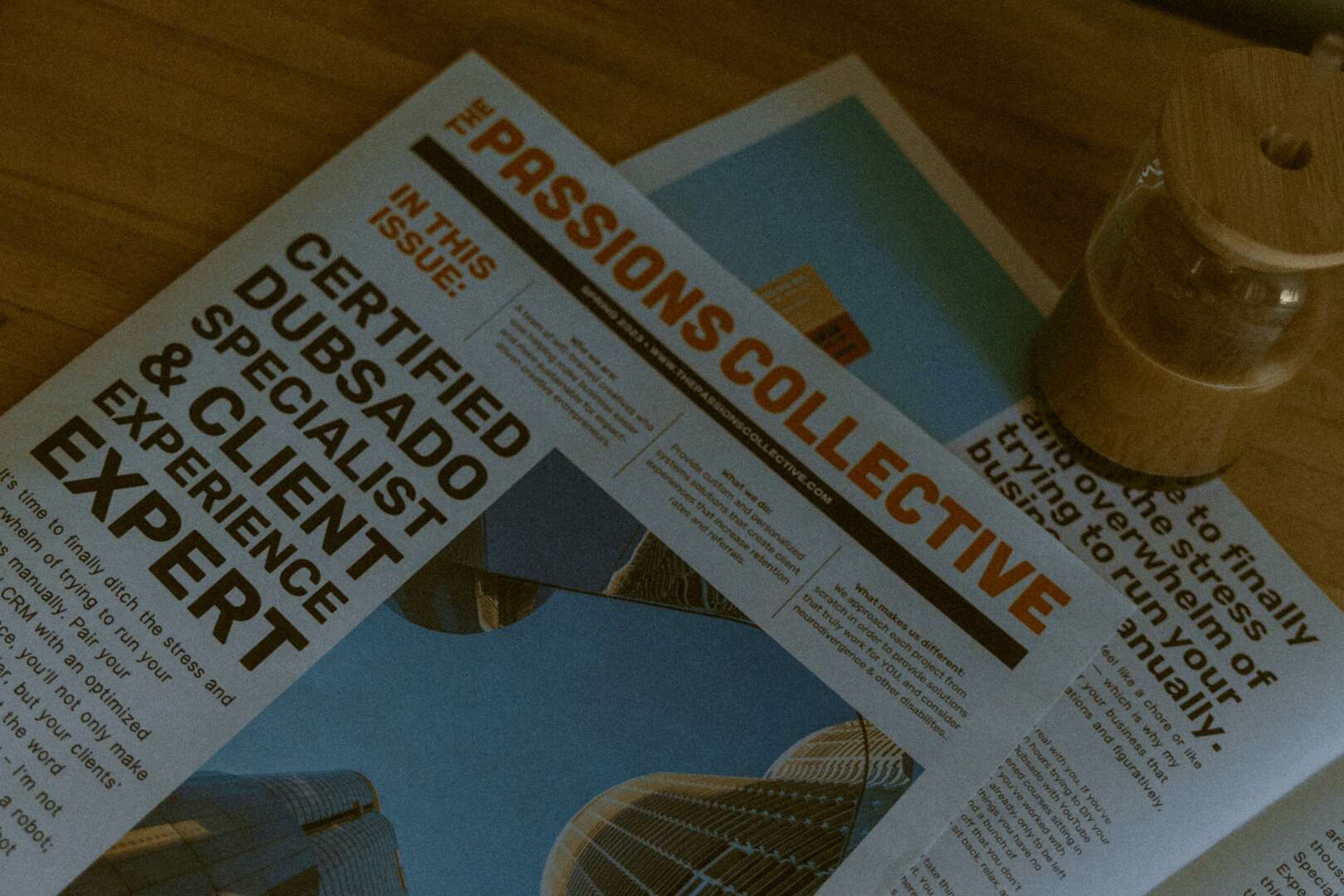
Image Credits
Olivia Steuer