

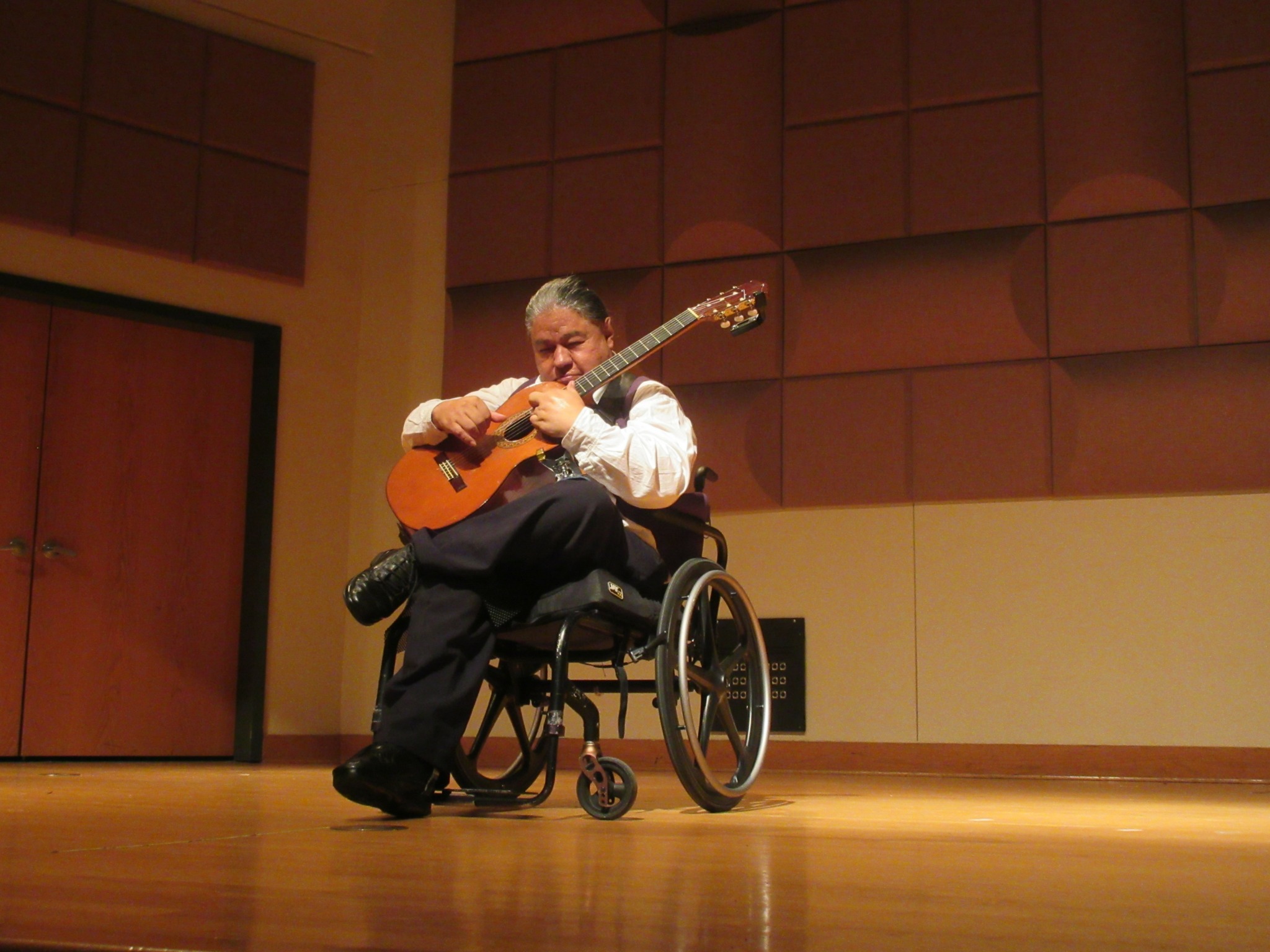

We recently connected with Fabian Carrera and have shared our conversation below.
Fabian, appreciate you joining us today. Can you tell us about a time that your work has been misunderstood? Why do you think it happened and did any interesting insights emerge from the experience?
Yes, growing up in stratified Ecuador I was both misunderstood and mischaracterized often due to my physical disability. Early in life, after surviving a severe case of polio I became physically disabled; consequently, I was wrongly assumed to have cognitive impairments as well simply because I used leg braces, and couldn’t walk. This resulted in being placed in a school for children with intellectual disabilities, not because of who I was, but because of how others perceived me. Even after transferring to a mainstream school, I was told by a teacher at my sixth-grade graduation that education wasn’t for “my kind” and that I should go shine shoes at the bus station with the other “cripples”. That moment crystallized in me what it feels like to be reduced to nothing more than a stereotype.
As a musician and educator, I’ve also seen how people sometimes mistake accommodation or difference for limitation. But through it all, I’ve learned that mischaracterization often says more about others’ limitations than your own. It taught me not only resilience but also compassion—for those who’ve been boxed in by misunderstanding and for those who don’t yet realize they’re doing the boxing.
Today, I use those experiences to guide how I teach and perform. I strive to make music not just about skill, but about breaking assumptions—one note, one student, one audience at a time.
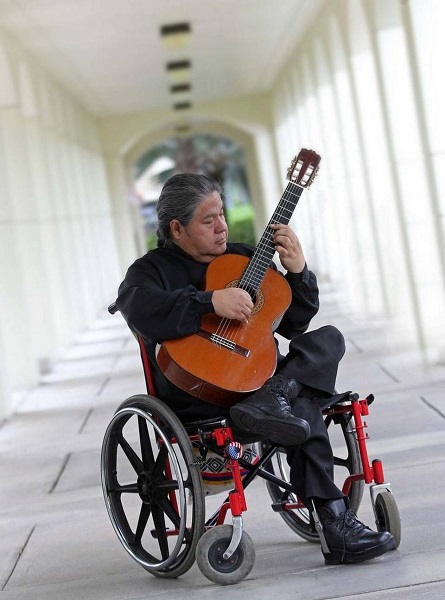
As always, we appreciate you sharing your insights and we’ve got a few more questions for you, but before we get to all of that can you take a minute to introduce yourself and give our readers some of your back background and context?
I’m Dr. Fabian Carrera, a classical guitarist, composer, music therapist, and music educator originally from Quito, Ecuador. My journey into music was anything but conventional. After surviving a life-threatening paralysis resulting from case of polio as a baby, I eventually regained upper body mobility and began walking with the help of leg braces after five years in an iron lung which breathed for me. Music became my refuge during years of social isolation resulting from my disability and the time commitment necessary for physical recovery—Nevertheless, these experiences later came to positively shape, my voice, my profession, and my calling.
My creative work focuses heavily on Latin American composers—especially those whose voices have been historically underrepresented in classical music. For example, the subject of my doctoral studies was the work of Maestro Carlos Bonilla Chávez, widely regarded as the Father of Ecuadorian Nationalistic Music. In March 2024, as part of these doctoral studies, I released the album Fabian Carrera Plays Carlos Bonilla Chávez, now available on Spotify. My discography also includes Guitar Forever (2003). These recordings reflect my commitment to preserving and elevating the musical heritage of Latin America through refined, heartfelt interpretation.
Beyond music, my performances and story have been featured in various media outlets—articles, interviews, and television segments—raising awareness about disability and celebrating my Ecuadorian roots.
Throughout my career, I have been honored with numerous awards, including the prestigious Artistic Merit Award from the Ecuadorian General Assembly (2020), recognition from Florida Governor Rick Scott for academic excellence (2018), the City of Miami’s Hispanic Pride Award (2018), Florida International University’s Worlds Ahead award (2017), and the Presidential Volunteer Service Award from the Obama Administration (2012).
What sets me apart is not just my training or technique, but the lived experience I bring to the stage and classroom. I have been mischaracterized, underestimated, and told I didn’t belong—but I persevered. That history informs every note I play and every student I mentor.
I am most proud when my work opens doors for others—when a student realizes their potential or when a performance connects deeply across cultural or personal barriers. For those who follow my work, I hope they see a commitment to originality, cultural celebration, and music as a transformative force.
Can you share a story from your journey that illustrates your resilience?
One story that best illustrates my resilience happened when I was a young child in Ecuador. After surviving polio and regaining upper body movement, I was eager to attend school like any other child. But because I wore leg braces and couldn’t walk unaided, I was misrepresented as cognitively disabled and denied access to a mainstream elementary school. Despite having no intellectual impairment, I was placed in a school for children with developmental disabilities simply because of how I ambulated.
My parents fought tirelessly to overturn this, challenging a system that confused physical disability with mental limitation. When I was finally admitted to a regular school, we faced another challenge: we had no wheelchair and no transportation. So my father carried me—literally—on his shoulders, six miles to and from school every day. Rain or shine, over hills and dirt roads, just so I could have the opportunity to learn.
Still, I was often left alone during recess since the classroom, on the third floor, was not accessible. Consequently, I couldn’t reach the playground where the other children played during recess. I spent many of those moments reading, imagining what life could be like beyond my current existence—dreaming not only of music, but of a world where I wasn’t defined by disability.
Then came sixth-grade graduation. I told a teacher I wanted to continue my studies. His response? “School is not for your kind. You should go shine shoes with the other cripples down at the bus station.”
That moment could have broken me. Instead, it fueled me.
I went on to graduate from high school, earn multiple degrees—including a Doctor of Musical Arts from the Frost School of Music—and now serve as a professor, performer, and advocate. That journey from being carried to school to standing on international stages and in university classrooms is, to me, the purest example of resilience—not just surviving, but reclaiming the narrative others tried to write for me.
For you, what’s the most rewarding aspect of being a creative?
The most rewarding aspect of being an artist is the ability to connect deeply—with others, with culture, and ultimately, with God. For me, music is not just a profession; it’s a calling. It’s a way to reflect beauty, tell stories of resilience, and offer hope in a world that often overlooks both the broken and the brave.
Every performance, every note, is an offering. I believe that the gifts I’ve been given—especially after surviving polio and facing so many obstacles—are not just for me. They are a testimony of God’s grace and purpose in my life. When someone tells me that my music touched them, or helped them through a hard time, I see that as a divine confirmation that I’m walking in my calling.
As a teacher, it’s even more rewarding to help others discover their own gifts—to watch students grow not just in skill, but in confidence and self-worth. I see every lesson as a chance to speak life, to inspire, and to remind others that they, too, are created with purpose.
Art for me is worship. It’s service. It’s gratitude. And it’s how I give back to the One who carried me when I couldn’t walk—literally and spiritually.
Contact Info:
- Instagram: https://www.instagram.com/fabiancarrera8869/
- Facebook: https://www.facebook.com/fabian.carrera.33
- Linkedin: https://www.linkedin.com/in/fabian-carrera-50a98414a/
- Twitter: https://x.com/Fabian_Carrera3
- Youtube: https://www.youtube.com/@gatocabrito
- Soundcloud: https://soundcloud.com/fabian-carrera
- Other: https://open.spotify.com/artist/2oWwAWGrIkqgcXD0MWeHtS
Image Credits
All photos courtesy of Fabian Carrera