



We’re excited to introduce you to the always interesting and insightful Evo Bluestein. We hope you’ll enjoy our conversation with Evo below.
Hi Evo, thanks for joining us today. Have you been able to earn a full-time living from your creative work? If so, can you walk us through your journey and how you made it happen? Was it like that from day one? If not, what were some of the major steps and milestones and do you think you could have sped up the process somehow knowing what you know now?
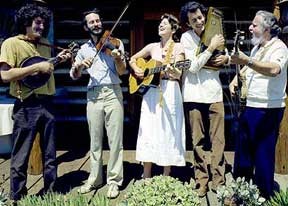
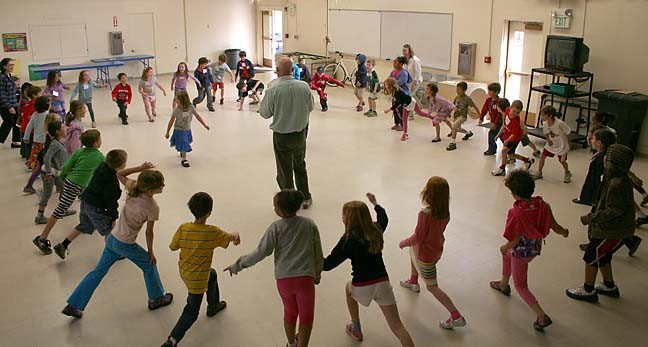
I have made a living in the arts for my whole adult life. I grew up in a folk music family–The Bluestein Family, eventually performing with my father and all four of his children. We performed in the U.S., France, Japan, and China. When I was a young fiddler I had a great time playing music with friends. It was a wonderful way to socialize, gain recognition, and it was also a natural way to start performing and sometimes get paid for playing music. I developed a lecture/concert to perform in schools. Every folk song and fiddle tune has history. After many years of performing around the U.S. and other countries I decided my school program should include working with students, not just providing a performance and leaving. I developed a week-long folk dance residency for schools. Normally if you go to a square dance there is a dance caller and a band. I decided to be both at once. It turns out I could do it! The first experiences were well received and I was asked to return again. I had a background in the multi-cultural aspects of American culture so I continued developing the program with activities for K-12th grade levels, I originally thought that the highest value had to do with the historical/cultural aspect of the program. I soon found out that equally important was the social aspect–teaching young people how to behave together on the dance floor and that it is a microcosm of the larger world. Folk dancing is a social activity requiring courtesy and respect for everyone.
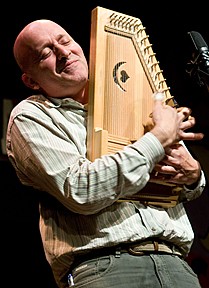
Awesome – so before we get into the rest of our questions, can you briefly introduce yourself to our readers.
My father, Gene Bluestein, was a university professor of American studies, folklore and literature. He was a folk music performer, influenced by Pete Seeger. He regularly brought America’s great folk performers to perform and teach in whatever community we were living. All four of his children benefitted from the experiences. It was natural that after hosting all these people throughout our young lives we would end up as performers ourselves. Because my father was a natural teacher, our concerts often had an educational approach. If you wish to include a diverse repertoire you have to introduce each culture in a quick and succinct manner. Programs included Cajun music, Appalachian, African American traditions, and songs from many other cultures. This prepared me for my own programs that would come later, drawing on the lessons learned from the many visitors throughout my childhood and the educational family concerts. We had many enjoyable times growing up and it is a great joy to share my knowledge with young people, both in schools and in a private lessons–teaching fiddle, banjo, mandolin, guitar, autoharp, dulcimer, bass, and piano.
Is there mission driving your creative journey?
I had many models to follow in the lifestyle of the traveling folk musician. An important transition for me was the decision to shift directions towards work in the schools as my primary focus. Having a father who was a great teacher was a helpful model, but I really developed my programs myself, based on my prior touring experiences, as if they were all the necessary preparation for my music and dance residencies. Humans need art. In my case, it is music and dance. The program has been so successful. I’ve been providing the music and dance residency for about thirty years and I still learn from it myself. Often, if a school has the program they will have it year after year. Everyone involved sees the benefits. This gives me drive to reach more and more schools (people). It builds a sense of community.
What do you find most rewarding about being a creative?
As an independent artist it can be difficult to attain a sense of security–not knowing when or where you next job will be. You don’t have a guaranteed income as you might in other “straight” jobs. However, “straight” jobs can leave you insecure too. As an artist, it is rewarding to know that I created the program and have ownership of it. I am not beholden to anyone else. I grew up surrounded by the arts and made it my life.
Contact Info:
- Website: [email protected]
- Youtube: evo bluestein
Image Credits
color photo of the Bluestein Family: E.Z. Smith autoharp photo: Michael Melnyk banjo photo: Michael Melnyk