

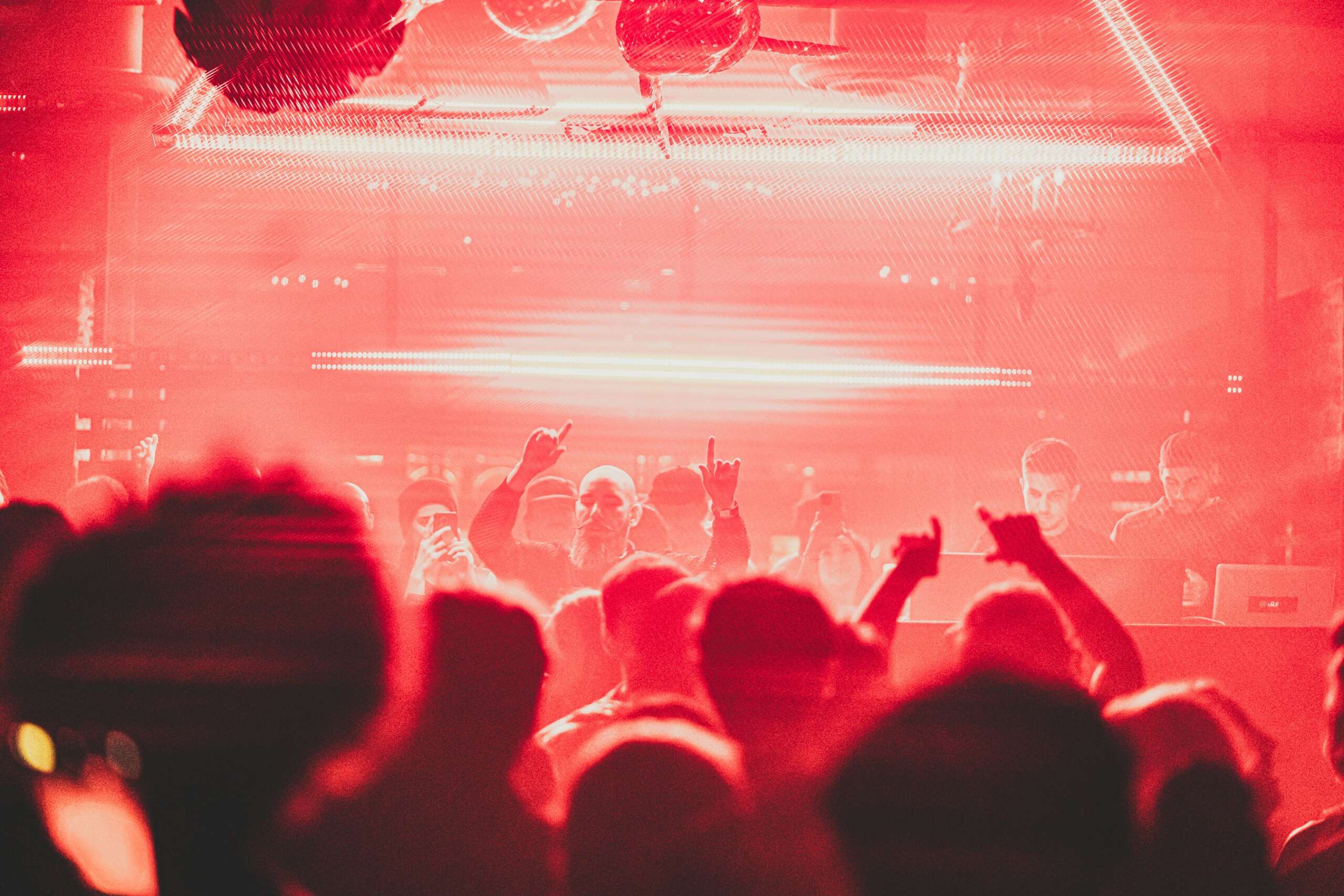

We recently connected with Eric Sharp and have shared our conversation below.
Eric, appreciate you joining us today. Can you talk to us about how you learned to do what you do?
I taught myself to DJ, and learned music production by collaborating with other artists. If I was starting out today, I would absolutely take music production classes. The learning curve for music production software is a steep one, and it took years for me to make tracks that I was proud of. I believe classes would have sped up this process. I think the most essential skills in my business are technical production skills, DJ skills, and marketing skills. I think my own stubbornness and desire to be a DIY artist stood in my way, as well as other artists gatekeeping their keys to success.

Awesome – so before we get into the rest of our questions, can you briefly introduce yourself to our readers.
My arc to becoming a DJ/Producer began on the dance floor, as I grew up breakdancing at clubs and underground raves in New England. I moved to San Francisco after college and became inspired to be on the other side of the turntables, so I began throwing my own parties and DJing in 2005. I was simultaneously working in sales and marketing which helped me have the necessary skills to build a brand.
The parties I was throwing were quite successful, and enabled me to build a name as a DJ. I then decided to try my hand at music production, and started doing studio sessions with close friends of mine. I began releasing music in 2009, and launched my own music label in 2010 which I ran for about 10 years before leaving it behind to focus solely on my own career.
From those beginnings I was able to build upon my skill set and resume. I’ve been fortunate to perform at many world renowned festivals such as Coachella, Outside Lands, Burning Man, Amsterdam Dance Event, South By Southwest, Life Is Beautiful, and Splash House to name a few. I moved to LA in 2012, which brought a lot more opportunity. In addition to nailing down a residency at the esteemed Sound Nightclub and making many guest appearances elsewhere, I was able to take on a lot of private and corporate clients such as Tao Group, Hakkasan, Delano Hotel Las Vegas, and more. My original music has also been used in a variety of media, including Netflix shows and films, a Fox series, and an anti-discrimination spot by Major League Soccer to name a few.
One of the things that sets me apart from others in my industry is the music and remixes that I produce. I also have the ability to read and connect with audiences in a wide variety of settings. Finally, I find that many artists after a few years become stuck in a specific sound and stop branching out and discovering new music. I work to remain open-minded and to keep things fresh and exciting instead.
I’m most proud of the positive message in my music, and of my intention to help people feel connected. This shines through in the music I produce and write, the DJ sets I perform, and the social media content that I share. I believe my purpose as an artist is to create positive vibrations that people can resonate with, and hopefully feel less alone in the world!
Is there mission driving your creative journey?
As a troubled teenager I found the most positive, uplifting, spiritual experience imaginable on the dance floor. For some context, I’ve been a recovering alcoholic and drug addict since I was 16, and getting sober was one of the hardest things I’ve ever done. I would go out and hear DJs and no matter what I was going through I would find solace in the music, and feel blissfully connected to the world and those around me. I have devoted my life to DJing and making dance music because I want others to have access to that same spiritual release that helped me so much.
We’d love to hear the story of how you built up your social media audience?
I’ve lived through several iterations of social media. Early on it was prototypes like Friendster and Tribe.net, which gave way to Myspace, then Facebook and Twitter, and now it’s primarily Instagram and Tiktok. Building an audience has changed as the technology has changed.
A couple of things have been of massive benefit over the years. First off, as someone who is my own product, I had to do the internal work of clearing any obstacles and limiting beliefs. For me this included hidden systems of thought that told me I didn’t deserve to take up space online and that my presence would be an annoyance.
In addition to clearing those obstacles, it was crucial for me to find a way to participate in social media that aligns with my purpose as an artist and a person. I’m not interested in sharing only a highlight reel of the best moments of my life. I believe the net effect of people doing that serves to make others feel bad about themselves, and also creates a false picture resulting in a disconnect between who we are online and who we are in real life.
I believe that in today’s social media landscape, authenticity rules. While difficult, being vulnerable and real online resonates more than anything else. It’s also crucial to become comfortable talking on camera. For someone starting out, I can’t stress enough the importance of being able to talk to your audience the way you would speak to a friend on Facetime. If you are consistent and authentic, you will find your audience!
Contact Info:
- Website: http://www.ericsharpmusic.com
- Instagram: http://www.instagram.com/ericsharpmusic
- Facebook: http://www.facebook.com/ericsharpmusic
- Linkedin: http://www.linkedin.com/in/djericsharp
- Twitter: http://www.twitter.com/ericsharpmusic
- Youtube: http://www.youtube.com/ericsharpest
- Other: http://www.tiktok.com/ericsharpmusic
Image Credits
Jeff Straw