We were lucky to catch up with Eric Delapenha recently and have shared our conversation below.
Alright, Eric thanks for taking the time to share your stories and insights with us today. What’s the backstory behind how you came up with the idea for your business?
After graduating USC in 2017, I started working at a biotechnology company in Los Angeles, helping to bring a consumer genetic testing platform to market. During my time there, I learned that people didn’t just want information, they wanted a personalized solution and began exploring opportunities in the beauty market.
I started to look at haircare and the approach to customization that brands were taking in 2018. They created quizzes that only used subjective, self-reported data to customize products like shampoo and conditioner. After taking these quizzes and not knowing how to accurately answer many of the questions myself, I saw an opportunity to build a better product and experience for the consumer using biological data. The entire industry was built on the assumption that the average consumer knows their hair and understands all of the factors that impact their strands. Instead we use the only tools we have, our sight and touch to inaccurately assess our hair and guess what it needs to look its best every day. This guessing game results in wasting money and time on buying products that don’t fit our individual hair needs…so many of us have a graveyard of untouched hair products sitting in our showers and cabinets.
Strands Hair Care was built in 2018 with the goal to provide hair care shoppers with a better way to shop and think about their hair, all starting with a new precision hair test. As scientists, we set out to design the perfect hair care experience beginning with a consumer-friendly, proprietary test that provides a true understanding of hair. Equipped with objective, biological data, we have ushered in a new era of effective, customized products for every hair type, ethnicity and lifestyle.
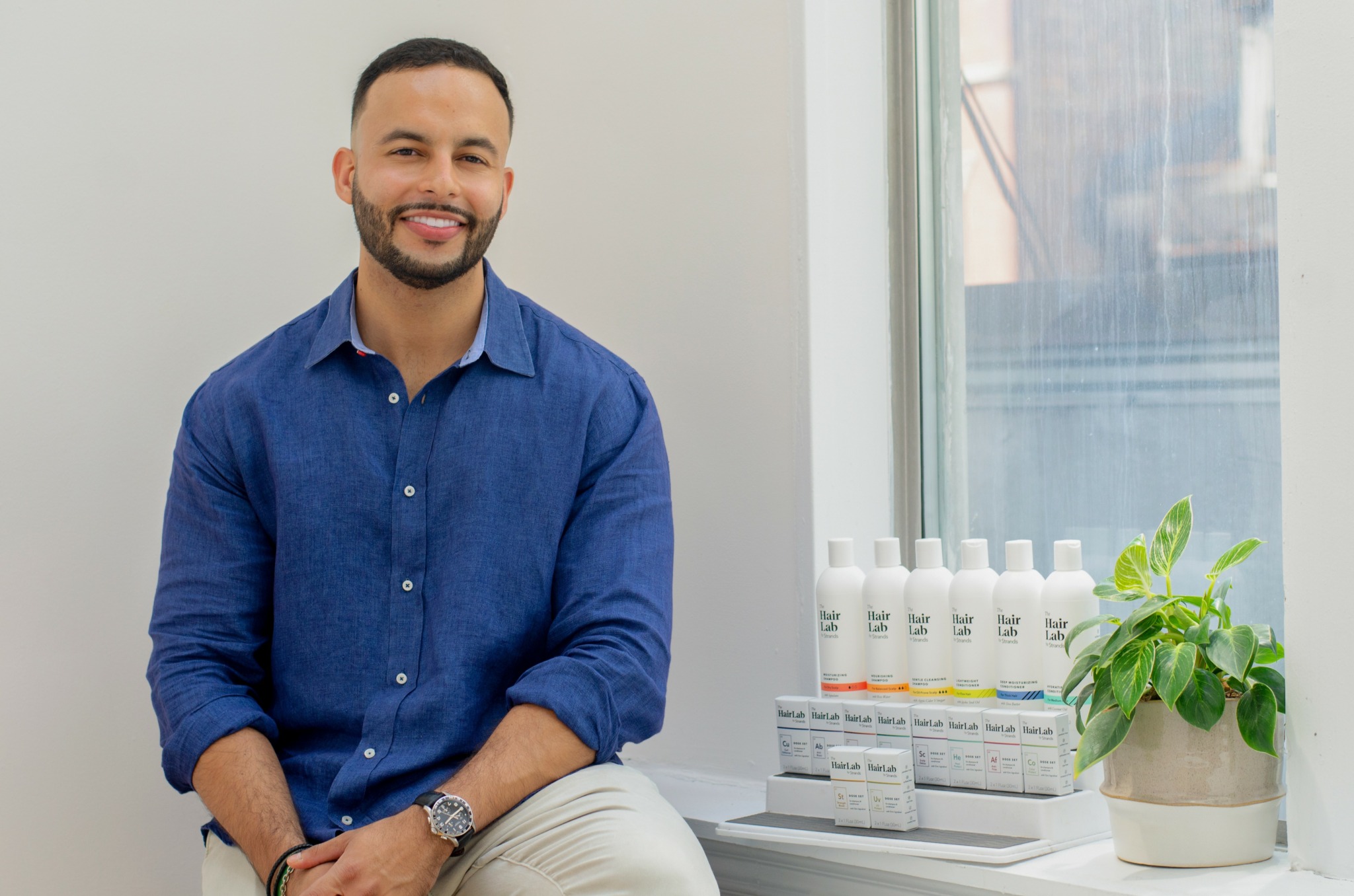
Eric , before we move on to more of these sorts of questions, can you take some time to bring our readers up to speed on you and what you do?
In 2020, after two years of development, we launched the Strands brand online, during the peak of the Covid-19 pandemic. With so many of us stuck at home, the timing of the launch combined with its unique approach made it an instant success. The test is done at home and then products are delivered to your door. It gives customers the ability to test their scalp oil levels at home, see their hair cuticle under the microscope for the first time, and ultimately co-create their hair care products that are individually filled at our lab in Los Angeles.
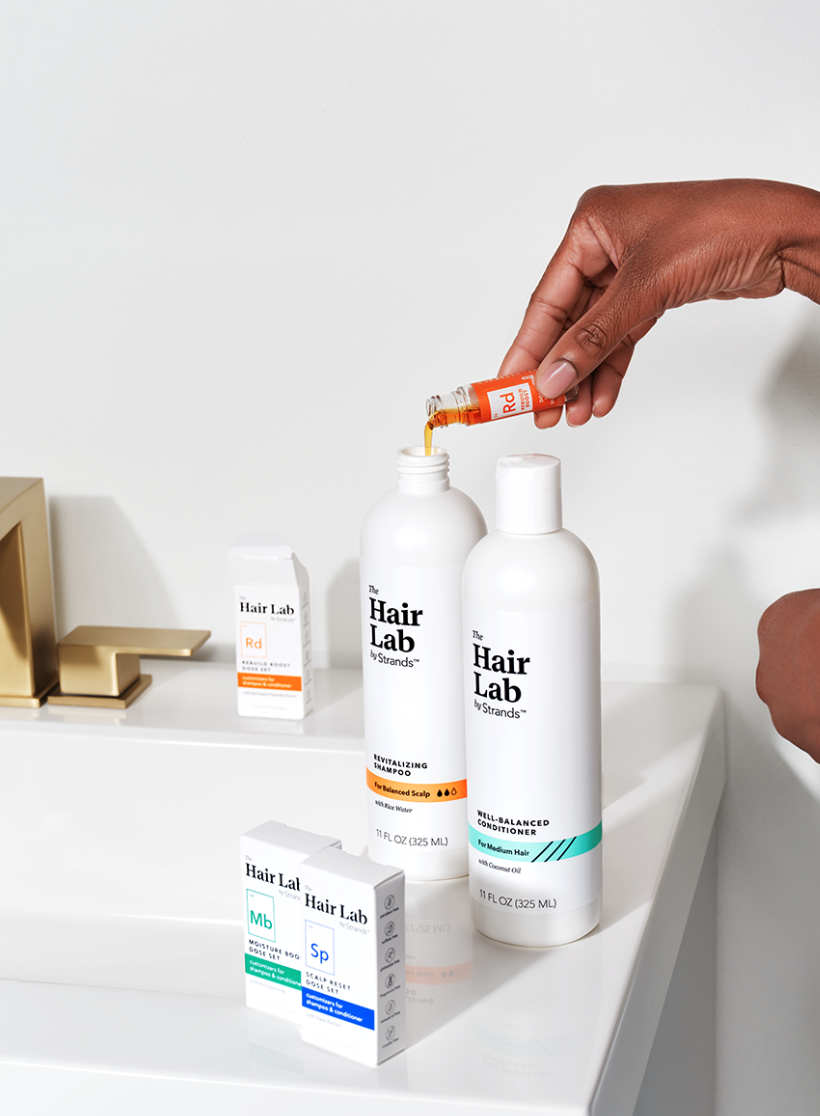
A few months after Strands launched, Walmart DM’ed us on social media asking to sell the Strands kits in their aisles. I honestly thought it was a joke at first! In our initial discussions with Walmart, I recognized that the Strands model didn’t meet the mass retail shopper’s needs – to have a customizable and accessible line of products that they can take home with them and use immediately after their shopping trip. That’s when we decided to partner together to create The Hair Lab by Strands
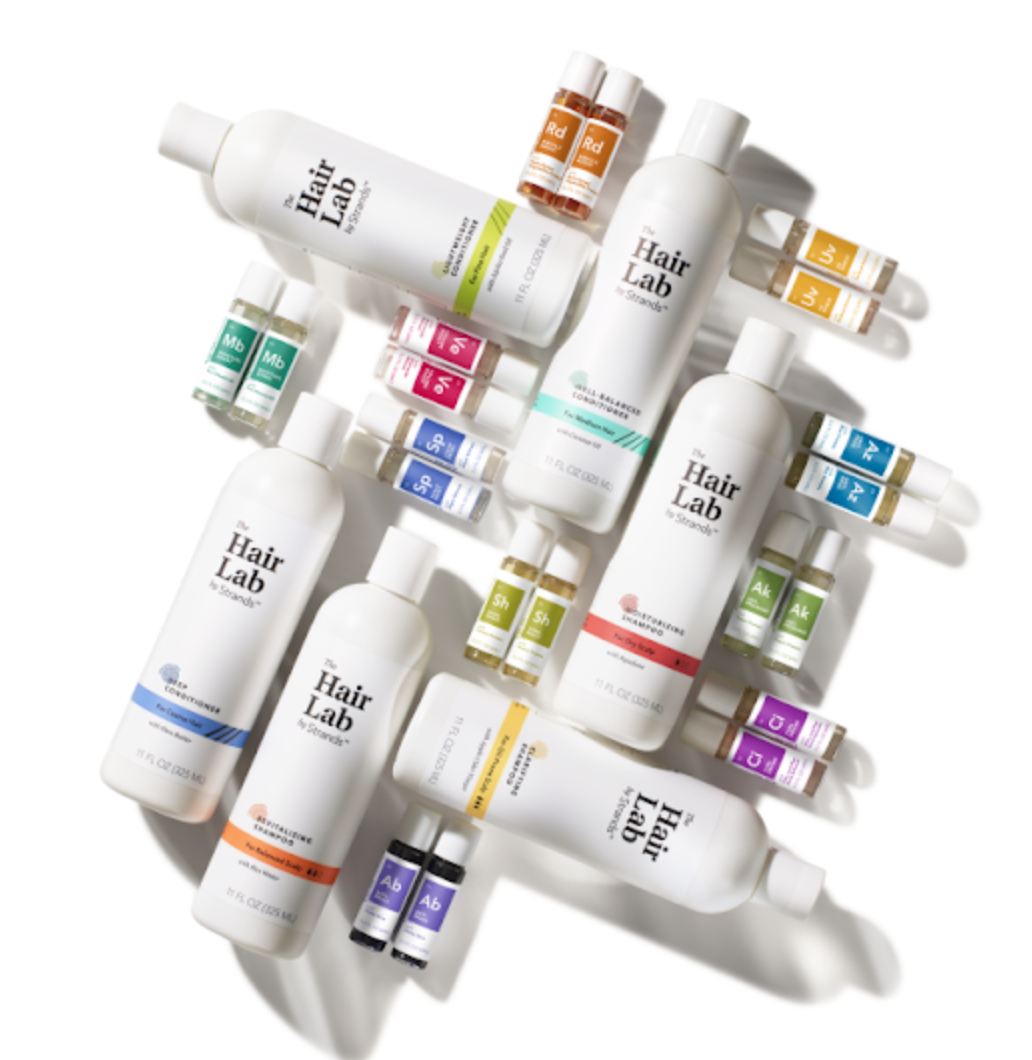
Unlike Strands where you need to test at home, send in your samples and then wait for your products to arrive in the mail, shoppers in the aisle can scan The Hair Lab QR code which takes them to our 2-minute AI diagnostic. Our AI diagnostic is equipped with the biological data and insights from Strands. Our customers’ physical hair and scalp test results is what powers The Hair Lab diagnostic and makes it truly customized. With The Hair Lab, shoppers can design their own customized routine from over 1,000 possible combinations of products – this can be very intimidating so our diagnostic simplifies the experience by referencing our proprietary biological hair database to come up with the perfect regimen. Upon completion, they select their personalized bases (shampoo, conditioner, leave-in conditioner and now scalp!) and up to three dose sets per base on the shelves to take home to mix themselves. The dose stickers can be applied to their base bottles so customers can remember their formulas when they run out.
The Hair Lab was considered one of Walmart Beauty’s “Big Bets” and launched in August 2022 under their first cohort of the Walmart Start Beauty Accelerator in 2,500 doors.
Any insights you can share with us about how you built up your social media presence?
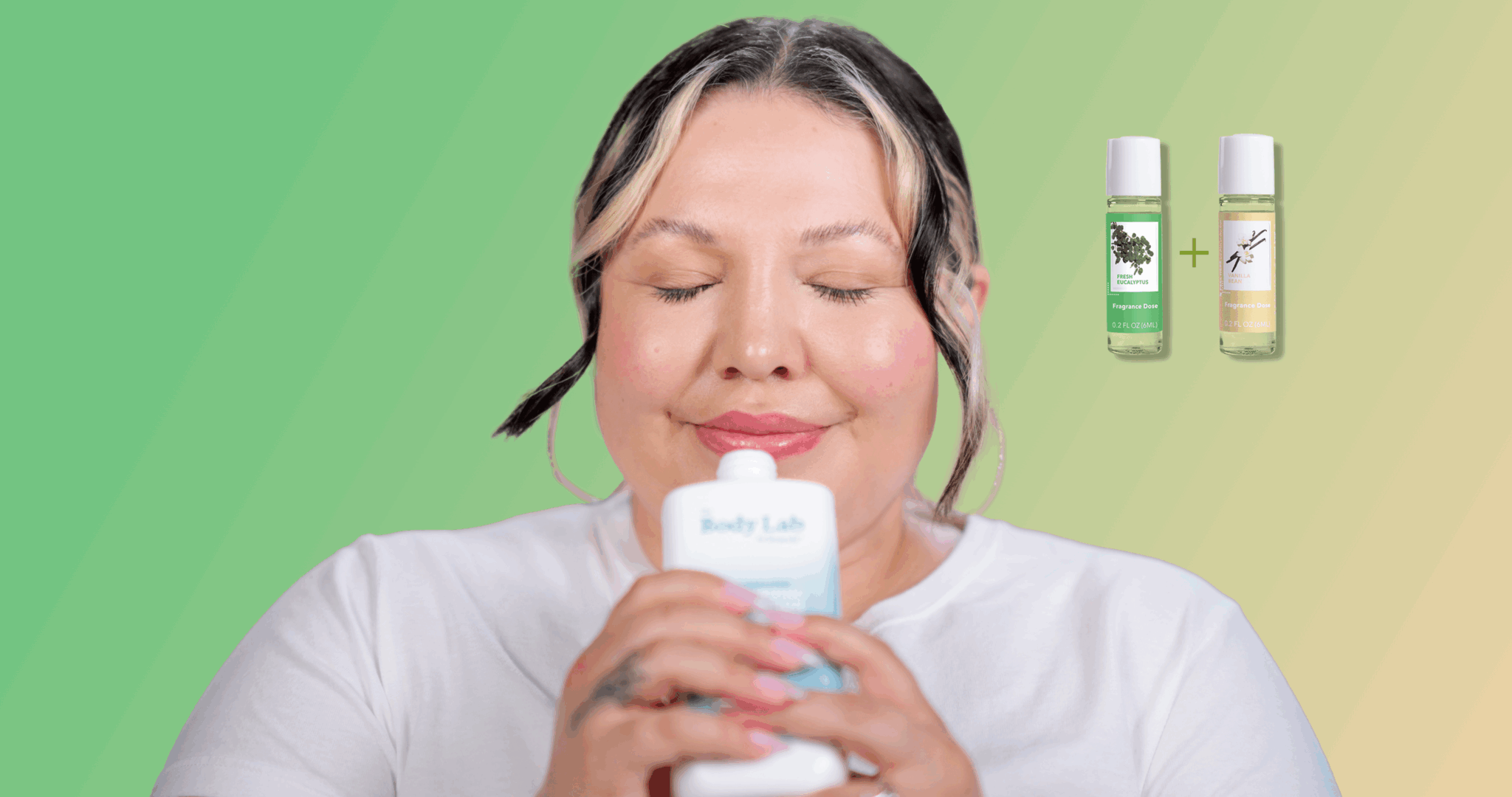
Over 50% of our consumer base is below the age of 25 so social media is central to our marketing strategy. Our team works with nano to macro TikTok content creators spanning young moms, families and trend-forward Gen Z’ers across the US where the brand has a strong retail presence to create fun, educational content. These real women speak peer to peer with their audience, typically after completing a shopping trip, demonstrating how the products work and the act of customization, which is typically a new concept to their followers. Another reason why the brand has seen success on TikTok is because of the products themselves and how demonstrable/fun the customization by mixing process is.
Some of our most successful partnerships are of families buying their individual doses/bases, then demonstrating the customization at-home to compare and showcase how different their hair needs, results and Hair Lab formulas are.
When the brand launched in 2022, it was a process of trial and error to identify the right influencer partners. Initially, we worked with traditional beauty influencers in coastal, metropolitan areas but their audiences were already saturated with branded beauty content. That was until February 2023, when Arkansas-based creator @still.bad.decisions posted organically about the brand after her shopping trip. Her post resulted in 765K views and a large spike in sales. That’s when we realized we were speaking to the wrong customer and pivoted our approach to where we are now. As a result, we have generated over 25 viral videos and 30 million + views on TikTok in 2023. We’ve also seen 2x – 3x surge in sales in 2023 as a direct result of our TikTok partnerships.
We’d love to hear a story of resilience from your journey.
Launching in Walmart was my first experience in building a retail presence for our brand. And launching in 2,500 doors is a risky bet for a new brand. In the not-so-distant past, typically brands will grow their audience online, have a clear understanding of their target consumer and then launch in retail to ensure the right product market fit. When we launched we had no data, other than that the retail consumer wanted customization and we could deliver it to them.
Traction was slow in the first few months after we had invested millions into the launch as an early-stage company, which put our team under a lot of stress. Ultimately we were able to navigate the friction points that existed at shelf, refine our messaging and targeting by understanding how to talk about customization in the mass market, and scale quickly to meet and exceed the turn rates of our retail partners.