



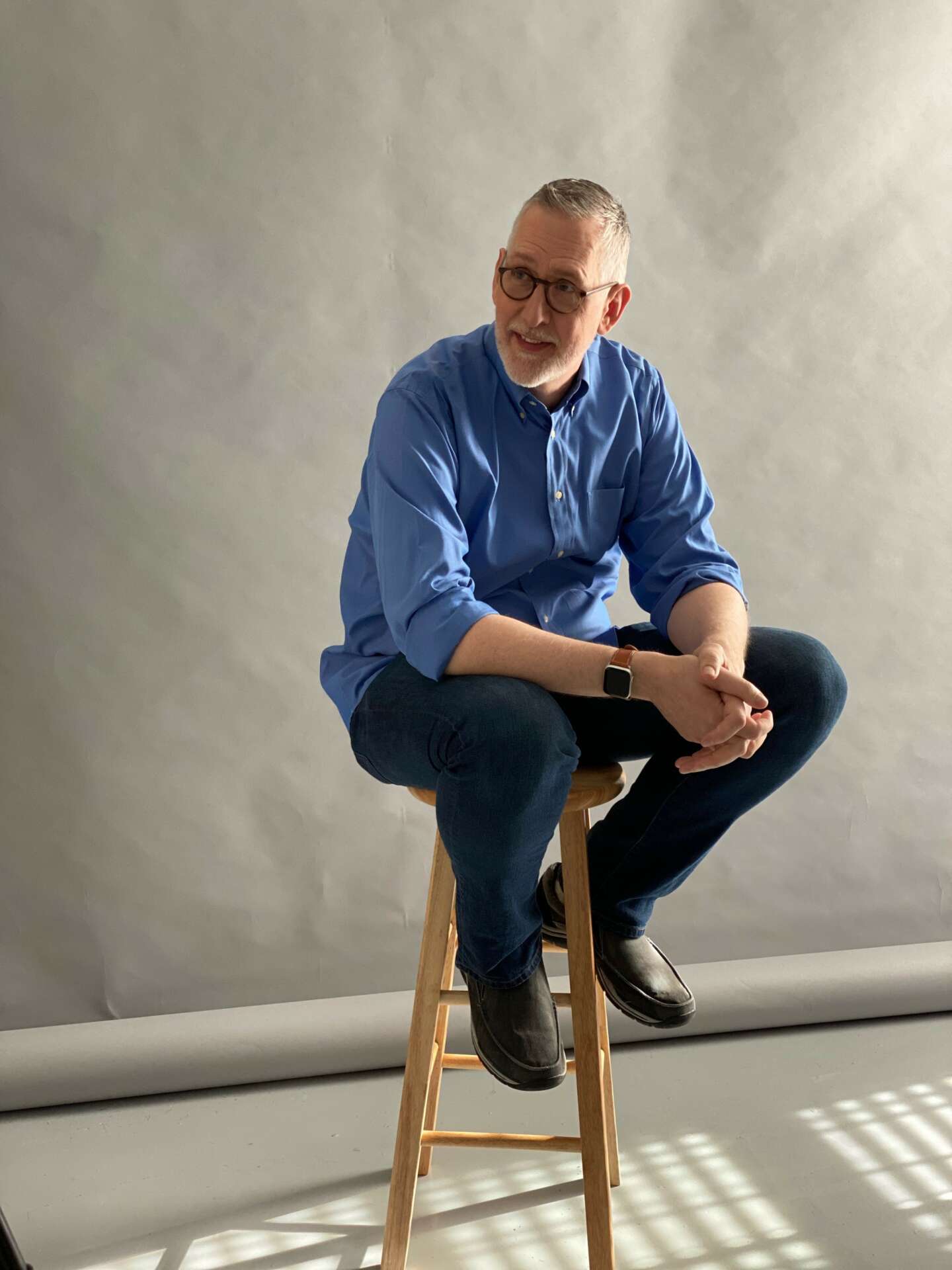
Alright – so today we’ve got the honor of introducing you to Eric Brown. We think you’ll enjoy our conversation, we’ve shared it below.
Eric, thanks for joining us, excited to have you contributing your stories and insights. We’d love to have you retell us the story behind how you came up with the idea for your business, I think our audience would really enjoy hearing the backstory.
I started freelancing as soon as I got out of art school. I had a dual degree in graphic design and illustration. Like all new artists in the field, I took whatever jobs came my way. I did collateral packages for start-ups, illustrations for a trophy company, training brochures for Hilton Hotels, design and mood boards for Sea Ray Boats’ corporate aviation, and more. I moved to Atlanta, Georgia, to broaden my portfolio of clients and found myself getting offered a job as senior designer for a local non-profit. Little did I expect to work there for over fifteen years.
As I look back, I believe what kept me there were new challenges to learn and grow in my creative career. I moved from designer to Art Director as we built up the staff. From Art Director, I moved to Creative Director and then Digital Director in the very early days of the Web. It was the online Wild West back then. There was a lot of creative freedom, but one thing I noticed was that during the transition to digital work, I was exposed to a whole other breed of creatives.
I remember hiring my first developer. She came from Hewlett Packard and was a powerhouse, but we were different. Not only were our temperaments different, but our ways of working were as well. She came from a fast-paced independent delivery culture, and I had been in a slower collaborative creative culture. We had trouble with communication and expectations. Unfortunately, she got frustrated and left a year later. During that year, however, we grew the website customers in leaps and bounds. Yet, after the developer left, I felt like a leadership failure. I wanted to learn and understand what happened and grow from the experience.
I was asked to leave the graphic design department and start up a new digital department. “Wait. What?” I thought to myself. “I am not equipped for this.” I had a friend tell me: leaders are learners. I also believe that creatives are learners. We are insanely curious. It was that curiosity and the discipline to learn from all kinds of sources that I was able to build a new department. I had a blast!
While I enjoyed the journey and learned a ton, Creatives Lead is the book I wish I’d had. It’s the coaching tools and leadership tips so many creatives don’t have when they’re promoted to managerial and leadership positions.
Years after I built the digital department of the nonprofit, I was promoted to a Vice President role with three departments reporting to me. I had other people in the organization that wanted to work in our area because we had a reputation for getting the work done fast, in a creative fashion, all while having fun. I had put some processes in place and I felt I was on to something. Then a year later, a new COO was hired who wanted to take the organization in a different direction, and I found myself without a job.
That was a tough time, but what I remember was my old team and other peers within that organization calling me over the following six months. Some asked where I was working because they wanted to work with me again. One leader who had been put over a creative team asked how I led creatives because they were used to leading in non-creative areas. These conversations led me to start working on Creatives Lead. I have a passion to help creatives grow and excel. I want to help other creatives learn what I learned in a shorter amount of time. Creative leaders are busy, and that’s why I wrote the book to be so practical and easy to apply to your day-to-day work and team building.
Throughout my career, I have interacted with creatives from a variety of disciplines. Almost every creative I have met aspires to evolve their craft and their role. Leading creatives is not a one-size-fits-all methodology. We are all unique and approach our craft differently. As I have taught and mentored creatives, I heard their desire to grow into leadership roles. I believe we need creatives in more leadership positions because of the way our brains work. Creatives see the world and their work in a different way, but because a lot of us are introverted, we are not seen as leadership material. Unfortunately, some creatives have taken an unhealthy attitude that they have to bowl over those around them in order to be heard. On top of that, corporate jobs seem to reward this behavior. Bullying and brash behavior is not the way to get noticed. But it happens. That’s why Kim Scott founded her company Radical Candor, to help rid the world of bad bosses. I wrote and developed a framework for Creatives Lead (book of the same name), because I wanted to share what I had learned and applied successfully over the years. It’s important that creatives understand they don’t have to bully their way to the top. The Creatives Lead framework shows us a different way, one that’s more aligned to how so many of us are wired. It’s been exciting to see creatives put it into practice and thrive.


Eric, love having you share your insights with us. Before we ask you more questions, maybe you can take a moment to introduce yourself to our readers who might have missed our earlier conversations?
As the owner of a design boutique, I consulted for brands across the U.S., including Rockwell Collins, Hilton Hotels, Chick-fil-A, CDC Software, Sea Ray Boats, GeoLearning, Lucent Technologies, and more. I was an Information Architect Supervisor at UPS and currently work with State Farm as an Experience Lead, Strategist, and Journey Management coach. I am also the author of Creatives Lead and a new book coming out in January 2024 called Creatives Talk Experience. I’ve been honored to be both a featured conference speaker and moderator. You’ll find more of my written work on leadership and creativity on my blog at creativeslead.com.
Having been in leadership for almost three decades, I am ardent about helping creatives transition from individual contributors to leaders. Because creativity is a major differentiator in today’s business landscape, I believe that more creatives should sit in leadership positions.
Throughout my creative leadership career, I have honed the craft of building high-performing, multi-disciplinary creative teams. I’ve worked across mediums and industries. I’ve held nearly every role available in the creative department: art director, digital director, e-learning designer, experience architect, and digital strategist. I remember—fondly, now—the fears I had as a new leader; among many lessons learned I have found the most critical one to be “adapt and change.”
That’s why I am passionate about helping next generation leaders. I want to pass along what I learned on my own journey to help more creatives land leadership roles—and more than land them, I want them to excel in building successful teams who work well together.
On a personal level, my work and life have taken me all over the U.S., landing me in the Southeast, where I live with my family today. I love the balance I find here; my family and I enjoy the fast pace of city life, the beauty of the mountains, and the serenity of the beach. My passion to learn extends beyond my vocation. I received a black belt in Isshinryu Karate from Grand Master Angi Uezu and was a private instructor for several years. Other passions that motivate me are creative career coaching, mentoring, and guest lecturing at General Assembly Atlanta. Being a learner at heart, I have varied interests in music, cuisine, reading, writing, percussion, and painting.

Have you ever had to pivot?
I grew up in a military family. As a result, I saw a lot of change every five to seven years as our family moved around the country. This makes change much easier for me than others, and it never occurred to me how much a difference it made until I married my wife. She grew up in the same household in the same city until after college when she moved to Atlanta. She was used to stability. Then I came along. I’m this guy who learned to grow up in a more chaotic environment. Seeing how she struggled with change helped me have more compassion for those who hadn’t had to learn to adapt and grow as much as I had.
I believe my upbringing and all the forced transitions I endured, coupled with being creative, has allowed me the opportunities to change my career path more easily than some creatives. I have done several stints in radio and television production as well as 3D animation on top of my regular day job. I always tell other creatives to keep doing freelance projects outside of work (as long as it does not interfere with their regular job). It is a great way to keep the creative juices flowing and to explore other mediums than what you are used to working in.
As a result of this, I have made several career pivots over the years. As the idea for Creatives Lead began to germinate, I moved from interactive web design into blended learning and training. I did freelance e-learning design with a company called TiER1 Performance Solutions until they hired me as a remote resource. After working for TiER1, I saw UX Design as a new opportunity.
That was in 2009 when the economy had gotten soft and hiring had tapered off. At the same time, many designers had started calling themselves UX Designers and I knew many were lacking in senior skills and competencies. So, I stepped back and looked at the skill sets that I had developed over the years. I had both design and information architecture chops from my early web design days.
After talking with a coach, I decided a certification from a prominent and respected international UX company would help my career. I got my certification through HFI and have not regretted it since. My career as a senior practitioner immediately launched. Nowadays, I see more and more roles for senior practitioners. Some don’t feel like they need coaching, and they tend to jump from job to job every three years. Unfortunately, their reputation is one of incompetence because they are not willing to look at how they can change and grow. For the leaders who do seek out help, mentoring, and coaching, they find that head hunters are quick to not only hire them, but also offer them better compensation and leadership positions. I saw in my own life how my motivation to learn and adapt helped me. I’m happy to help others do the same.


Learning and unlearning are both critical parts of growth – can you share a story of a time when you had to unlearn a lesson?
One lesson I had to unlearn was in regard to communication. As I moved into leadership, I had a knack for connecting work, thoughts, and ideas. To me it was common sense. I have come to learn that not everyone shares that sense. I distinctly remember being in a senior leadership meeting and problem-solving with the executive team. After hearing from many in the room, I saw some connecting points. I threw out an idea, and everyone looked at me with blank stares.
After 20 more minutes of conversation, another executive voiced what I had thrown out earlier. It was like a light bulb went on in everyone’s head. I remember leaning over to the COO and saying, “Didn’t I say that twenty minutes ago?” To which he responded, and I will never forget, “Yeah, it just took them twenty minutes to get it.” I share that to say, don’t be discouraged when others do not get your thoughts and ideas. But, as a result of this meeting, I did need to unlearn a couple things. The first was to not assume my communication style was the same as others. While I have a level of comfort in ambiguity and ideation, others do not. I had to recognize others’ need for facts and data to help them see the connections that came easier to me. My second “unlearning” through that experience was to pick up a new skill. I needed to learn and practice speaking the “language” of others. If I had not learned this, it would take longer than needed to communicate with those from another temperament. Creative right-brainers see the world differently and make connections quickly that others do not see. Don’t let it frustrate or embarrass you. Keep putting your thoughts and ideas out there—we need you to do that! And, we need to do it in a language our audience can understand.
Contact Info:
- Website: http://www.creativeslead.com
- Instagram: https://www.instagram.com/creativeslead/
- Facebook: https://www.facebook.com/groups/creativesleadbook
- Linkedin: https://www.linkedin.com/in/erichbrown/
- Twitter: https://twitter.com/eweirdguy
Image Credits
Mr. Jeno Uche, Lisa Hale, Sharon Brown