

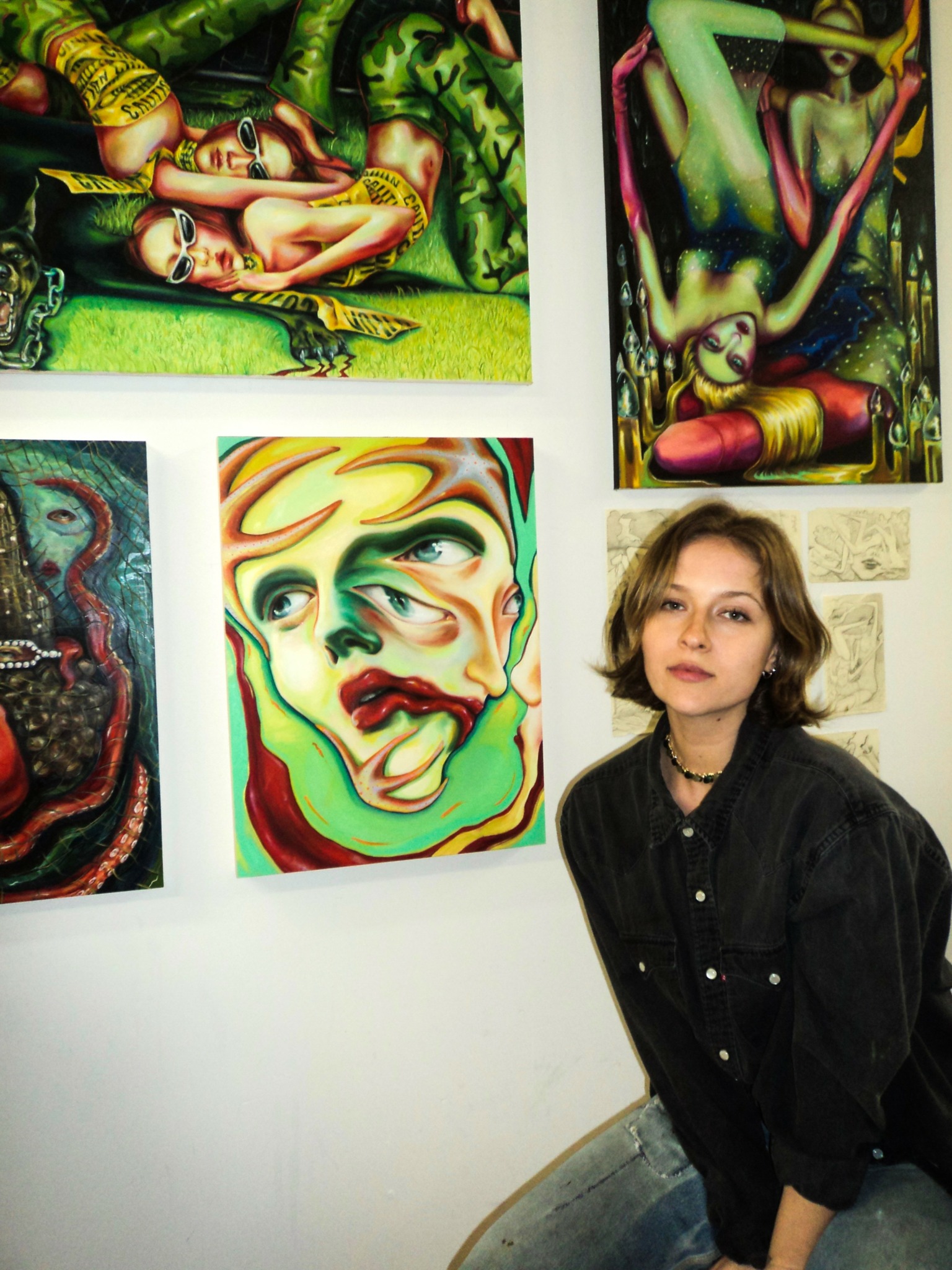

We’re excited to introduce you to the always interesting and insightful Emma June Jones. We hope you’ll enjoy our conversation with Emma June below.
Emma June, appreciate you joining us today. It’s always helpful to hear about times when someone’s had to take a risk – how did they think through the decision, why did they take the risk, and what ended up happening. We’d love to hear about a risk you’ve taken.
The greatest risk I ever took was the day I moved to New York City. I had just graduated from the Savannah College of Art and Design, holding an illustration degree, a suitcase, and only a few bills tucked into my pocket. I landed in the East Village with the stubborn belief that within a month I’d find work and make it all come together.
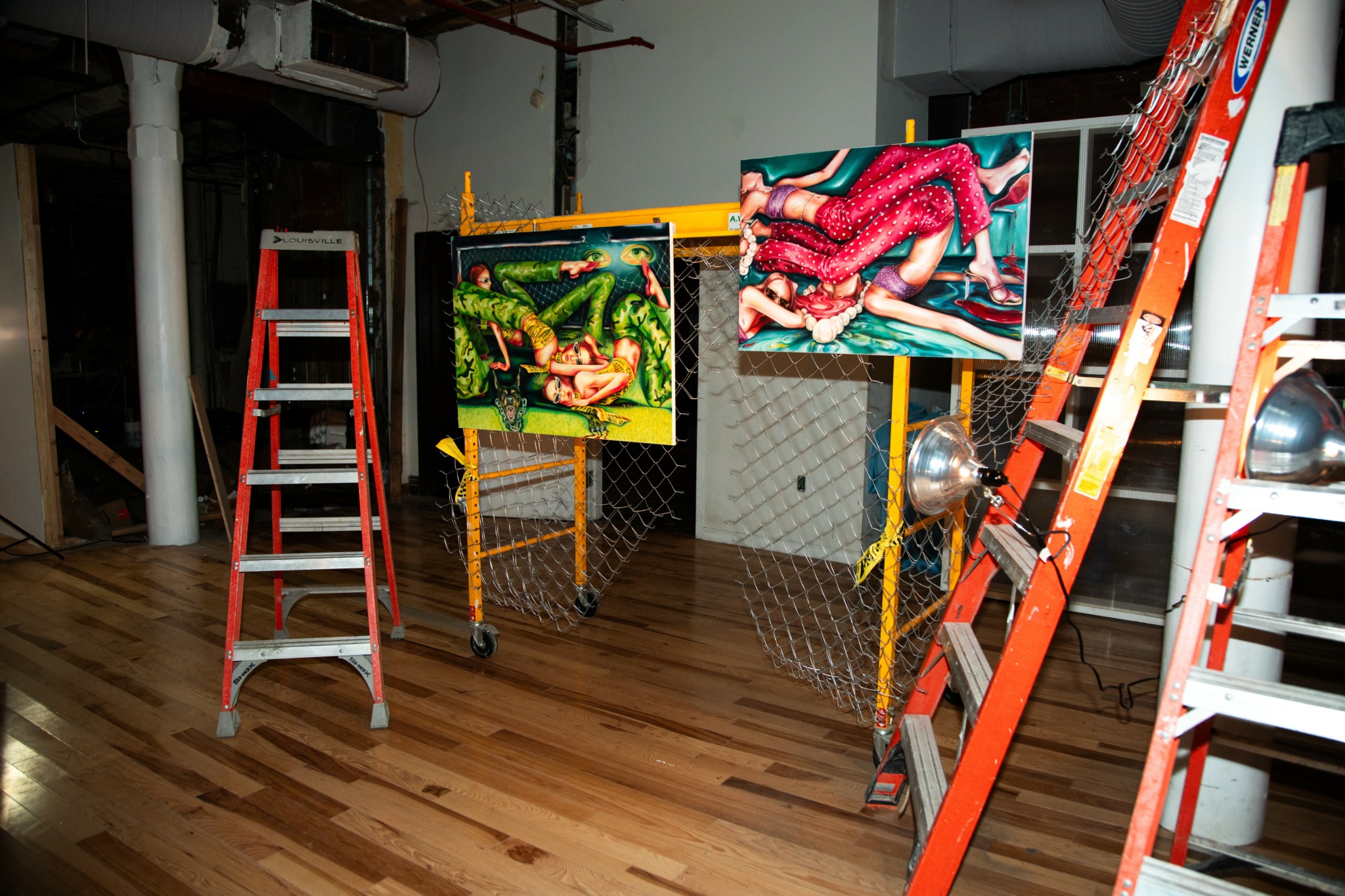
But New York had other plans. Time here moved differently, stretching me thin. The hundreds of resumes sent in to any job I was remotely qualified for never came to be, so I worked odd jobs to stay afloat. Eventually, I moved into an artist’s studio—a place that became a threshold. In that small, shared makeshift space I prepared two paintings for my first New York exhibition curated by a woman I had reached out to in search for a job, she had another plan for me, and in that moment, a door opened. I began to find my place within the scene, meeting artists, learning what it meant to put myself out there and showcase my work. For the first time, I saw strangers in New York, taking their phone out to take pictures of my work, and at the end of the opening, chase me down the street to talk about purchasing my work.
That studio was the seed. From there, I stepped into the maze of galleries: first unpaid internships, including one in a toxic environment that nearly drained me, then slowly into the gallery where I now work full time. Every chapter has been stitched together by risk—by saying yes to jobs that don’t pay well, but knowing their is something there for me in the connections, by standing in rooms where I felt invisible, talking to people who could care less to see my work just by looking at me, by choosing to keep showing up to each opportunity knowing that one meaningful relationship will open a door.
I have gone to every opening that called to me, each time carrying the quiet hope that my presence, or my work, might spark connection. Sharing paintings with strangers has been its own gamble—laying bare the most vulnerable parts of myself, waiting to see if someone else might feel what I feel. Each time, the risk is the same: will they see me, or will they turn away?
More than anything, I’ve risked belief. Belief that one day my paintings will be seen and loved, belief that the hours and sacrifices are not in vain. Every artist knows this risk: to create something so personal that it becomes inseparable from who you are, and then to release it into the world to be judged. My art is me, and each painting grows its own meaning as time unfolds.
The risks haven’t just been artistic. I’ve risked leaving family behind, choosing solitude in the largest city in the country. I’ve risked my health, my stability, my finances. I’ve endured the ache of losing family members from afar, unable to be present, because I chose this path. I’ve risked the comfort of certainty in exchange for the unknown—believing that somehow, New York would shape me into the artist I wanted to become.
And despite it all—the struggle, the uncertainty—I still choose risk. Because every risk has carried me closer to the life I am building: a life in art, a life in this city, a life stitched together by the stubborn belief that it is worth it.
As always, we appreciate you sharing your insights and we’ve got a few more questions for you, but before we get to all of that can you take a minute to introduce yourself and give our readers some of your back background and context?
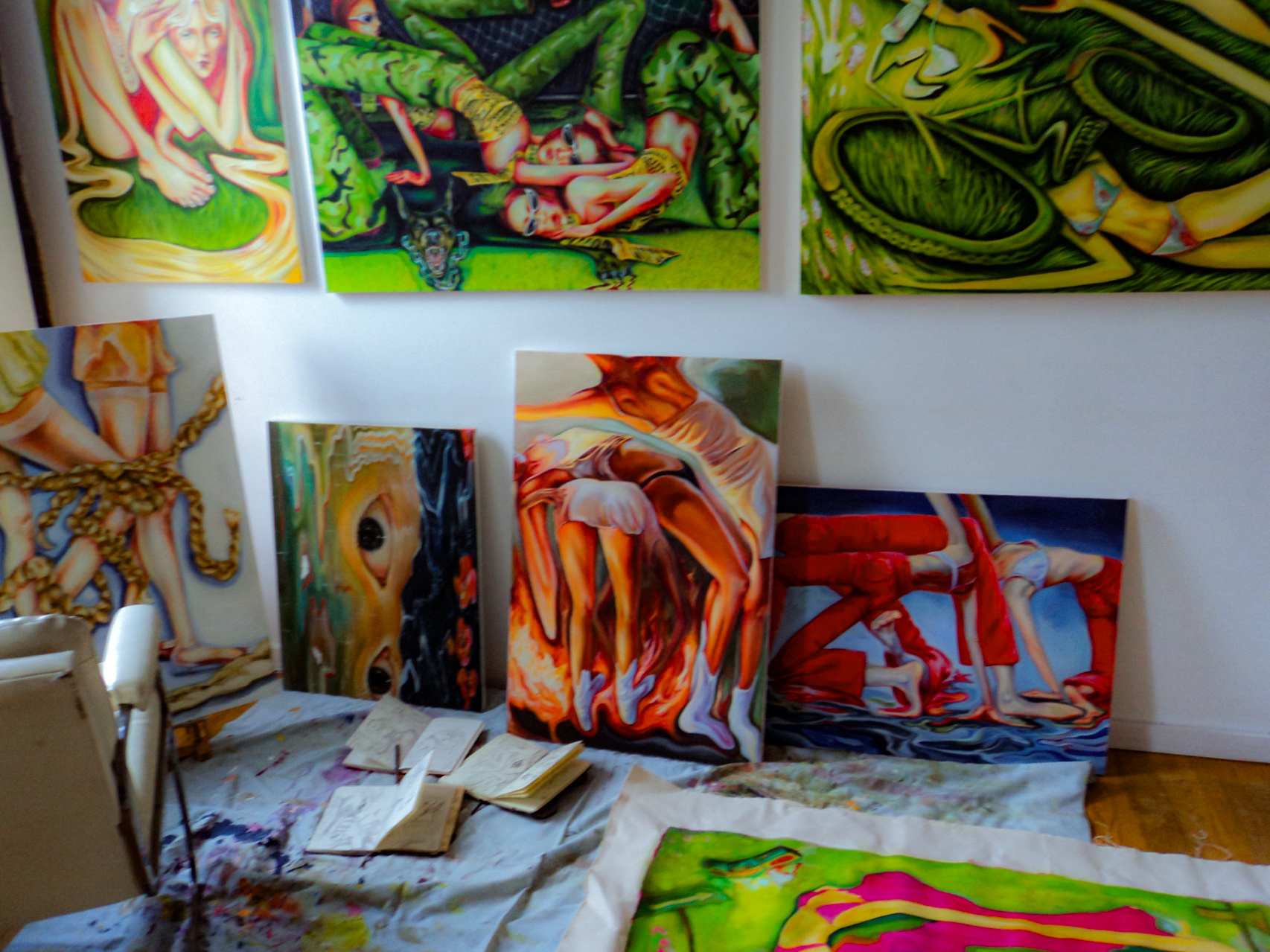
Emma June Jones (b. 2000, Chicago, IL) is a painter based in New York City. I earned my BFA in Illustration with a minor in Art History from the Savannah College of Art and Design in 2023. Working primarily in oil, I build dreamlike, distorted figures that navigate the psychological terrain of contemporary womanhood. Bodies press into tight, often claustrophobic spaces where animals, objects, fashion, and color double as stand-ins for identity, desire, and unease.
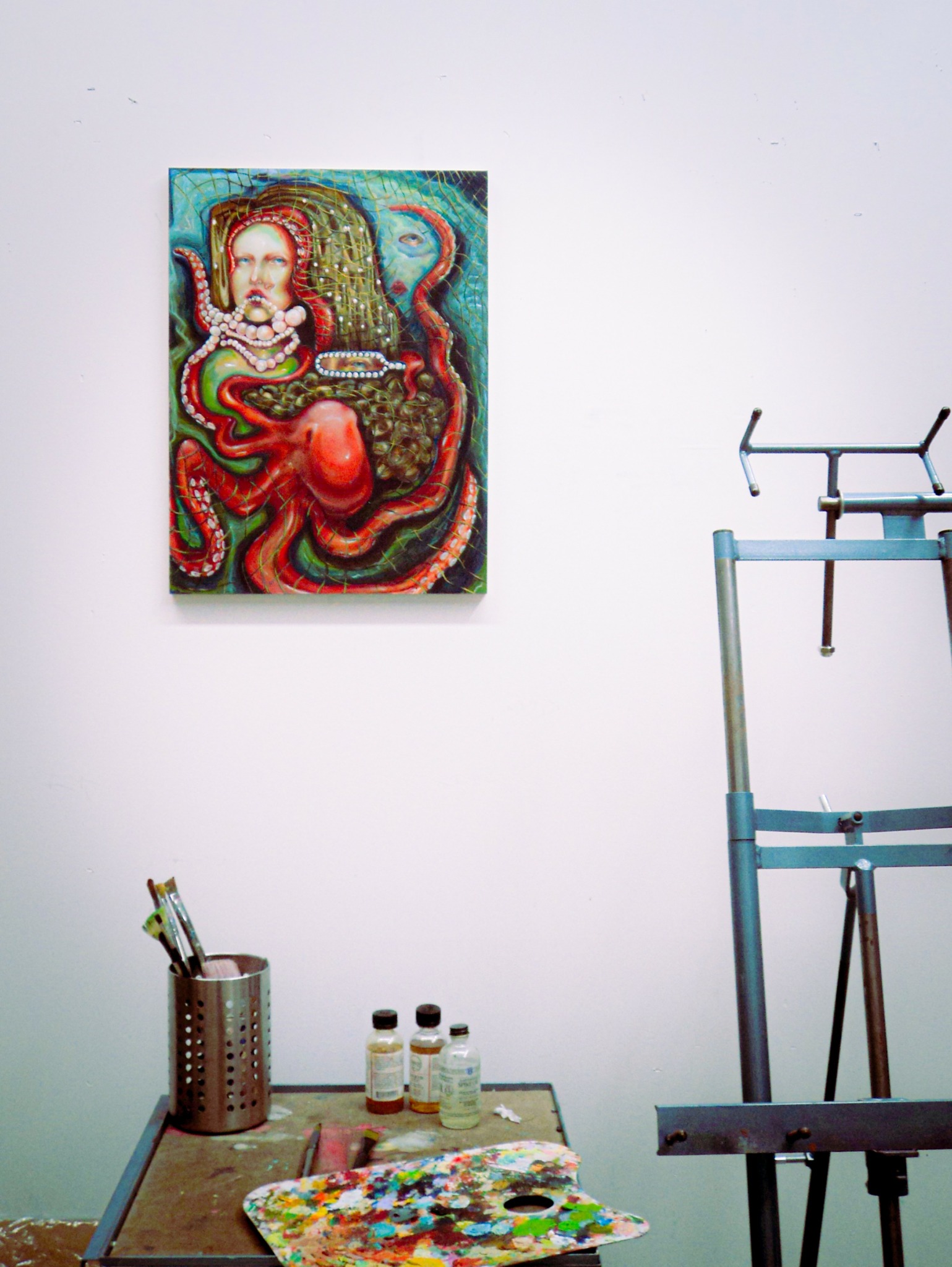
My process begins in the sketchbook—an intimate diary where drawing captures fragments of thought, invisible friends, and the emotional residue of an unstable upbringing. These sketches, raw and unfiltered, often multiply into scenes where internal voices appear as figures of their own. From there, they evolve into larger compositions, holding onto their immediacy while stepping into more concrete scenarios with colors that give the painting a time, place and feeling. Much of my work reflects my personal history, especially the complexities of growing up with a twin in a household marked by substance abuse, neglect, and loss. These origins feed my exploration of a psychological multiplicity, where figures are both self and other, voices layered within one body.
Since moving to New York, my paintings have taken on new urgency—charged with spontaneity, performative gesture, and sharper emotional clarity. My recent works open into wider spaces, where humor and discomfort coexist and surreal figuration unfolds with theatrical force. Symbolic objects, exaggerated limbs, and shifting scale act as mirrors of interior states. The narrative is never distant—it is lived. Lover, friend, twin, family, and self all blur together, appearing not from reference but from obsession, memory, and the moment at hand.
What can society do to ensure an environment that’s helpful to artists and creatives?
That’s such an interesting question. From where I stand as an artist in New York, I see a few things happening at once. On one hand, America’s economy is in a rough place right now—most young people I know are living on very little, just trying to make ends meet. That makes it hard to think about investing in original art.
At the same time, there’s also this cultural urgency, this constant need to have something now. I see people filling their walls with quick prints pulled from Pinterest, in the same way fast fashion or “fast furniture” has taken over—cheap, disposable, meant to last only a year or two. But I think art is the opposite of that. A painting, a sculpture, even a drawing—these are things you live with, grow with, and never really get tired of. Saving up for something that truly speaks to you is worth it, because it’s built to last and it holds meaning.
Loving an artwork also means supporting the person behind it. When you buy directly from an artist, or through a gallery, you’re investing in their future, and in the community that sustains them. Beyond purchasing, support can be simple: go to gallery shows, talk to artists, share their work on social media, tell your friends. Word of mouth still goes a long way.
And honestly, a lot of emerging artists are willing to work with collectors on price. Sometimes it’s about finding a number that feels possible for both sides, because at the end of the day, artists want their work to live in people’s homes, not just in storage.
For me, the most important thing is slowing down—really looking, spending time with art, and choosing something that resonates on a deeper level. That’s where the connection starts, and that’s what lasts.
Can you share your view on NFTs? (Note: this is for education/entertainment purposes only, readers should not construe this as advice)
I get a lot of people reaching out to me about NFTs, and honestly, I think it’s frustrating. For me, it strips away so much of what art is about. You lose a lot of your rights when you sell your work that way, and in many cases you’re handing over control to platforms that don’t have the artist’s best interests at heart. On top of that, I think it risks your credibility in the fine art world, where so much of the value is tied to authenticity, materiality, and history.
The NFT market has also been incredibly unstable—it feels more like a speculative bubble than a genuine way to support artists. I’ve seen people treat it more like gambling than collecting, and that doesn’t build the kind of lasting relationships between artists, collectors, and galleries that the art world depends on.
And then there’s the environmental impact. A single NFT transaction can burn through an absurd amount of energy, which feels reckless at a time when we should be thinking about sustainability and our footprint as creators.
For me, art is about presence—seeing a work in person, living with it, experiencing its physicality over time. NFTs reduce that to a digital token, and I just don’t believe that has the same weight. I’d rather someone save up for a real piece of art they love than invest in something that only exists on the blockchain.
Contact Info:
- Website: https://www.EmmaJuneJones.com
- Instagram: @Emma.June
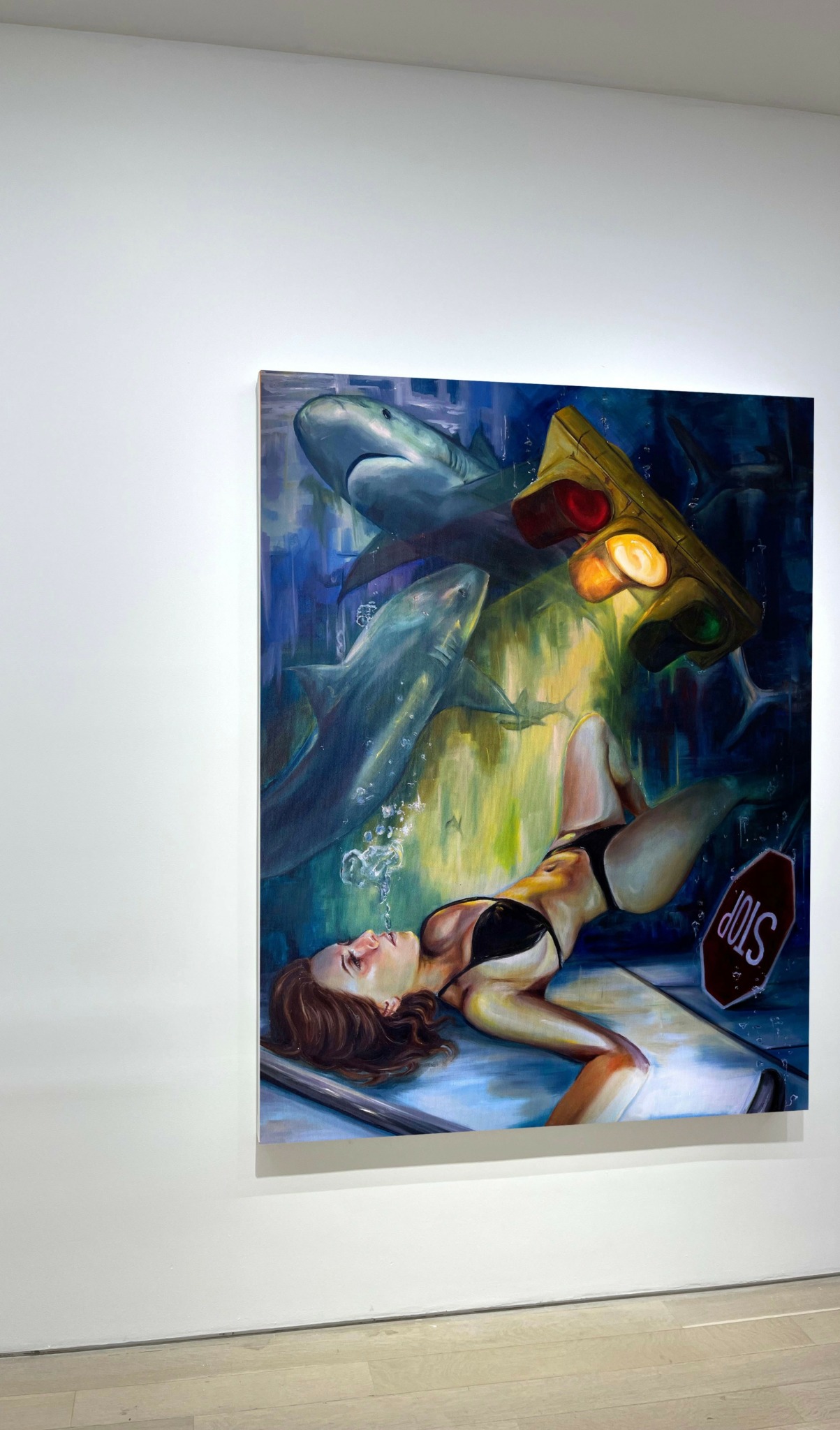
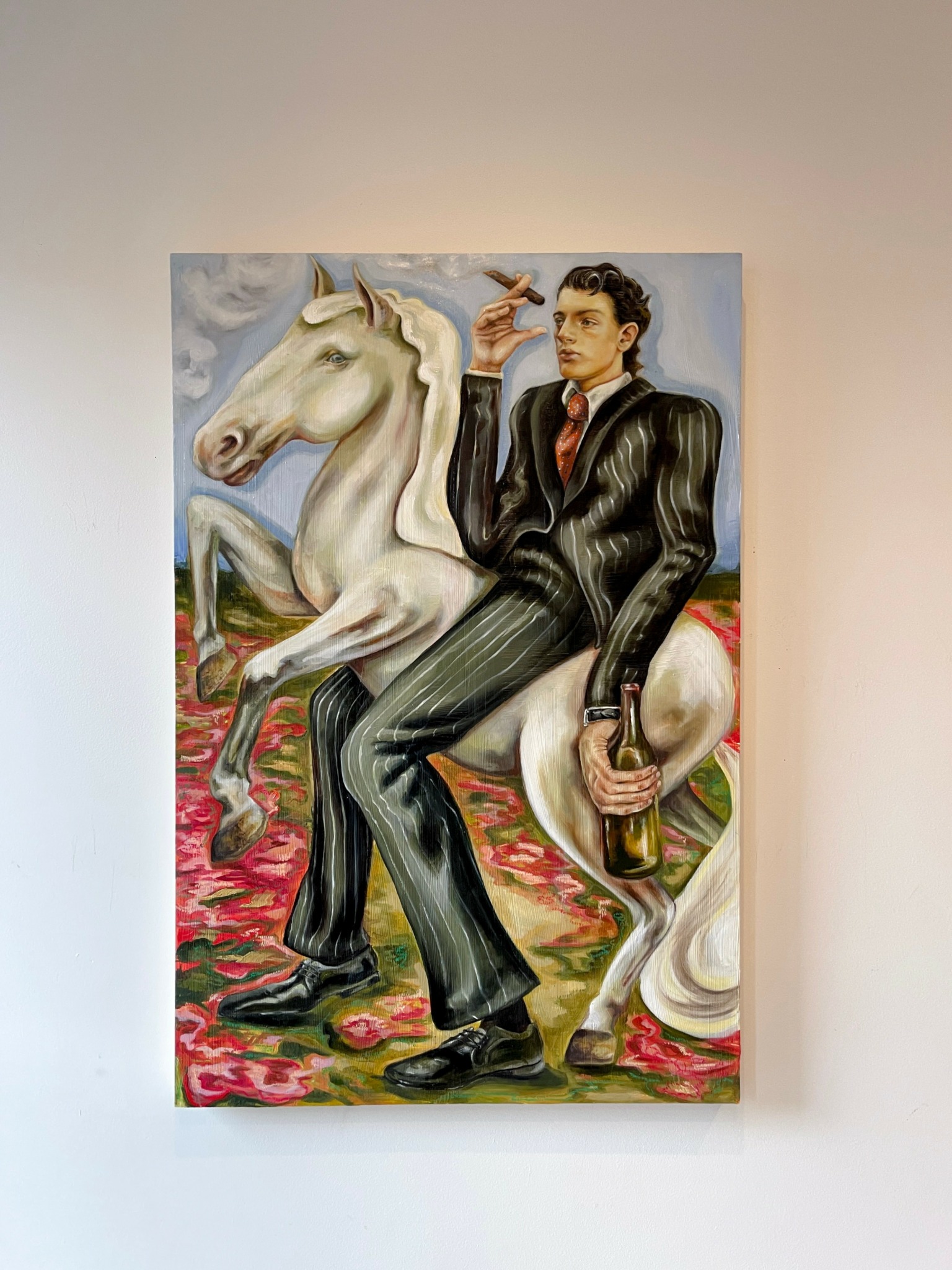
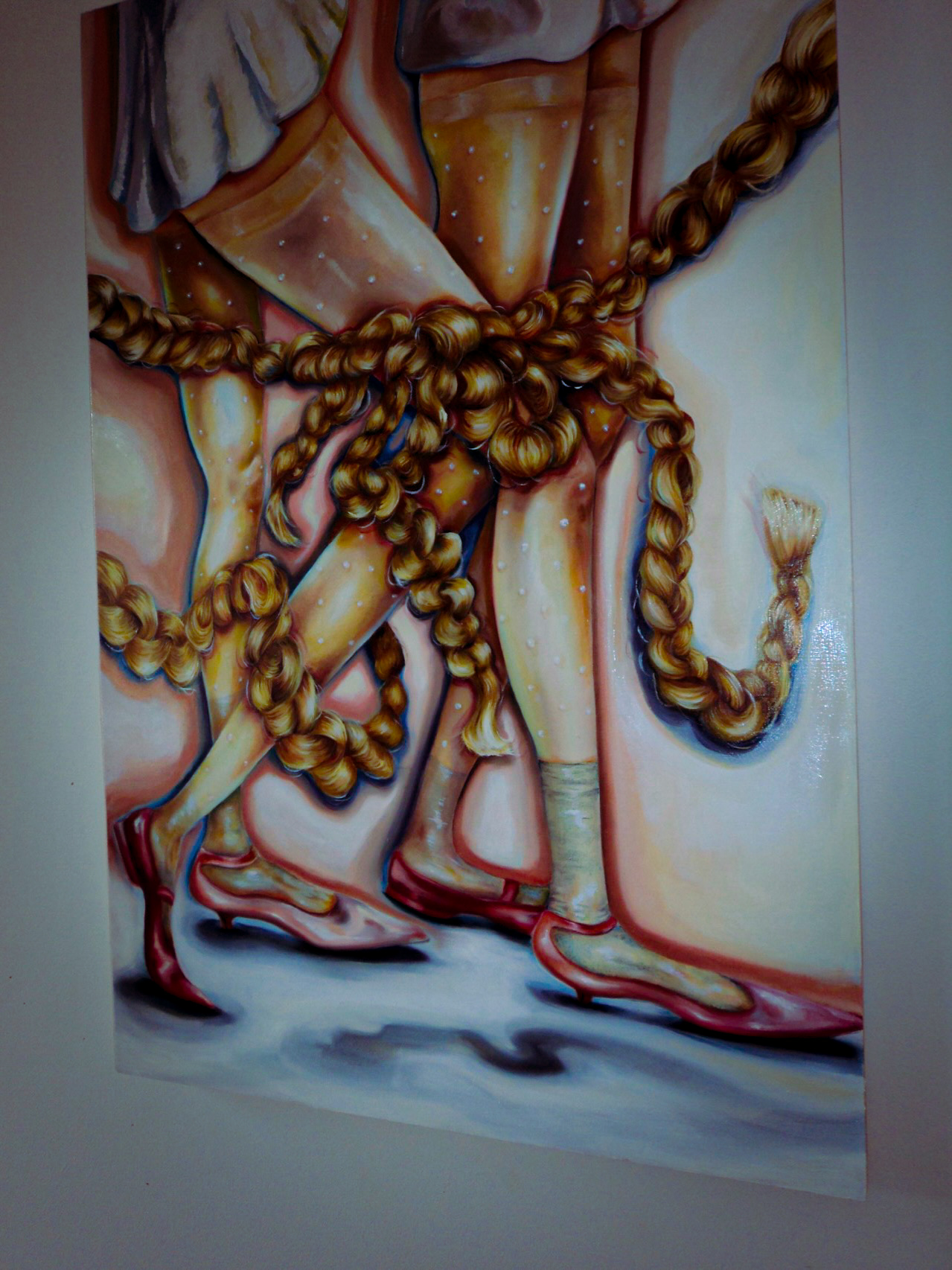

Image Credits
Courtesy of Emma June Jones