

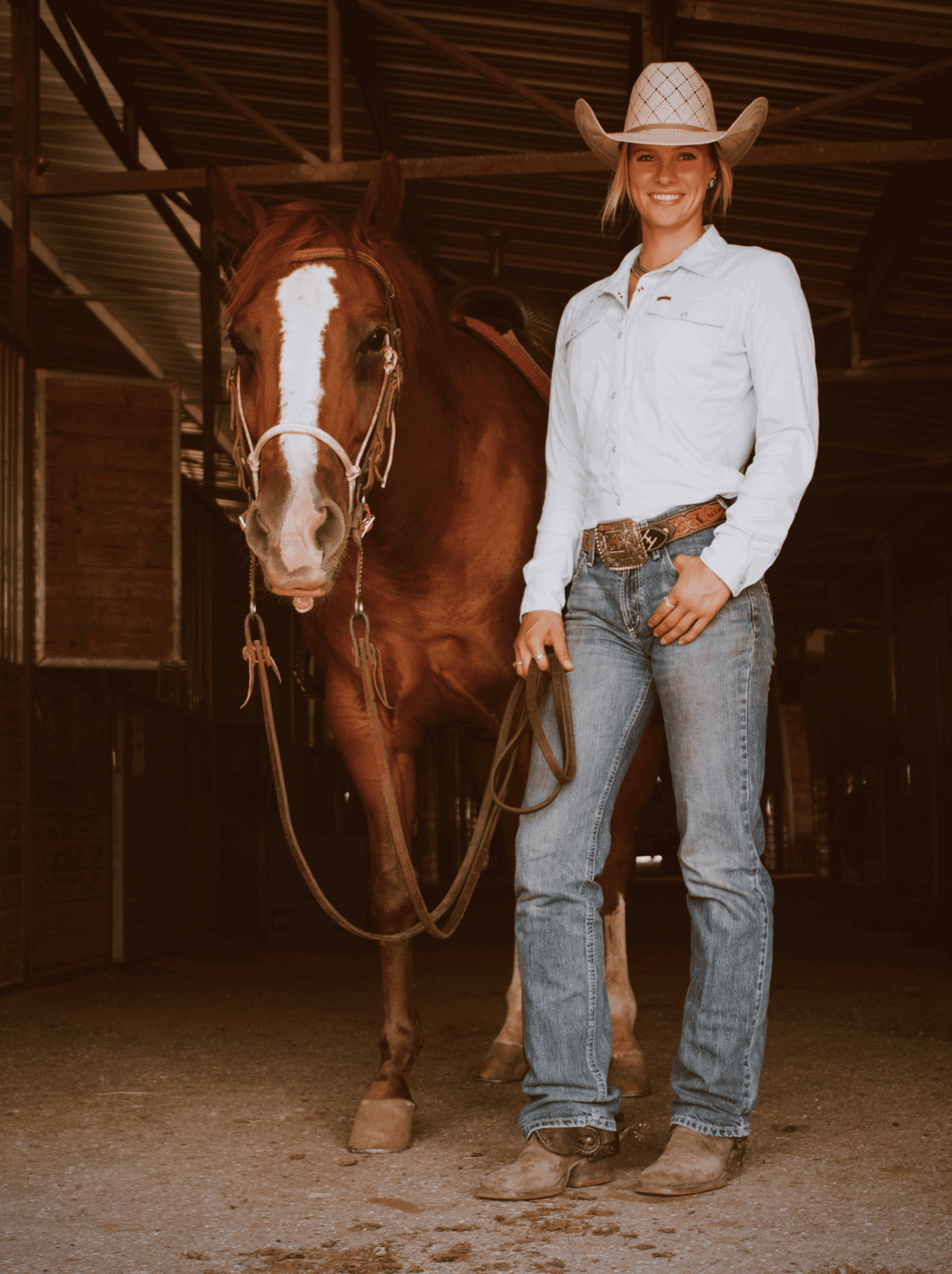

Alright – so today we’ve got the honor of introducing you to Emma Coffman. We think you’ll enjoy our conversation, we’ve shared it below.
Emma, looking forward to hearing all of your stories today. It’s easy to look at a business or industry as an outsider and assume it’s super profitable – but we’ve seen over and over again in our conversation with folks that most industries have factors that make profitability a challenge. What’s biggest challenge to profitability in your industry?
Lately, agriculture has been romanticized in social media, movies, and TV shows, inspiring many to grow their own food, homestead, or start hobby farms. While this renewed interest is wonderful, it’s important to remember why many people left the agriculture industry in the first place. Decades ago, nearly everyone had a farm or ranch, but rising input costs and stagnant sale prices quickly made it difficult to sustain. Today, this challenge persists, with input costs so high that many operations are no longer viable.
Government regulations, although often intended for community well-being and environmental safety, sometimes contradict their own goals and place additional burdens on farmers and ranchers. As consumers become further removed from agricultural production, they are more vulnerable to misinformation, leading them to purchase higher-priced items based on trendy claims and labels.
This situation puts family-owned operations in a difficult position: should they mislead consumers to stay afloat or remain honest and risk going out of business? The increasing costs are crippling the agriculture industry, making it hard for families to survive while only large corporations can manage the expenses. These corporations, in turn, exploit consumer ignorance to influence purchasing decisions, further consolidating their control over the market.

Awesome – so before we get into the rest of our questions, can you briefly introduce yourself to our readers.
Ever since I was a child, I’ve been obsessed with agriculture. It all began with an out-of-control Breyer horse collection and My Little Ponies that were “branded” with nail polish. Barbies never interested me, but reenacting scenes from John Wayne movies, Lonesome Dove, and Bonanza fueled my imagination and deepened my passion for the ranching way of life.
As I grew older, I joined 4-H, which was linked with the Agrilife Extension system. Through 4-H, I gained valuable resources and learned more about agriculture through livestock shows and workshops. The late nights, early mornings, and experiences in the show ring solidified my desire to pursue a career in livestock. My passion grew further when I joined the Texas 4-H Livestock Ambassador program as a teenager, where I discovered the concept of Agriculture Advocacy. I fell in love with the idea, but I didn’t yet know how to turn it into a career.
The Agrilife Extension program was connected to Texas A&M University, and that exposure planted the seed of becoming a Fightin’ Texas Aggie. I was fortunate to know the field I wanted to be in; I just needed the education and guidance to channel that passion in the right direction. The faculty and staff in the TAMU Animal Science department provided that guidance. Throughout my college journey, I took on officer positions, joined a judging team, and even started my own photography business. I knew that gaining experience was the only way to understand how the industry worked, how business and economics intertwined, and where my passion would be most valuable.
My career began in Australia right before COVID, but the excitement was short-lived as the world shut down, and so did many opportunities. I was nervous and scared that all those internships and my education might go to waste, especially as I struggled to find a job before college graduation. However, the Aggie network proved invaluable. I reached out to my professor, Dr. Clark Springfield, who has since become my biggest mentor. He helped me secure a position as a Livestock Production Specialist with Purina. My journey in sales began there in Virginia, then continued with Zoetis back in Texas, Oklahoma, and New Mexico, and later with Vytelle as a regional sales manager covering five states in the Southwest region.
Throughout my full-time sales roles, I realized my heart truly belonged to agriculture advocacy. I started sharing my thoughts on TikTok, discussing agriculture and debunking common misconceptions about the industry. This led to guest appearances on podcasts and part-time consulting for agricultural operations and startups. Through the Double E Ranch brand, I take pride in being transparent and unbiased on topics such as ag law, bills, practices, methods of production, and marketing. My goal is to educate both everyday consumers and multi-generational agricultural producers.
Currently, I’m working on gathering locations and sponsors for a virtual farm tour-style podcast and YouTube channel to help share producers’ stories and further agriculture education. I am deeply grateful to God for giving me such a passion and for the opportunity to work in an amazing industry like agriculture.

What do you think helped you build your reputation within your market?
Short answer? Experience. That’s what will earn you respect in any industry, no matter which one it is. I was naive to think that being a woman wouldn’t matter in a man’s world—I was wrong. I believed that hard work and sweat alone would get you ahead—I was misguided. If you’re an outsider, especially a woman in an industry where you have little to no reputation, you have to work harder, put in longer hours, be smarter, and stay ten steps ahead. While others are playing, you’re working. While they’re partying, you’re studying. While they’re resting, you’re planning. You can’t quit. You can’t give in. You can’t stop. The moment you do, you lose momentum and fall behind. It’s much easier to stay ahead and maintain momentum than to play catch-up.
In the agricultural industry, I had to gain knowledge, experience, and, most importantly, build relationships. I worked three jobs, ran my own business, took 21 credit hours, and participated in student organizations and a judging team—all at once in college. It wasn’t for everyone, and it was stressful, but it played a part in getting me to where I am now. I remember attending my first beef cattle convention and realizing I knew maybe three people on the entire trade show floor. I told myself I would never be in that position again. So, I gathered business cards, introduced myself in the lunch line, sat next to people I didn’t know, and visited every single trade show booth to learn about their products or operations and to build relationships. Fast forward three years, and now I can’t walk down a trade show aisle without knowing someone. That’s when I realized I had actually accomplished my goal.
But there’s a key to all of this: If you’re new to an industry, you face the challenge of building yourself up, but you also have the opportunity to create a reputation. I’m still making a name for myself in this industry, but I pray that everyone knows I will always do what’s right for my customer, never take the easy way out, and treat your operation as if it were my own. I’ve lost clients over those morals, I’ve lost jobs, and I’ve even lost friends, but I see those losses as blessings. Never compromise your moral standards for any career. It’s not worth it, and it often leads to regret if you cross those lines.

We’d love to hear a story of resilience from your journey.
Our lives are a constant journey of peaks, valleys, and challenges. There are times when you might feel like you’re spinning your wheels and getting nowhere, whether in life, personal matters, or business. You may feel stagnant and helpless. Then, there are days—or even years—when it feels like you’ve accomplished so much that all the struggles were worth it. On the flip side, there are moments when you wonder, “Why am I even trying?” Everything seems to go wrong, and you feel like giving up.
My life and career journey have followed this same cycle. One particular moment was last year (2023) when I shared my dream of wanting to pursue agricultural advocacy, ideally full-time. I was told by family, coworkers, organizations, and even those I considered friends that it was pointless, that I was nothing special, and that no one would listen or care. At times, it seemed like they were right. When keyboard warriors left negative comments or sent direct messages filled with threats, accusations, and negativity, it was hard to drown out the noise.
But then, I started receiving messages from companies asking for help—asking me for help! First-generation producers shared that they had learned something from my content and talks. I began getting paid to speak at events, organization meetings, and conventions. I received brand deals and collaboration requests. While I am still a small creator with much room to grow, I look back with pride knowing that every follower was gained organically. Even when I hit a plateau where my account doesn’t grow for a few months, or I have no brand deals, or not a single paid view, I know that when that next spike comes, I will appreciate it even more.
The journey reveals who your true friends are, who should be in your circle, and who doesn’t belong. As long as you keep your focus on the Lord, He will establish your plans (Proverbs 16:3).
Contact Info:
- Instagram: @double_e_ranch_
- Facebook: Double E Ranch
- Linkedin: Emma Coffman
- Youtube: The Double E Ranch
- Other: TikTok: @DoubleERanch
Image Credits
Hailey Frost Photography
MB Creations
Kendall Whatley