
We recently connected with Emily Ellis and have shared our conversation below.
Hi Emily, thanks for joining us today. Do you think your parents have had a meaningful impact on you and your journey?
I was a child of the 80s. It was a wild time of madly cycling home by the time the streetlights came on, running through the neighborhood catching giant grasshoppers with friends, and mixing up wild scallion and acorn “soup” in an old cat food can to pretend to live in the wilds of the neighborhood park. There were some hard times growing up in the south with no air conditioning in my early youth juxtaposed with the luxury of watching cable tv at the neighbor’s house. My parents were both busy working full time jobs. I was the third child. I think by the time parents get to the third child, it’s very much a “they’ll live” type attitude. I wasn’t fretted over as first baby nerves tend to elicit in first time parents. I was left to do my own thing, pretty much. We went camping as a family around the south and northeastern US. They were very diligent about getting us to see as much of the world as they could possibly afford.
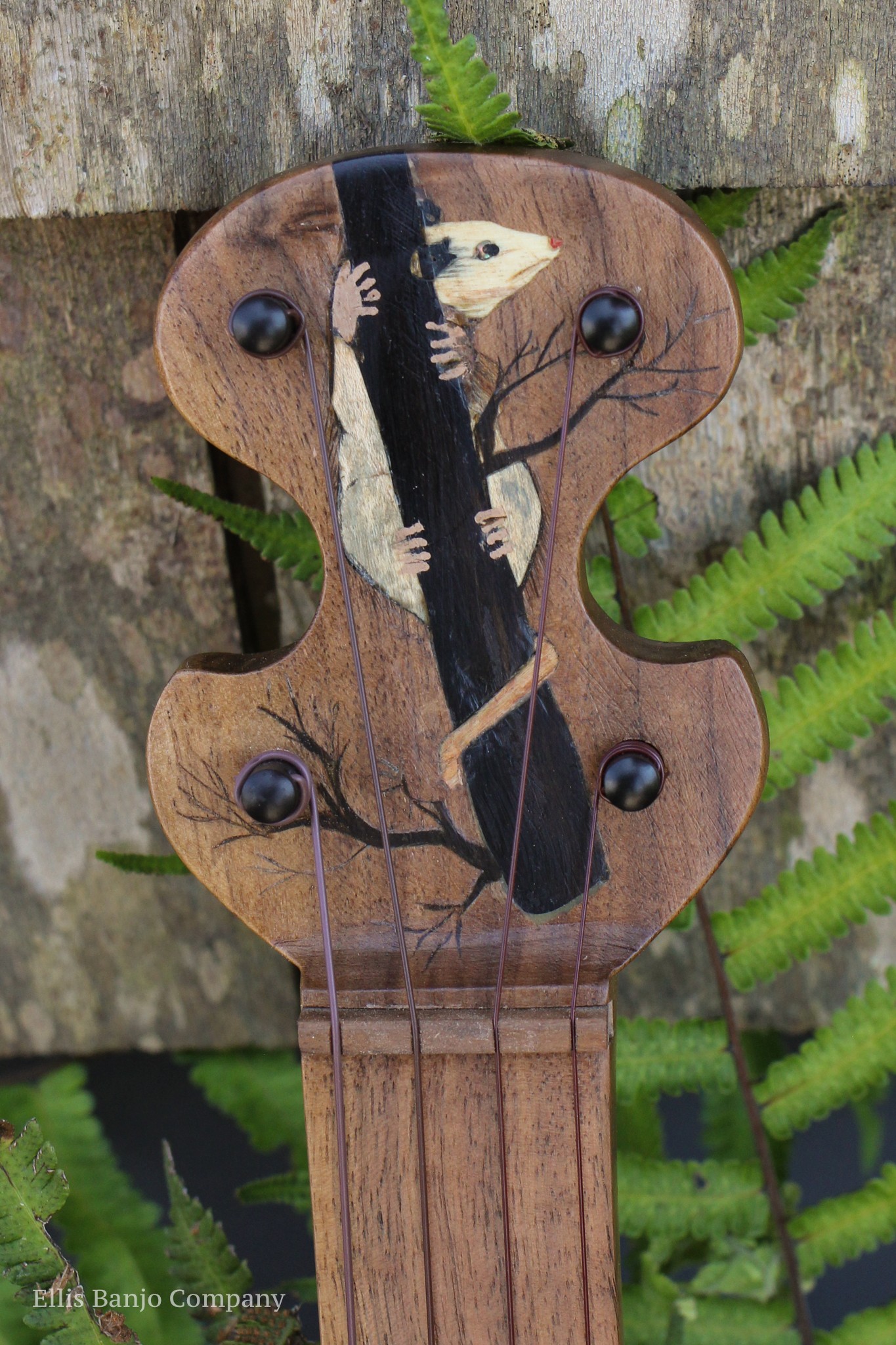
One of the most important traits they had was that when I had a crazy idea or showed up with some animal from the wild, they said, “yes.” I used to ride my horse along the country roads. Whenever I would see a roadkill possum, I would check to see if it was a female with a pouch. Oftentimes, I would find little babies in the mom’s pouch, still alive. When I brought home pockets full of possums, my parents said “yes” and I raised many different possum babies to be released back into the wild.
When I asked if I could use our garage as my “art studio,” they said “yes!” I asked if I could decorate it how I wanted and they said “yes!’ So, like a true child of the 80s, I painted the walls jet black and then threw hot pink splatter paint everywhere. It was certainly something.
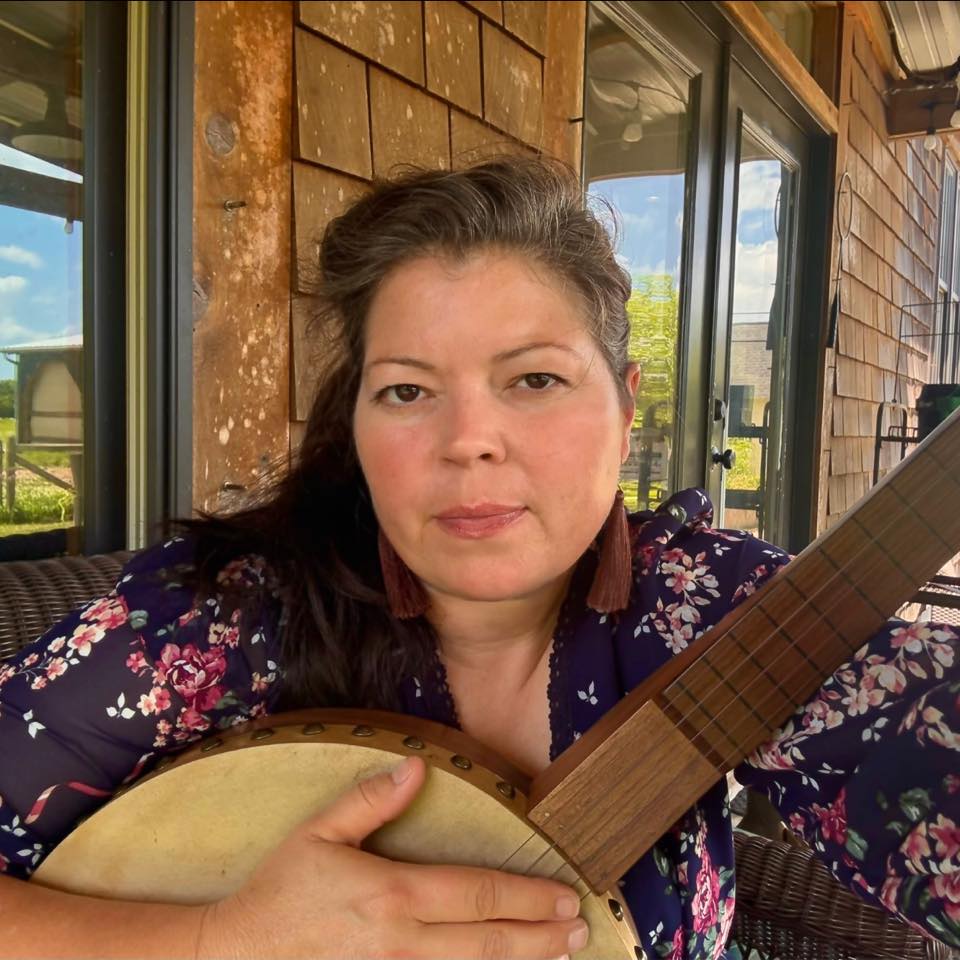
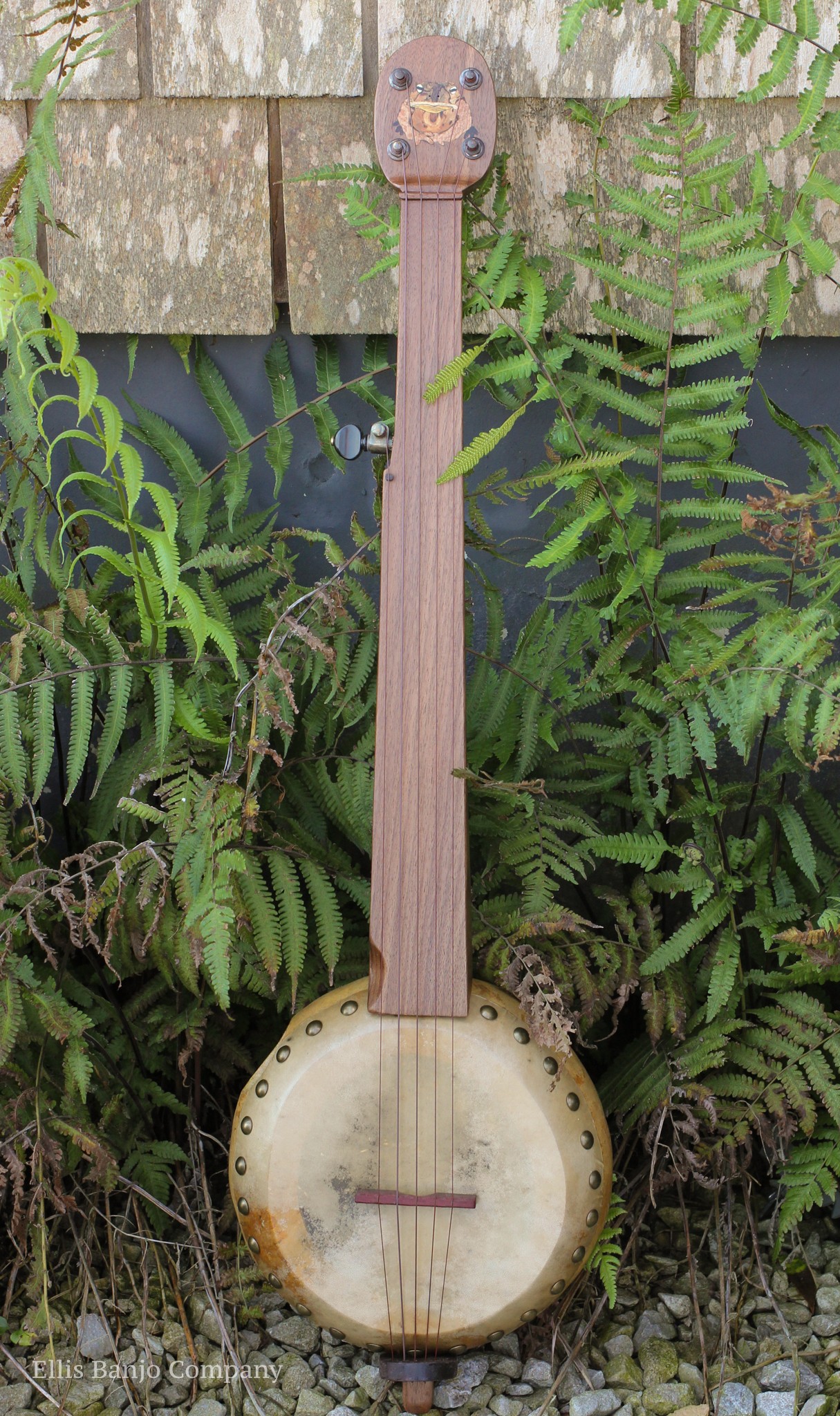
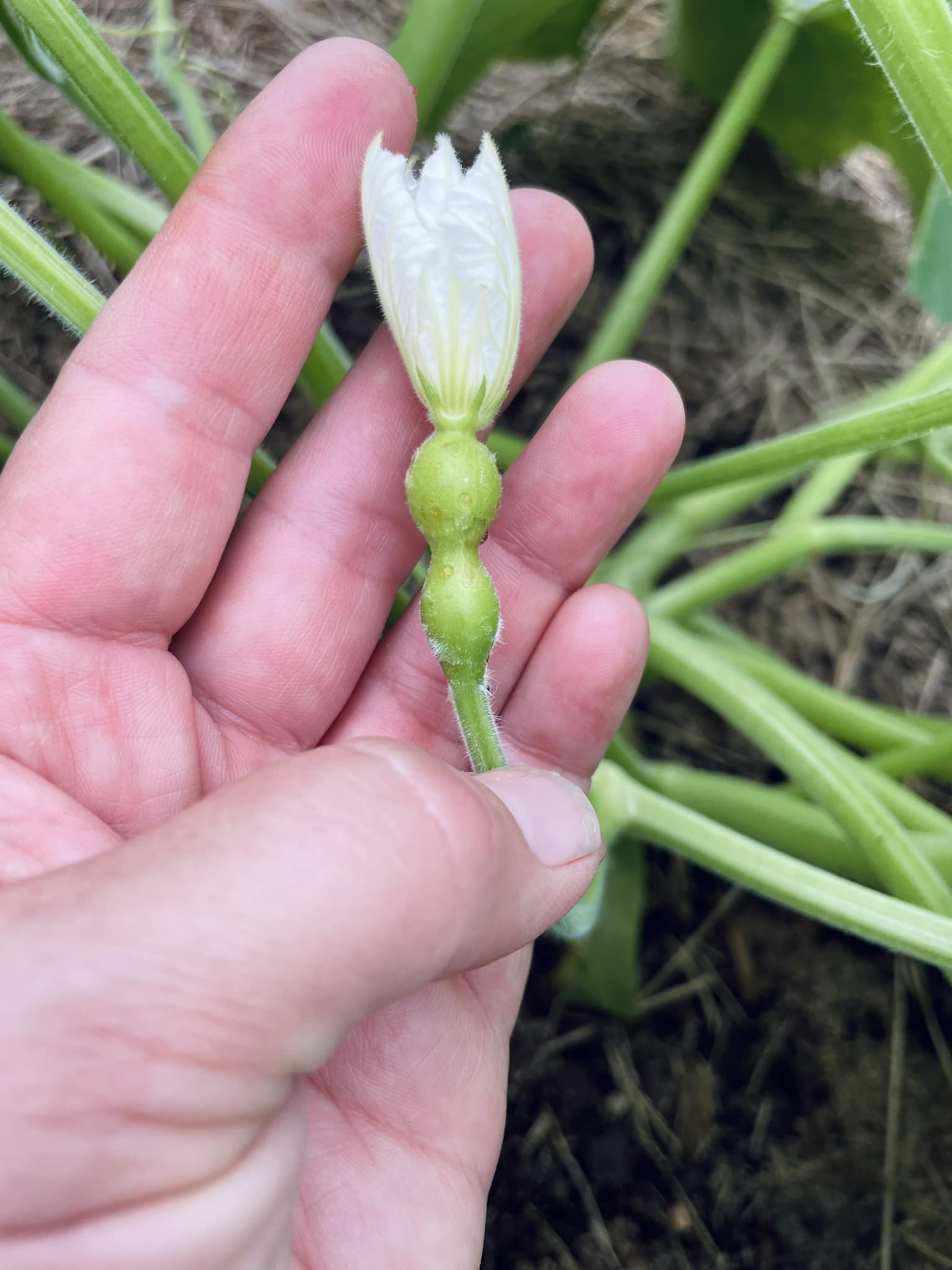
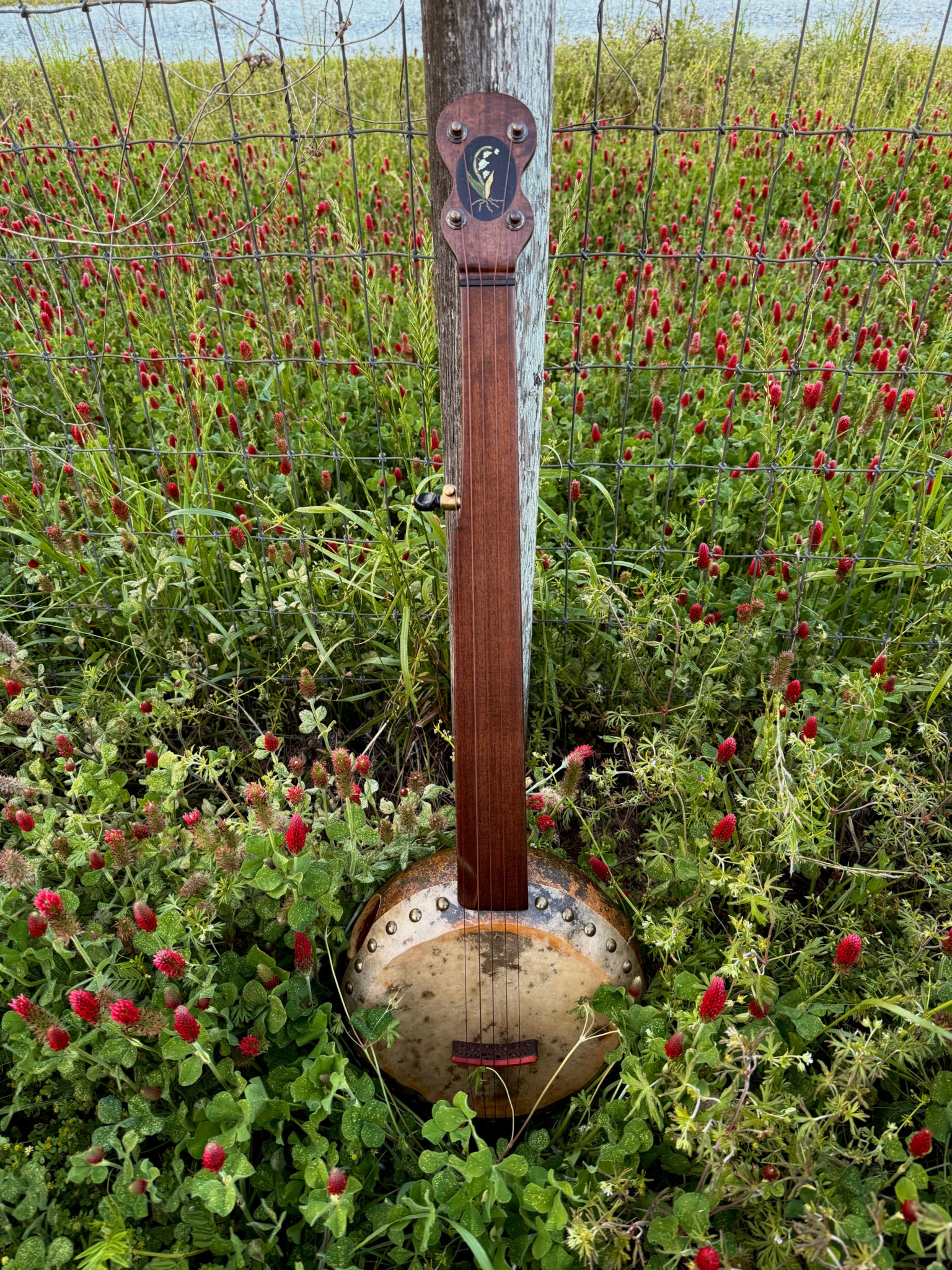
What they fostered by saying “yes” was a confidence to simply go for things in life. When I started playing the banjo and eventually wanted a gourd banjo, I purchased one online. It was not my favorite banjo. I went online to look for a “nicer” gourd banjo, but I did not find anything that really spoke to me. Drawing upon the lifetime of saying “go for it” to myself, I thought “well, I bet I can build my own gourd banjo.” And so I did. My first banjo build was a terrible example of an instrument. However, using a gourd grown from our farm land, whittling the neck and tuners and attaching strings to the hollow body of the gourd, was extremely rewarding. I remember being in our barn workshop and hearing the gourd banjo for the first time. Hearing the sound of a vegetable grown on our land and then shaped with my own hands was a transcendent experience. I knew what I wanted to dedicate the rest of my life doing. There are hardly any other woman gourd banjo builders with a business. I am hoping to be used as a stepping stone for more women to take up the saw of banjo building. I am getting up in years, but I will continue to say ‘yes’ as I was taught to do so many years ago.
Awesome – so before we get into the rest of our questions, can you briefly introduce yourself to our readers.
My name is Emily Ellis, and I live on a family farm in south Alabama. We have horses, cows, chickens, ponies, goats, dogs, cats, one pig and one large tortoise. Most of my family lives on this farm. Mom and Dad are next door and my brother is just down the road. Lots of cousins call this farmland home as well. I enjoy working on the farm, creating art, woodworking, being in nature, making music with friends and camping with my husband, Joel, and two kids. I have always loved the old way of doing things and often feel like I was born during the wrong time period.
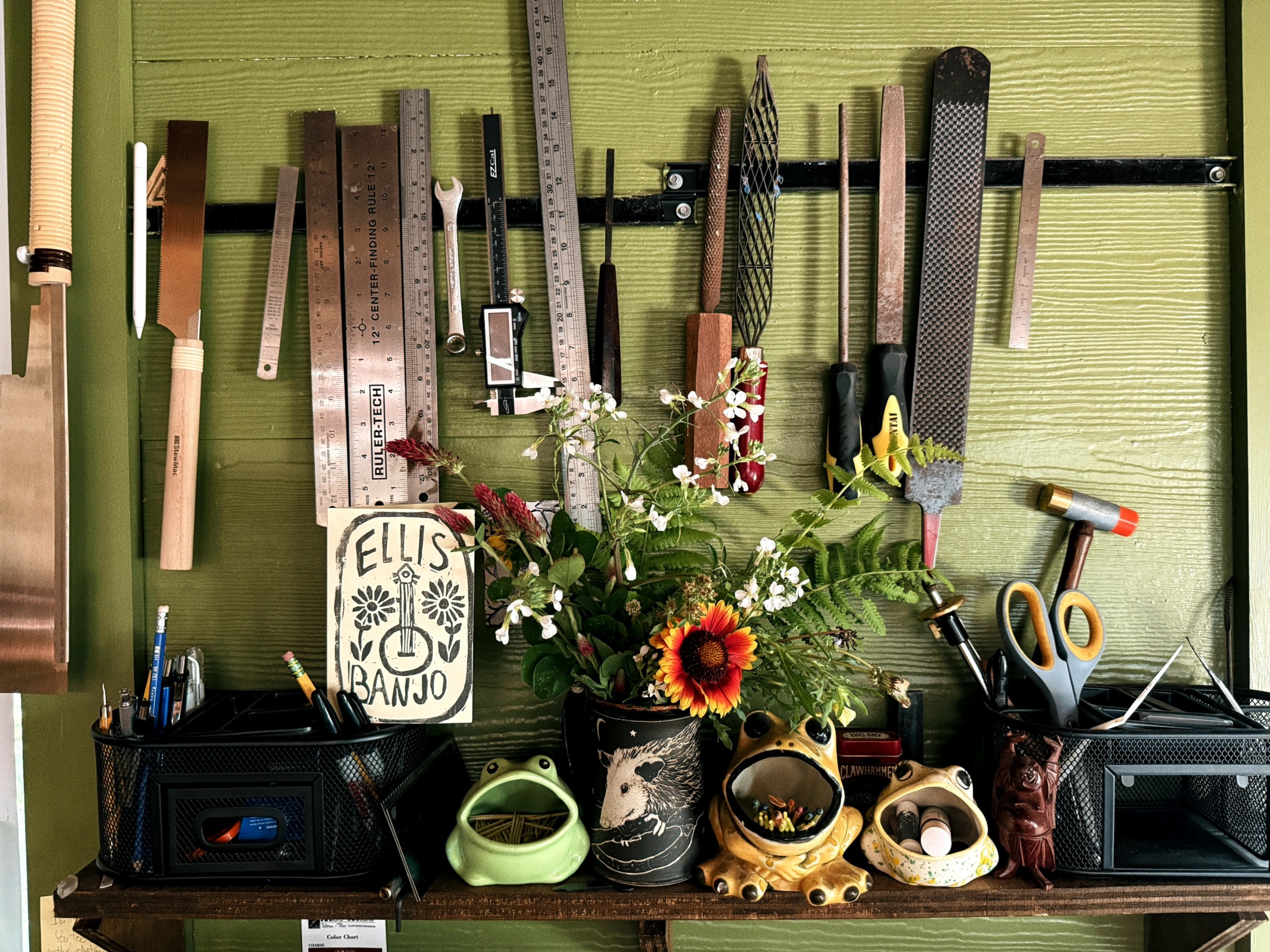
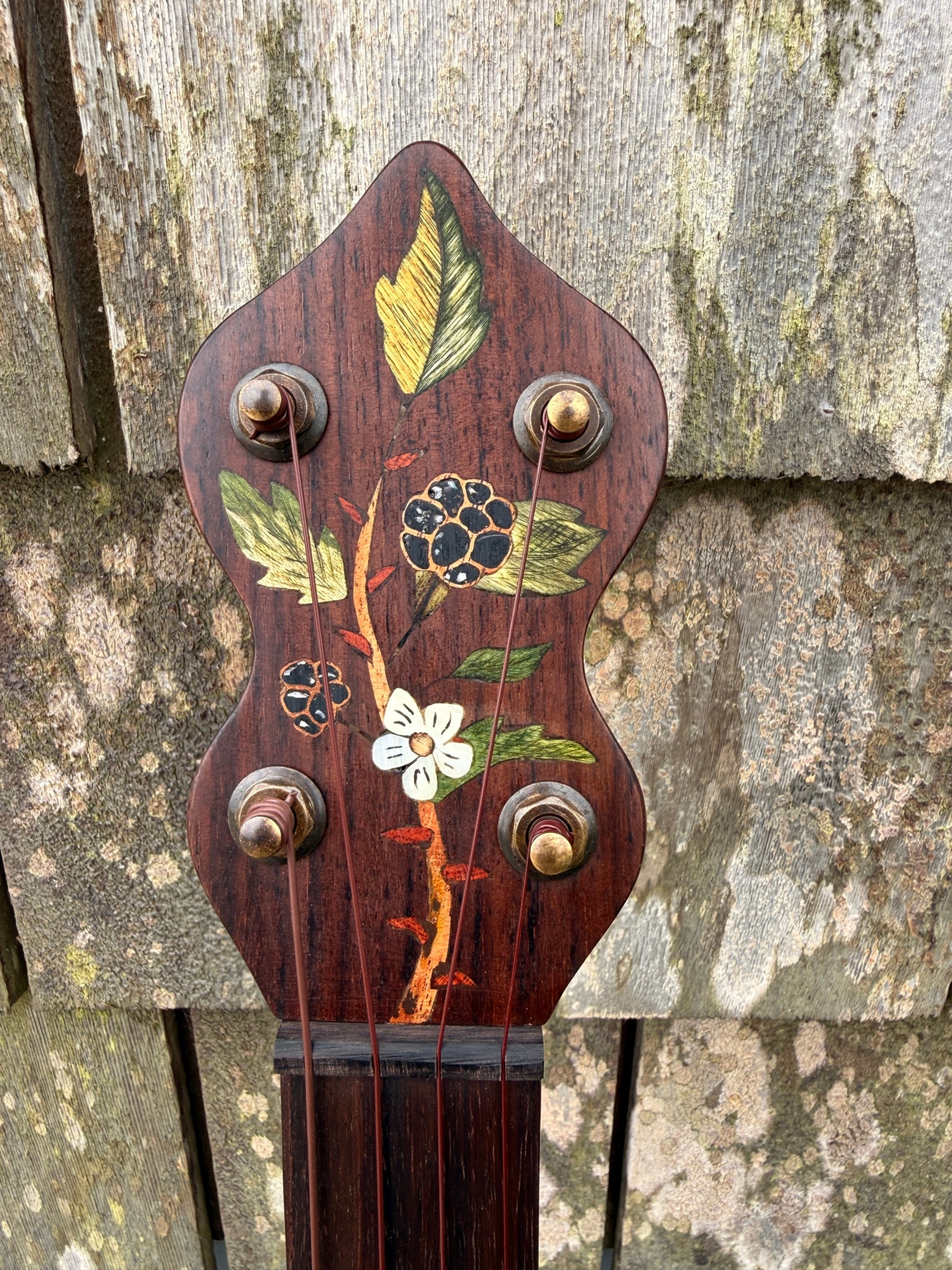
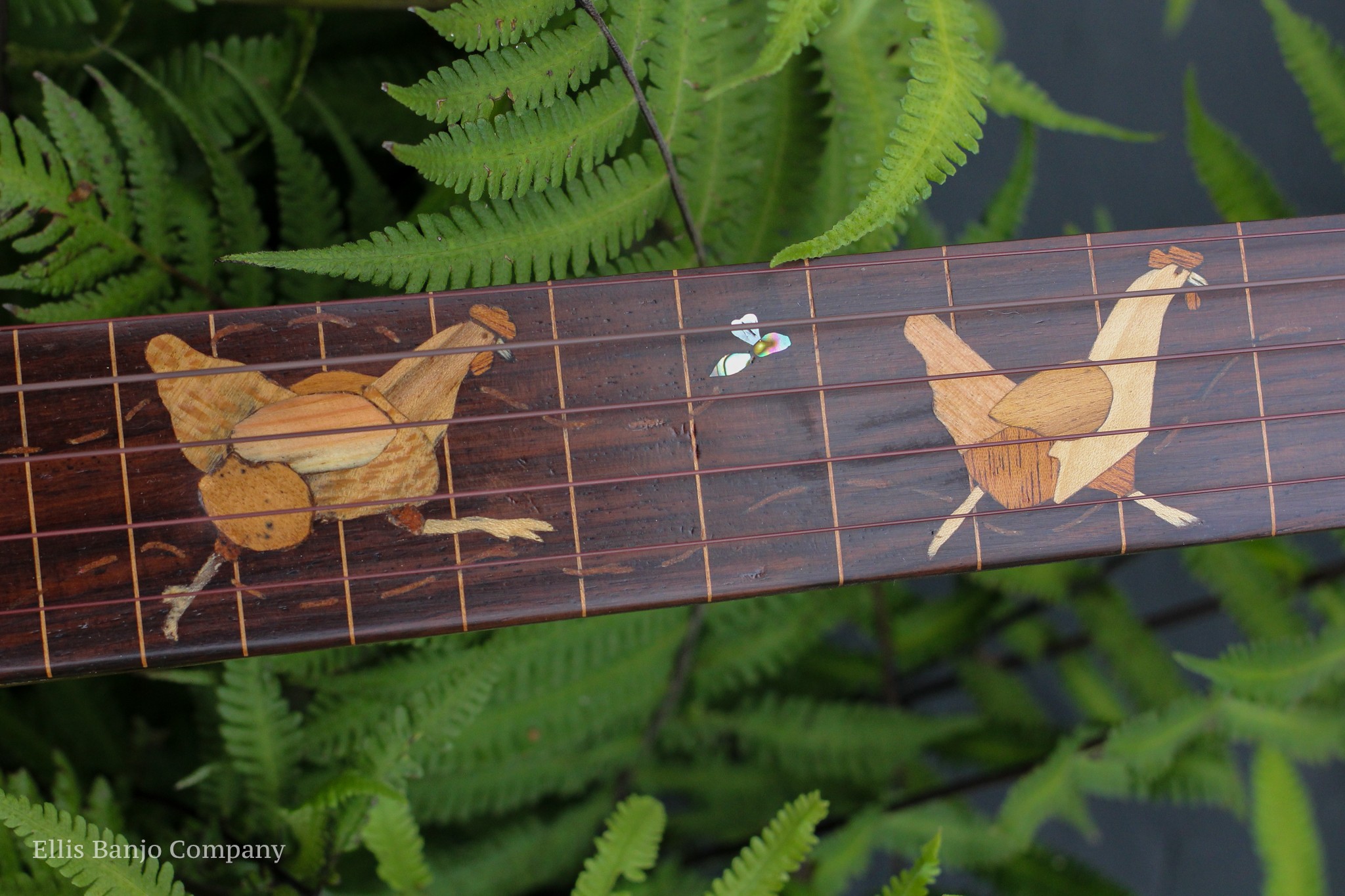
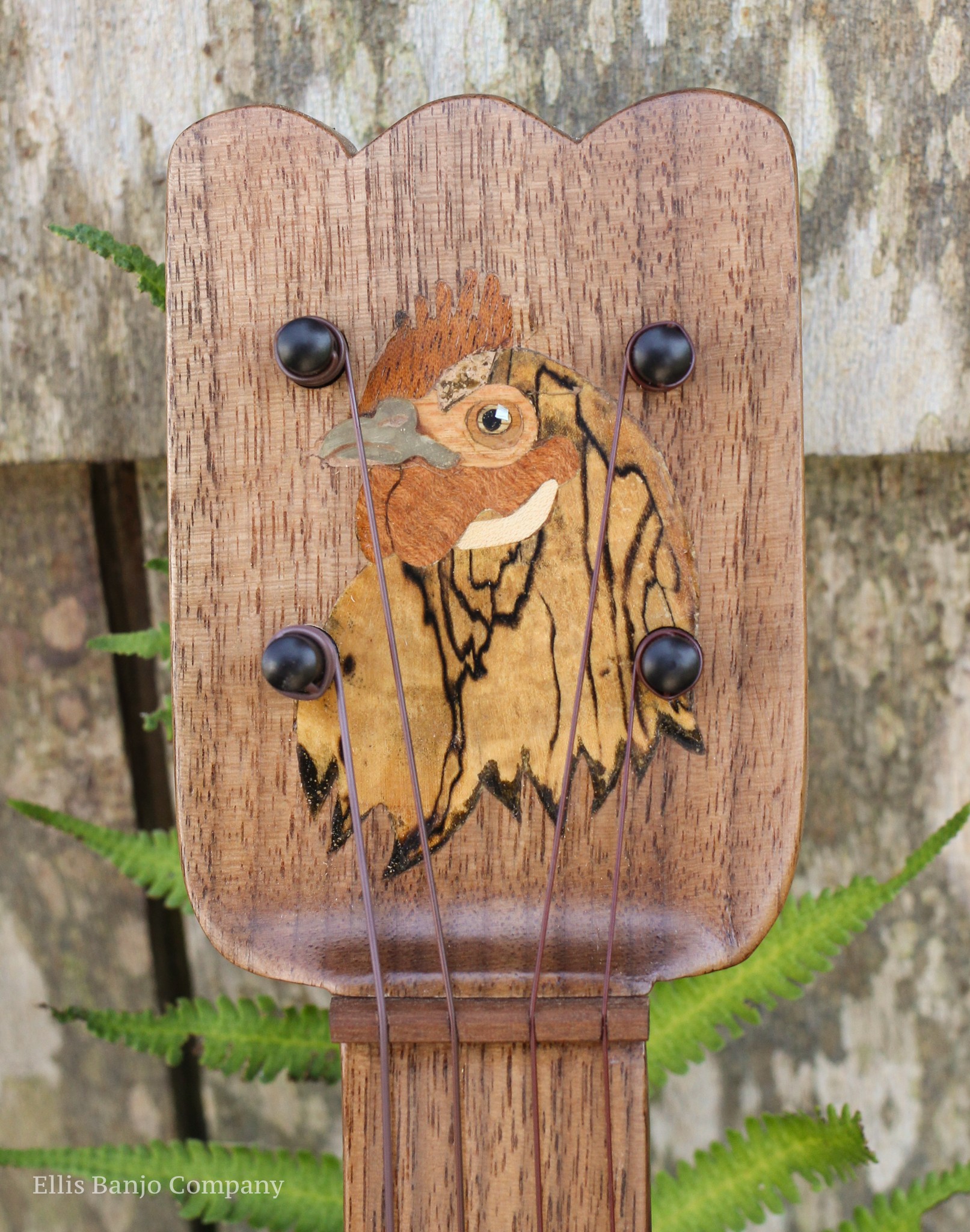
All of my banjos are hand-guided in their building, meaning I do not use laser cutting, or a computer program or a CNC machine for my inlay or shaping my necks or any other part of the building process. I mainly use hand tools like a horse hoof rasp and variously sized files. I do use an electrically powered bandsaw and drill press. All this to say that you are getting an instrument that is handmade, and that is really important to my personal process. I love the deep, soulful sound that gourds and tackhead banjos produce, and one of my favorite parts of the building process is oiling the neck for the first time and seeing the wood really come alive. I spent the last several years building banjo after banjo until I started producing banjos that I love to own and play.
Is there a particular goal or mission driving your creative journey?
A particular goal of mine is to show other women that we can be amazing banjo builders. We have a place in this industry. There are only two women that I know of that build banjos as a business. I am one of them, and Dena Ross Jennings is an incredible builder of gourd banjos. Most women in the banjo world traditionally work on the inlay or decorative aspect of the banjo. I want women to see that we can do it all.
How can we best help foster a strong, supportive environment for artists and creatives?
The most helpful thing people can do to support an artist is to simply share their work. You never know whose work will touch someone and change their life in a positive way.
Contact Info:
- Website: https://www.ellisbanjo.com
- Instagram: https://www.instagram.com/emily_ellis_banjo_company/
- Facebook: https://www.facebook.com/emily.e.richards.1