

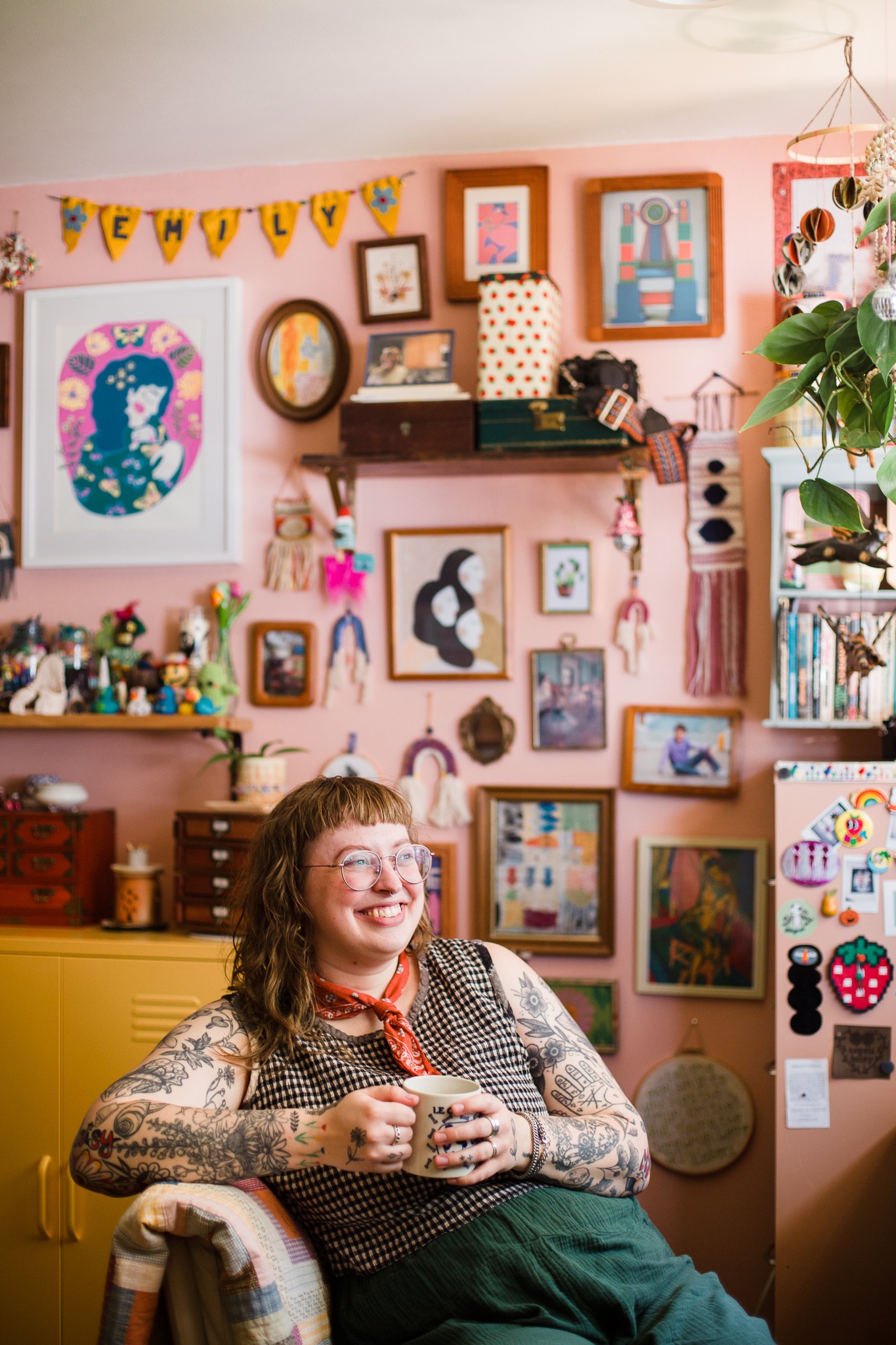

We recently connected with Emily Eklof and have shared our conversation below.
Hi Emily, thanks for joining us today. We’d love to hear the backstory behind a risk you’ve taken – whether big or small, walk us through what it was like and how it ultimately turned out.
About five years ago I was working for a software company, feeling incredibly pressured to desire and strive for success in a way that didn’t feel like me. I was reaching a breaking point, crying in my office from stress, upping appointments with my therapist and desperately looking for another career – but I had no idea where to start. To add to the complexity, my long term partner and I were looking to buy a house and move in together for the first time. Which is how I found myself, in December of 2018, leaving the only “adult” job I’d ever had, taking a 50% pay cut and signing a 30–year mortgage with my partner. I never would have been able to make that leap if it weren’t for my extreme corporate burnout and the support of my partner and family.
It was an immediate and staggering relief to realize I could leave my job at 4pm and not think about it again until I walked in the next morning. I had energy and space to be creative again. I was able to start working part time at a local animal sanctuary. It gave me room to dream and take risks with my time and energy. In addition to having mental space to work, having a permanent physical space to create in the new house was also incredible. It was amazing to go from a small one-bedroom apartment where many of my materials and tools had to be tucked away to having an entire room to use as a studio.
It wasn’t all sunshine and roses. The new job I took was in a completely different field that I had almost no background in. Not only did I need training in my daily duties but I also needed to catch up on a lot of base knowledge to understand the “whys” and “hows.” Learning to set boundaries around work and not set myself up for burnout again was hard. Obviously taking a 50% salary cut was significant. I had to rearrange quite a few of my habits and goals around money. Luckily for me, it turned out that energy and mental space were the more precious resources.
It was only a few months after my big leap that I applied and was accepted into my first market. The same incredible organization invited me to become one of their shop artists. It’s only gotten bigger and cooler from there.
Emily, before we move on to more of these sorts of questions, can you take some time to bring our readers up to speed on you and what you do?
I’ve been making art basically my entire life. Growing up, I was at every craft table and art making event I could find. I wanted to try to soak up any medium I could get my hands on. I thought that maybe as I grew up I might settle into a single discipline or at least find a favorite, but that never really happened. Instead of putting one down before picking up another, I just kept loading up my arms.
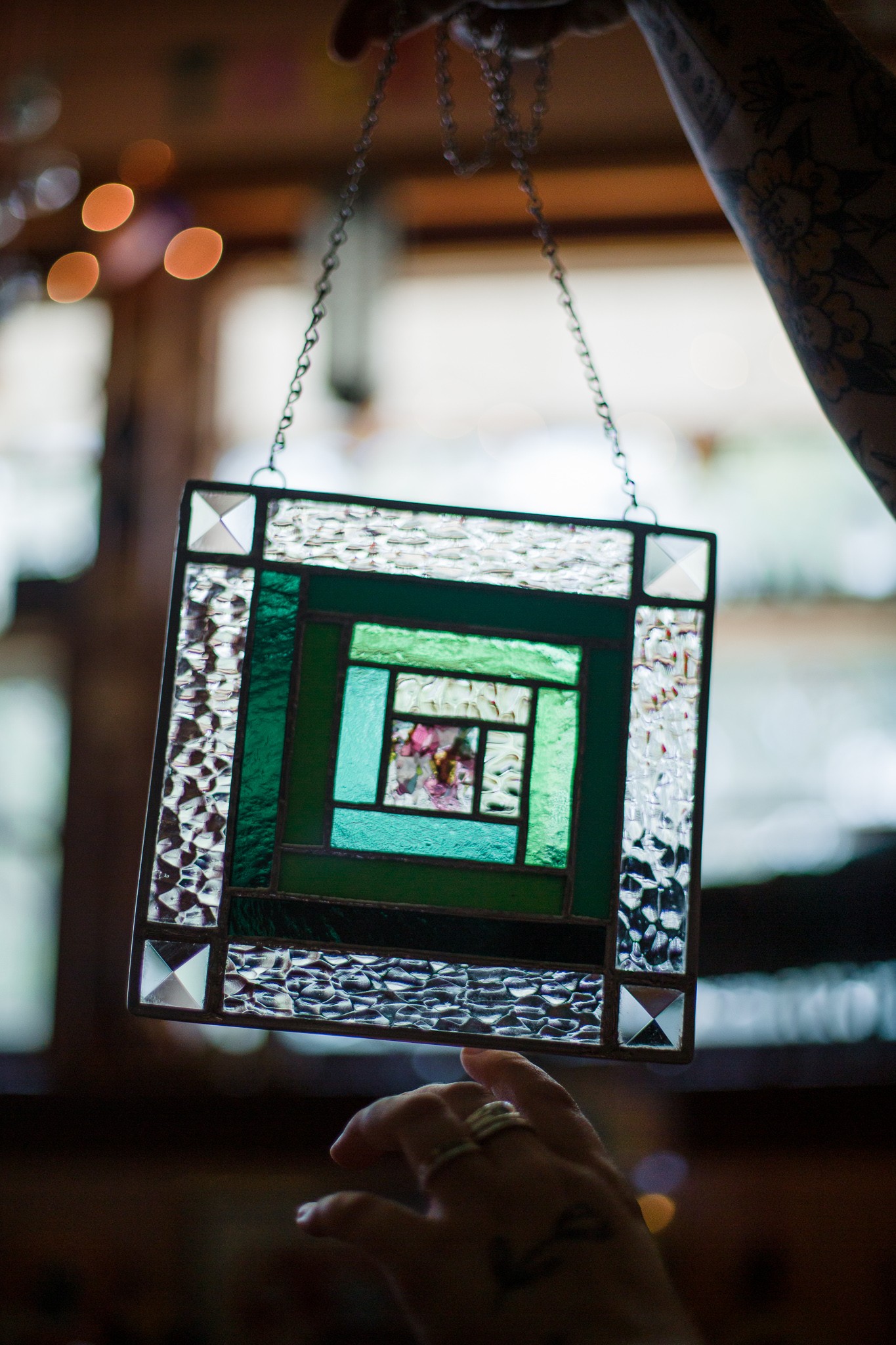
I started with beading and friendship bracelets and then around middle school I asked my great aunt to teach me how to crochet. Next came a blur of knitting, sewing, and cross stitch that I was able to learn from my Mom. My older sister, who was and is still the coolest, did some collage and decoupage projects when she was in high school, So obviously I insisted on learning how to do it too (so that I could be just like her). In high school and college I took metal smithing and pottery classes. Eventually I started teaching myself new embroidery stitches and weaving techniques. Along the way I also picked up paper-making, hand mending, resin, and most recently, stained glass.
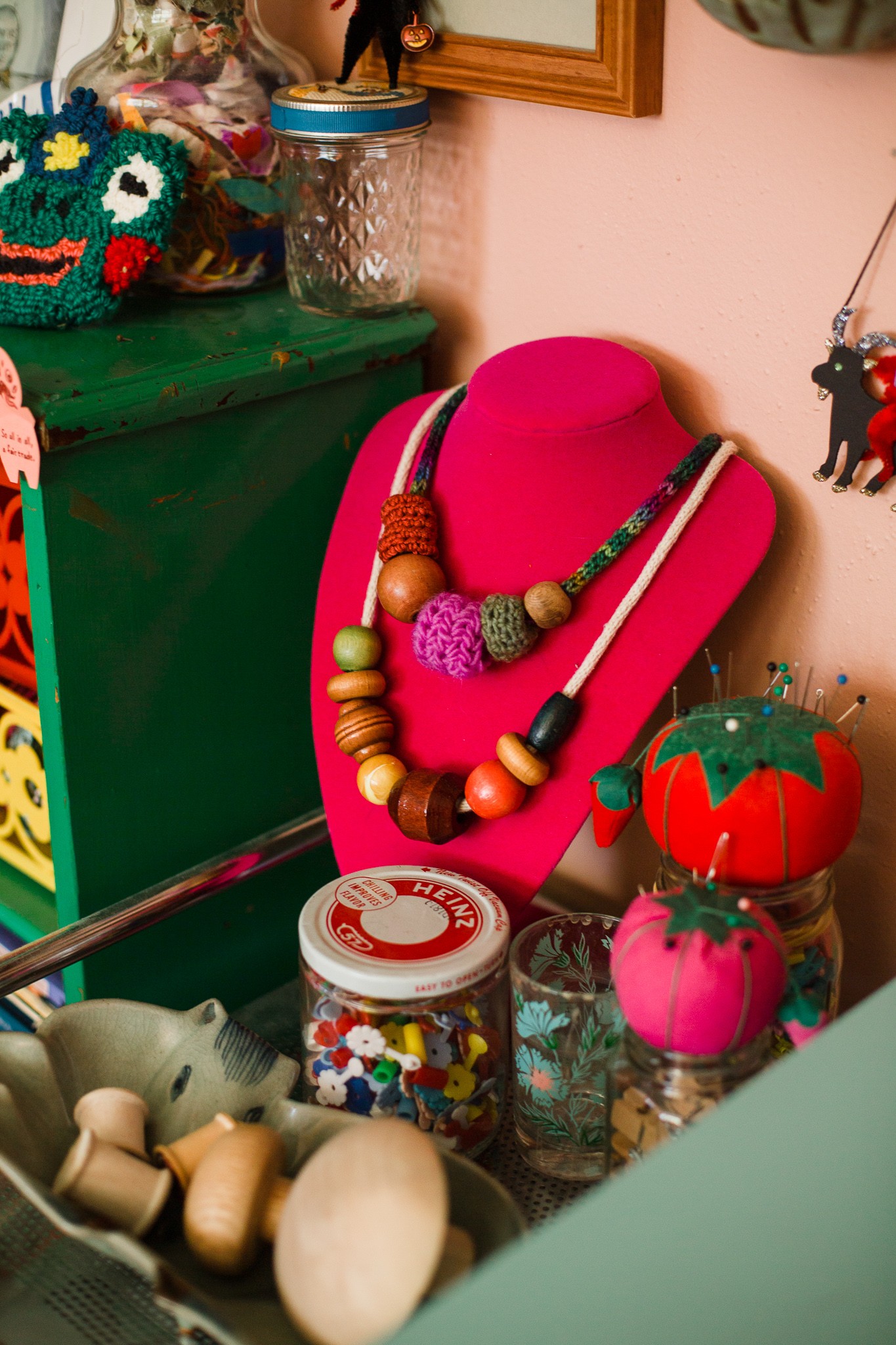
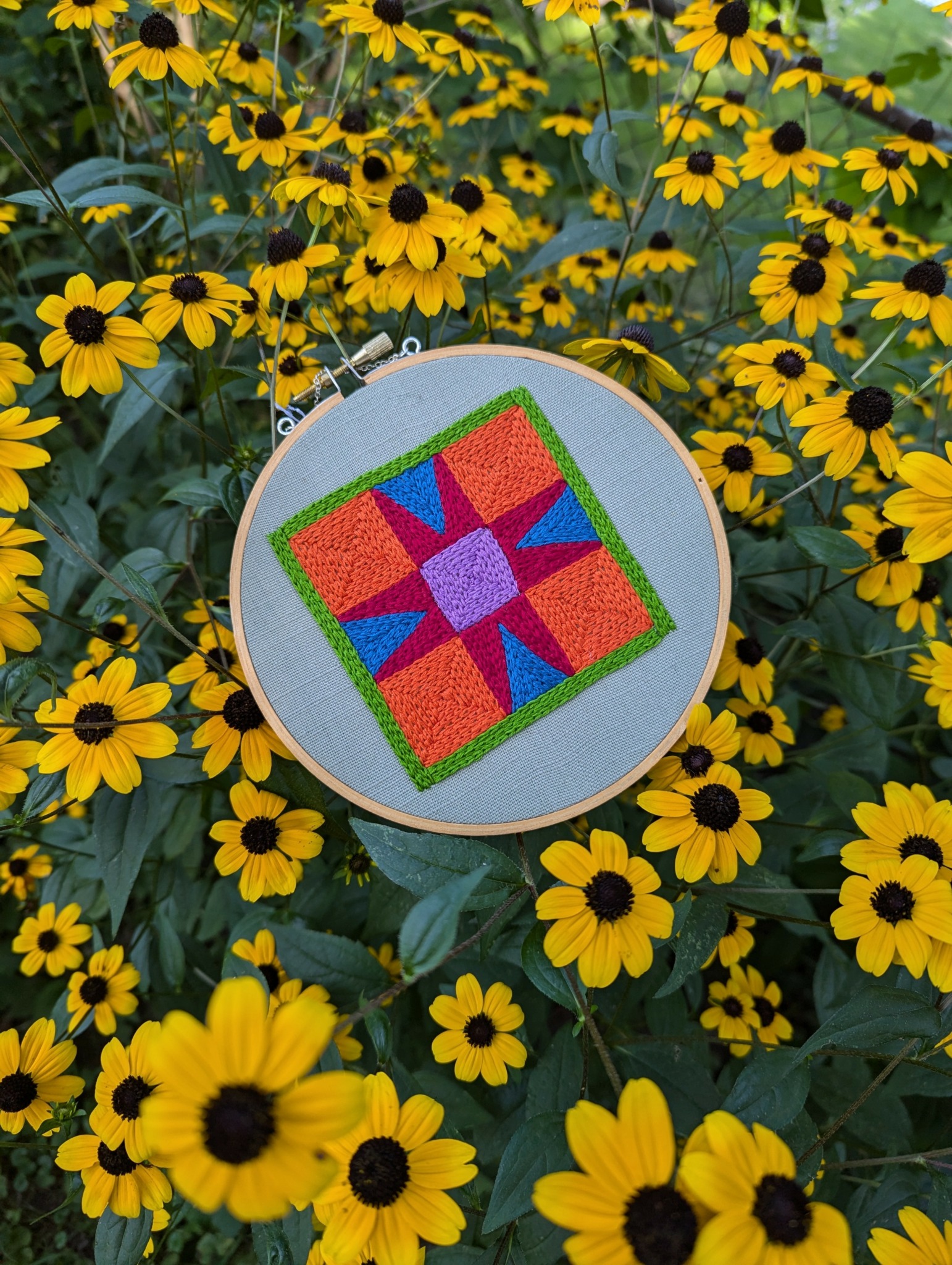
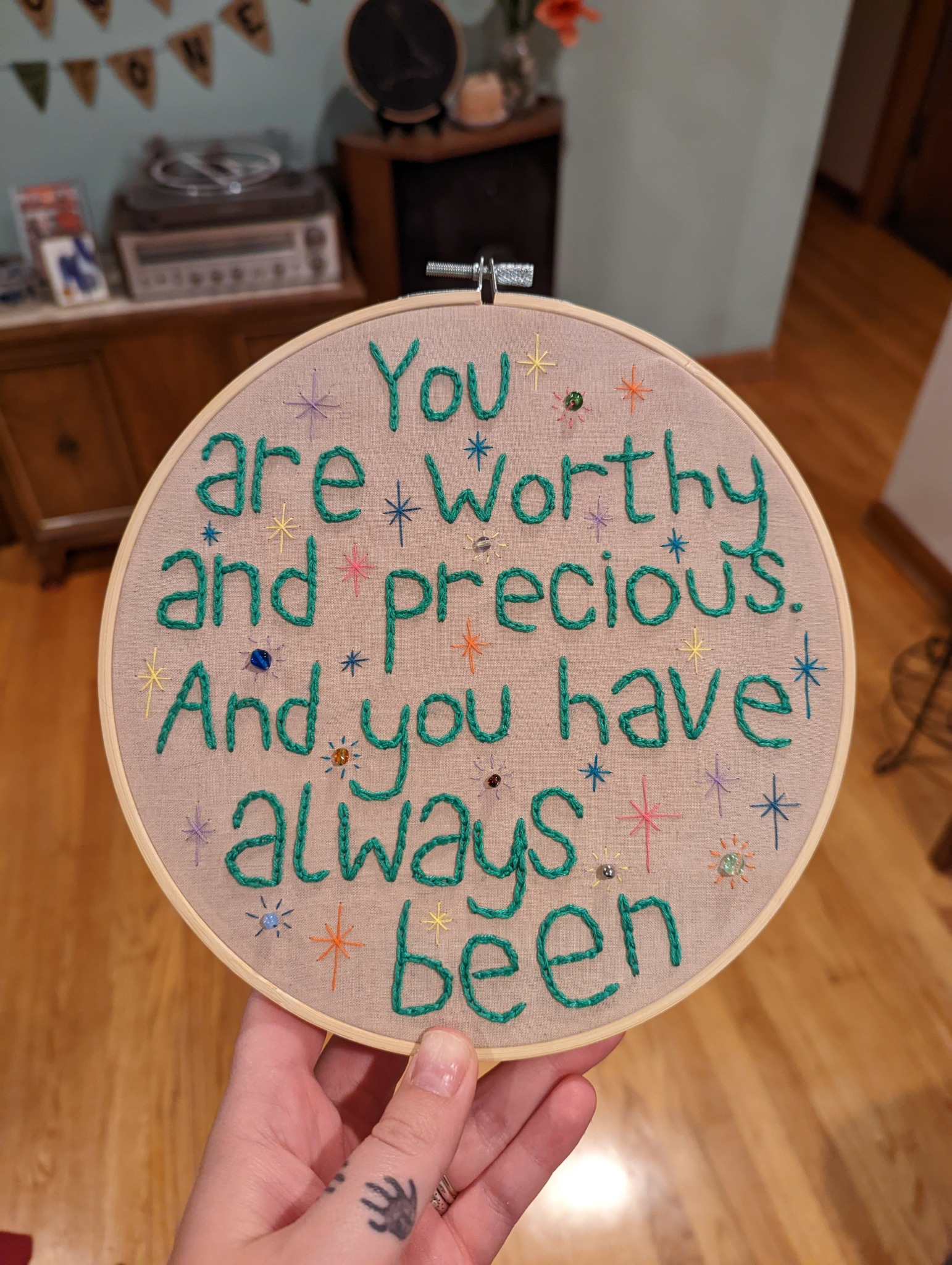
Even with that extensive history of making, I only started selling my work and thinking of myself as a “working artist” about five years ago. I still sell the same things today that I did at that first market- jewelry, accessories and small home goods. I finish my embroidery works in the hoops they’re created in, adding eye hooks and chains so that they can be hung on the wall. I make earrings both out of resin and beads/vintage findings that I’ve thrifted and repurposed. I make necklaces out of hand dyed cotton cording and vintage macrame beads. I’ve even started making some that are entirely knitted and crocheted.
Within the past year or so I’ve also had the opportunity to start teaching. I’ve done a handful of embroidery and jewelry workshops. Starting this spring I’ve led some mending classes that have been fulfilling in an entirely new way. It’s one thing to feel like I can inspire joy and connectedness in people with my art. It’s a whole other beautiful thing to get to put the tools in people’s hands and show them they have the skills to do that too.
My work explores so many skills and styles and is defined more by my processes and values than any specific format. It took a really long time – and a lot of support from friends and family – to start seeing myself as more than just a “jack of all trades, master of none.” So many of the folks I looked up to in my local art community had a tighter focus on what they were making. Many of them also had, at least it seemed to me, more professional training and education. It’s taken years but I’ve finally started seeing my breadth and lack of formal teaching as something that can be an asset. For me the most important thing is that this should all be fun and expressive. Art is play. It helps me represent myself to the world in a way that feels honest. I don’t think I’m necessarily solving a problem for people, I think I’m trying to hold up a mirror – to have people see themselves in the things that I made to help see myself.
What can society do to ensure an environment that’s helpful to artists and creatives?
I think I can best explain my view on this by talking about an amazing local organization I’ve worked with my entire time as an artist, Communication. Communication is a collectively-run, all-ages, sober arts and performing space. I followed them on social media and saw that they’d posted about hosting an art market, so I clicked through to read the application. I had looked into a few other markets before this one but was overwhelmed by upfront costs. But Communication was different – there was no application fee and the market fee was based on sales made that day. That money went directly to help Communication pay its rent. This organization, whose margins are basically non-existent, was focused on lowering the barrier for new and lower-income artists to show and get paid for their work.
It was my first market ever and by far the most supportive group of people I’ve encountered in the arts space. They also invited me to be one of their shop artists – having my work for sale in the shop year round. I started volunteering with them soon after, eager to help provide other folks with the kind of support and opportunity I received. It doesn’t feel like an exaggeration to say that I wouldn’t be the artist or the person I am today without them.
Communication and so many organizations like it rely on the strength of the community to get by and do its work. It’s also a part of a chain reaction. One of the founders credits her ability to get her own footing as an artist to funding through local libraries. I truly cannot imagine all the good that could be done if organizations and communities like this were given funding. They are not only providing opportunities to people like me, but they’re also empowering and inspiring them to go on and do the same thing for other people.
As of 2024, according to the National Association of State Arts Agencies, Wisconsin is 49th in the country in arts funding. We need to push people, local legislatures especially, to understand the good that this kind of funding does in communities. Find a local organization and get involved. Show up to council meetings and talk about the impact these programs have had on you. Talk to your neighbors about it.
On an even more personal level, if you find yourself looking to find a piece of art for your home, or if your workplace is looking to hire a muralist, try to find someone in your area. I guarantee there is someone in your community whose work will blow you away.
What’s the most rewarding aspect of being a creative in your experience?
The perspective that making art gives me is probably my favorite thing. I find that when I’ve had time to be creative, to work on projects or just play in my studio, I’m more thoughtful, I move more slowly and I’m kinder. I look around my studio, which is absolutely packed to the brim with color and tchotchkes and art made by so many different people. There are original pieces that I’ve saved up to buy from some incredible painters. And those are right alongside a clump of chicken wire that my partner balled up while building our chicken coop – I think it is one of the coolest accidental sculptures I’ve ever seen. I have a beaded ring that my nephew made for my birthday last year hanging above a small planter that my best friend bought because it reminded her of me. I’ve also developed a habit of buying every framed child’s art project I come across at thrift stores; they’re some of my favorite pieces.
Even when things come from people I’ve never met, I’m surrounded by the joy and skill that they’ve chosen to share with the world. It makes me think about work of mine hanging in people’s homes, and how honored I am to be there even if we’ve never met.
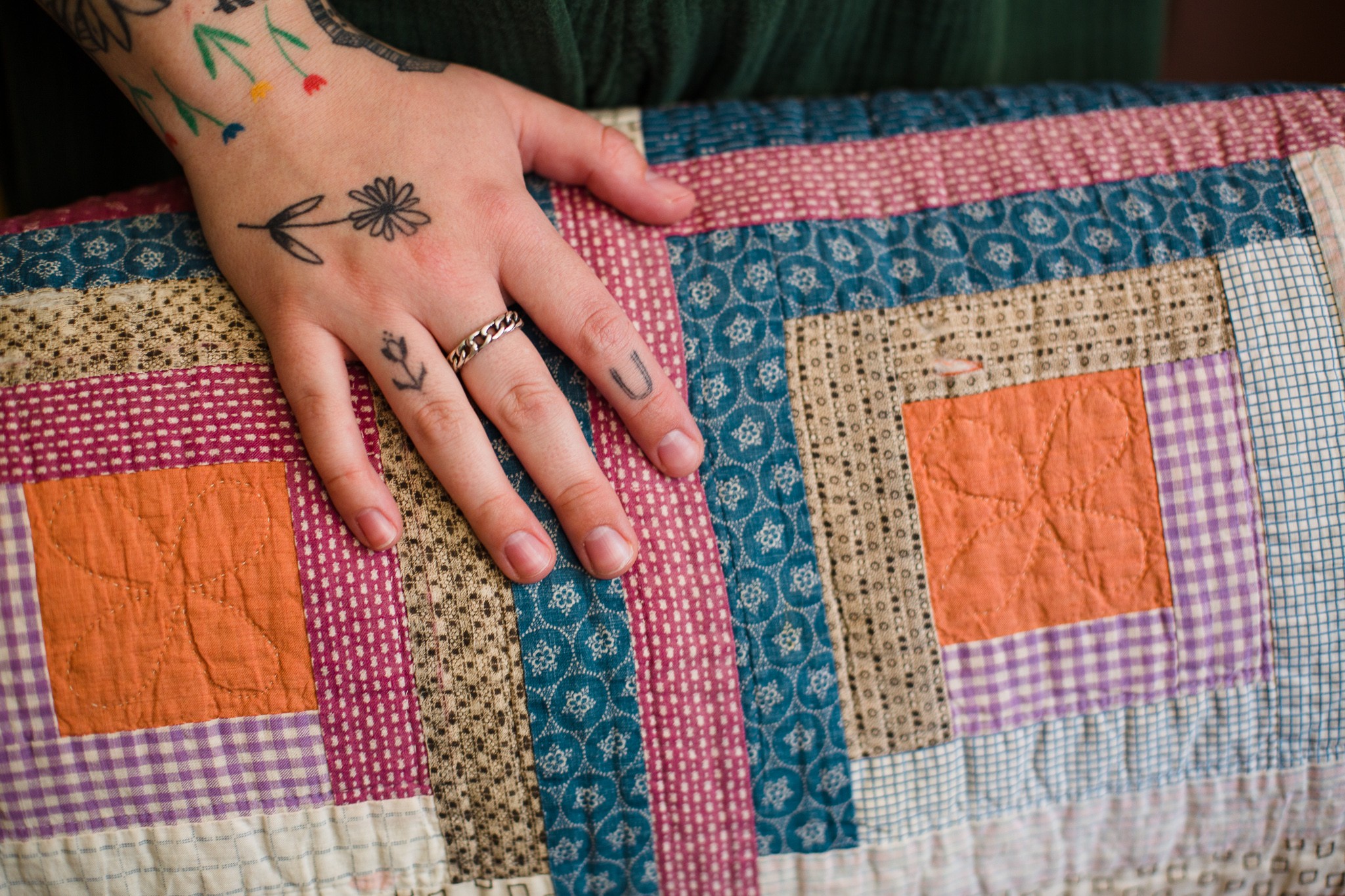
In the past few years I’ve started collecting quilts. Most recently I came across one at a community garage sale. The fabric was so worn that it was beginning to actually disintegrate in places. I took it home only to find an envelope attached to it with a safety pin. Inside was a small card that looked like it was once displayed along with this quilt. It read, “Exhibited by Mrs. Hattie E. Gates. Made by Sarah E. Merrell Case, Her grandmother. This quilt was awarded first prize at a fair in 1840.” On another slip of paper, the cursive is faded and difficult to read. I’m able to make out that it was originally created as a wedding gift in the early 1820’s, making this quilt 200 years old. Hand pieced and quilted together by two women to celebrate a wedding, it’s lived so many lives and represented so many things to so many people. And now it’s in my living room, keeping me and my cats warm.
I spend a lot of time thinking about that quilt and quilts in general. One day someone looked at a pile of scraps and decided they’d put them all together to make a beautiful thing to keep someone warm. Those impulses represent the best parts of human nature to me, and I love being able to lean into those impulses. It’s my honor to help try and keep us warm.
Contact Info:
- Website: https://www.emilymarieeklof.com/
- Instagram: @emilymakesthingseveryday
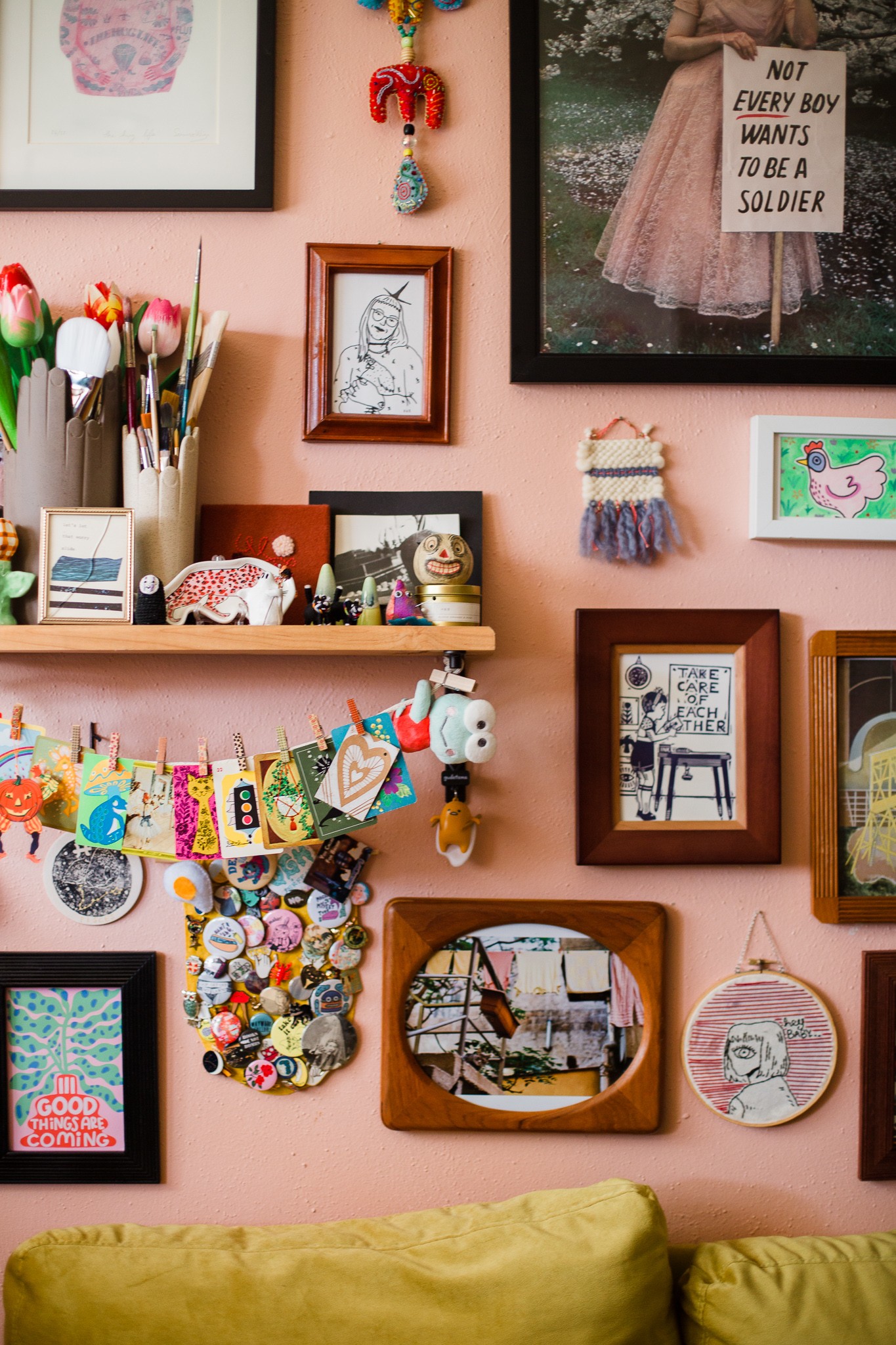
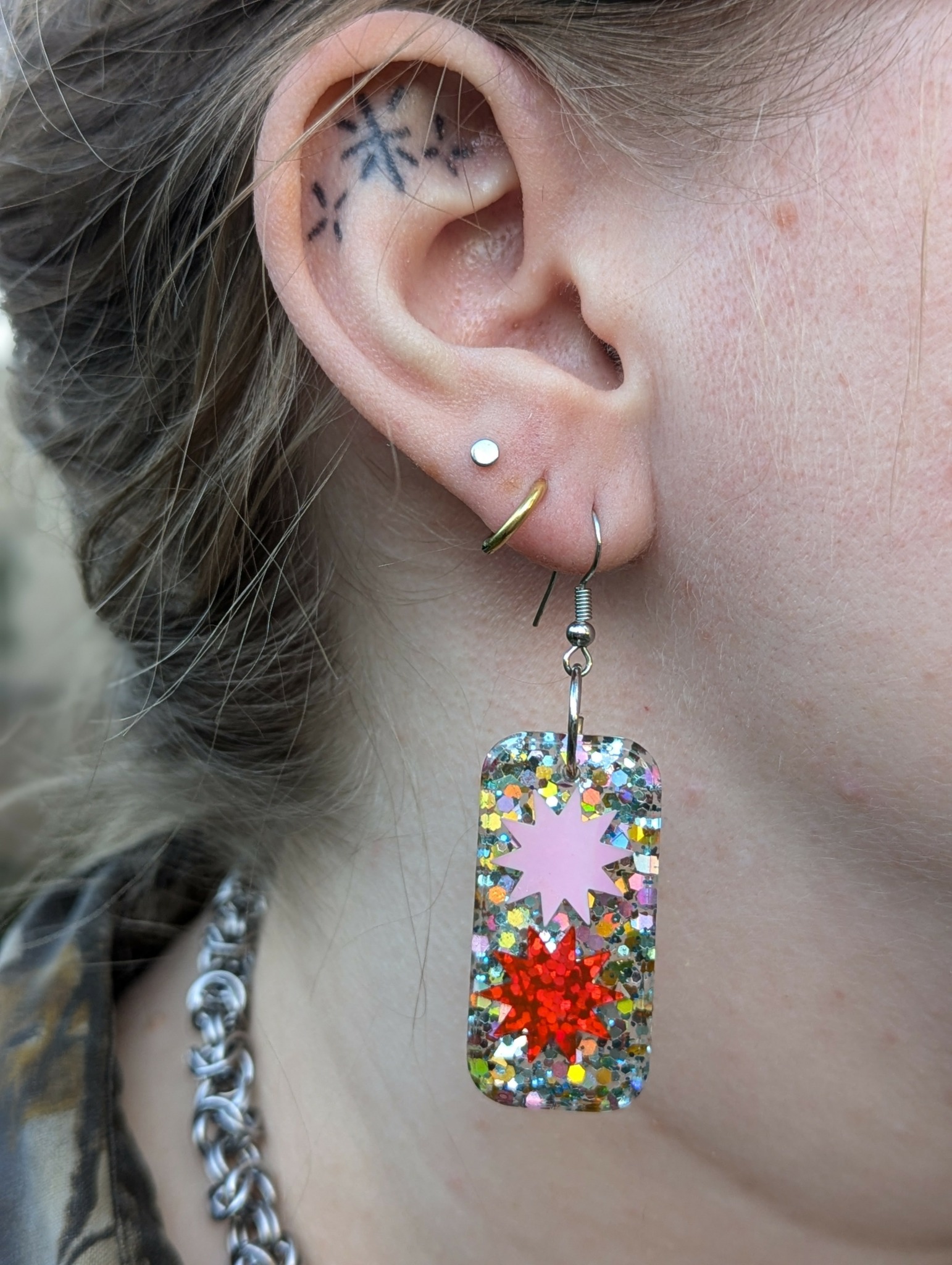
Image Credits
Jennie Bastian