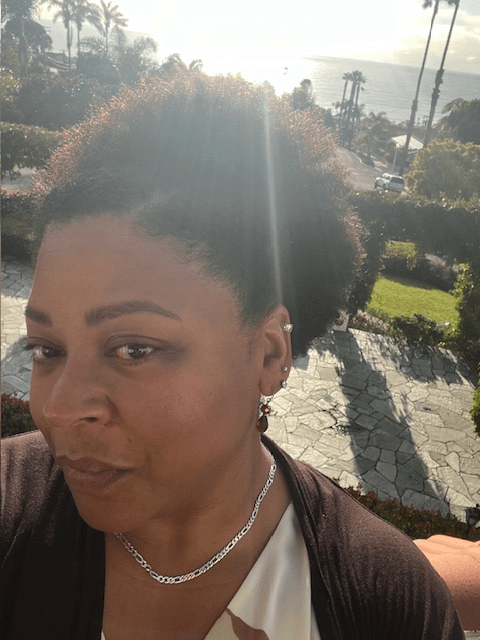
We were lucky to catch up with Elizabeth Hill, Mft recently and have shared our conversation below.
Elizabeth, appreciate you joining us today. We’d love to hear the backstory of how you established your own practice.
When I started my private practice, it was not my plan AT ALL to start a private practice. In 2017 I was working for a private company focused on college students in recovery. This was a dual diagnosis program where I served as the clinical director of outpatient services. Because the program was small, I was also doing individual therapy with all of the participants in the program. I was blessed and cursed at the same time when the program announced its upcoming closure, giving me about 30 days notice to be laid off and unemployed. I was also informed that there would be no conflict of interest if I would like to continue to work with these young adults and see them in private practice. I had some moments of panic around the news of losing my job, then heard from the parents/families that they were also having some angst around their children being left without a therapist. Signs began to point toward the idea of beginning a practice, especially knowing that I could open my doors with a few members who were already familiar with me.
The first step was to wrap my head around the possibility and the second step was to talk to my close friend/colleague, Naomi, who had been in private practice for about a year already. Naomi showed me the ropes and helped me immensely by walking me through the steps she had taken to start her business. She offered up her tax professional, Carol, as a resource and also subleased her office space to me for one day per week during my first year. The referral meant so much to me because I had no idea how to create a corporation, prepare corporate tax returns, manage bookkeeping or how to do the “tasking” involved in running a business. Carol created an S-Corp for me within a few weeks and I was up and running by the time the I was officially unemployed. I think often in my life that things work out the way they’re supposed to – this was one of those times without a doubt. I received my lay off notice in October 2017 and was seeing people in private practice by November of 2017.
Early challenges in the business were centered around the “how to” tasks that were completely foreign to me. Every week I was asking Naomi and Carol how to do something and they were both SO patient with me. The beginning was all about asking questions, learning the tasks of business ownership, adjustments to my schedule and managing an entirely new set of duties/responsibilities. I opened the doors with 9 participants in therapy and would see them all in one day. I eventually got my own office, grew my census, added a second day, then a third day. At the time of this interview, we’re on the 7 year anniversary of that October when I was panicking about being laid off. The census is full, the business is thriving and the work I’m doing is continually rewarding, meaningful and balanced.
If I were to do anything differently knowing what I know now, I would have balanced my time, boundaries, expectations and limitations a bit better. I have some strict policies for myself to prevent burnout, manage my time well and accomplish everything for the business in a reasonable amount of time. Some of my personal policies include no more than 6 appointments per day, no more than 18 appointments per week, no more than 4 work days per week and taking time off once per quarter (even if just a few days). I want my clientele to see a rested, balanced version of me so that I can be present for them and true to my own values of self-care, rest and self-compassion.
To any mental health professional who wants to venture into private practice, I would advise that you find your “Naomi” and your “Carol” to mentor your process, encourage your successes and to cheer you on. Support and expertise from others really matters. In psychology programs there is little to no education around business management and it really was a brand new skill set for me. I encourage people to seek mentorship wherever possible and it can be even better if your mentors can become friends.
Great, appreciate you sharing that with us. Before we ask you to share more of your insights, can you take a moment to introduce yourself and how you got to where you are today to our readers.
I grew up in Chula Vista, California in a single-parent home, being raised by my mother and grandmother. My family ended up moving to the south Oregon coast and I lived there as an adolescent, attending the community college there (where I obtained my AA degree) before returning to San Diego to attend SDSU (undergraduate studies in psychology). I had been interested in psychology since I was child, being fascinated with people, behavior, families and the effects of trauma upon family systems. I majored in psychology at SDSU, minored in Africana studies and spent four years there, doing lab research and preparing for graduate school in psychology to become a therapist. I completed my master’s degree from Chapman university in San Diego, then did practicum studies and internships working with local community populations in San Diego county.
Beginning in 2000, I worked with children in a variety of settings. I taught preschool, worked in daycare facilities, worked with children in the foster care system and also worked with incarcerated women and their children in an alternative sentencing program. I then transitioned to working primarily with adults in settings such as inpatient hospitalization, outpatient intensive treatment programs, outpatient treatment with incarcerated adults and convicted s*x offenders on parole/probation. I have always had an abundance of empathy for the most disenfranchised/marginalized populations in society – hence my work in some very challenging settings.
I completed a required 3,000 hours under supervision, sat for two licensing exams and became licensed as an MFT (marriage and family therapist) in 2015. I started my private practice in 2017 and currently focus solely on my practice where I see disenfranchised/marginalized individuals, couples and families. Since Covid began in 2020, I’ve been working remotely 100% of the time and no longer have an office outside of my home. This has enabled me to reach more people throughout the state of California and creates such a convenience and flexibility – it has worked very well for 4 years from now! I recently became approved to conduct telehealth in the state of Florida, where I can reach more immigrant and various ethnic populations as well. I am very proud of the work I am doing and it is truly fulfilling, rewarding, inspiring to be a part of so much healing and recovery.
My specialties in private practice are around helping people heal from attachment wounds, heal from historical trauma (common to Black and indigenous populations) and to develop more skills to have healthy relationships in all aspects of their lives. I’m most proud of the work I do with people who have not historically had the access or the ability to seek therapy. I tend to work with individuals, couples and families with marginalized identities (Black, brown, gay, trans) in particular, because therapists of marginalized identities are still a great minority in the field.
If you could go back, would you choose the same profession, specialty, etc.?
Over and over again. Psychology, insight, self-awareness and introspection have been my passions since childhood. It is truly an honor and a great privilege to do work that rarely feels like a “job” to me.
Other than training/knowledge, what do you think is most helpful for succeeding in your field?
I think I succeed because I really care about each person with whom I come into contact. I am greatly invested in raising awareness around mental health, destigmatizing the field, helping us heal and fighting against systems of oppression so that we can all have equal rights and access to resources. I have also been successful because I have great support around me – people who cheer me on and want to see me do well.
Contact Info:
- Website: https://www.psychologytoday.com/us/therapists/elizabeth-a-hill-san-diego-ca/359959
- Instagram: https://www.instagram.com/ehill_mft/
- Facebook: https://www.facebook.com/ehillmft/
- Other: https://www.blackfemaletherapists.com/directory/listing/elizabeth-hill/