
We’re excited to introduce you to the always interesting and insightful Eliza Daniek. We hope you’ll enjoy our conversation with Eliza below.
Eliza, thanks for taking the time to share your stories with us today. So, naming is such a challenge. How did you come up with the name of your brand?
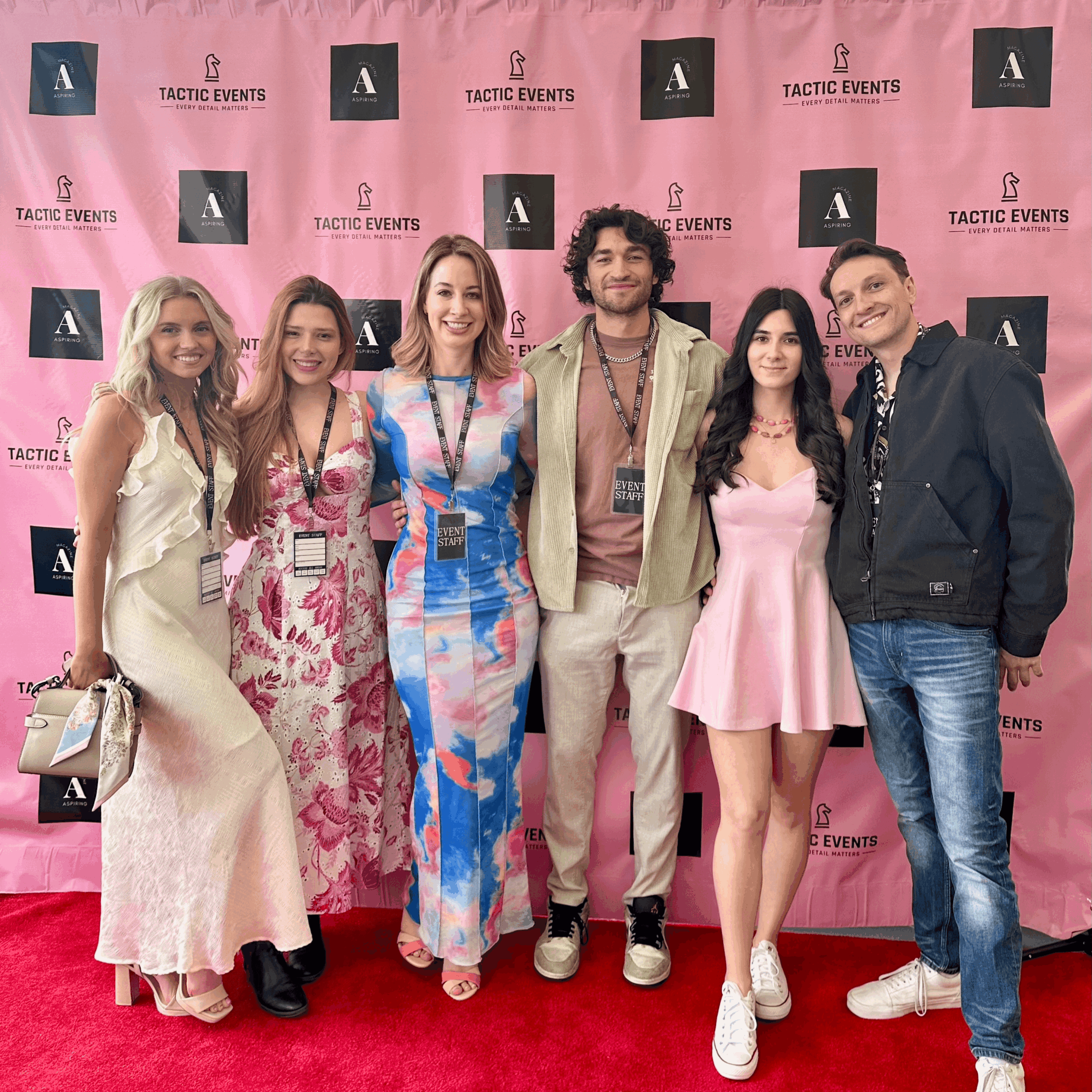
When I was 11, my parents sent me to a summer horseback riding camp. I was terrified. I spent the entire two weeks trying to avoid getting on a horse. These animals felt huge and intimidating, and I was just a shy little girl trying not to be noticed. But life has a funny way of turning things around. Just two years later, I not only got over my fear, I owned a horse. His name was Tactic. He wasn’t the most well-bred horse at the stables, but he was mine. And together, we started competing in show jumping. We trained hard, learned together, and we brought home trophies. Eventually, I even became a horseback riding instructor and taught for a year. The world of horseback riding is competitive and resource-heavy. You need multiple horses, expensive equipment, sponsors, and constant travel. I didn’t have much, but I had passion and determination. That experience taught me something I would carry into adulthood. When resources are limited, perseverance becomes your greatest tool. Years later, that same grit followed me into entrepreneurship. I’m originally from Poland, but by the time I turned 30, I had lived in seven different countries. I earned degrees in the United Kingdom and France and eventually found my way to the U.S., where I’m now pursuing a Doctorate in Business Administration. Starting over in California wasn’t easy. I had no connections, no family, and no safety net. But I had a vision. And I knew exactly what I wanted to call my company: Tactic Events. The name is a tribute to my first horse, my first lesson in resilience. The logo, a horse shaped like a chess knight, often gets people asking if I run chess tournaments, which always makes me laugh. But the symbolism is intentional. Chess is about making smart decisions, just like event planning. Horses represent strength, grace, and qualities I admire and aim to bring into every project. The black and white color scheme grounds it all, a reminder to stay confident and clear even in chaos.
As always, we appreciate you sharing your insights and we’ve got a few more questions for you, but before we get to all of that can you take a minute to introduce yourself and give our readers some of your background and context?
Both of my parents are entrepreneurs. They had their own businesses ever since I can remember, so I always knew that one day I would be a business owner too. I just didn’t know what kind of business, where it would be, or when it would happen. After high school, I spent a year at acting school. But very quickly, I realized that I preferred being behind the scenes rather than on stage. I was drawn to what makes things work, especially the coordination, logistics, and operations. That’s when the idea to study Events Management came naturally. I started volunteering at film festivals, conferences, and cultural events, and it became clear that this was my path. I’m a total logistics enthusiast. There’s something magical about taking an idea, something that didn’t exist before, and turning it into a real experience. You bring people together in one place, at one time, and they leave with something new: a feeling, a memory, a moment of connection. Each person walks away with something different, and I find that incredibly special. I’m also obsessed with customer service. Maybe it’s something I picked up while living in England, France, or Switzerland, but I’m passionate about making sure things run smoothly and that people feel genuinely cared for. When you think about it, events have always been a part of human life. People were celebrating milestones many years ago, and we’re still doing it today. The only difference now is that we have event planners! (laughs) Over the years, I’ve built my portfolio by working with a wide range of companies and industries. I’ve worked on TED conferences, the Cannes Film Festival, Venice Film Festival, and Toronto Film Festival. I’ve organized events working for JPMorgan, and the London School of Economics or The Hollywood Reporter. I’ve worked with small independent companies and large global corporations. Every single event has taught me something new. After more than eight years in the industry, I realized that while I was creating events with my team, it was always under someone else’s company name. I wanted to build something of my own. I needed a personal brand where people could recognize my work. I think what sets me apart from other event planners is my adaptability. I’ve had to adjust to new situations so often that it’s become second nature to me. I actually thrive under pressure and in this field, that’s essential. You have to expect that something will go wrong, every time. But it’s not about avoiding problems, it’s about how you handle them. I always remind my clients, “Let’s not stress about what we can’t control.”
Have you ever had to pivot?
Absolutely! I think my 20s were all about trying, learning, failing, moving, and starting over again. I first opened my company in the UK, but it didn’t go well. I couldn’t quite fit in, and it just didn’t feel like the right place for me. So I moved to Spain, then Sweden and Switzerland, and eventually settled in France to complete my master’s degree. My goal was to meet like-minded people and create something meaningful together. But then COVID hit. I moved to Poland and opened my company there in 2020. I quickly realized I wouldn’t be able to find clients due to the restrictions, so I got a job at J.P. Morgan. I put my business on hold and tried to focus on a corporate career, but I felt stuck. I still remember sitting in my apartment, asking myself, “Is this really it? Am I going to work here for the next 30 to 40 years?” So I packed everything into one suitcase and bought a one-way ticket to LA. It wasn’t a Hollywood movie moment, but it was definitely a tough and important life lesson. In my opinion, the US is the best place for entrepreneurs. I saw limitations in Europe that I could easily overcome here. I love how driven people are. If you’re willing to take risks, the payoff is unlike anywhere else. For example, before I started organizing events full-time, I needed cash flow, so I began renting out items for events. Even if your idea has just a 10% chance of success, banks here are often willing to invest. That kind of opportunity and support is rare. Also, I think the biggest misconception about this industry is that when people hear “event planner,” they immediately say, “Oh! You organize weddings!” And while I love weddings, there’s so much more to this profession. These days, anyone can take a weekend or online course and call themselves an event planner. But do we have the same level of training and experience? I think you know the answer. What many people don’t realize is that event planning is a complex discipline. It involves far more than picking a theme or booking a DJ. We study risk management, crowd control, budgeting, logistics, safety regulations, and much more. A simple example? Knowing how many emergency exits are required for a specific number of attendees. In an emergency, everyone must be able to evacuate the venue in under several minutes. That’s not something you learn in a weekend course, it takes real training, attention to detail, and hands-on experience.
Are there any books, videos or other content that you feel have meaningfully impacted your thinking?
Yes, absolutely. Over the years, I’ve read several books that have shaped the way I think about entrepreneurship and management, including How to Win Friends and Influence People, What They Don’t Teach You at Harvard Business School, The 4-Hour Work Week, and Why “A” Students Work for “C” Students, among others. But the one book that truly left a lasting impression on me is Screw It, Let’s Do It by Richard Branson. It’s short and accessible, which makes it a great starting point for anyone new to business literature, but beyond that, it resonated with me personally. Branson shares how he built successful ventures despite having limited resources and living with dyslexia. That hit home for me. I’ve always struggled with grammar and learning new languages, but that didn’t stop me from learning both French and Spanish. I sometimes mix up letters or forget phrases, and for a long time, I saw that as a weakness. Branson helped me realize that creative, out-of-the-box thinking often comes from people who see the world a little differently. He didn’t try to “fix” his challenges, he used them to his advantage. That shifted my entire mindset. I stopped comparing myself to others and started focusing on building teams with complementary strengths. For example, today I work closely with Lizabeth Greenwald, a New York-based architect who previously designed for brands like Tom Ford and Gucci. She brings a strong design sensibility to our projects, while I focus more on strategy and logistics. That kind of collaboration, where you’re not trying to be the best at everything but instead surround yourself with people who elevate your vision, is at the heart of how I approach entrepreneurship now. And lastly, I have to mention the importance of having a strong support system. My parents, especially my mom, have always believed in me. That emotional foundation gave me the confidence to take risks, from moving countries to launching businesses in completely new environments. I wouldn’t be where I am without that kind of encouragement.
Contact Info:
- Website: https://tactic-events.com/
- Instagram: https://www.instagram.com/tactic.events/
- Facebook: https://www.facebook.com/profile.php?id=100063733441524