



We were lucky to catch up with Elena Agaragimova recently and have shared our conversation below.
Elena, thanks for taking the time to share your stories with us today So, let’s start with a hypothetical – what would you change about the educational system?
When it comes to career development, one’s journey starts way before he or she enters the working force. It starts in schools and universities. Career development professionals and educators must ensure that we are preparing the next generations to come for the real world. Too often, we focus on academics, but in fact, there are more important factors at play. There needs to be an integration between academics and career advising for better student outcomes. In addition, parents now often want their children to attend university to be better prepared for careers. Yet, that is not the case. There is a huge disconnect between what universities are teaching and what companies look for in a fresh talent.
The world is constantly shifting with the ever-changing dynamics of technology & industry demands. With the new and promising technologies like the Internet of Things, Driverless Cars, Cyber, Robotics, and Blockchain taking the forefront in this information age, one can only imagine what technology would be like in the decades to come. As per World Economic Forum, it is an estimate that around 65% of students entering into primary school today will be working on jobs that yet do not exist. This seems to be quite possible as most of the jobs existing today will be completely automated with the help of artificial intelligence. Thus, the question is, ‘how can schools begin to prepare students for careers in the future?’
Schools and universities must integrate real hands-on experience, as well as intensive soft skills training into the curriculum. In today’s institutions, career services is not something that is required for students to take part in and even if there is a course that is about career planning, the credits for it are on average 1 to 2 credits only. Career services, if at all existing in an institution, have very low weight in the students’ educational journey. When looking at the future of work reports from various firms, we can easily acknowledge that soft skills such as emotional and cultural intelligences, critical thinking, stress management, resilience, and communications, just to name a few, are on top of lists of what employers look for in a talent. Yet, most schools and universities do not offer courses or extra-curricular activities on these topics. These soft skills are essential in the future world of work where technology will supplement a great deal of technical skills. What we need is to create leaders who are able to motivate, lead, inspire, create and manage, yet we keep graduating students who are lacking these skills.
Next, requiring students to get exposure to various industries and job functions is essential. Students are choosing majors and degrees of study without having any idea of what the role entitles. Schools and universities need to have regular company visits, shadow opportunities, project based or freelance work for students to have access to while studying throughout their educational journey. Today, universities mainly focus on junior or senior year students when it comes to career explorations. This is too late. By this time, if the student does an internship at that stage and realizes that they do not like their chosen degree of study, it might be too late for them to make a change. Students need to start internships, volunteering, projects, and company visits every semester (and summer) starting from 2nd year onwards. This way they can get a real insight of whether their chosen degree and future career path is the right one for them.
The first most sensible way to engage with employers is to engage alumni or parents of the students who might be working in companies who can arrange company visits, guest speaker sessions, shadow opportunities, and internships. Next, collaborating up with professional bodies and organizations can also help. Joining groups where retirees want to give back to the youth and thus can offer their expertise, coaching, or mentoring to the students. Outsourcing coaches and mentors who can give one on one career sessions or group workshops to students at different parts of their educational journeys and career explorations will be of great benefit to the students.
And, last but not least, rethinking the curriculum, length of programs, and overall individual talents of future students. Not everyone needs a 4 year degree, not everyone is good at academics, but great with their hands instead, and not everyone can afford traditional education. Creating different options to make education more inclusive in a real way – not in a way that is on paper only – but in fact, actually creating quality opportunities for students who do not fit the traditional path to university education – will be the key in ensuring our future generations are prepared for the future of work.
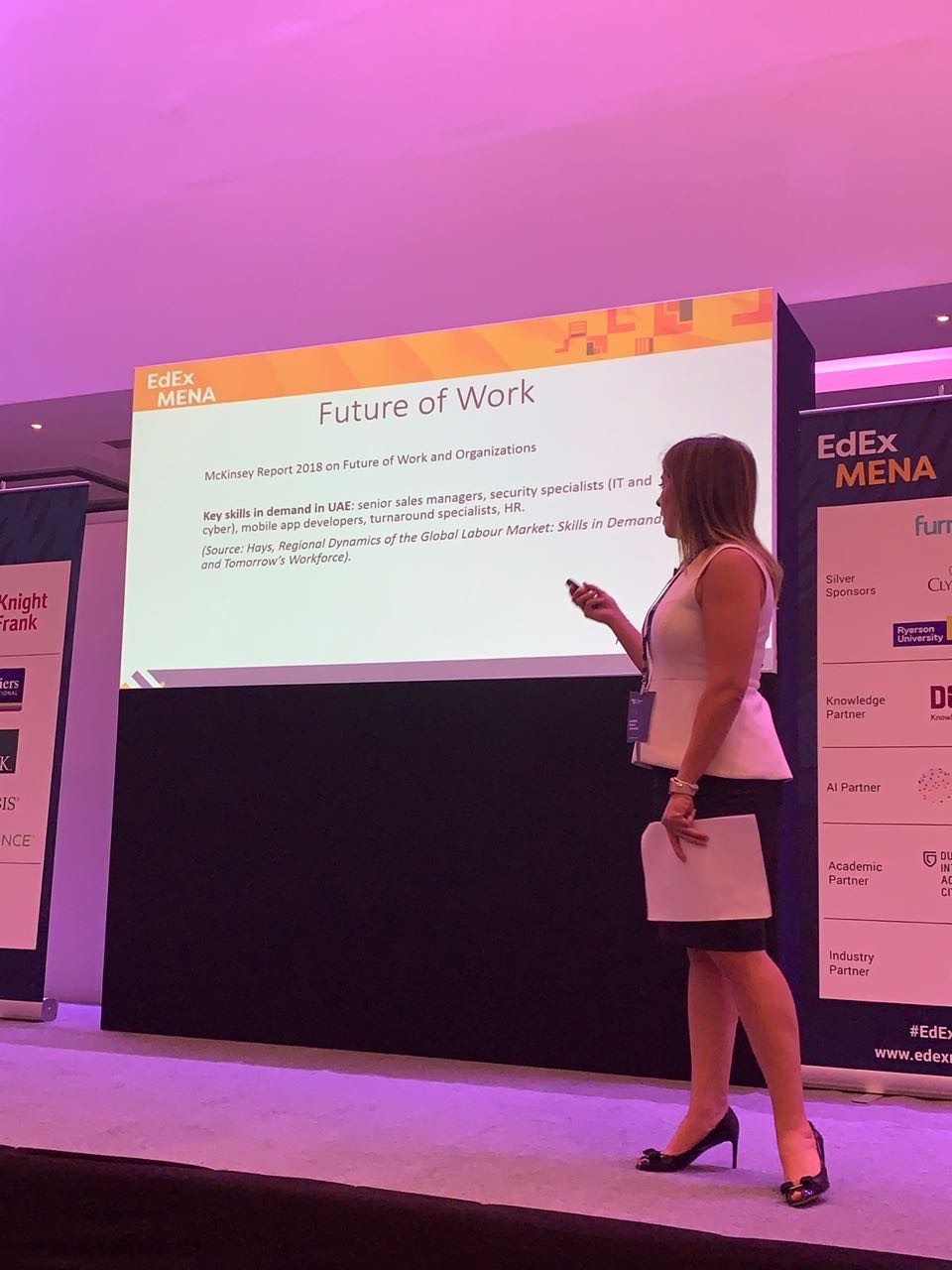
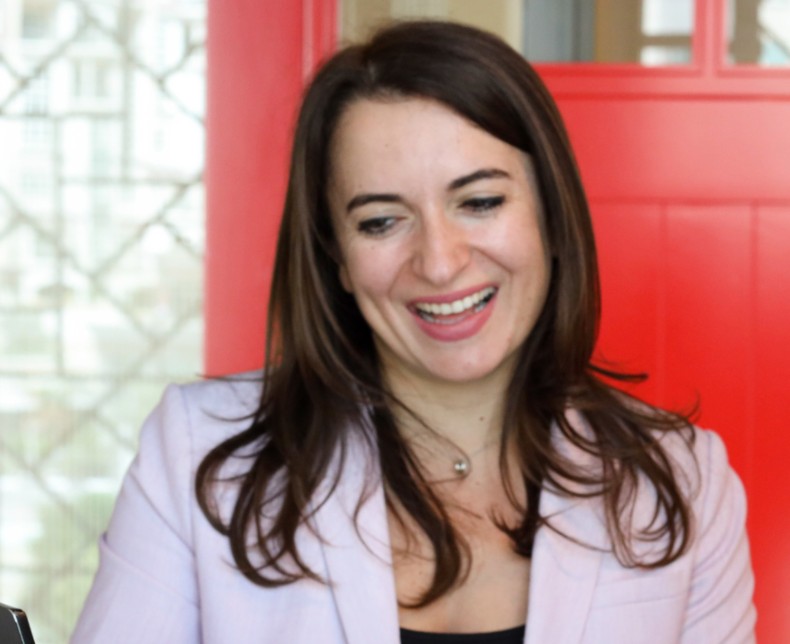

Awesome – so before we get into the rest of our questions, can you briefly introduce yourself to our readers.
I like to say that for me my career journey was a hobby that turned into a career and a business. I have created my own career path essentially but continuously experimenting with jobs and ideas, and it might sound silly – but if I didn’t enjoy a particular work or experience, I would just move on to something I do enjoy, hence, ending in a sweet spot where I genuinely wake up excited to do what I do every single day, maybe not all day but definitely every day. It is a privilege I do not take for granted, and also believe we can all feel this way.
That is probably the most thing I am proud of is creating a career and a lifestyle I enjoy, after lots of trial and ups & downs, and now helping people and organizations do the same for their individual aspirations and business goals.
In terms of my experience – I am a talent acquisition & development specialist, credited with combining operations, education, and international expertise to design and deliver programs for diverse audiences. I am known for my ability to drive change within individuals and organizations that are looking to reach their potential and maintain their competitive edge in the business world. I started my career in higher education, having worked across various institutions, departments and regions. I, then, shifted towards corporate learning and talent acquisition in the last few years of my career, providing talent onboarding and development to multi-nationals across the MENA region. In 2020, I made a move back to the US (after 7 years in the Middle East region) to expand my brand and work here and be closer to family.
During my time in Dubai, I’ve also started a couple of companies: I founded Bloom Youth – a platform that prepares youth for the future and Co-Founded Bessern – tech solution for productivity and well-being in organizations.
Currently, my work is around leading on a project for a US based tech company to help bring on board tech talent, as well as design career path and growth opportunities for the whole organization.
I have a strong passion for L&D, promoting creative and engaging workplaces and all about optimizing performance through the development of others with a keen interest in neuroscience. As a career and talent development coach, I have over 13 years of experience working individuals across different generations, supporting them in achieving their professional and personal goals.
I am a regular contributor (& sought after speaker) to magazines, podcasts, events, and publications globally on topics of professional development and future of work.
When I am not leading talent transformation, I volunteer my time to help young students with their career development goals and military veterans who are looking to transition towards the private sector. On my free time, I enjoy boxing, running, and spending time in nature/outdoors as much as possible. I reside in Washington, DC area.
Any insights you can share with us about how you built up your social media presence?
Our main social media channels are LinkedIn & YouTube, so step one – know your audience and where they ‘hang out’ online. Social media is a long term game. In our case, we had little to no budget, so everything we did in terms of growing our audience (and still doing today) is organic, personal, and comes directly from us. We do not have a team managing our channels, but instead we work with freelancers for editing & use automation tools to get our content out there on consistent basis. Step two – automate where possible and stay consistent.
Growing a brand from scratch is about showing up consistently day after day, week after week, month after month, and doing that for years – that is how you build trust and credibility with your audience. Engaging with your audience is equally as important. Many people give up on growing their network because it takes time, but there is really no magic formula to this. Genuine relationships with your customers takes time. You cannot rush the process.
Another hurdle we had to overcome is trying to be perfect. The reality is your first post, article, podcast, video will suck (for lack of a better word), so just get started – it gets better but only with practice and experience. Do not expect your first piece of content to be great – unless you have a huge production team and resources behind you and you are a professional public speaker / content creator. You just have to get started – it is the only way to get better.
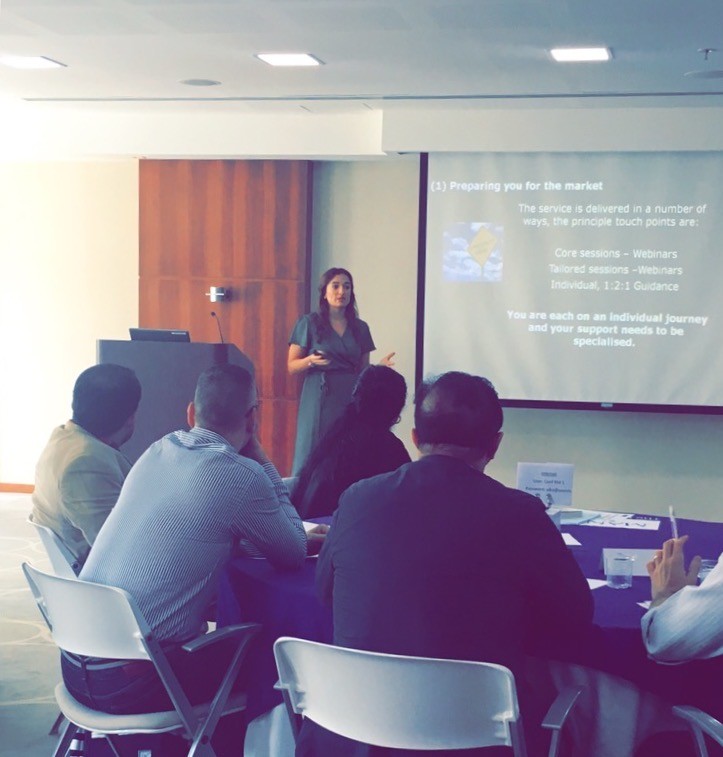


How about pivoting – can you share the story of a time you’ve had to pivot?
I feel like I do that on regular basis – because in order to stay competitive in career, business, and life, you have to adjust course as needed – and as many times as necessary.
From business side, we started off as a B2C business, only to realize that we cannot afford to be in that space as customer acquisition in B2C is very costly. And, being a small company with little capital, we simply could not afford that. We also recognized that our products and services are more suited for a different type of client – head of HR, talent development leads, and companies looking to transform their teams. That is where we found our sweet spot and pivoted to be a B2B company – where we found success.
From personal side, shifting from Dubai back to DC area was a big decision. After 7 years in Dubai, building a life and a business there and then uprooting all of that in midst of a pandemic was a big pivot from all sides (personal, emotional, financial, and mental). I knew it had to be done and ultimately, I saw myself being in a bigger market such as the US – I needed that challenge and so I jumped! It was one of the hardest times in my life – those 4-6 months of shifting brought me to my knees, my health suffered and I hit burnout. It was also one of the best time I look back on because it taught me more resilience and gave me more confidence than I could have ever imagined. It also forced me to learn to take breaks and put myself first, not my business, not my work, but myself. It taught me that as low as I can get, I have what it takes to come back up every time, and that is a powerful feeling to have. That is priceless, and worth every struggle I endured.
Contact Info:
- Website: bessern.co
- Instagram: @elenaagaragimova
- Facebook: https://www.facebook.com/bessern/
- Linkedin: https://www.linkedin.com/in/elenaagaragimova/
- Twitter: @elenaagaragi
- Youtube: https://www.youtube.com/channel/UCX-tUIvseCy5SKgzkZuXv7Q
- Other: Personal website – https://elenaagar.com/ Bessern YouTube – https://www.youtube.com/bessernofficial