



We’re excited to introduce you to the always interesting and insightful Ebonique Boyd. We hope you’ll enjoy our conversation with Ebonique below.
Ebonique, thanks for taking the time to share your stories with us today Coming up with the idea is so exciting, but then comes the hard part – executing. Too often the media ignores the execution part and goes from idea to success, skipping over the nitty, gritty details of executing in the early days. We think that’s a disservice both to the entrepreneurs who built something amazing as well as the public who isn’t getting a realistic picture of what it takes to succeed. So, we’d really appreciate if you could open up about your execution story – how did you go from idea to execution?
I had a job that became antithetical to everything I was and I was very stressed about it. All my favorite mentors left the industry and suddenly I was getting more senior-level jobs at the same time. My husband said that my problem was that I didn’t have hobbies outside of my job. Everything I was doing was work-related and this caused me to be more stressed than I needed to be. He told me I needed a hobby.
I remembered that at one time I loved art. I even briefly went to the top art & design school in America, Parsons in New York City. I just thought it wasn’t the right fit for me career-wise, as you can probably notice, I get a little obsessive and I didn’t think that nature was practical as an artist.
So I thought that I could just enjoy art not make art as my official hobby. I would spend $5000 a year to look at art and travel to places that had art that I wanted to see. I would spend money on different art books and just learn more about the industry that I didn’t think I could ever work in or afford.
I never thought that I could afford fine art with my small discretionary income allotted to this. I only saw the headlines, Jean-Michel Basquiat selling for $100+ million or a Andy Warhol selling for $190+ million. However, I soon found out that I could probably afford a great piece with my $5000 budget AND I found out that both Warhol and Basquiat sold for reasonable prices when they were alive.
If you were to buy an Andy Warhol during the Factory days, it would have been $5000, about the equivalent of $25,000 today. You would now be able to sell that in the millions! I thought that Warhol was the exception, but I soon read research by Stanford economists who said that fine art appreciates about 7% per year which is better than bonds.
I learned all of this information, but I was still working my stressful job. However, now I was armed with this new information and I thought that I would need professional-level help to actually find the next Warhol or Basquiat. So I started trying to find an art advisor, but their commission structure and system isn’t designed to help middle-class consumers like me. They charge the consumer 10% of the purchase price, so if my purchase price was $5000, they would only make $500. For that price, they would be giving me either one-size fits all advice or not be working at the level that I want.
I started to think about how I could get quality advice for a price that I could actually afford. I thought that if I could solve the problem for myself, I could possibly make some money helping others too. I put together some low-tech solutions that were not working and then COVID-19 hit the country. My parents told me to pick up my little sister from a COVID-19 hotspot and have her quarantine with me at my apartment. She just happened to be a computer science sophomore who recently was awarded first place for her NSF-sponsored project on piezoelectric heart sensors in Illinois.
I told my sister about my problem and she said that I should just use machine learning. That machine learning could do everything that I expected an art advisor to do and that it “was very easy.” I asked her how it was easy and she asked for equity. A few months later we built MVP 1.0.

As always, we appreciate you sharing your insights and we’ve got a few more questions for you, but before we get to all of that can you take a minute to introduce yourself and give our readers some of your back background and context?
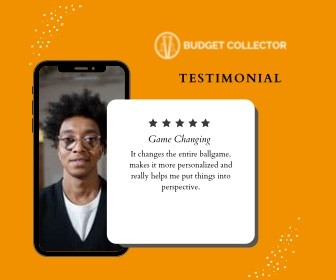
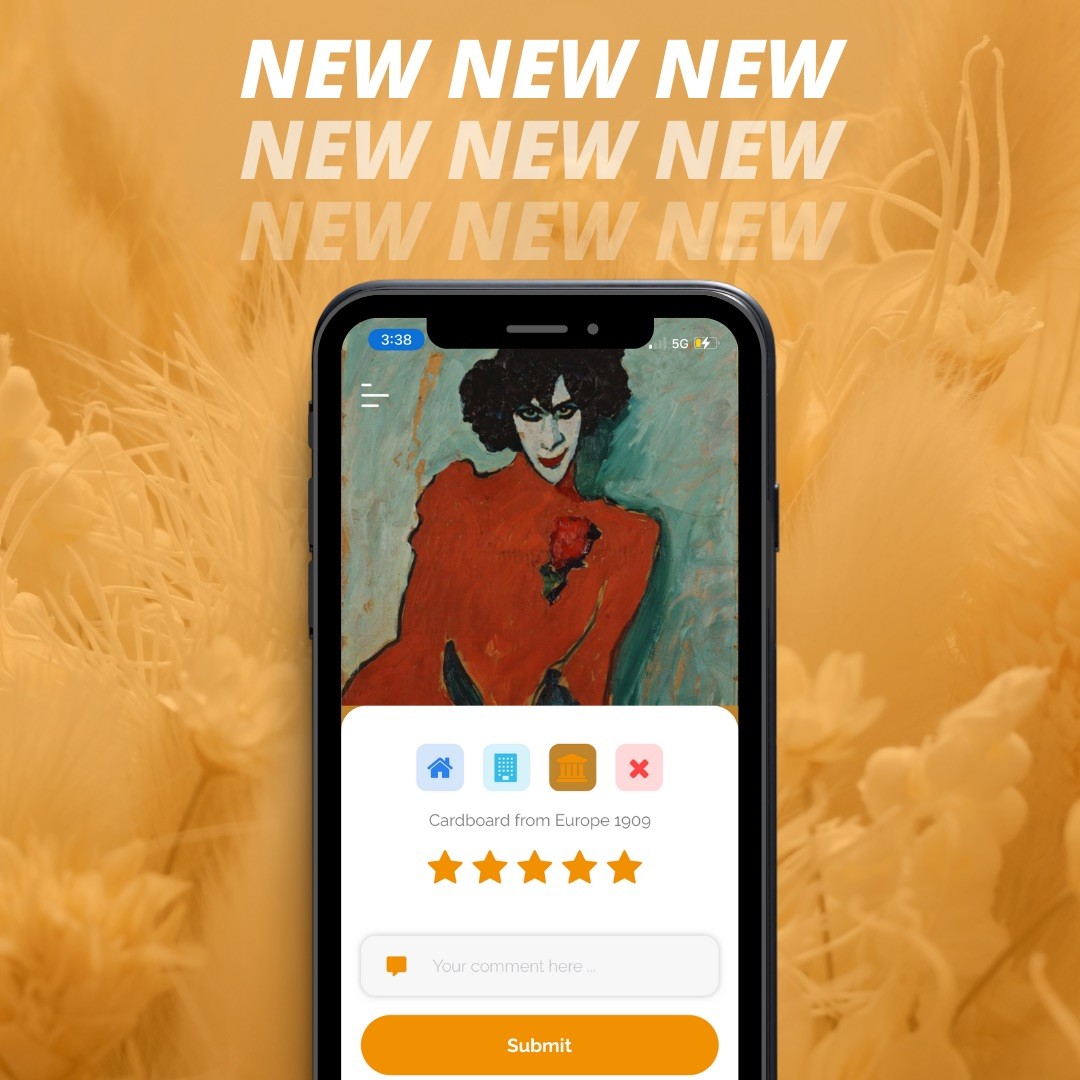
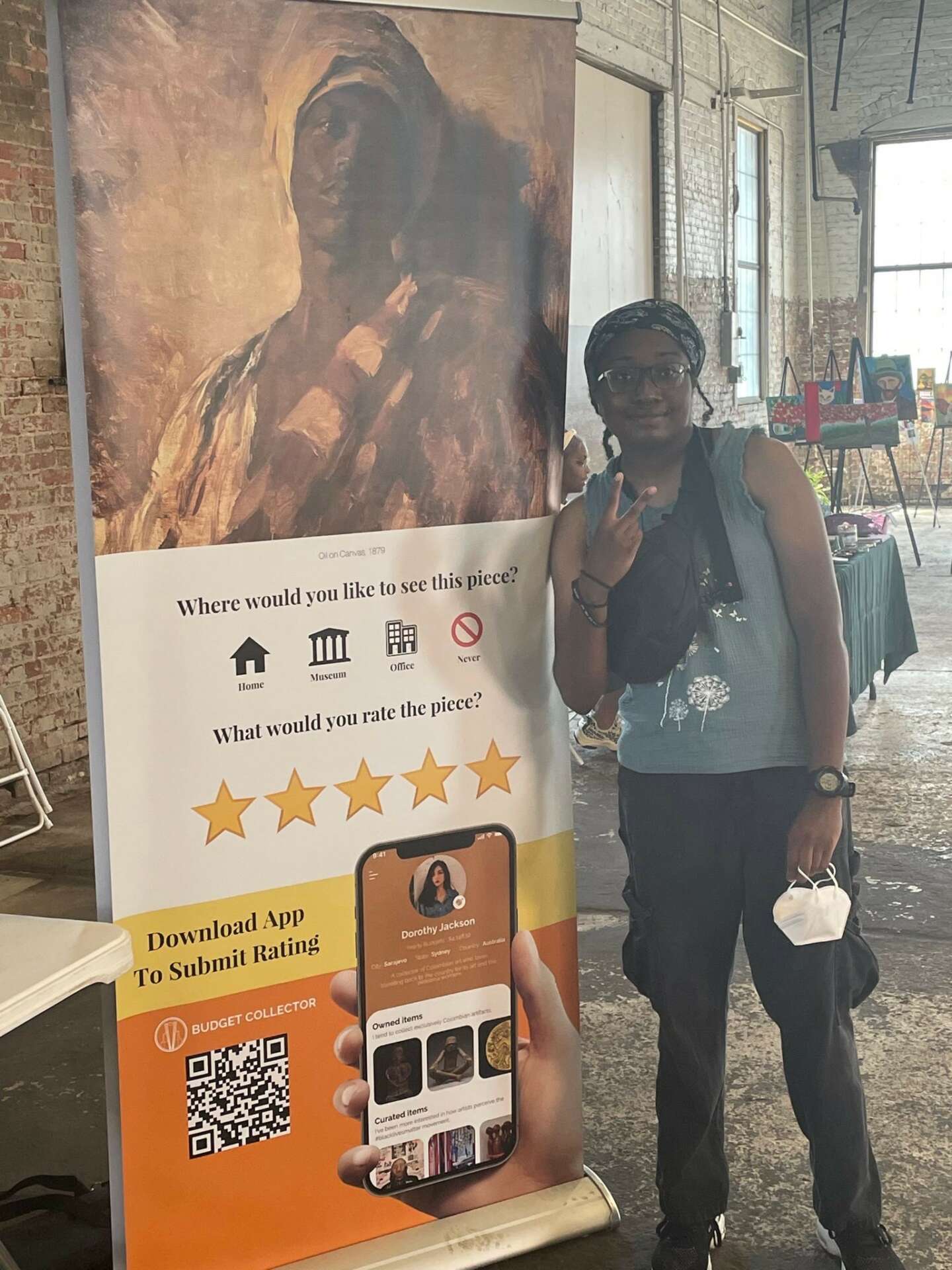
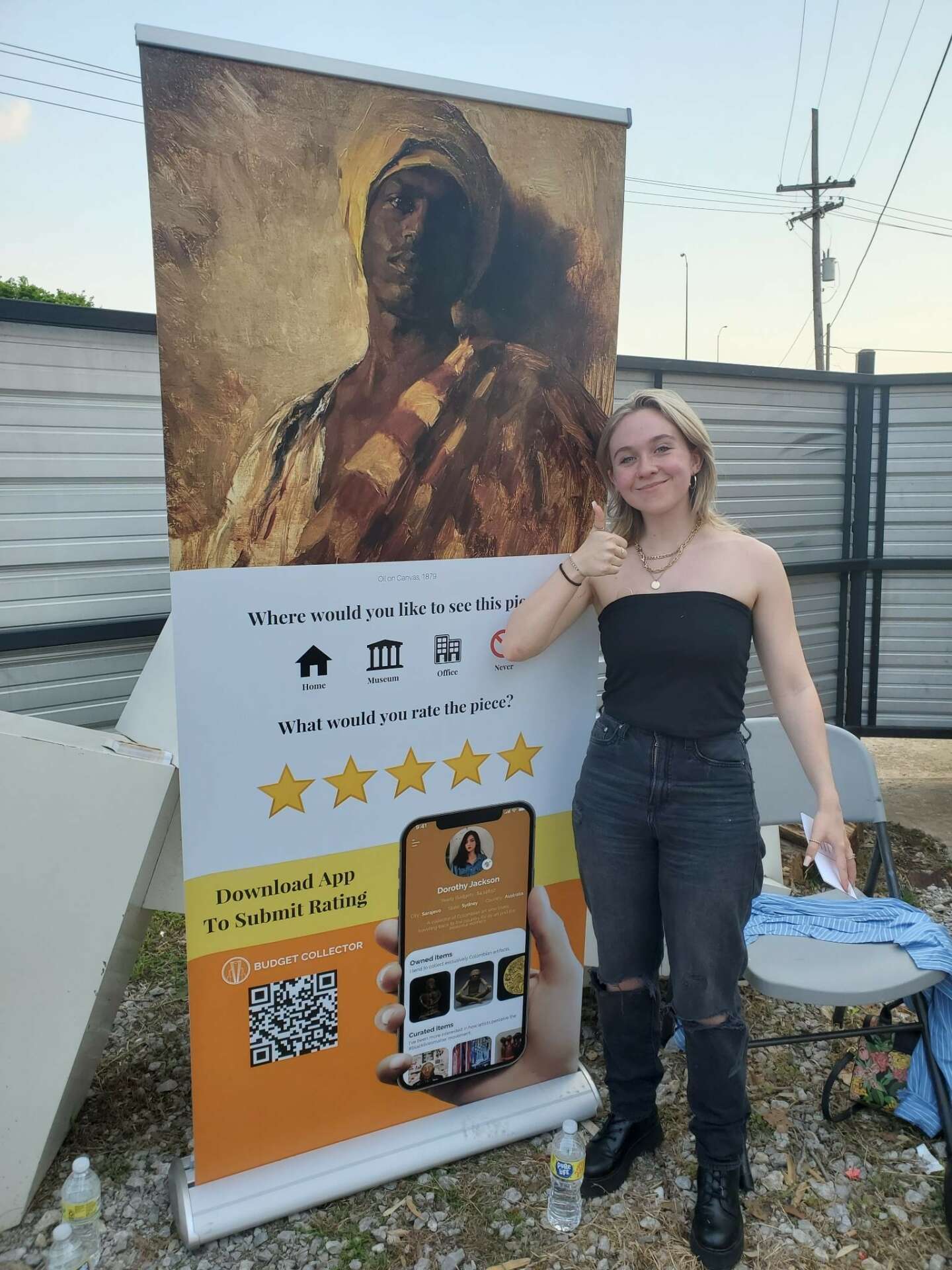
Budget Collector launched a mobile app that brings art advising to everyone with a phone through casual gaming. Art advising is a luxury typically reserved for ultra-high net worth individuals (UHNWI), and the app gives all the same services for a fraction of the cost. The company’s goal is to offer better art advising services than even current UHNWI can receive by using the most significant advancements in machine learning. We received research grants from Stanford University and National Science Foundation to continue to build upon this cutting-edge innovation.
Budget Collector started as a blog by Ebonique Boyd about her journey to buy fine art within her budget of $5000. She initially blogged about art galleries and museums that she visited. She also blogged about art books and even wrote a small inconsequential journal type book. However, the book is the precipice for the app.

Have you ever had to pivot?
Although, my cofounder has half the equity, she didn’t do half the work initially. I felt comfortable giving her half the equity, because she’s my sister and she had the initial idea and the knowledge to help guide me to the point that we are today. I think her contributions were that valuable to me and I was/am incredibly grateful. However, she did come on as a full partner once we got some funding. It was difficult for me to rein in my control of the project. I went from having total control to having to listen to someone’s input and it was very difficult for me to process. There was a lot of tears on my part, because this project was basically my child at this point. I had to realize that this project was no longer my hobby, but that it could potentially be a big business. I needed to treat it as a big business and respect other people’s input more and to allow them to contribute. I needed to expect that people had valuable contributions and that I didn’t need to do everything to push this project along. It was no longer an exercise in vanity, but that it was now supporting people’s daily lives.
Can you talk to us about how your funded your business?
My cofounder asking for equity in my hobby was the first time I think I heard the word ‘equity’ in terms of finance. I wanted to learn more about that, so I paid for a course at the now defunct institution called ‘Founder Gym.’ I tried to talk to venture capitalists after that, but I found the experience lacking. Many VCs had so much ‘advice’ to give me, but they never seemed to want to give me money. I thought maybe I needed advice, but that VCs weren’t the best place to find it. So I started to seek it out from research institutions. The first institution was the National Science Foundation (NSF). They have a virtual program across the United States that helps you research your potential customer for your technical product. They give you a grant of $2000 to help. Our project was done with the University of Michigan and it really helped us to learn more about our customer.
The second institution was Stanford University’s BlackAIR that was being promoted by preeminent scholar Timnit Gebru. They gave us $1500 to research our AI-based portion that we are still planning to implement into our app.
The third institution was Fiverr’s Future Collective for Black Businesses who gave us the equivalent of $24000. I already spent a lot of money on Fiverr, so I thought that I was likely their best customer who applied lol. I definitely thought that I would probably get it, because I think I love Fiverr more than mostly anyone else.
These research institutions and Fiverr was everything that we needed to get our basic prototype together. Although, getting the Stanford and Fiverr grants are probably not possible anymore, the NSF grant is very possible for anyone with a tech project. I think anyone reading this should definitely apply. I also recommend that when building your prototype that you heavily rely on Fiverr. They have great overseas talent at prices that are ridiculously low. However, the prices are honestly fair, because in some parts of the world you could live in luxury for only $500 USD per month.
However, getting accepted into the ActHouse accelerator with funding of $70,000 definitely encouraged our growth. We didn’t really care about growth just building an exceptional product, but the accelerator helped us prioritize growth to become the top 40% of all apps in terms of downloads on Google Play and a 90% month over month growth rate.
Contact Info:
- Website: Https://www.budgetcollector.org
- Instagram: Https://www.instagram.com/budgetcollectordotorg
- Facebook: https://www.facebook.com/budgetcollectors/
- Linkedin: https://www.linkedin.com/company/49163138
- Twitter: https://twitter.com/aiartadvisor