



We were lucky to catch up with E. Elizabeth Watson recently and have shared our conversation below.
Alright, E. Elizabeth thanks for taking the time to share your stories and insights with us today. Before we get into specifics, let’s talk about success more generally. What do you think it takes to be successful?
While everyone defines success differently, I think without a doubt, succeeding at anything requires a healthy respect for failure. Failure can feel uncomfortable, upsetting, and dejecting, and perhaps it isn’t the best word choice. Perhaps instead of failure, we should consider working toward our goals–in my case, writing, publishing a novel I feel proud of, and reaching larger audiences each book release–as experiments that succeed to varying degrees. We stumble a lot in the beginning, learning all the things we don’t know we don’t know, before building on what we finally DO know with each successive endeavor. We make changes, tweak our process, examine our goals, and reevaluate the experience we want others to have interacting with our art or product. We study our industries and audiences/customers, and refine our experiment for the next go. And then the next go. And the next. We will stumble more along the way as our craft improves, as markets shift, as our business savvy grows, and we take more risks. Wash, rinse, repeat. One cannot be afraid of failing and going back to the proverbial drawing board to either see what went wrong and how to fix it, or see what went right and how to improve on it. In fact, there’s always something to learn from an experiment that didn’t yield the results we wanted. If we are determined to succeed, we must embrace the results no matter what they are with grit and determination and then, as the saying goes, try, try again.
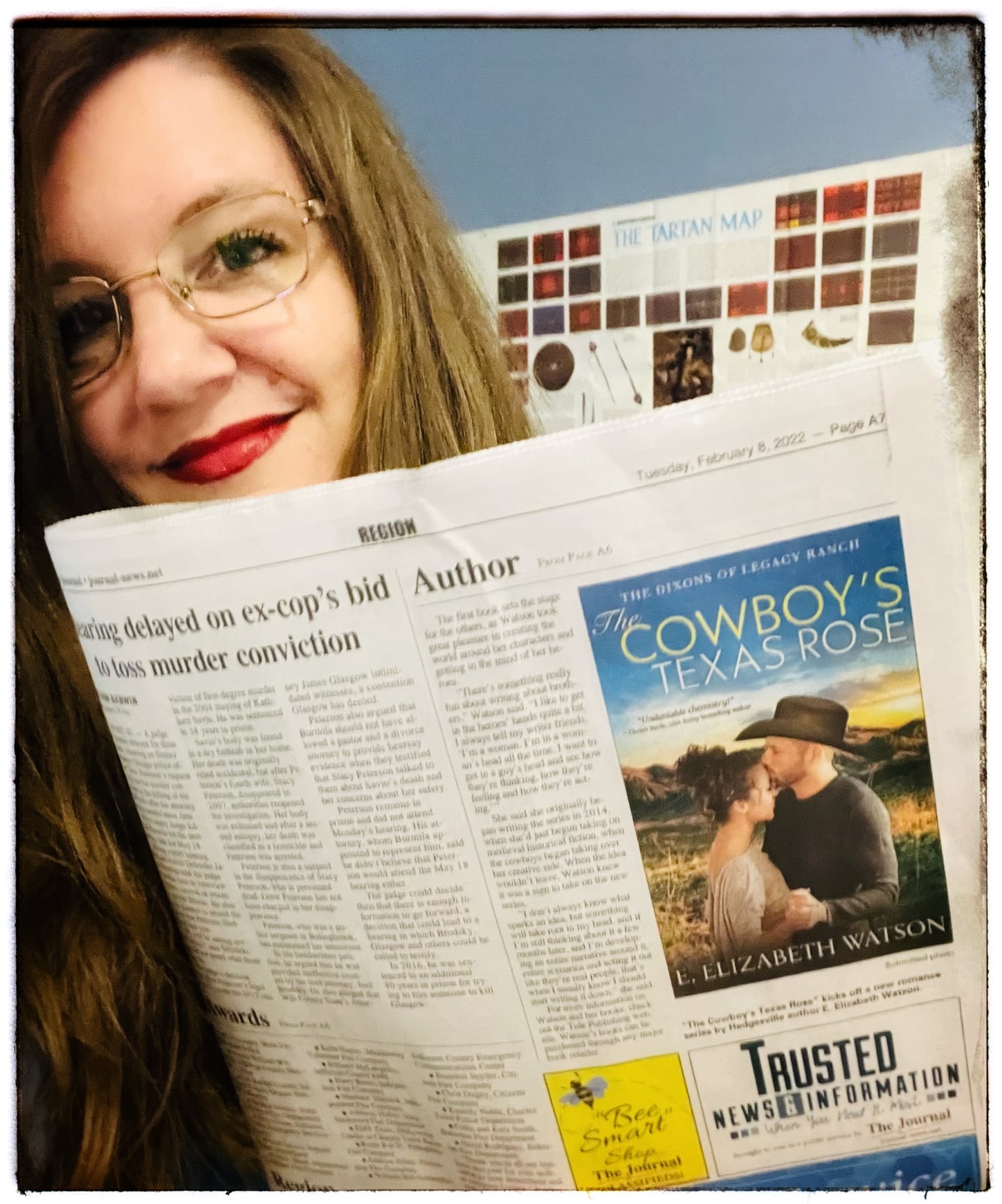
Awesome – so before we get into the rest of our questions, can you briefly introduce yourself to our readers.
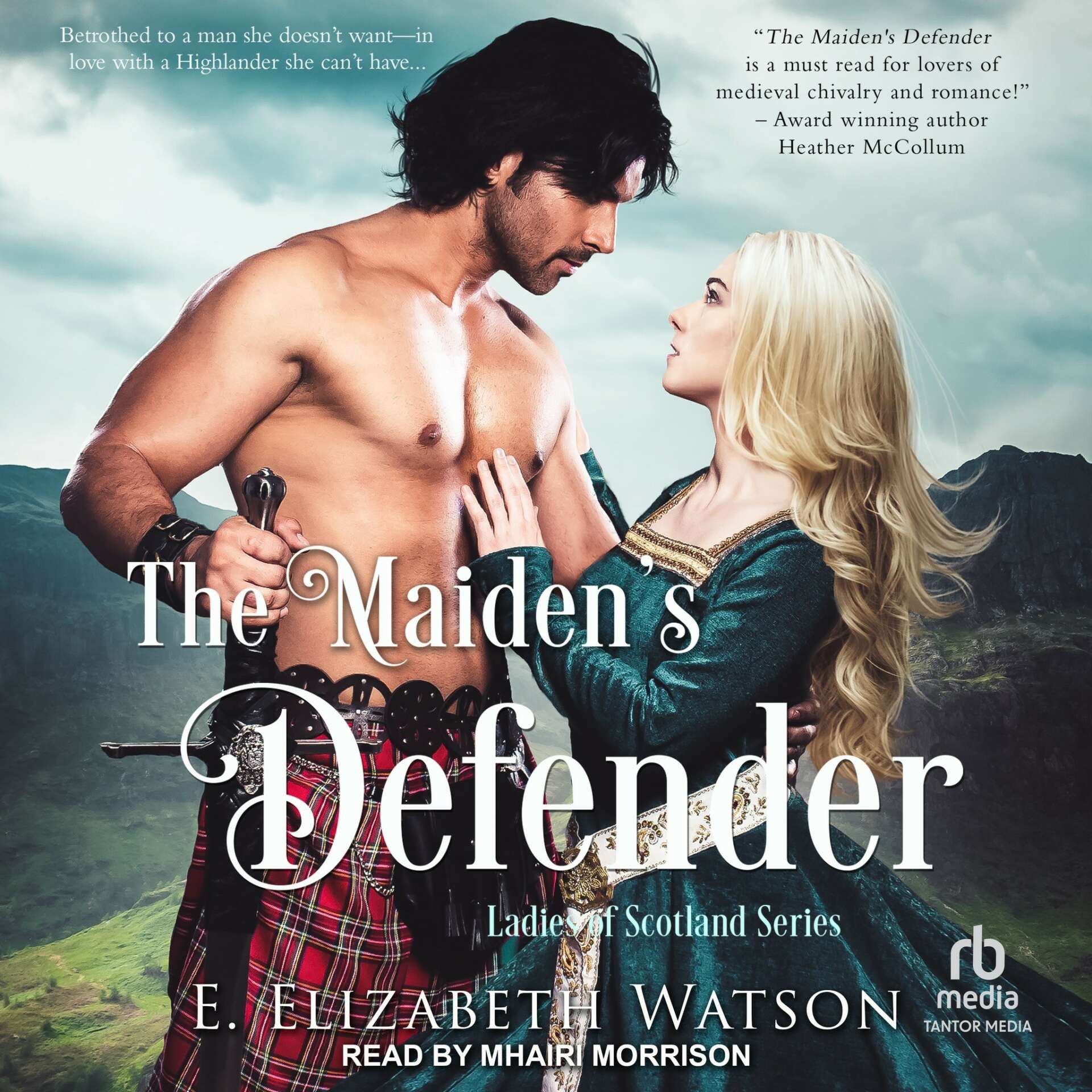
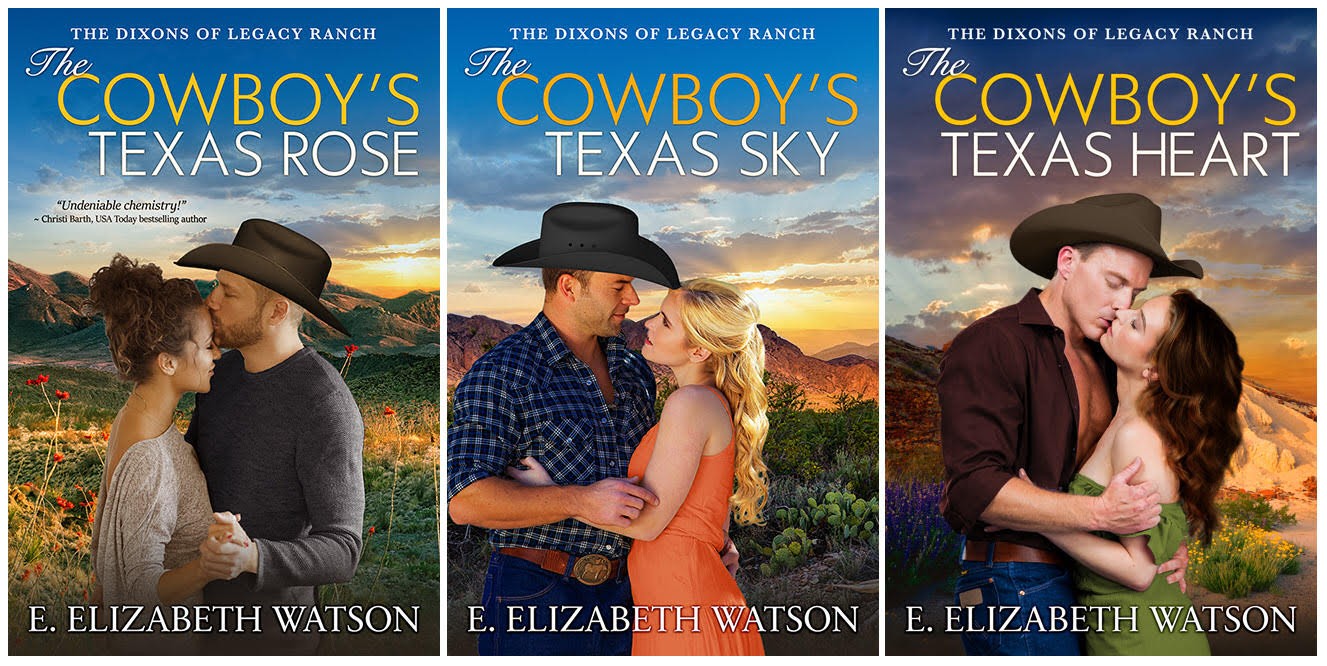
I’m honored to be asked to talk about my work, and to be given this platform to do so. I’m a novelist. I paint stories with words instead of colors, shape narratives on 2-dimensional paper instead of molding it with clay. My characters are dynamic and relatable, the plots are sweeping and fraught with both strife and hope. I strive to make the history that inspires the books and the landscapes in which they take place tangible, and the journeys my protagonists endure, adventurous. Do I write thrillers? Or perhaps suspense? Actually, I write historical romance/fiction with an affinity to Scottish romance, and contemporary western romance. The romance genre is filled with diversity and beauty, where characters overcome hardships and obstacles to find a happily ever after with the ones they’ve fallen for. I’m in the business of providing entertainment and an escape, but it’s a fulfilling role I take seriously. Authors give life to stories that exist only in our minds, and we do it with intense study of our craft, professional education, and studying our industry and audience. For my readers, they want books to feel real, but with hope and inspiration that overcomes the challenges of real life. Things don’t always work out in real life. But in a romance, things do.
I didn’t always aspire to be a romance author, even though I had teachers over the years tell me I should be a writer, and always loved writing as a child. The career evolved. Before I discovered my love of writing fiction, I had written a couple journal articles based on my archaeological research, and was pursuing degrees and a career in archaeology. I love archaeology, and studying the human past. I love history, too. I also love studying how history shapes the present. When I wrote a short story for my kids one day on winter break, it was just for fun. They were bored and the weather was bad so they couldn’t go outside to play. They’d exhausted all their normal indoor activities and so I tried to help them brainstorm what they could do instead. Writing a short story and illustrating it was just one of many ideas we brainstormed, with the promise that whatever they wrote, I’d take to Kinkos (this was a long time ago, ha!) and have laminated and bound so we could add it to our bookshelf. But the more I tried to inspire them, the more excited I became by the prospect, to the point that my kids finally said, “maybe you should write US a story!” Challenge accepted. But as I wrote a Y.A. fantasy short story for them, I realized I was embarking on something bigger–a full-length book that I was reading to them chapter by chapter as a bedtime story each night to gauge their reactions. I found a lot of joy and fulfillment in it, and soon began to realize that I wanted to pursue writing more seriously. I started researching how to become an author, how to query an agent or editor, kept writing that short-story-now-book, which had by then become a four-book series–until I knew in my heart this was a serious endeavor I wanted to work toward.
It was my husband who challenged me to write a romance. At the time, I laughed it off. I had a lot of misconceptions about the genre, and sadly, didn’t consider it a serious one. I spent my days reading archaeological surveys, site reports, and journal articles, and binging Orwell for fun. But the idea stuck. His challenge nagged in the back of my mind. Soon, I was at the library in South Gosforth, near Newcastle, U.K. where we lived at the time, perusing the books with long, flowing gowns on the covers. I picked up Sarah Zettel’s Camelot books on a whim… Absolutely devoured them! I went back for more books with pretty gowns on the covers, warriors with swords, cowboys and dukes, castles and ladies, and read more and more and MORE, shocked that I’d never realized how incredibly complex and alluring the genre was. As I began to understand the romance genre more, I was utterly transformed. The adventures and conflict in a romance, the angst and how love always overcomes the worst of humanity hooked me. I never looked back!
Best part? As I started writing, and then over the next handful of years, pursuing a career, gaining an agent, gaining contracts, gaining recognition in writing competitions, I’d found a home for my love of history, archaeology, and nature, too. I’m naturally inquisitive, and each new manuscript I write provides me with a chance to study something new. I use my historical background all the time in my books, both historical and contemporary, and it’s so rewarding to feel as if I’m able to bring past settings and people to live on the page.


Do you think there is something that non-creatives might struggle to understand about your journey as a creative? Maybe you can shed some light?
When asked similar questions, I often think of those memes showing pictures of a certain job with the captions beneath them such as, “What my mom thinks I do…” “What my friends think I do…” “What society thinks I do…” “What I think I do…” “What I ACTUALLY do…” This becomes so relevant when talking about a creative job. Does a writer daydream in a coffee shop all day, writing in mad bursts at 2:00 a.m. when the inspiration finally hits? Actually, while writing is creative, it’s actually a structured craft, too. Writing as a profession is a business with set aims and marketing plans. It’s goal-oriented. Not only is personal fulfillment necessary–I mean, why write fiction if one doesn’t enjoy writing it?–the goal isn’t to just be expressive, rather, it’s to be lucrative, too. There are techniques to learn, a writing voice to develop and hone. Countless hours are spent reading books on craft and marketing or attending workshops on the same. We study changes and trends in the industry. Only 30-40% of my time is spent actually writing or editing. The rest is spent on growing my audience, researching, studying, building bridges with other authors and industry professionals, interacting with readers online or in-person book events, trying to reach new readers or solidify the trust of returning readers by consistently providing the stories both they and I love, and advertising. As a one-woman band who now works directly with my editors and publishers instead of negotiating through a literary agent, I am constantly experimenting–and yes, failing here and there–learning, and developing both my brand and craft, as well as doing my best to make my work both relevant to the current time and yet hopefully, timeless.

What do you think helped you build your reputation within your market?
I’m definitely still building my brand and reputation. While I’ve come a long way from where I started, I have a long way to go, too, and I don’t think that trajectory of growth and development is ever going to reach an end point as long as I am still writing. But despite all the professional development and research authors do, if at the end of the day I haven’t written a book that I can stand behind and believe is compelling, page-turning, with characters a reader can fall in love with and root for, then all the advertising and professional education is for naught, because I won’t win readers’ trust that way. Therefore I must consistently write to a caliber I feel proud of. It’s the best feeling in the world when a reader or blogger gives a glowing review. It’s also a lot of responsibility for me, too, to make sure I’m delivering their expectations, which means I spend a lot of time at that proverbial drawing board, always trying to improve.

Contact Info:
- Website: www.eelizabethwatson.com
- Instagram: @authoreewatson
- Facebook: https://www.facebook.com/Author.E.Elizabeth.Watson
- Twitter: @AuthorEEWatson
- Amazon: https://www.amazon.com/stores/E.-Elizabeth-Watson/author/B006W3XVXC?ref=ap_rdr&store_ref=ap_rdr&isDramIntegrated=true&shoppingPortalEnabled=true
- TikTok: https://www.tiktok.com/@eelizabethwatsonauthor
- Goodreads: https://www.goodreads.com/author/show/5274630.E_Elizabeth_Watson?from_search=true&from_srp=true
- BookBub: https://www.bookbub.com/authors/e-elizabeth-watson
- Newsletter: https://eelizabethwatson.us15.list-manage.com/subscribe?u=b575d20db75ea76e7fc9a6972&id=c4c1334fbe
Image Credits
Entangled Publishing Cheeky Covers